
By Sarah West
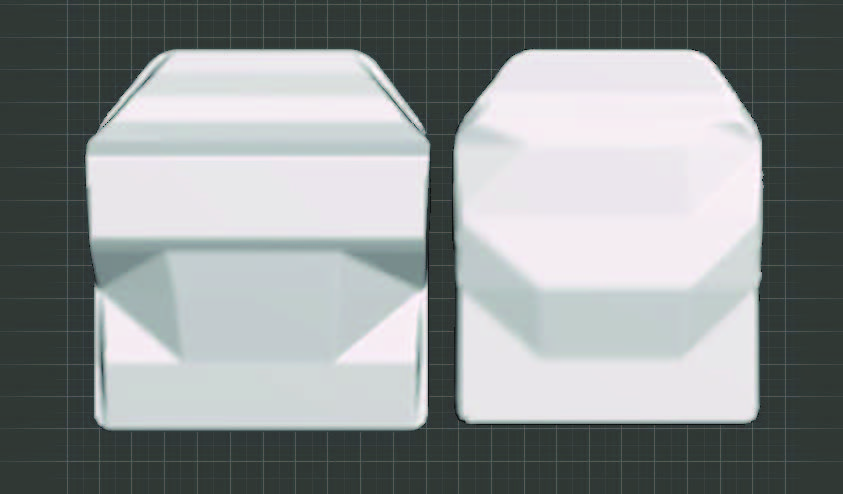
This report discusses how there is a lack of availability when it comes to female police officers. It talks through the difference between female and male anthropometry. In this case study, she looked at creating 3D Plates that would be inserted within the body armour. To see if it would help change the fit, comfort, mobility, and coverage.
Key Words: Anthropometry, fit, comfort, mobility & 3D Plates
Research Objectives
- To explore design criteria for form fitting hard plates for female officers.
- To develop a methodology to create form fitting plates based on a body scan.
- To develop a protocol to:
a. Compare currently available hard plates and a prototype plate in the context of range of
motion and coverage for female officers.
b. Evaluate female officers’ perceptions of fit, comfort, and mobility while wearing the
prototype plate.
c. Evaluate the potential impact of the prototype plate on female officers’ feelings of inclusion.
Key Insights:
“There are vests and flexible armor designed for females currently available, but hard plates are not available for female body shapes.”
“The hard plate armor available for police officers fits female bodies in such a way that extra space is exposed at the chest as breast tissue pushes the flat plate away. This exposes vital organs and increases the possibility of a fatal shot.”
“Adjustments to the chest, neckline, armhole, and plate shape of ballistic vests may improve range of motion and performance for female officers. The chest should be less tight with a plate that is not flat.”

Data Analysis
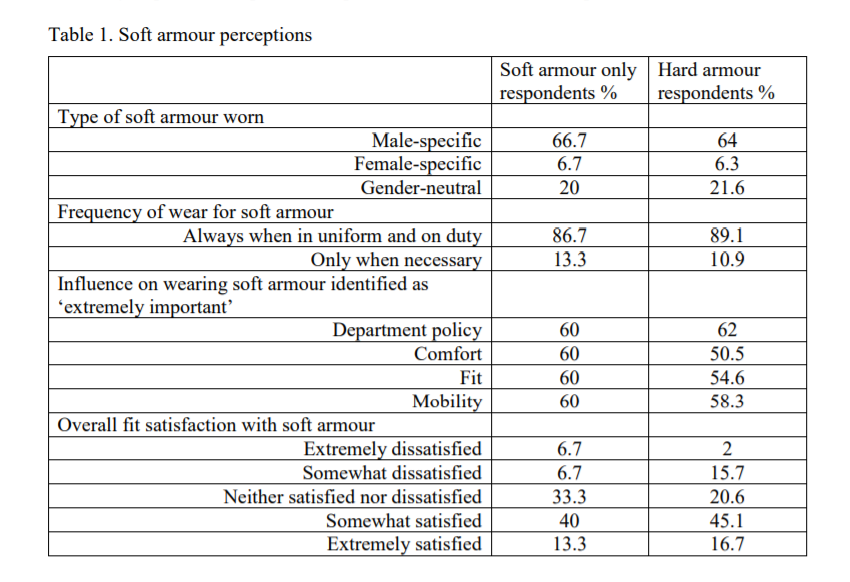
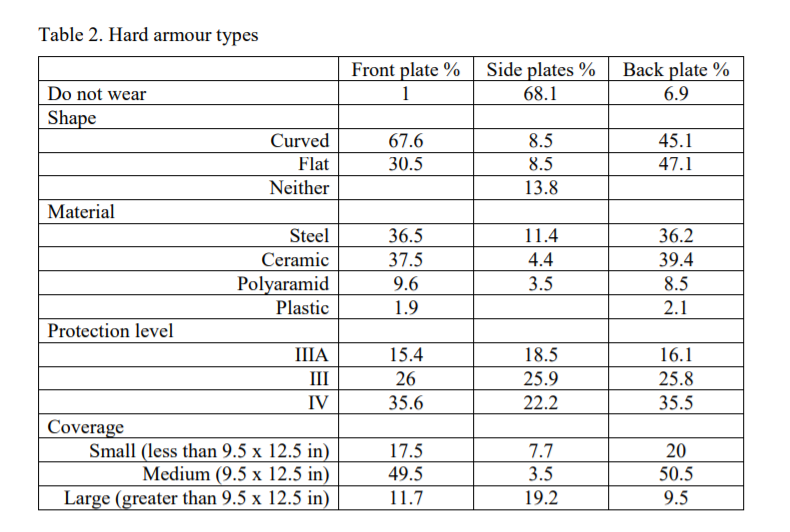

Read The Study Here
Hi Clarissa, it is great to see that people are working to solve this issue. Hopefully the work that is being done and the work that you are doing can help to increase the employment and retention of female identifying police officers. I look forward to seeing what you learn next.