

After receiving funding from the KPU Teaching and Learning Innovation Grant earlier this year, Jessica Bayntun was funded for two VR headsets that her students could use in the classroom. Currently a faculty member in Fashion and Technology and Chair, Foundations in Design, Jessica helped design ‘3D Futures,’ a special topics course for third year fashion students at the Wilson School of Design.
Although there are no formal fashion programs in virtual reality, Jessica explains how this is still emerging and even cross-disciplinary, allowing students to virtually design, watch fashion shows, even seek inspiration for projects by traveling the world.
“Product design students could be using it, graphic design, interior fashion. Essentially anyone at the Wilson School of Design could be using it.”
After specializing in design futures for her Masters Degree at Emily Carr, Jessica wanted to blend these concepts of critical and speculative design and bring them into application to her students in the fashion program.
“You can do all of these other aspects that when you’re designing something if front of a computer you take hours to do it. The ocular endurance you have is different.”
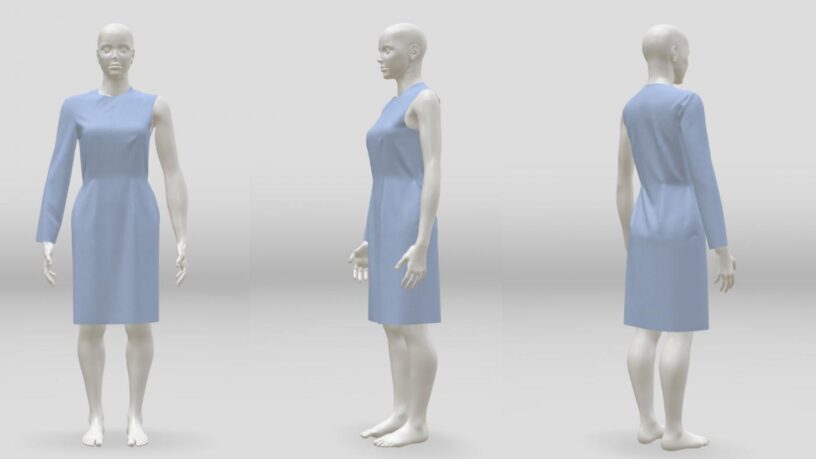
Jessica’s students were using ‘gravity sketch’ to draw dress forms in space using joysticks called accelerometers, similar to the Nintendo Wii remote. Some of her students, she mentions, were virtually fitting garments.
“One student had a project where she measured her body, she made an avatar of her body in Optitext, which is the the program we teach here at Kwantlen, and she designed a garment in virtual space. So you make the pattern pieces, all of the shapes of all the pieces that get cut out. Then, you can virtually sew it and put it on the avatar so you can see.”
Because Jessica’s students are so diverse in their interests, she allowed them to choose a technology and explore a design concept.
“For example, two of my students explored 3D printing, one of them made 3D printed a dress, so she made these shapes and she plotted them all over the the dress and painted them. Another did a wrist guard for arthritis, but for petite wrists, so she custom 3D printed these structural supports. Another designed a horse blanket.”
During the pandemic, she also taught some of the continuing education courses, such as a beginner’s course on how to sew a collared shirt.
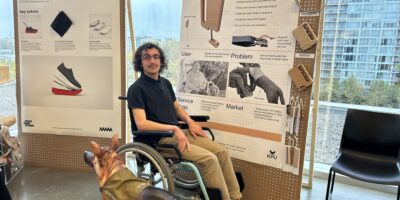
“It’s been really interesting – the whole idea of teaching and looking at virtual fittings and not necessarily being in the same room as people has really shifted some of the ways that the industry is even thinking. It’s giving more accessibility for those that aren’t able to be in a shared space.”
Jessica’s background ranges from designing Menswear at Lululemon, to costume design and eventually starting a custom swimwear company for mostly plus-size women. Today, along with teaching at KPU, Jessica says she has shifted into the research side of fashion design.
“I’m working for a software company called Vital Mechanics that are developing avatars and virtual fit. I’ve taken a lot of research and work that I’ve done in that area and filled in the gaps and explored virtual fitting a little more in depth in this course.”
Article by Brit Williams, Internal Communication Specialist.
