After an epic drive from St. John’s, Newfoundland, to the West Coast, Dr. Valérie Vézina joined the Political Science Department at KPU in the fall of 2018 with a teaching focus on Canadian and comparative politics. She is the author of Une île, une nation? Le nationalisme insulaire à la lumière des cas de Terre-Neuve et Puerto Rico (2018), which was the official runner-up this past summer for le Prix francophone 2020 from the Canadian Political Science Association /l’Association canadienne de science politique. Valérie presently holds a KPU Katalyst Research Grant (2019-2021) for her project examining the ‘islandness’ of the political histories and cultures of Alberta and Saskatchewan. This research is a collaborative project involving three KPU students. Valérie’s most recent publication appeared this fall in the international, open-access journal Shima.
I can say that it was really by studying at Memorial University in St. John’s, Newfoundland, that I became hooked on islands. There was this “je ne sais quoi” that I really wanted to grasp, to live, to embody. And since then, the love story has never ended.
Valérie Vézina
Political Science Department
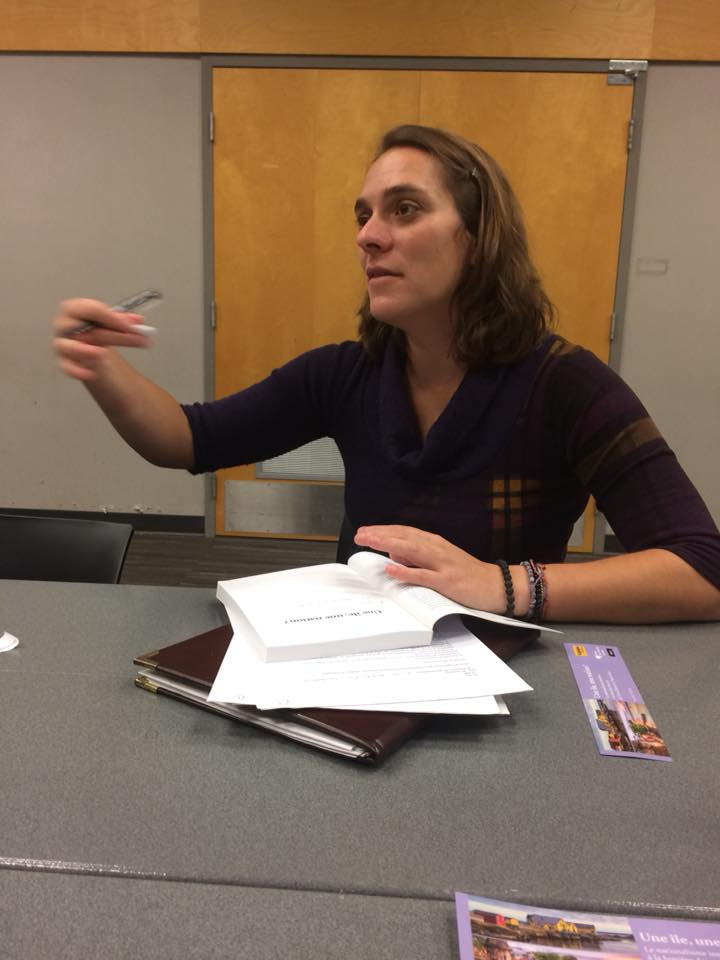
Valérie Vézina at her book launch at KPU in 2018.
Islands have clearly fascinated you for some time. What initially drew you to this topic of study?
Ah! I love this question! I was born on the ancestral land of the Huron-Wendat and would like to acknowledge how grateful I am to have lived and thrived on Indigenous lands in many places. I am using the settler names from now on, but I have a deep appreciation for, and try every day to grow my knowledge of, the land I am on: a rural town in a farming community. Let’s just say that the prognosis for being passionate about islands was not great! However, the first spark probably came from my numerous visits with relatives on my mom’s side on l’Isle-aux-Coudres, an island in Charlevoix about 2 hours from Quebec City. I spent numerous week-ends there. We had to take a ferry to get there with all sorts of adventures. And as soon as we set foot on the island, there was something different: time slowed down; people walked slower, said hi, etc.
Obviously, my experience of island life was quite different when I moved to Montreal (an island!) to study for my undergrad at McGill, but it was still a different place. Montrealers speak differently, act differently, etc.
As for my topic of study, I can say that it was really by studying at Memorial University in St. John’s, Newfoundland, that I became hooked on islands. There was this je ne sais quoi that I really wanted to grasp, to live, to embody. And since then, the love story has never ended.
Your monograph, Une île, une nation ? Le nationalisme insulaire à la lumière des cas de Terre-Neuve et Puerto Rico (2018), brings together places through unexpected pairings. Can you briefly describe the field of Island Studies and how you approach it as a political scientist?
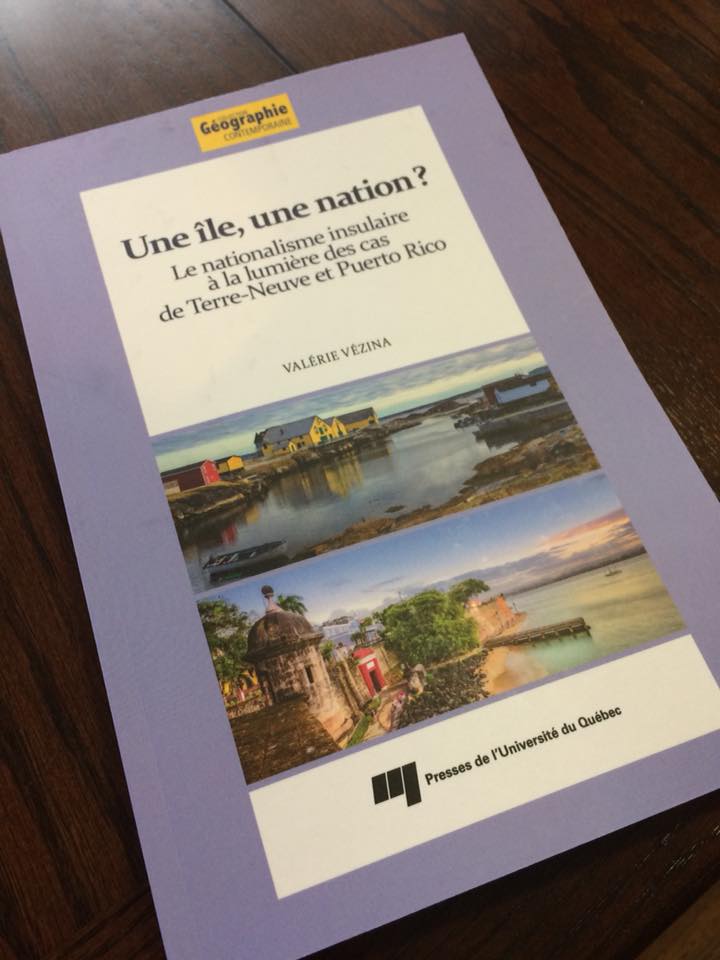
First off, I would like to say I am quite proud of this book; it is the result of many years of research but also of living on those two wonderful islands. I am so grateful for all the people I met there, and both Newfoundland and Puerto Rico have special places in my heart and are my “home” in many ways. I wrote this book for (and address it to) the people of those islands for their stories to be told and heard…
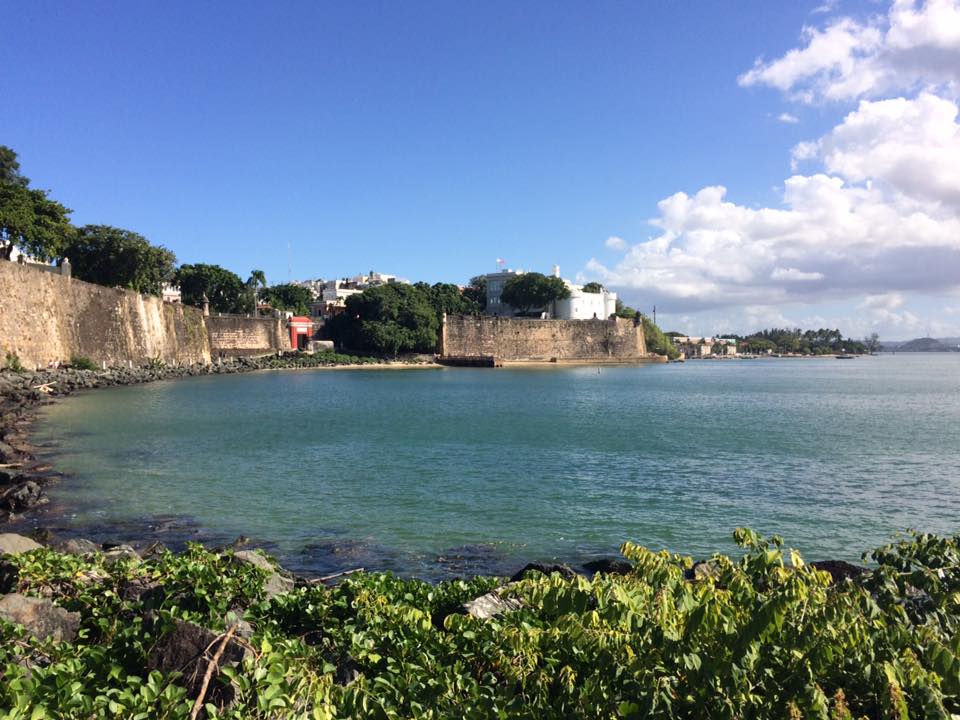
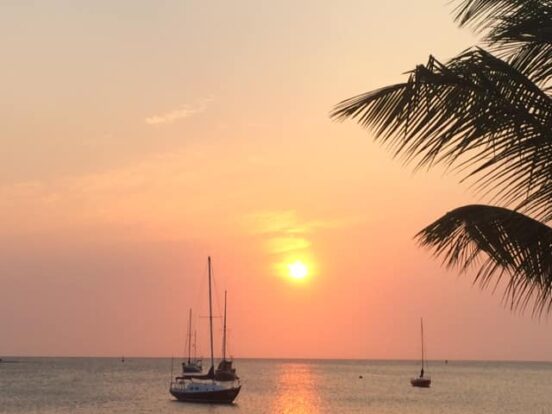
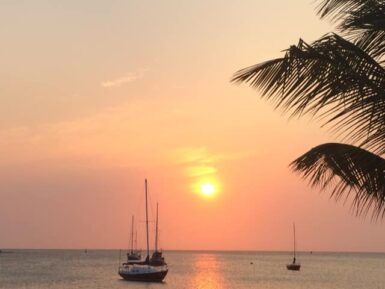
Now, back to your question! Island studies is an interdisciplinary field that brings together disciplines from all areas of life: arts, science, social sciences. My book is a reflection of this interdisciplinary approach as I draw on geography, economics, arts and culture, and obviously political science to understand island nationalism. As a political scientist specifically, I argue that islands are unique places, a bit like laboratories, where innovative and new forms of governance take place. In other words, islands (that are not yet independent, or countries) are places with unique arrangements with their metropole in terms of autonomy and sovereignty. For example, take Aruba (an island I was blessed to visit in 2019); it is a constituent country of the Kingdom of the Netherlands with internal autonomy. Matters such as foreign affairs and defense are handled by the Netherlands, but Aruba has its own money, its own Parliament. These forms of governance could be models to emulate what we call “continental states” with multiple nations or claims of nationhood. As such, for political science, islands show us what is possible to achieve in plurinational polities.
Congratulations on your recent journal article “Navigating Citizenship and National Identity in American Territories: Nationalism in American Samoa and Puerto Rico,” which appeared this fall in the journal Shima. How is this recent publication taking your research in new directions?
Well, since my time spent in Puerto Rico, I have become obsessed by American Territories. The American Territories are a current example of continuous colonialism but with a different name. All American Territories are islands/archipelagos (Puerto Rico, Guam, American Samoa, US Virgin Islands, Northern Mariana Islands)! All have political arrangements that are different with the American state. Hence, I am curious to see how national identity is articulated in those territories, how attached they feel to the US, and if they have any inclination to become fully-fledged states – like the other 50 states – (which ultimately is decided by the US Congress and not the territories!), and if being an island or an archipelago has any impact on those claims. I am hoping to do field work on all those islands. Virtual meetings are great, but any researcher would tell you that to gain confidence and trust from the people you want to interview, you need to live somewhere, you need to live, to embody the island. I hope to turn this into another book in the upcoming years.
Islands are unique places, a bit like laboratories, where innovative and new forms of governance take place.
Valérie Vézina, Political Science Department
Last March, you presented on your research — “Is Saskatchewan an Island?” — at the University of Regina. Although it is difficult to imagine this land-locked prairie province as an island, how are you re-conceptualizing what islands are in this instance?
Yes, just before the lockdown, I was invited to present at the University of Regina, in both French and English, a talk about Saskatchewan as an island. This is part of ongoing research funded by the Katalyst Research Grant and is a collaborative project with students from KPU.
As you pointed out in your question, it might be hard to imagine the land-locked province as an island, but there are many ways to conceive of Saskatchewan (and Alberta) as such. In island studies, one of the key variable is ‘islandness,’ the defining feature of islands. But the state of islandness can also be metaphorical. The use of the island metaphor is nothing new. If you think about it, Western culture not only thinks about islands but thinks with them; there are islands everywhere! In city ghettos, in groups of cells, in parts of the brains; we even “surf” the Internet and use “navigators” to do so! In island studies, there is an intense debate about what constitutes an island, etc. Some say everything is an island; I do not necessarily want to go there, but I am taking this idea of islandness as a metaphor and trying to see if it applies to enclaves (or land-locked places). In some ways, I see great poetry (here inspired by the great French Canadian poet Félix Leclerc) in the common (often stereotypical) sight of the Prairies: the Grain Elevators are lighthouses in endless fields; the sway of the fields are waves on the ocean; and the Living Skies (as the Saskatchewan motto reminds us) are announcing the storms that are to rage or the endless sun that will dry the land…
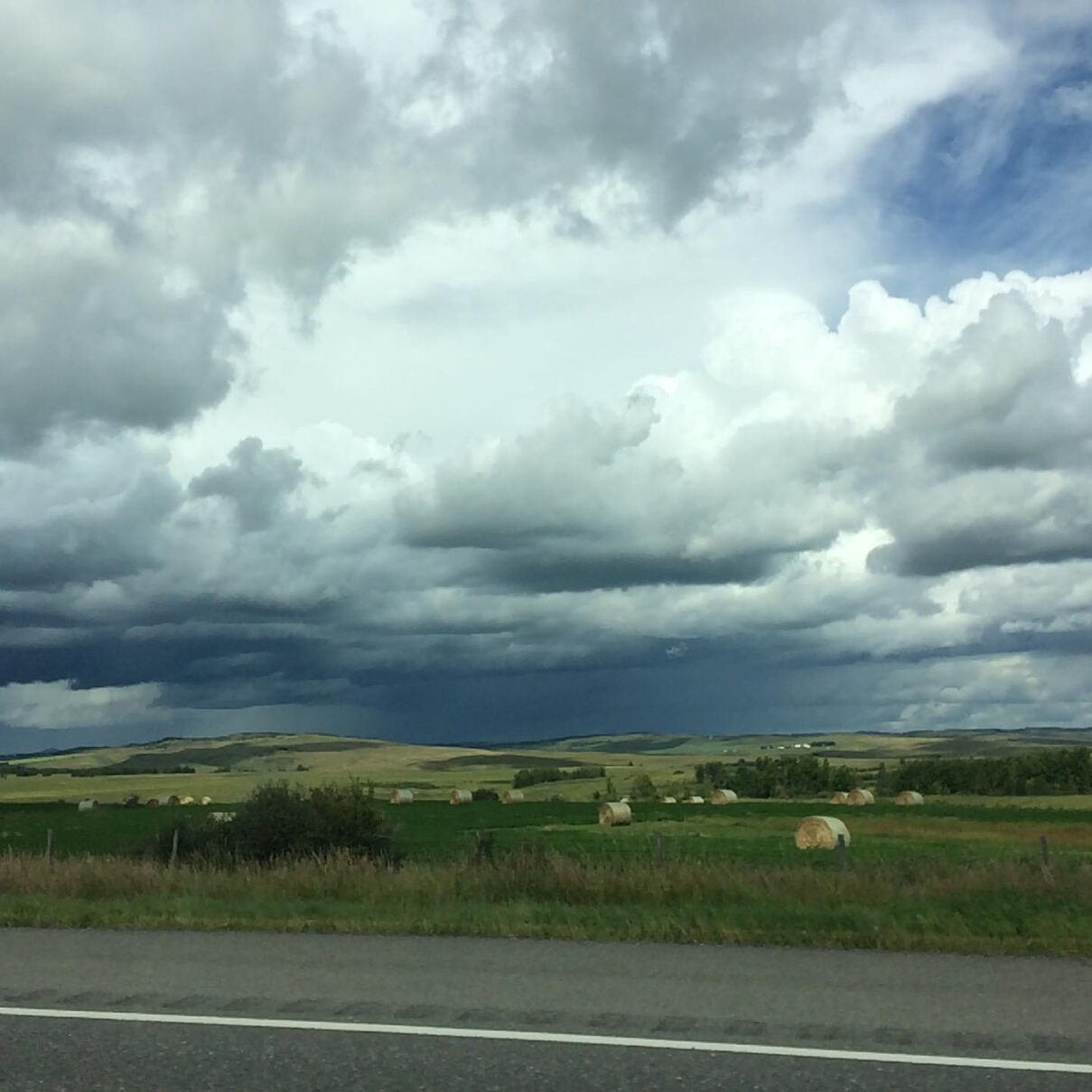
So far, our research has led us to see islandness in many ways in Saskatchewan; first, it has many islands intersecting with each other (Indigenous peoples, settlers, urban-rural, Southern and Northern Saskatchewan, for example); second, the political party system is unique and different (with the leadership of the Saskatchewan Party over the last decade); and third, there are strong historical roots with social democracy, but most interesting is how people think of themselves. In the few interviews the students and I had the chance to conduct, some describe themselves as “rooted, in tune with the land,” as “one with the place”; similar language is used by islanders.
You recently joined the editorial board of the open-access, multi- and inter-disciplinary journal Shima. Could you tell us about this journal and especially what it means to you to be serving in this new role?
Absolutely! I am a big advocate of open-access journals and books. Shima is one of the few journals publishing work on islands. (Another would be Island Studies Journal, also an open-access journal). Furthermore, “Shima derives its title from a Japanese term that is most often translated into English as ‘island.’ But – as significantly – the term also refers to other types of space that are regarded as insular by the communities that inhabit them” (Editorial Introduction). This publication could not be more in tune with the kind of work I strive for and research. As a member of the editorial board, I am working closely with people from around the world (editorial board members are from Japan, Australia, Malaysia, Italy, Denmark, and many other places), and we are responsible for deciding which papers will be published. For me, this is a great opportunity to collaborate with colleagues from multiple disciplines and perspectives and to give back to the academic and scholarly world; plus, I get to read tons of fascinating works on islands!
Are there points of connection between your research on islands and our present Covid context with countries closing borders, restricting travel, and promoting physical distancing? Why is it so important now — during this global pandemic — for KPU students to be taking Political Science courses?
There are indeed. For a very long time, the Western world has portrayed islands as closed and restrictive places — something that is quite at odds with how islanders see themselves, which is open and connected to the world. Research by Indigenous scholars in Oceania has, thankfully, rectified this position. In some ways, Covid 19 has shown both the vulnerability of islands (especially if dependent on tourism), but also the resilience of islands (American Samoa has so far 0 cases of Covid-19; in Canada, both Newfoundland and Prince Edward Island have had a very low number of cases). This pandemic does show and exacerbate how governance is done and why the division of powers is so important. In the Canadian context, a quite complex interplay of provincial and federal powers is at stake, health being a provincial jurisdiction with funding from the federal government, etc. Understanding not only who is responsible for what, but also how individual actions can impact governments’ answers — and how collaboration is key to tackling a global problem (I’m thinking also, here, of our need to tackle climate change in big ways!) — are examples of the importance of understanding the world we live in and hence studying political science.
If you would like to learn more about Dr. Vézina’s research, you can read her most recent article “Navigating Citizenship and National Identity in American Territories: Nationalism in American Samoa and Puerto Rico,” through the interdisciplinary, open-access journal Shima, vol. 14, no.2 (2020).

Comments by s boyd