Designing for Student Success – 2025 Professional Development Series
In spring 2025, the Teaching & Learning Commons team paused what we had on our project list to contemplate how we could support the KPU community with the current financial and enrollment challenges. Presentations by the Office of Planning and Accountability shared with leaders’ information such as the number of students who leave KPU without completing their credential. While this detailed that we are losing many students in year 1 and 2, it also highlighted a wide spectrum of reasons for these departures, some of which relate to learners unsure of their direction, lacking skills, feeling disconnected from the community. and facing complex personal challenges. Teaching students varied and complex needs presents many challenges for educators. It is our role in the Teaching & Learning Commons to support educators with strategies to meet the needs of learners. The result was the development of a themed series of communications and learning opportunities for faculty titled “Designing for Student Success – 2025 PD Series”.
We had several full day design sprints and attempted to create learning opportunities to meet the needs of a variety of faculty. We turned to the literature and identified Lizzio’s Senses and Outcomes model that highlights key areas that support student success.
Lizzio’s Senses and Outcomes
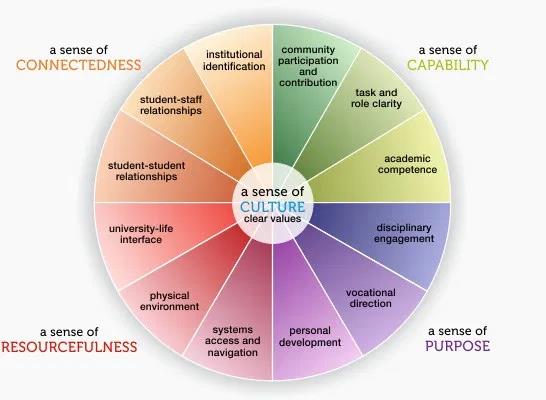
This model identifies five key “senses” that shape a student’s experience: Connectedness, Capability, Purpose, Resourcefulness, and Culture. Each sense includes specific elements, such as institutional identification and student-staff relationships for Connectedness, academic competence and task clarity for Capability, vocational direction and personal development for Purpose, access to systems and a supportive physical environment for Resourcefulness, and clear institutional values for Culture.
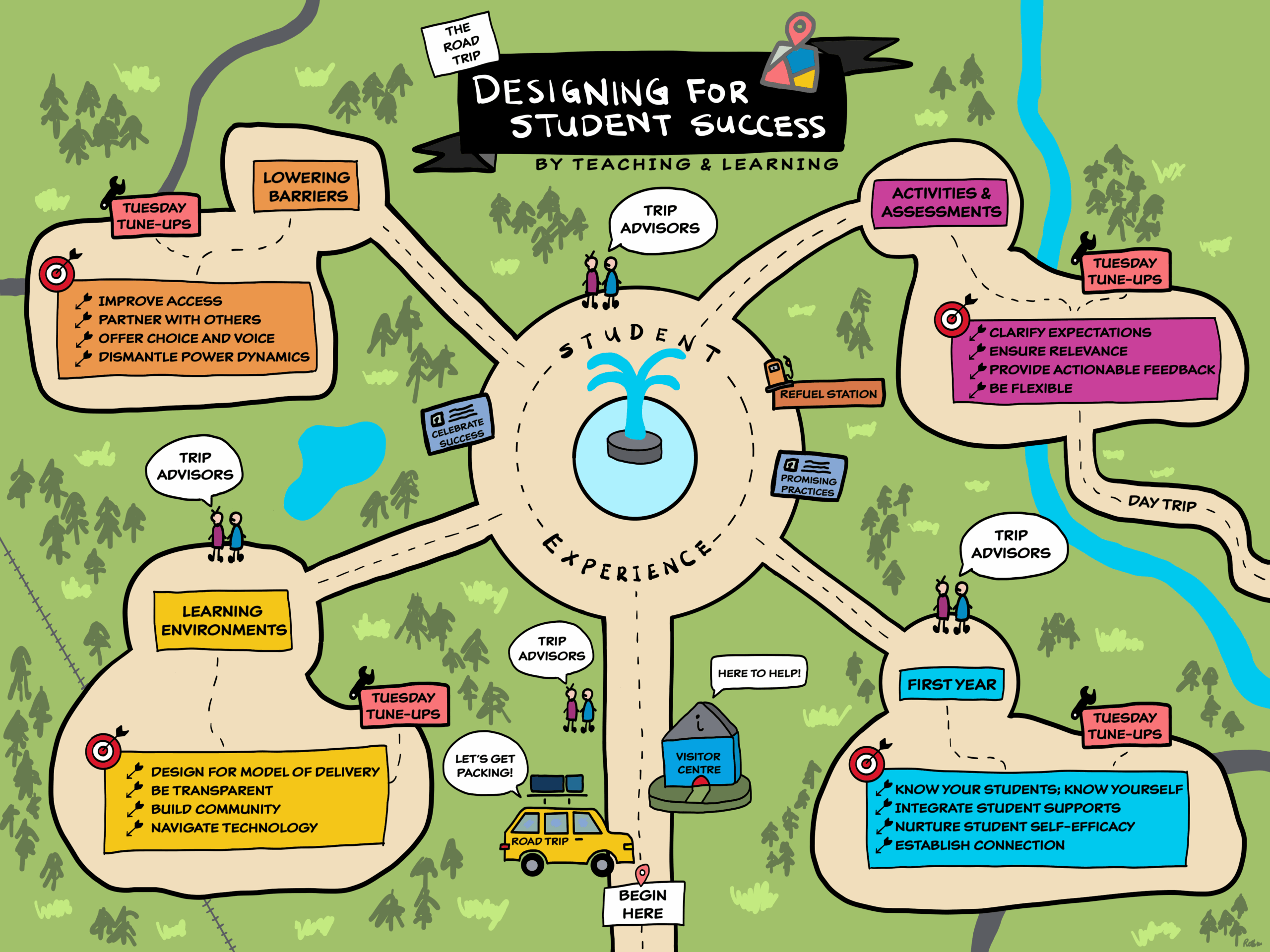
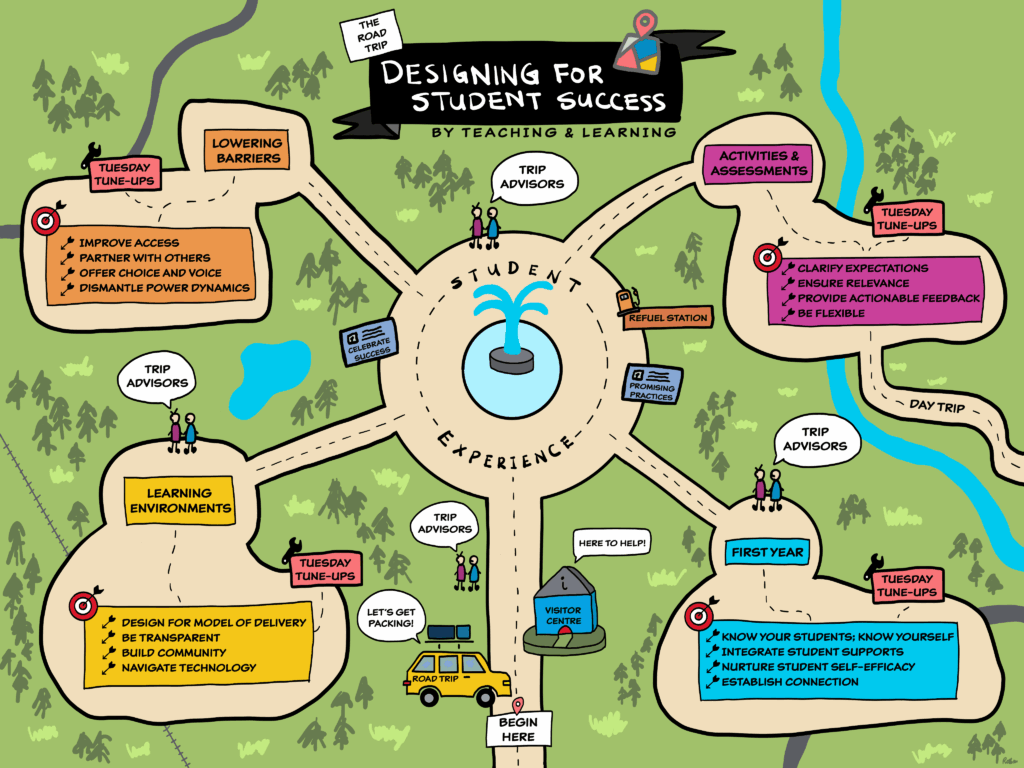
PD streams: We applied this model to KPU and identified four categories that best matched student data, resulting in four streams. To help keep things memorable, we identified guiding principles or “big ideas” for each stream.
- Know your students; know yourself
- Integrate student supports
- Nurture student self-efficacy
- Establish connection
- Clarify expectations
- Ensure relevance
- Provide actionable feedback
- Be flexible
This PD series offered faculty the option to choose-your-own-path faculty development “road trip” to explore inclusive teaching, better support first-year students, and design impactful assessments across all delivery models to support departments and address retention and enrollment challenges.
To begin this journey: A self-assessment was designed to help faculty reflect on their current practices and identify opportunities for development that can be supported by the offerings in this PD journey. Click on the image below to access the self-assessment.

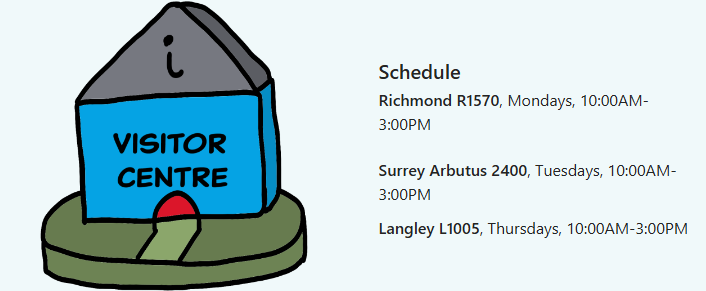
The visitor centre: Faculty seeking professional development support or wishing to arrange a custom department session are provided an opportunity to drop into the Teaching & Learning Commons– referred to as the visitor Centre – on all three campuses or book an appointment based on their availability.
Ways to engage with PD: Faculty is provided multiple options to engage with the content of this professional development series.

Refueling Stations
These activities will support wellness and community for faculty. Various events are scheduled at our KPU campuses each month. Click here for past and upcoming refueling station activities scheduled.
Tuesday Tune-ups
Asynchronous resources released every Tuesday will provide tangible and easy to implement resources and strategies to address challenges identified in the student experience survey data. These are released to faculty email distribution list. Click here for past Tuesday Tune-Up resources.
Messages from the Road
Faculty were sent digital postcards highlighting faculty successes with promising practices to support student success. Click here to access past Messages from the Road postcard series.
Synchronous Learning Opportunities
Faculty can register for synchronous learning options to apply design principles in each stream, supporting departments with retention and enrollment issues. Register here for the upcoming synchronous learning opportunities through the provided link.
Learning Environments
Dive into how the physical, digital, and interpersonal settings of your course shape student engagement. Thoughtful learning environments boost motivation, foster collaboration, and improve academic outcomes, whether online, hybrid, or face-to-face.
- June – Elevating Student Engagement
- July – Muddling Through Moodle
- August – Designing Effective Syllabus
- September – Synchronous Online Tools for Success
- October – The Power of Padlet
- November – Teaching Across Delivery Models: Strategies for Every Setting
- December – Building Bridges: Aligning Learning Outcomes, Assessments & Activities
Decreasing Barriers for Learning
Explore options for reducing financial and access-related options for students by incorporating OERs as well as designing for inclusion and accessibility, removing costs and opening up accessibility supports equity in learning.
- June – Creating Simple and Impactful Open Educational Resources
- July – Muddling Through Moodle
- August – Accessibility and Accommodation Planning
- September – Teaching with Awareness: Understanding Instructor Impact
- October – Reflect and Redesign: Intentionality and Iterative Course Design
- November – Finding Free and Flexible Teaching Resources
- December – Breaking down barriers in the classroom: What is academic ableism?
First Year Experience
Focus on designing with the unique needs of first-year students in mind, building connection, belonging, and foundational learning and disciplinary skills. A strong start can determine whether a student continues or gives up. Support during the first year builds confidence, connection to the institution, and long-term success.
- June – Elevating Student Engagement
- July – Engaging 21st Century Learner
- September – Teaching with Awareness: Understanding Instructor Impact
- October – Reflect and Redesign: Intentionality and Iterative Course Design
- November – Teaching Across Delivery Models: Strategies for Every Setting
- December – Building Bridges: Aligning Learning Outcomes, Assessments and Activities
Activities and Assessments
Rethink how your course activities and assessments drive engagement and measure learning in meaningful ways. Well-designed assessments don’t just test learning, they reinforce it, and engaging activities keep students curious, active, and involved.
- June – Designing Effective Rubrics for Meaningful Learning Assessment
- July – Innovative Grading: Transforming Your Assessment Practices
- August – Assessing ePortfolios with PebblePad & ATLAS
- September – Maximizing Moodle Gradebook
- October – Generative AI for Academic Integrity
- November – Beyond the Grade: Designing Meaningful Student Assessments
- December – Assessing for Success: Empowering Learning Through UDL
The Road Trip: We are continuing this series through the fall, and we welcome faculty to continue to engage support departments and address retention and enrollment challenges.
Faculty are invited to watch a brief video in which Dr. Leeann Waddington, AVP Teaching & Learning, shares insights about this journey.
Ensuring student success truly takes a village—an ecosystem of faculty, departments, and support services working in concert to foster meaningful learning experiences. At KPU, addressing student retention and enrolment challenges requires not only thoughtful delivery but intentional design for success. This means embedding inclusive teaching, better support first-year students, and design impactful assessments across all delivery models, and continuously refining them through collaboration and data-informed reflection. We invite faculties and departments to co-create strategies that prioritize learning design and delivery that lay the foundation for sustainable student success. For more information, visit the Designing For Student Success SharePoint page or email TLCommons@kpu.ca

Leeann leads the Learning Technology and Educational Consultant teams in their efforts to support innovation in teaching and learning at KPU. Leeann oversees and advances existing KPU supported educational technologies and tools to align with institutional values and current best practices. Previously an experienced faculty member, Leeann holds a Post Masters Certificate in Curriculum Design and is a doctoral candidate in the Distance Education EdD at Athabasca University. Leeann is an advocate for the culture of folio thinking pedagogy and its potential to revolutionize KPU's learning landscape.

Nishan Perera
Nishan considers himself as a creative professional educator with a passion for teaching and research in the fields of Business and Marketing. He has over twenty-five years of consolidated experience in teaching, curriculum development, academic administration, training, entrepreneurial and commercial business management. He loves to use technology for teaching and has a deep appreciation in integrating technology with pedagogy to enhance student learning. Nishan provides consultations to faculty on curriculum development with an emphasis on delivering courses in a blended and an online format.