This week, I started an adaptive soccer program along with Katie Jameson (whose reflections here are an important read and echo a lot of my own thoughts). Do I have time to start an adaptive soccer program? No. Do I know a lot about soccer? Also no. Am I able to kick a soccer ball? Not really. But do I at least have a deep, hidden passion for sports administration and unpaid meetings? I’ll let you answer that one.
But I do have a kid who I signed up for a parent-run adaptive soccer program. And I did spend weeks watching videos about soccer with this kid, and buying her a soccer ball, until she got excited about being on a team. And then I opened up Facebook one day to see that the adaptive program that I’d signed her up for had been cancelled.
And just as I was figuring out what happened, I looked over at my little girl, who was kicking a soccer ball in my hallway, proudly telling me that she was “on a team.” And I simply was not going to say, “Actually, no you’re not.” Especially not after this year, after everything.
I will save you the details. The emails. The Facebook posts. The meetings. I have worked in parasport, which means that I know amazing people like Nadine Barbisan, who connected me with some other parents who have started their own adaptive soccer programs. The point is, I have a particular set of skills, mostly that I have worked in parasport enough to watch other people organize teams, that I benefitted from playing parasport, that I have learned about disability justice from other crips, and that I have the ability to be very annoying and go into situations like a bull in a china shop.
But the point is that yesterday, a wonderful thing happened. Katie and I had a meeting with Courtney from the Marpole Soccer Club and she said yes. She said, “Let’s make this happen!” And while we’re still hammering out the final details, it looks like it’s going to happen: an adaptive soccer program for kids with developmental disabilities. It is so beautiful when someone doesn’t say “but we need to study the issue and consult our stakeholders and look into it and get back you” but “yes! Sure! I don’t know how, but we’ll make it happen!”
So much of inclusion is just that: saying yes. Saying “let’s make it happen.” Saying “I don’t know what I’m doing, but I’m going to start.” That applies from everything from teaching in higher ed to organizing soccer for four-year-olds. I am so happy and thrilled that Marpole Soccer Club chose to say yes, even when the details are still being worked out. And hopefully, this will be a model for other clubs to say yes.
But it’s interesting, isn’t it? That the only adaptive programs seem to be parent-run. Parents of non-disabled kids sign their kids up for soccer programs, and those programs are run by governing bodies who take care of the registration, the liability insurance, the paperwork, the uniforms. Access to sport isn’t easy at the best of times, especially in terms of cost. Lots of parents of non-disabled kids end up hovering at their computers at exactly 7 am on some random day, refreshing their pages at just the right moment to score a coveted spot in a soccer or baseball or swimming program, as if it was Coachella not little league.
Access to sports could be easier for everyone, especially during Covid. But why are the only adaptive soccer programs parent-run? I would assume it’s because most sports teams will say they “welcome” disabled, neurodivergent and chronically ill kids…which they mean that they will allow them to register. But being on a team that has made no efforts to understand the needs of a disabled child or change how the practices are run or seek out expertise from those with lived experience or change anything at all is not inclusion. It’s participation. It’s wearing a uniform without really being on a team. It’s the very same as how I was “included” in gym class when I was a kid in a wheelchair in elementary school because I was the scorekeeper or the “referee.” I was there! I was included!
That’s not inclusion. That’s tolerating someone’s presence. That’s what leads to all those feel-good, inspiration porn, viral videos where a basketball player with Down Syndrome or autism gets subbed into the game for a few minutes, long after the result has been decided, and scores a basket. A neurodivergent player getting to play for 2 minutes without impacting the final result of the game isn’t inclusion. It isn’t a cause for celebration. That player, sitting at the end of the bench for the entire season, playing a few minutes here and there, hasn’t been able to fully use their skills and abilities. They’re a prop. A life lesson for non-disabled people. A meme.
I disgress. I don’t know if there’s Universal Design for Coaching, the way there is Universal Design for Learning. If clubs want to take a look at their programs from the ground up and design them in a way that support a greater range of participants, that’s great. But until that happens, there will be kids for whom a traditional soccer practice isn’t going to work. And those kids deserve amazing sport experiences. They deserve to be in community with those who share their neurotype, to move their bodies in ways that feel good, to challenge themselves to do hard things, to be part of programs that honour their ways of knowing and being in the world.
All kids deserve that. And parents of disabled kids, many of whom are disabled themselves, deserve to be able to access those programs without starting their own. Of course parent-run adaptive soccer teams fold. Of course they do! It is no fault of the parents. If parents were the best people to run sports organizations, then sports organizations wouldn’t exist. Even the best, most amazing parents are going to get burnt out, especially if they’re battling ableism from all sides in other aspects of their lives. Their kid will lose interest, or grow up. Or they’ll move. Or they’ll get resentful and tired and just want to spend the weekend on the couch and not have one more meeting. Of course, of course, of course. Adaptive programs require consistency. They require extra work in recruiting and retention. They require thought and care and flexibility and experience. There’s a reason you can get a degree in sport admin! And so adaptive programs need systemic change: actual inclusion.
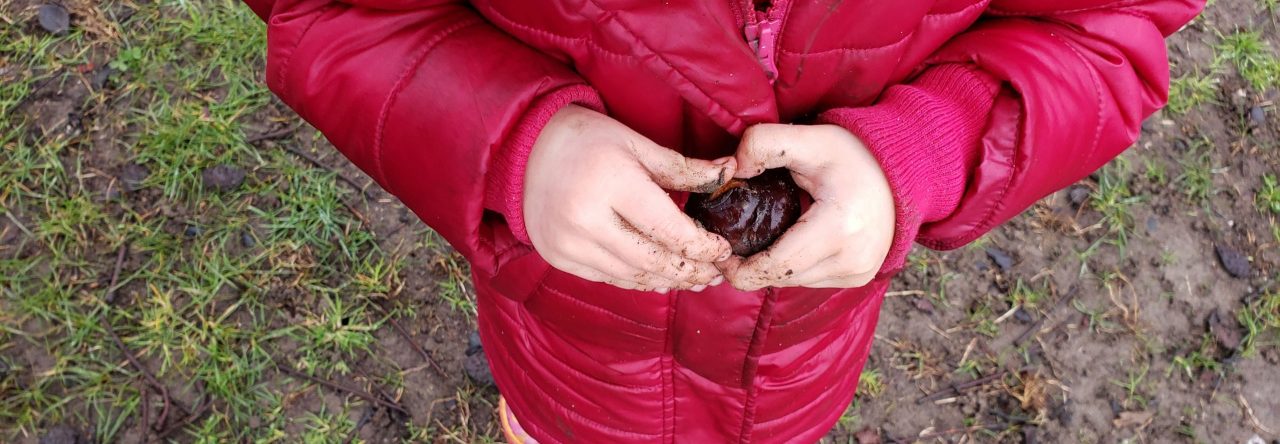
My kid doesn’t know that her soccer program was cancelled. All she knows is she’s going to be on a team. Maybe she’ll spend that time putting rocks down a drain or standing in a mud puddle. Maybe she’ll spend it running and playing. Maybe she’ll develop a love of soccer. Maybe she’ll refuse to go. Maybe she’ll make a friend. Maybe she won’t. That is not the point. The point is that she gets to try. She deserves to try. All kids deserve the chance to try.
So if you live near Vancouver, and you have a kid who wants to try adaptive soccer, contact hello@katiejameson and let’s try together. I can’t wait to see what happens.