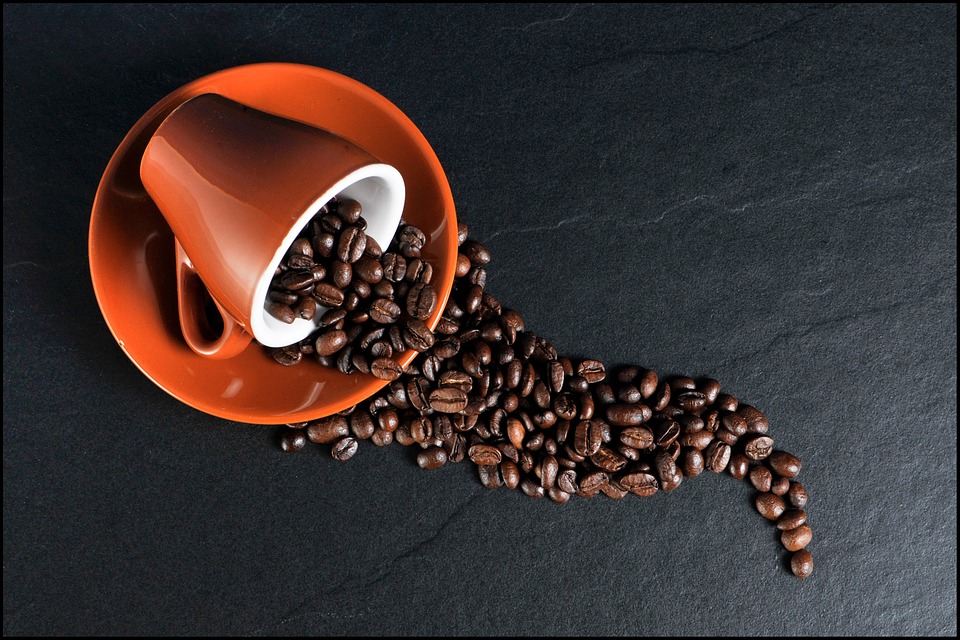
As an artist who makes most of their income from doing commissions for people on the internet, I drink a lot of coffee. It’s a workplace hazard at this point. Coffee is something society tends to take for granted – it provides a solution to the age-old issue of not having enough energy to make it through the day. It’s loaded to the gills with caffeine, a drug that inhibits the body’s ability to feel fatigue.
While the location of the original discovery of coffee is a topic of arguments between food historians, the most well-known story is as follows:
Coffee grown worldwide can trace its heritage back centuries to the ancient coffee forests on the Ethiopian plateau. There, legend says the goat herder Kaldi first discovered the potential of these beloved beans.
The story goes that that Kaldi discovered coffee after he noticed that after eating the berries from a certain tree, his goats became so energetic that they did not want to sleep at night.
Kaldi reported his findings to the abbot of the local monastery, who made a drink with the berries and found that it kept him alert through the long hours of evening prayer. The abbot shared his discovery with the other monks at the monastery, and knowledge of the energizing berries began to spread.
As word moved east and coffee reached the Arabian peninsula, it began a journey which would bring these beans across the globe. (National Coffee Association of the USA)
Regardless of where the coffee bean originated, it’s non-arguable that it spread across Europe and Asia like wildfire. Coffee houses began popping up across Europe, considered to be hubs where philosophers and intellects could gather and discuss their research and how to use it. Coffee shops weren’t considered for the everyman until much later, generally around the late 19th or early 20th century. Coincidentally, this was also around the time that full-time jobs with set hours were introduced to the workforce. It’s amazing that a beverage simply created by dripping hot water through roasted beans has cultivated the culture that it has.
 Coffee is best-known for being the life blood of employees and students alike, providing the small boost of energy often considered necessary to stay awake until the end of the day. It’s often found accompanied by baked goods, breakfasts, and homework packages across the globe. It’s often considered an acquired taste, which is ironic, considering the sheer quantity of people who drink more than one cup a day. It isn’t sweet on its own, instead having an earthy and bitter taste. Some prefer to leave it be, enjoying the strong flavour on its own. Most people (including myself) enjoy adding milk (or a substitute for it) in order to cut the bitterness. Some go even further and add sugar, essentially leaving it a completely different drink than before. It all comes down to personal taste.
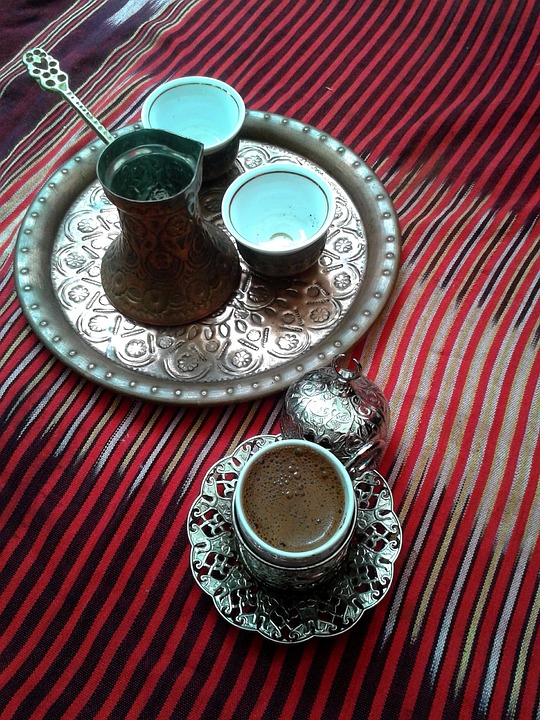 While its most commonly found in its basic form, coffee is very well-known for being incredibly versatile in its preparations. Espresso, lattes, americanos, and cappuccinos are all different forms of it. Different countries often have their own signature ways of preparing coffee, with Turkish coffee being a very famous example. It’s brewed in a special small pot called a cezfe – they’re much smaller than a coffee carafe and sport a long handle to prevent burning your hands. The grounds are left in, creating a very strong cup of coffee that’s often split between several people. It creates a communal experience, much akin to the traditional coffee houses of centuries past.
Did you know that espresso beans (typically) aren’t actually a separate type of coffee from the regular variety? It’s all in the preparation – instead of being dripped through the ground beans like regular coffee, espresso is created by blasting high-pressure hot water directly through them into the cup. The resulting blend tastes much stronger and condenses the caffeine into a smaller amount of liquid! Espresso lends itself well to milky drinks like lattes, as the full flavour can still be experienced without being watered down. It’s also often enjoyed on its own, though its quite bitter.
Coffee is quite unique in its universal importance to cultures across the globe. Most foods are concentrated to one or two specific areas, considered to be ethnic anywhere else. Coffee has found a home everywhere, its alluring energy providence and delicious aroma drawing everyone in. It’s versatile, it’s useful, and most of all, it just tastes good. I’m drinking coffee as I write this, if you can’t tell.
If you’re reading this, you’re probably a coffee-enjoyer-in-arms alongside myself. If you aren’t, I applaud your ability to maintain consciousness without aid. This would usually be the part where I’d urge you to try the food I’m talking about but when I say coffee is a slippery slope, I truly mean it. But hey, at least its tasty!
National Coffee Association of the USA. "The History of Coffee." Last accessed March 31 2023. https://www.ncausa.org/about-coffee/history-of-coffee Food & Wine. "Turkish Coffee isn't a Type of Bean, it's a Ritual." August 30 2022. https://www.foodandwine.com/coffee/how-to-make-turkish-coffee

