
Since Easter is right around the corner and everyone is preparing for Easter egg hunts and family meals, I wanted to introduce an important food associated to Easter for Portuguese people, massa sovada.
Massa sovada is a Portuguese sweet bread that originated in the Azorean Islands of Portugal. Traditionally the bread is commonly made for religious holidays like Easter and other celebrations. During Easter, many people bake sweet bread for their families and make different variations. One variation specific to Easter is, sweet bread that is baked with an egg on top and typically a dough shaped cross over it. This variation of the sweet bread is called Folar da Páscoa which translates to traditional bun of Easter. The egg represents the rebirth of Christ, and the bread is to represent the bread served at the last supper.1
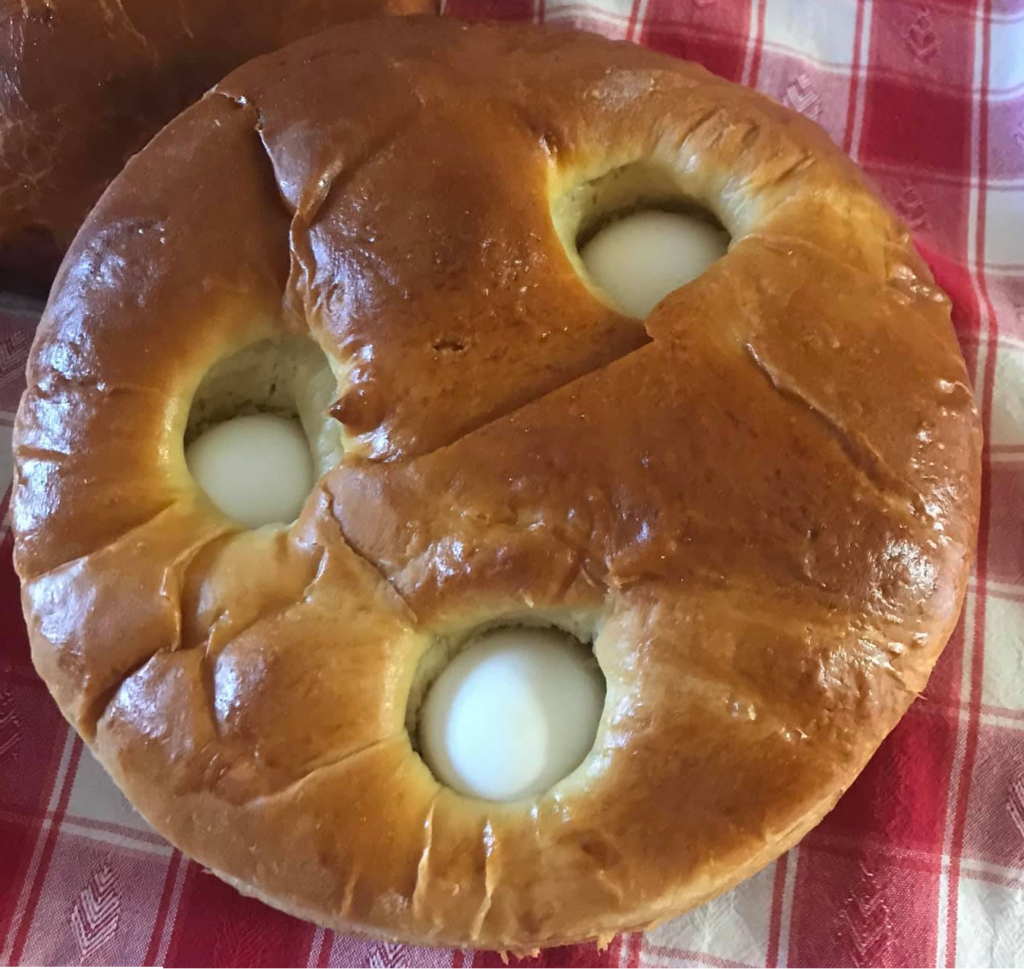
Massa sovada – home made sweet bread with whole eggs
Another celebration where the sweetbread is made and served is during the Festival of the Holy Spirit. During this festival, many Azorean people say prayers, attend a special mass and walk in a procession to honour the Holy Spirit and the crown of the Holy Spirit.2 These festivals are used to bring the community together and have a special meal in honour of the day. Portuguese sweet bread is baked and served as a dessert following the holy spirit soup or “sopas” (bread soaked in beef broth and mint leaves) as the meal of the celebration.3 The sweet bread is also given to each person to take home when they donate to the Holy Spirit.
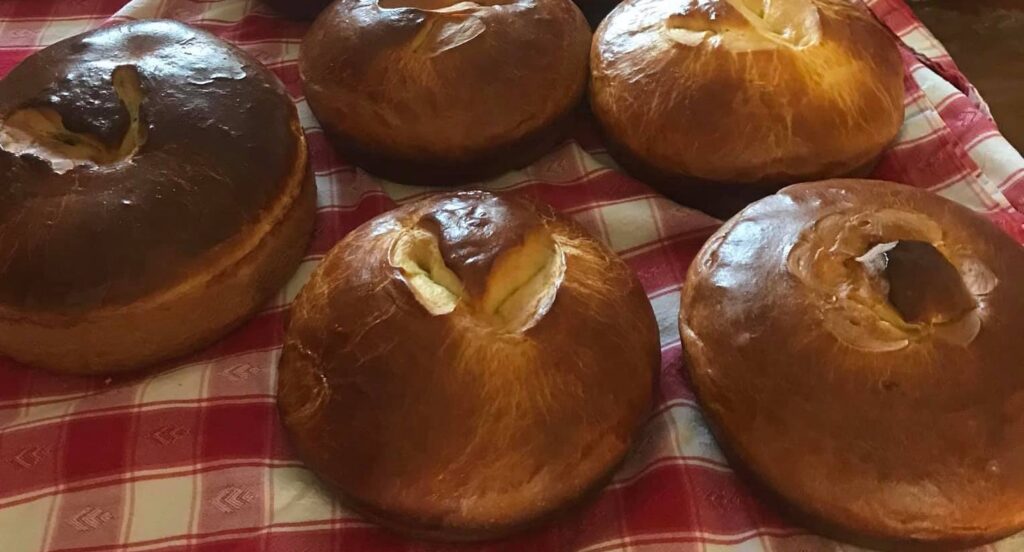
Sometimes different symbols will be cut in the top of the bread before they bake
While this sweet bread is traditionally made during certain times of the year. Many Portuguese households will keep some available as great accompaniment to coffee in the morning or as a sweet treat after dinner. Especially when it is fresh out of the oven, it is melt in your mouth delicious and great with some butter or jam spread on top. My family immigrated to Canada from the Azorean islands and have been a part of keeping these traditions alive in a new country. I have been privileged to experience these traditions and celebrations my whole life and regardless of when we make it, it is one thing that I have always loved to bake and eat.
Just this weekend I was able to keep this tradition alive and make the sweet bread with my mother. It brought me back to when I was a child making the bread with my grandmother, where we mixed the dough by hand, punched it so much that our arms hurt and shaped every bread perfectly for baking. It was amazing to relive those fond memories again and sneak a taste of the yummy dough. My mother and I have not made sweet bread in years but as Easter is approaching we decided to give it a shot and hopefully we can continue to keep this Azorean Portuguese tradition alive!
Each family makes this sweet bread differently and if you would like to make this delicious bread yourself follow the recipe and directions on this website. If you enjoy a hint of lemon in your baked goods, I recommend adding lemon zest or lemon extract to the dough and it will add the perfect amount of flavour. https://www.liveluso.com/post/massa-sovada-portuguese-sweet-bread
- “Masssa Sovada: Portuguese Sweet Bread.” https://www.liveluso.com/post/massa-sovada-portuguese-sweet-bread. Accessed April 3, 2023.
- Francisco Bethencourt. Cosmopolitanism in the Portuguese-Speaking World. European Expansion and Indigenous Response. (Brill, 2017.) https://search-ebscohost-com.ezproxy.kpu.ca:2443/login.aspx?direct=true&db=e000xna&AN=1613573&site=ehost-live&scope=site. Accessed April 3, 2023.
- Bethencourt. Cosmopolitanism in the Portuguese-Speaking World.https://search-ebscohost-com.ezproxy.kpu.ca:2443/login.aspx?direct=true&db=e000xna&AN=1613573&site=ehost-live&scope=site [accessed April 3, 2023.]
Bibliography: Bethencourt, Francisco. Cosmopolitanism in the Portuguese-Speaking World. European Expansion and Indigenous Response. Leiden: Brill, (2017) https://search-ebscohost-com.ezproxy.kpu.ca:2443/login.aspx?direct=true&db=e000xna&AN=1613573&site=ehost-live&scope=site."Masssa Sovada: Portuguese Sweet Bread." LiveLUSO. https://www.liveluso.com/post/massa-sovada-portuguese-sweet-bread. Accessed April 3, 2023.

