
by Jennifer Hayward and Iuliia Astashova
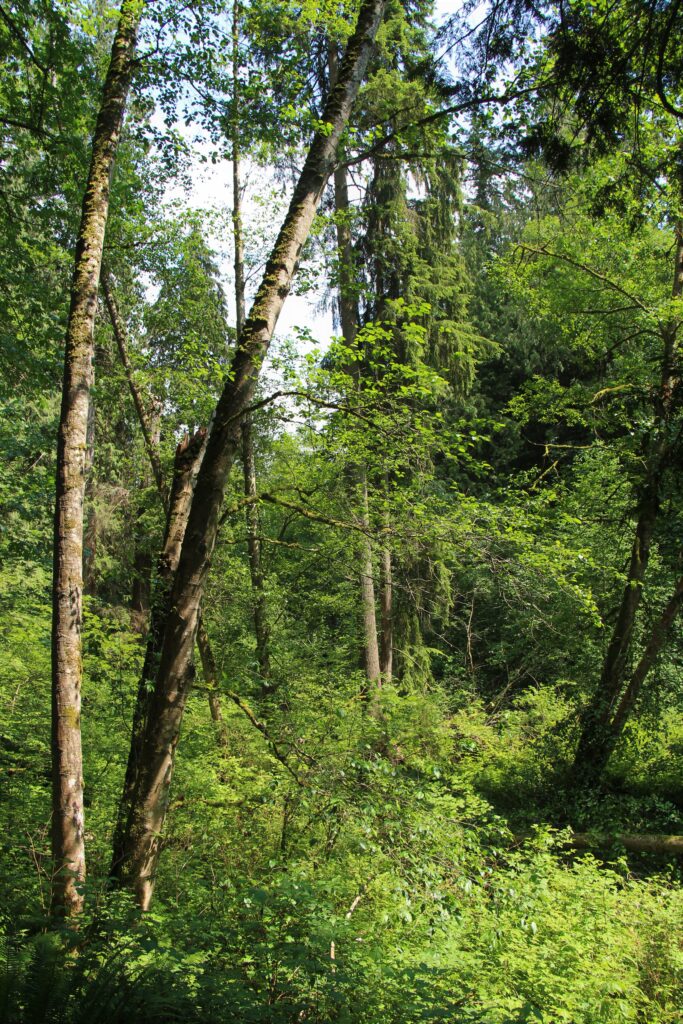
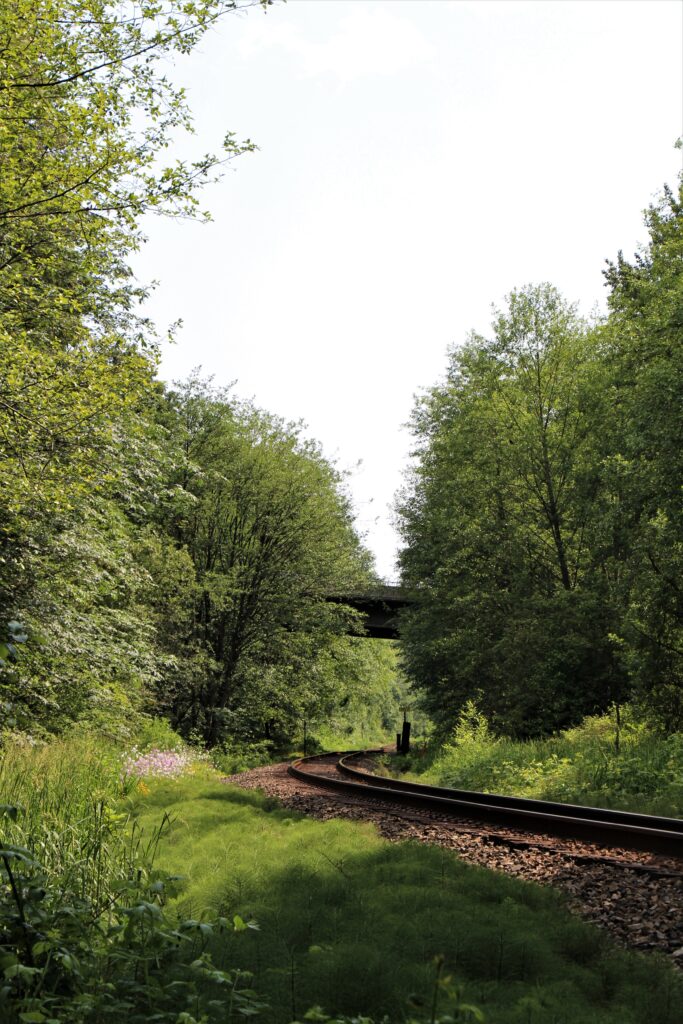
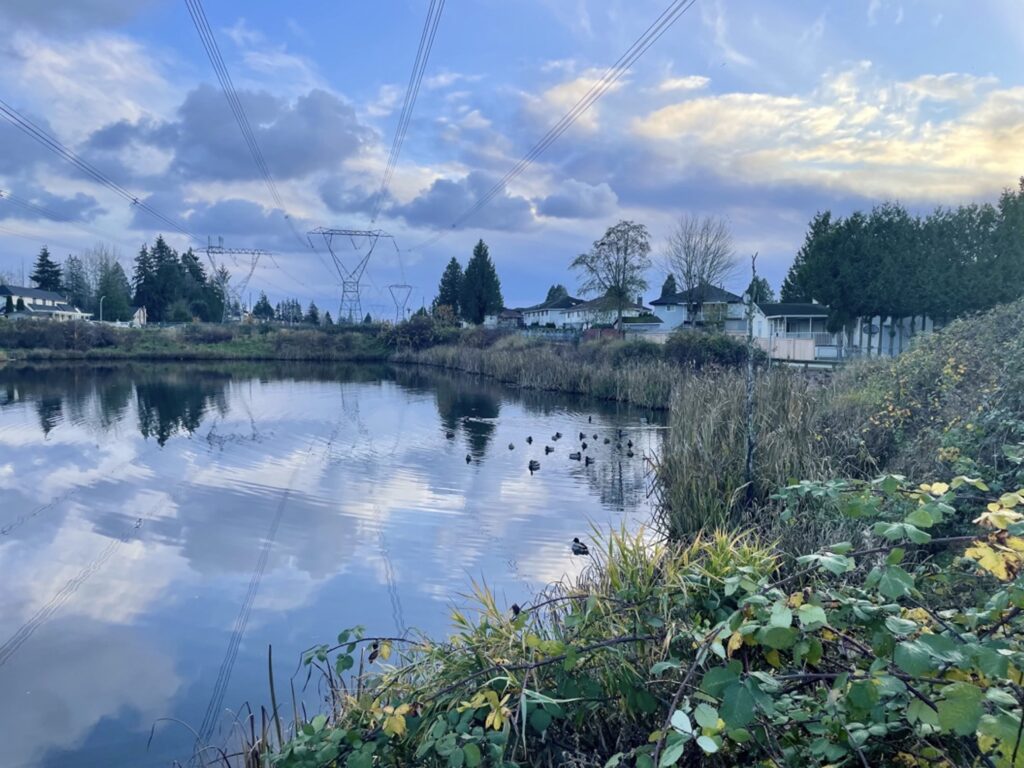
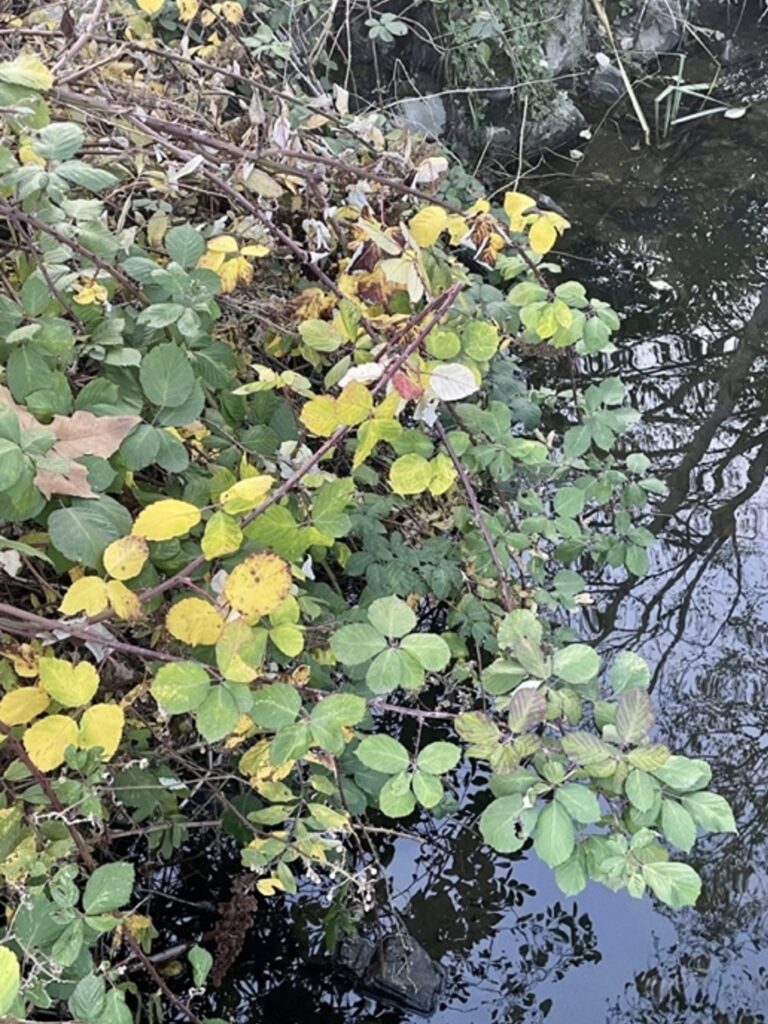
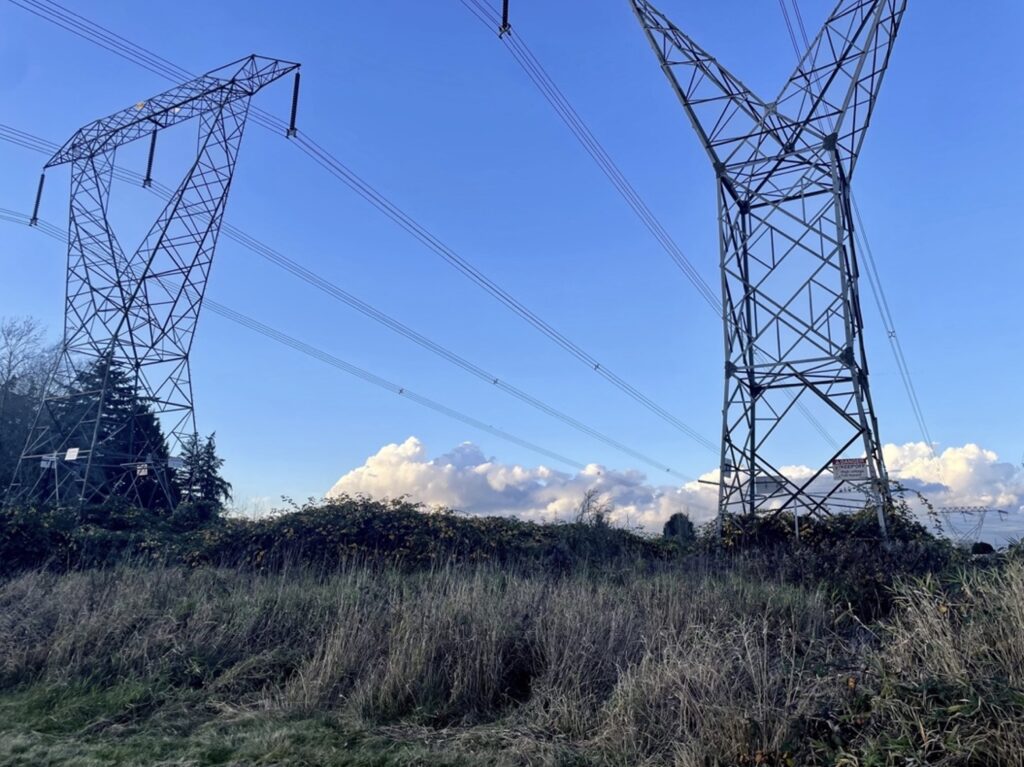
A short walk from KPU is a tranquil pathway lined with shrubs and trees. Amid the busy city this is a place to enjoy birdsong and reconnect with nature. Transmission towers are a distinguished feature of the greenway. This unique urban corridor thrives with native flora and fauna alongside Himalayan blackberry.
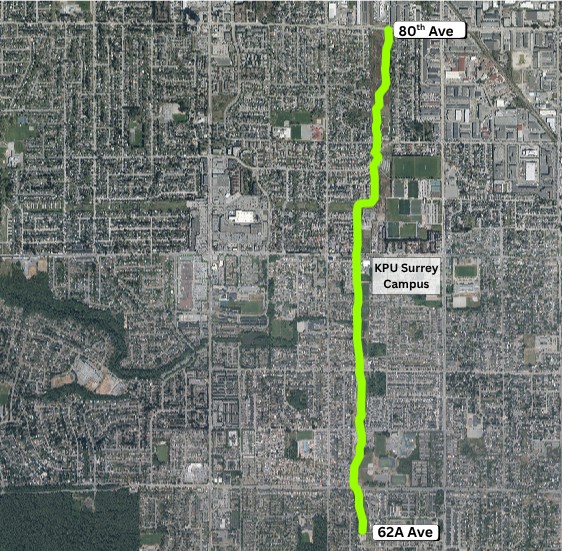
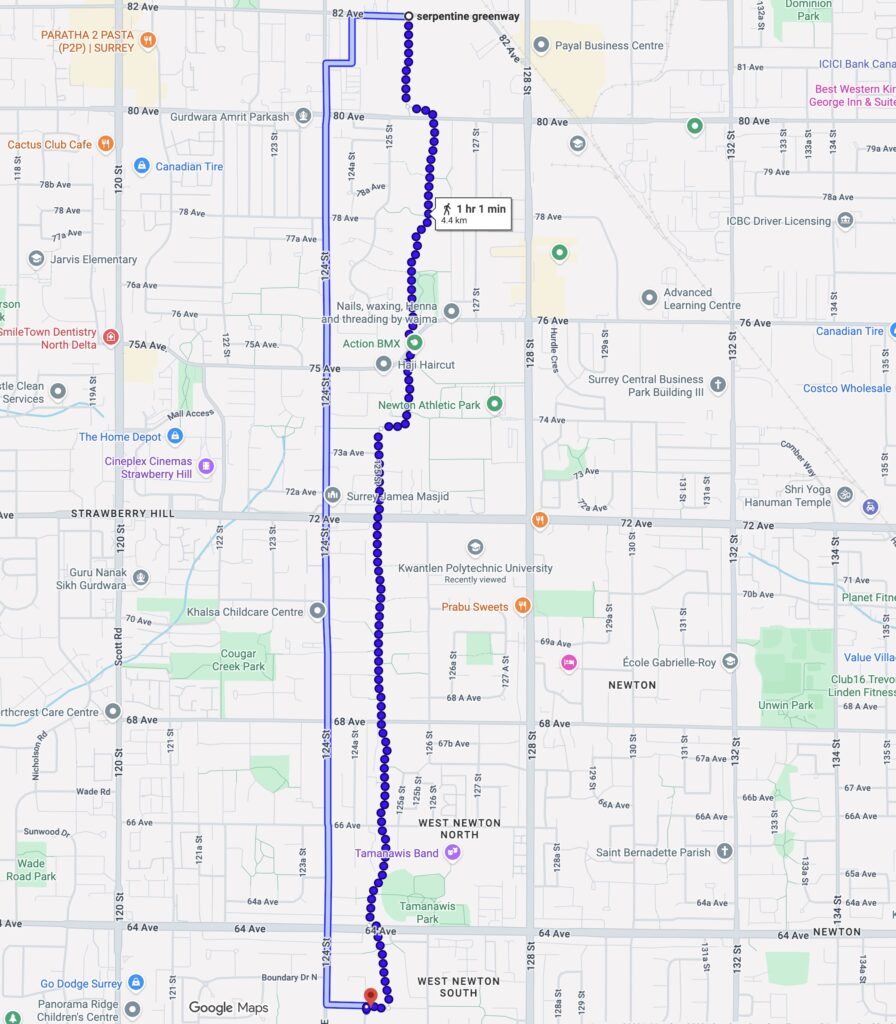
The Newton Greenway is a multi-use pathway that stretches from 62A Avenue to 80th Avenue in Surrey. Originally a small gravel trail through thick brush areas, past farmland and pastures, it was used by locals as a walking and biking trail (Surrey Parks, Recreation and Culture Commission Report, 2001).
History of Newton Greenway
As use of the trail increased over time the trail was made part of the city of Surrey’s Greenway Program, introduced in 1996, to develop major greenway connections throughout the city. In 2001, a partnership between BC hydro and Surrey Parks, Recreation and Culture developed the section between 66th and 68th Avenue at 128th Street with interpretive signage. By 2014 with the City of Surrey’s Biodiversity Conservation Strategy, the Newton Greenway became part of the Green Infrastructure Network (GIN) interconnecting with 3,900 hectares of natural areas and green space corridors within Surrey (City of Surrey, 2024). In the past it has gone by the name Serpentine Greenway, likely due to its proximity to the Serpentine River watershed (Pamela Zevit, City of Surrey).
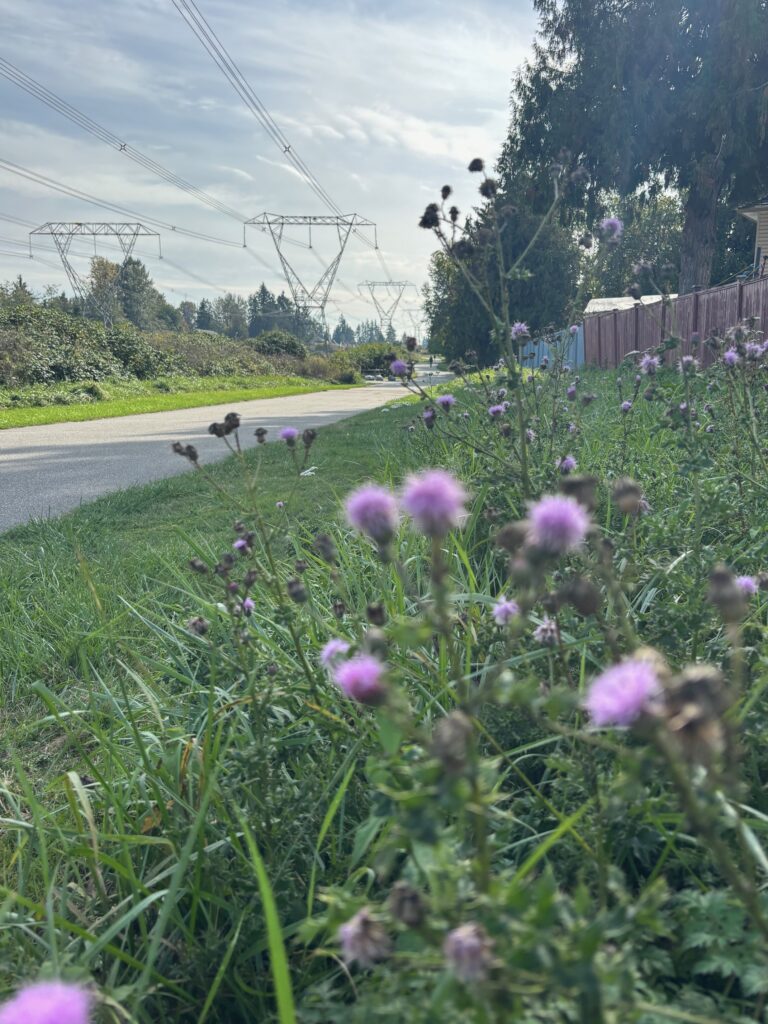
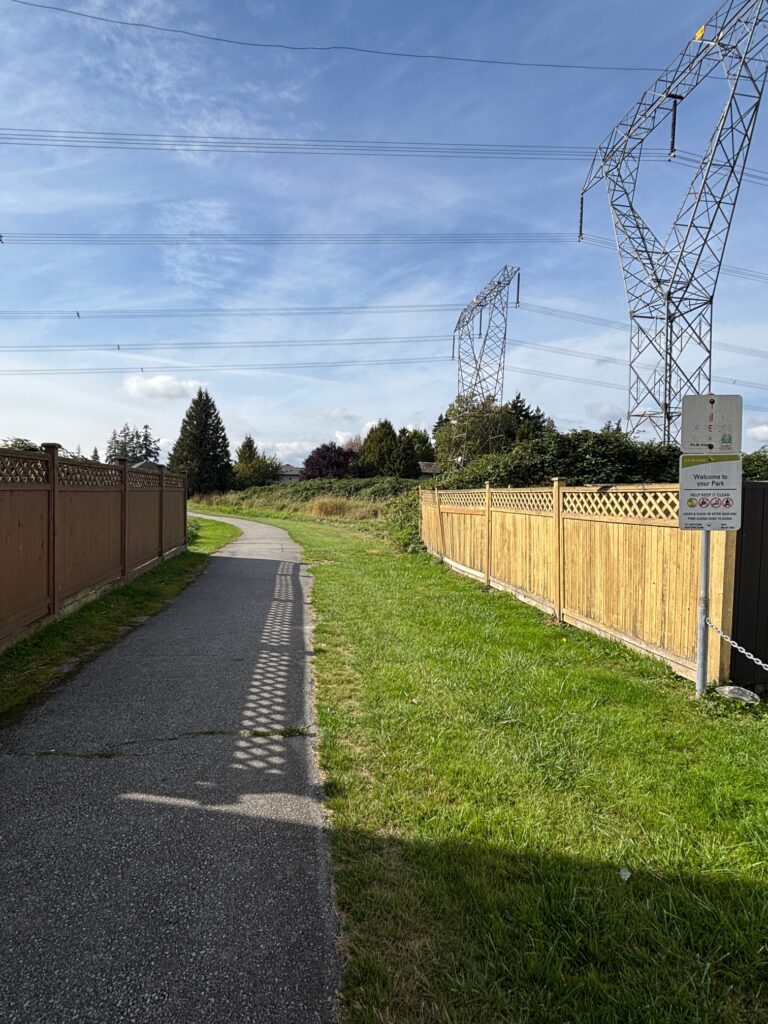
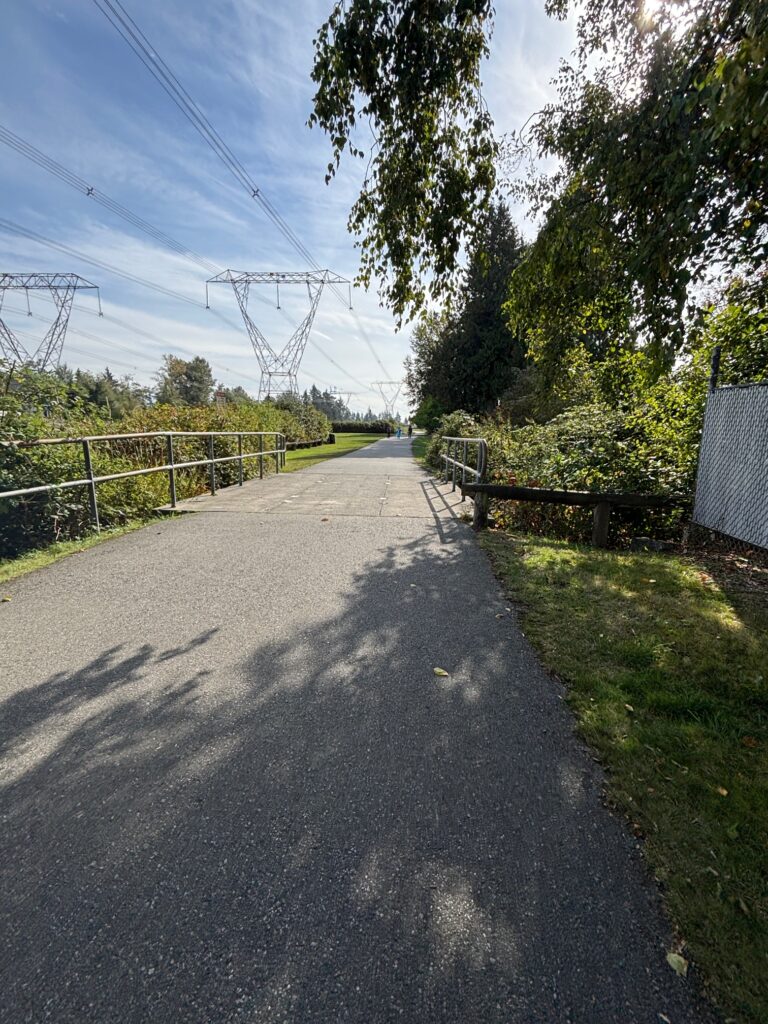
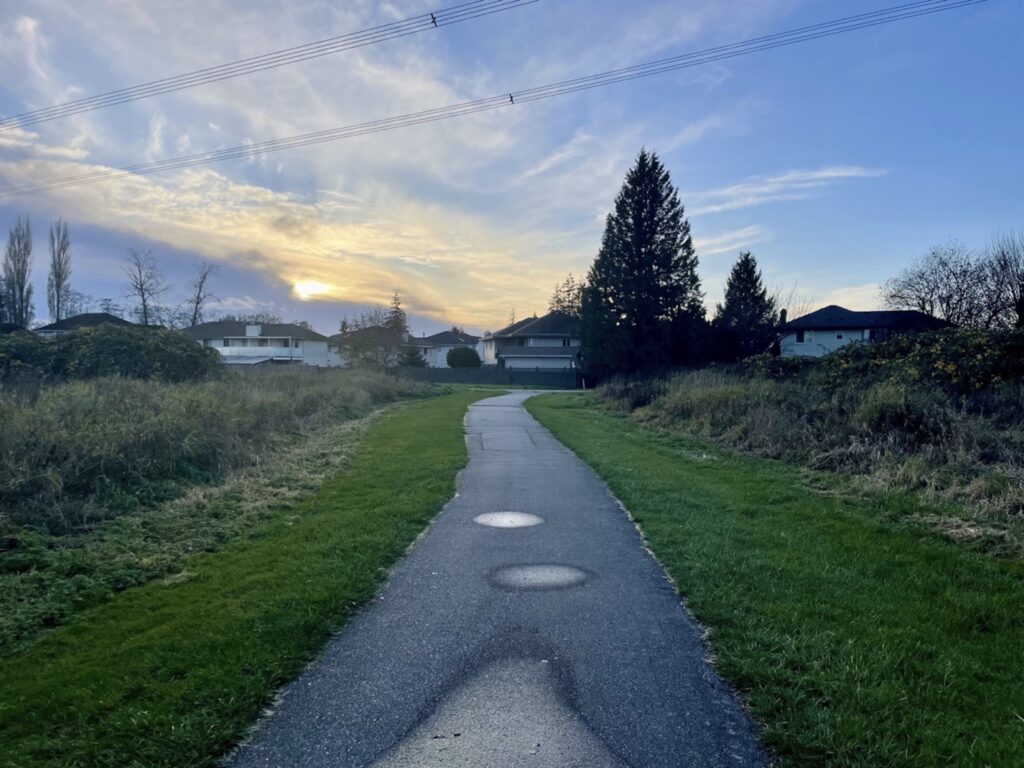
Today you find a wide paved path nearly four kilometres long. Accessible for walking, cycling, rollerblading or a picnic near the pond. This greenway provides a walking route one-step removed from congested roadways and noise pollution. The trail follows the BC hydro corridor and is set into a grassy field amongst residential housing. There are several entrances to the greenway, marked with signage for easy access.
Biodiversity and Stormwater Ponds
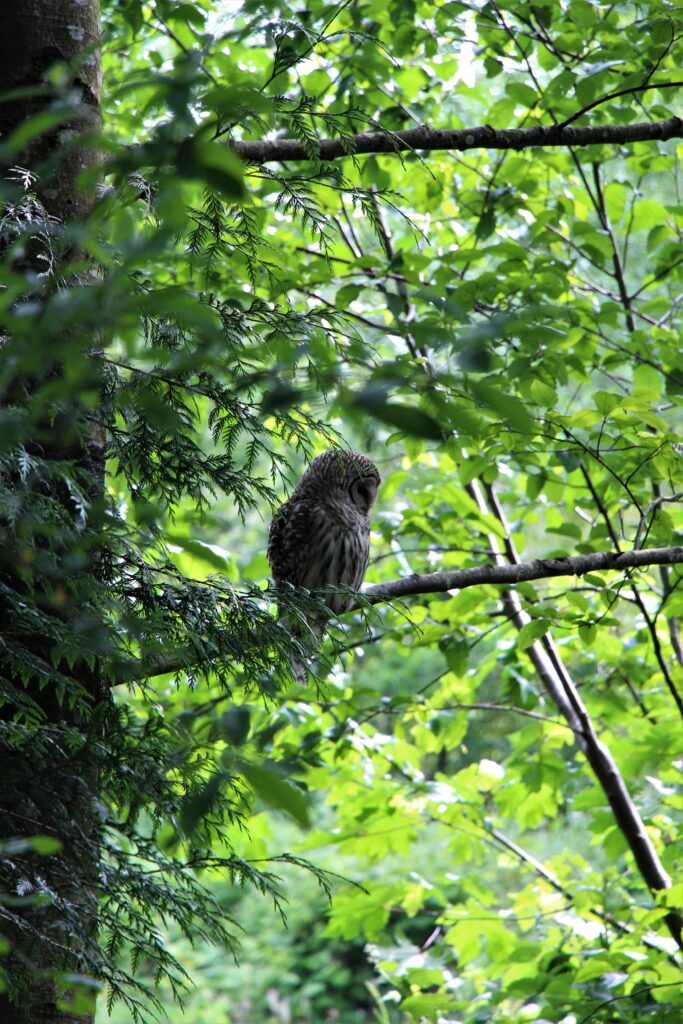
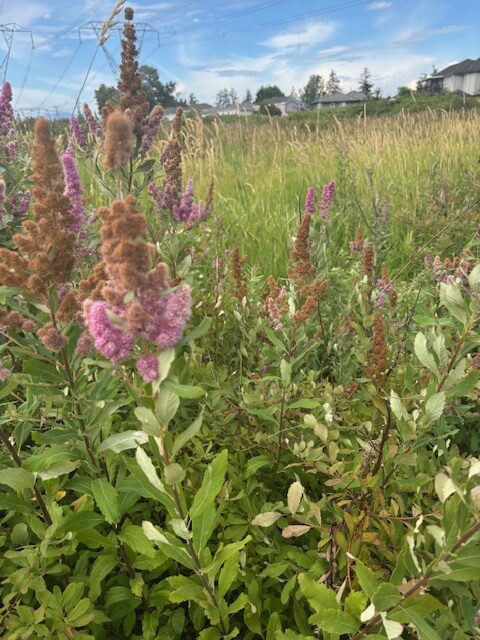
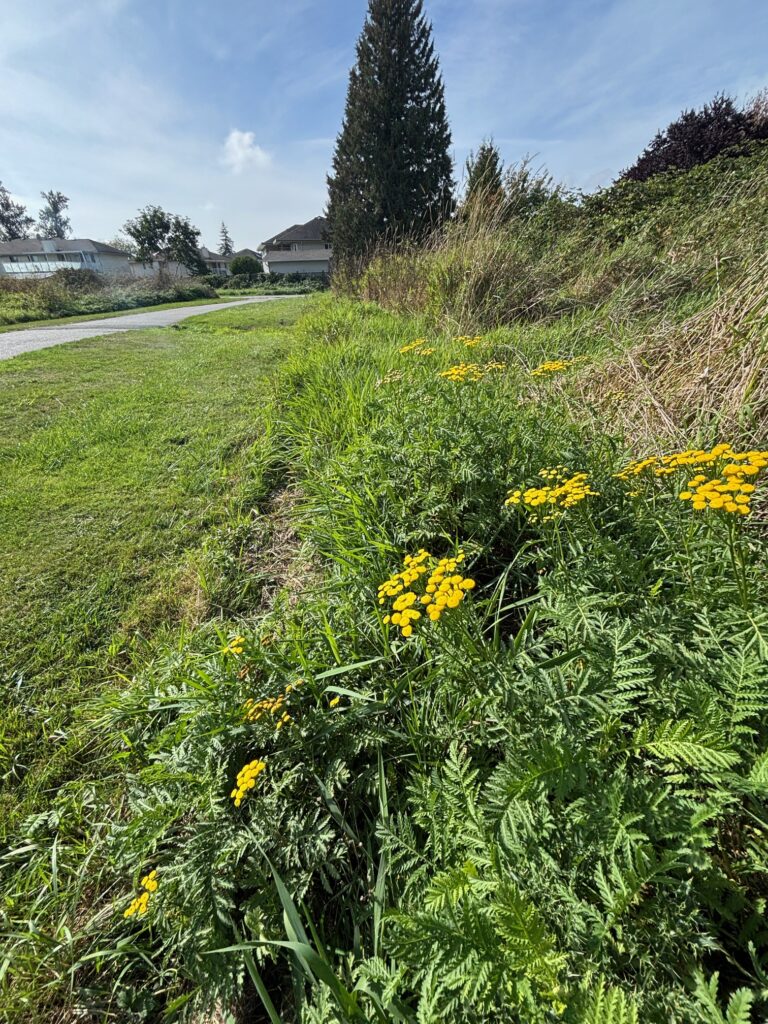
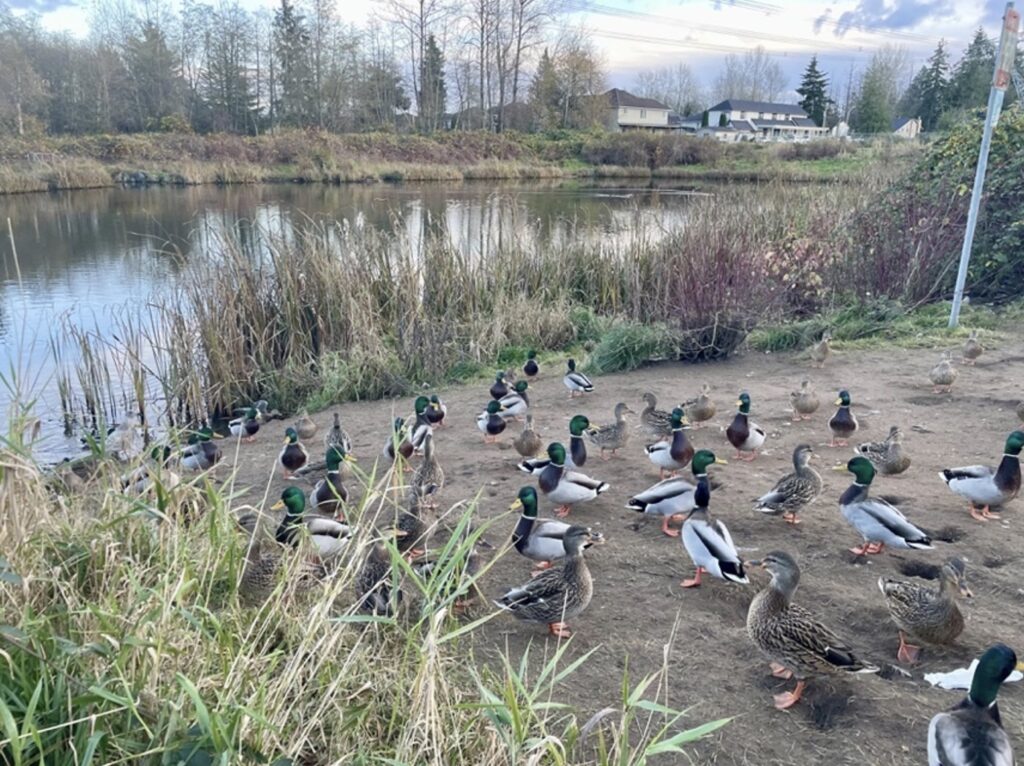
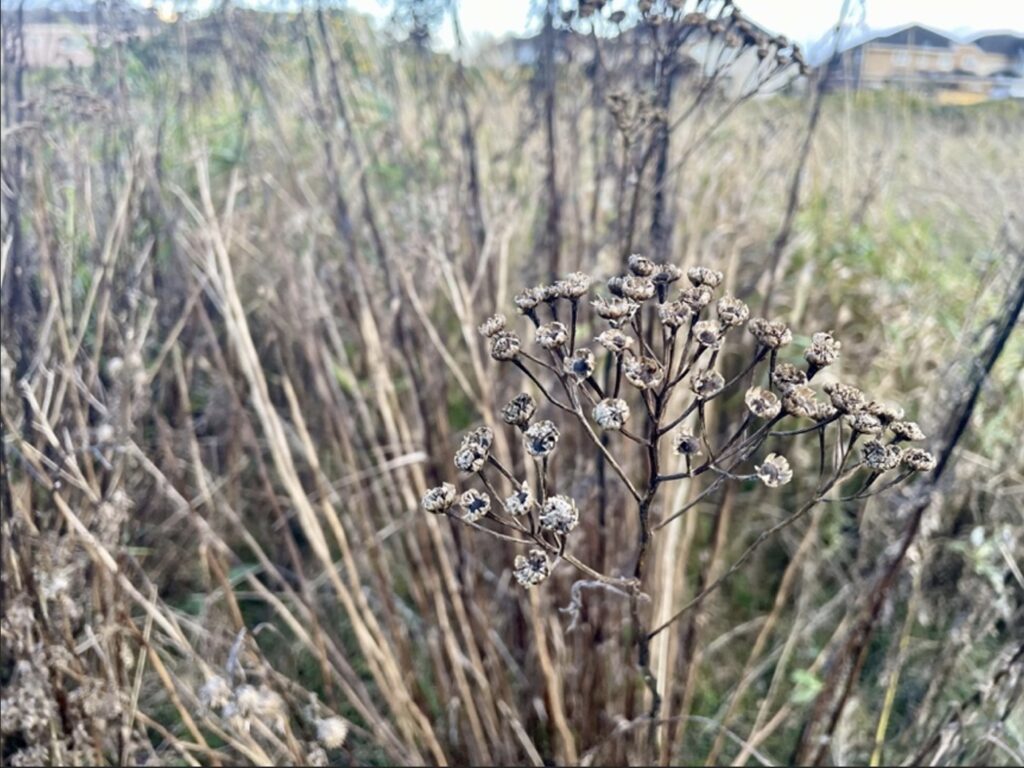
There is a diverse variety of plants such as hardhack, red twig dogwood, Douglas-fir and Western red cedar, in addition to the invasives common tansy, hemlock, reed canary grass, Himalayan blackberry, and cow parsley. Animal species you might encounter include gulls, mallards and other ducks, various songbirds, and the occasional great blue heron. Beyond its recreational value, the greenway serves as an excellent outdoor learning environment for studying local ecosystems and biodiversity (Iuliia Astashova, Wild Spaces arts practicum student in 2024).
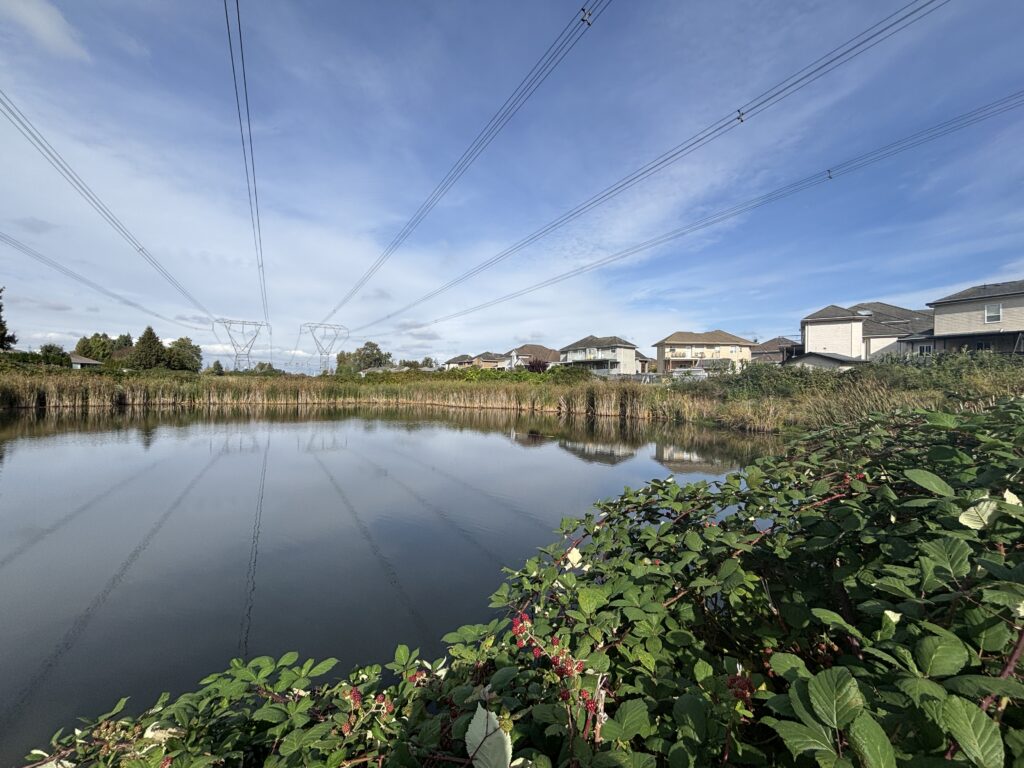
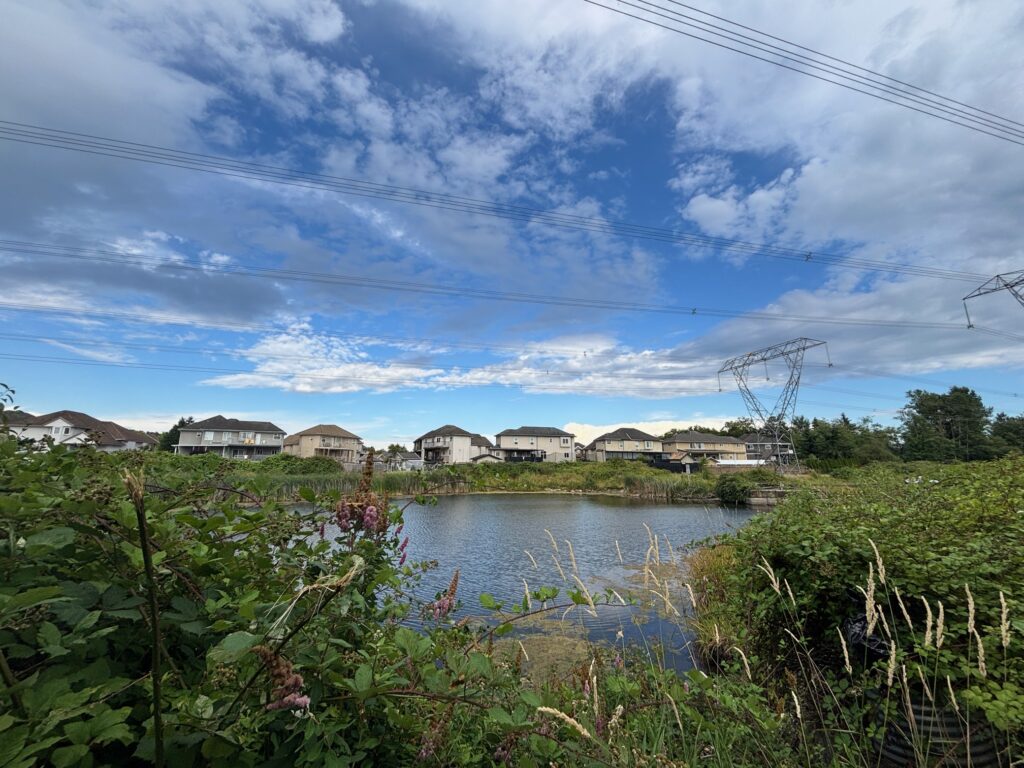
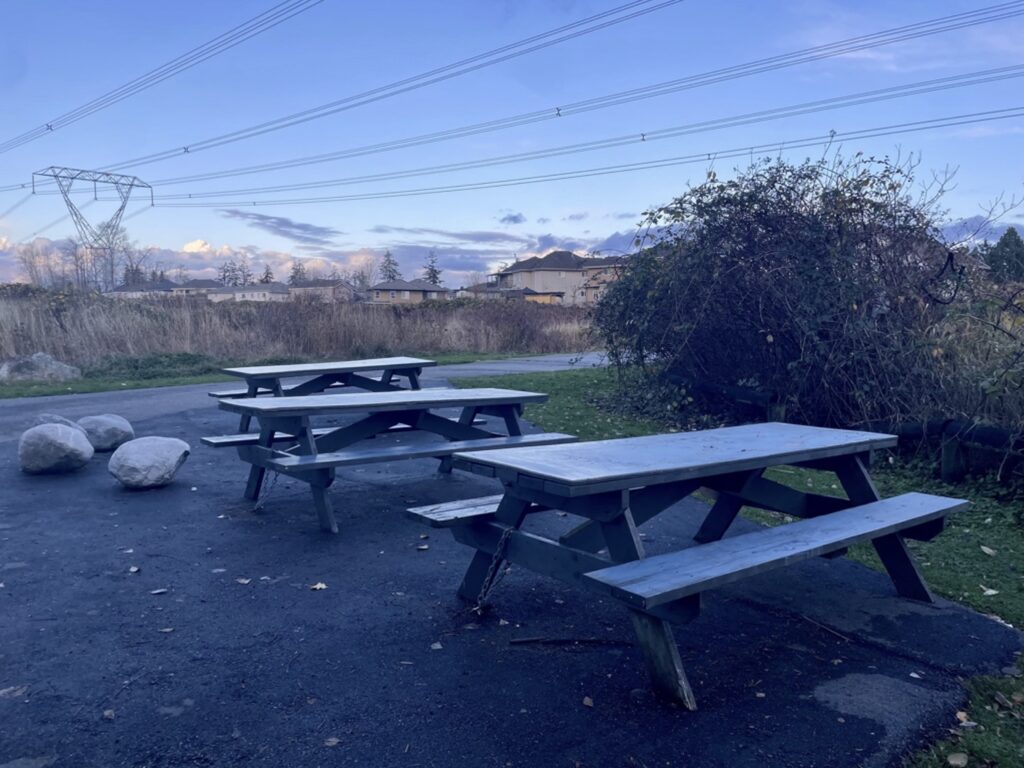
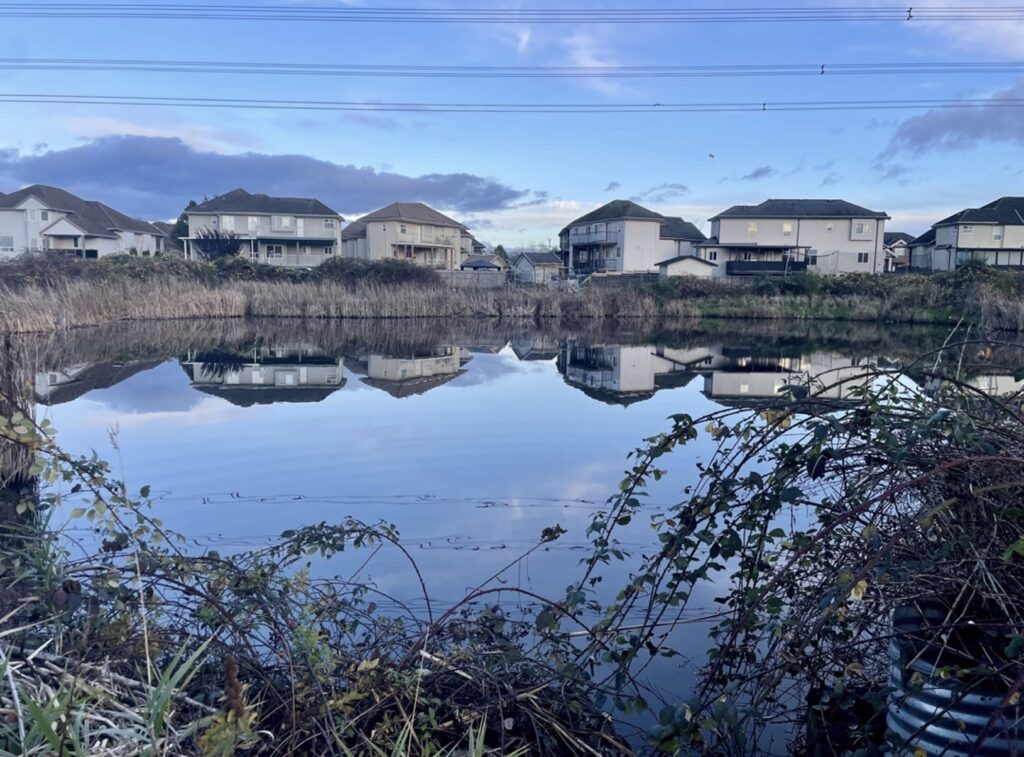
Two stormwater ponds can be found between 70th Ave and 68A Avenue. You will find designated picnic tables and benches to sit near the pond and enjoy the view.
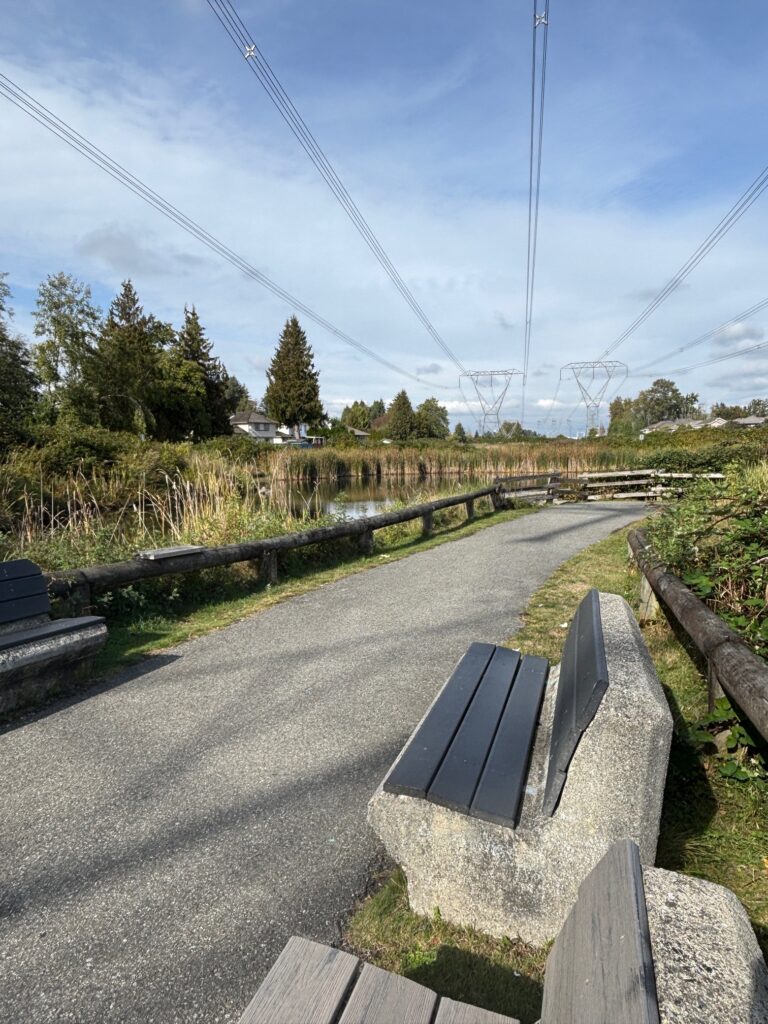
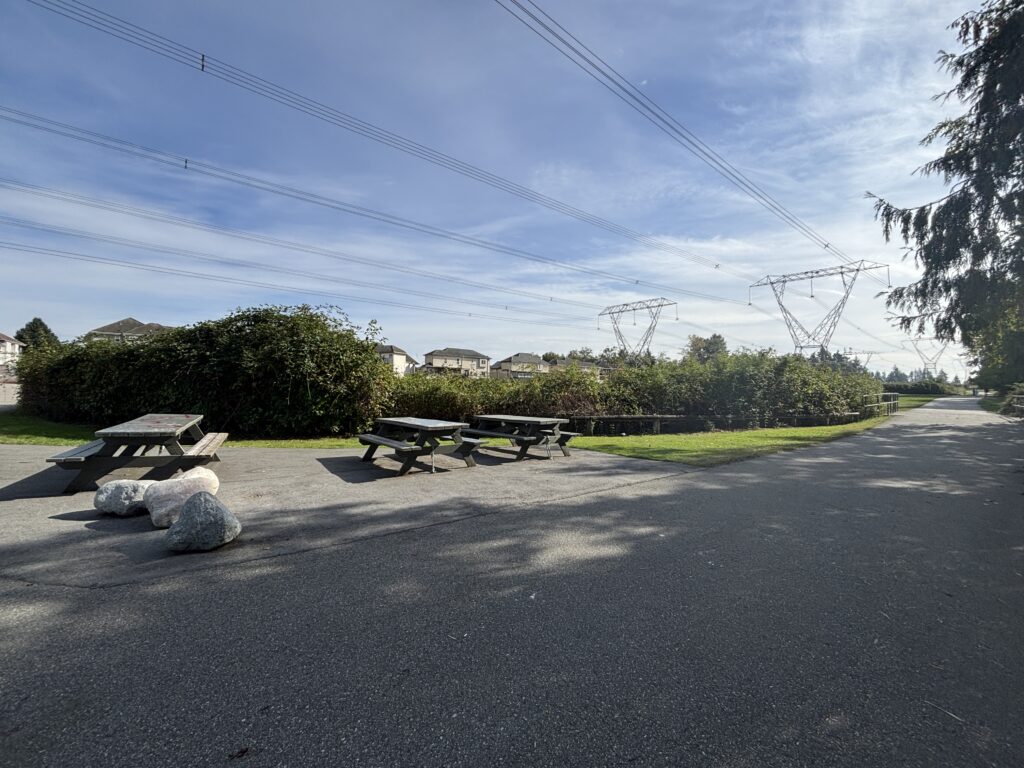
The stormwater ponds along Newton Greenway support biodiversity, acting as habitats for birds, amphibians, and aquatic plants. Surrounding the edges of the water are grasses that shelter ducks from prey and provide nesting grounds. Frogs—likely including invasive bullfrogs—hunt for insects, hide, and lay their eggs among the grasses. Bullrushes found by the ponds are used traditionally in Indigenous cultures. The stems of bullrushes are strong and flexible and used for weaving ceremonial mats, baskets, lining the inside of canoes. Additionally, many parts are harvested as a food source.
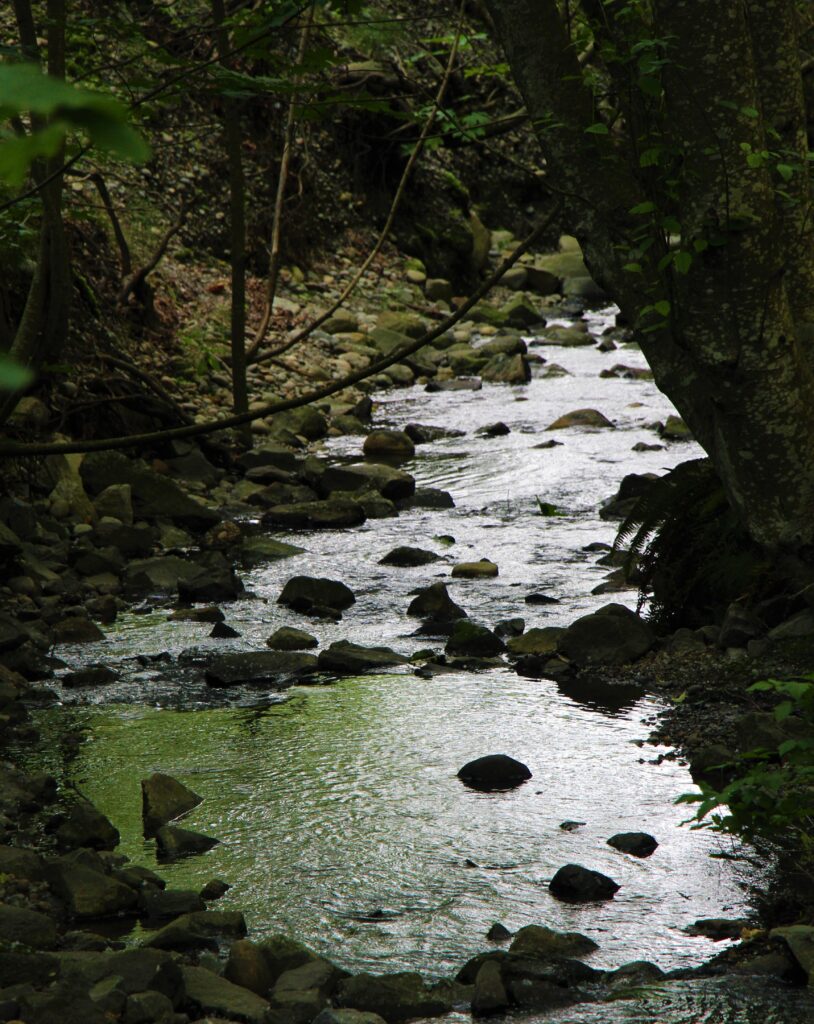
The ponds also help with stormwater management by naturally filtering runoff and decreasing the risk of flooding while improving water quality. The water from the ponds flow into nearby Cougar Creek, a salmon bearing stream part of a great network of waterways that flow through Surrey and North Delta and into the stɑl̓əw̓ / Fraser River. The Cougar Creek Streamkeepers is a group dedicated to restoration and maintaining the health of the stream.
Walking Newton Greenway
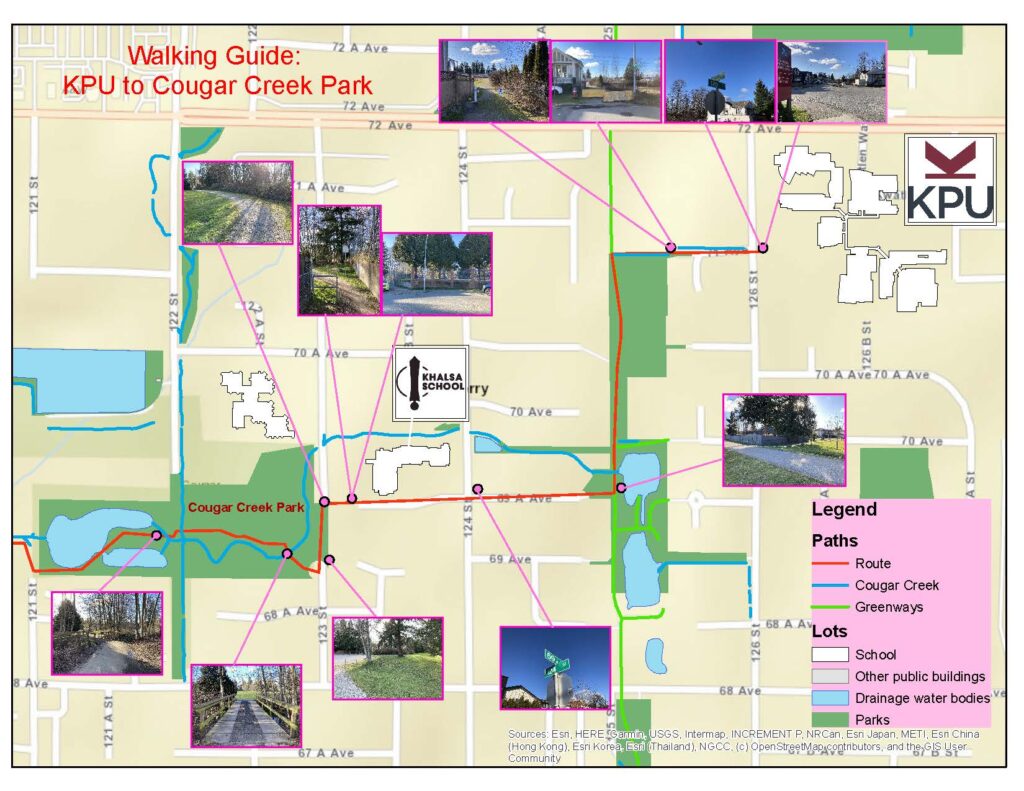
In October 2025, Jenn Hayward walked a section of Newton Greenway. Her reflections:
I entered off 70A and 126th Street and turned onto the trail to find a far-reaching path. The hydro towers were offset to one side of the trail, with long cables high up against the blue sky, with only a few clouds. Small yellow flowers poked out among the grass. Looking out over a large pond, the water reflecting the landscape, I was reminded of a passage from Robin Wall Kimmerer’s book, Braiding Sweetgrass. She writes:
“..in Native ways of knowing, human people are often referred to as “the younger brothers of Creation.” We say that humans have the least experience with how to live and thus the most to learn—we must look to our teachers among the other species for guidance. Their wisdom is apparent in the way that they live” (Kimmerer, 2013, p. 9).
In this way, everything in nature has a way of knowing. Fungi form vast mycorrhizal networks underground with tree roots to communicate and share resources. Bees dance and birds fly in formation when it is time to migrate. Nature has deep wisdom and much to teach us when we listen.
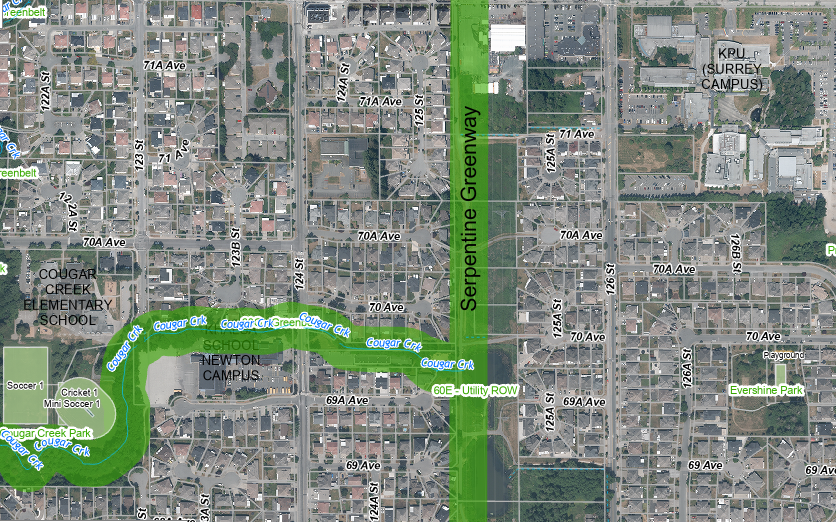
A Note for Teachers (by Lee Beavington)
The Newton Greenway runs parallel to KPU Surrey. This makes the greenway an accessible field trip for university students and those in surrounding schools. In addition to the benefits of getting outside the classroom—increased focus, engagement, and physiological health—there is an opportunity for place-based pedagogy. Students can engage in experiential learning related to their area of study.
Some examples:
| Department | Educational Topics to Explore |
|---|---|
| Biology | local flora, fauna, and funga; ecology, animal behaviour, population estimates |
| Geography | hydrology, urban spaces, and urban planning; socio-spatial geography |
| Creative Writing | inspiration for setting and stories/poetry; attuning to the senses for imagery |
| Psychology | ecopsychology and nature’s effects on the mind; science of wellness |
| Criminology | green criminology, environmental / climate impacts, multi-species justice |
| Journalism | local stories, field reporting, photojournalism, video journalism, personal essays |
Students can also be encouraged to engage in reciprocity by helping care for the greenway through garbage pickup, working on projects that connect local community to this space, collecting data on biodiversity, and reporting on invasive species. Local community science efforts can be supported by using tools such as iNaturalist and eBird to contribute observations. Learn more about using iNaturalist on the City of Surrey website.
Not sure how best to take your class to the Newton Greenway? Looking for ways to connect this experience to specific goals and learning outcomes? Contact Wild Spaces for a consultation.
Additional photos from Iuliia Astashova:
References
City of Surrey. (2024, March 4). Biodiversity conservation. https://www.surrey.ca/biodiversity
City of Surrey. (2012, May). Greenways plan. Surrey. https://www.surrey.ca/sites/default/files/media/documents/GreenwaysPlan.pdf
Kimmerer, R. W. (2013). Braiding sweetgrass: Indigenous wisdom, scientific knowledge and the teachings of plants. Milkweed.