Place-based Education with an Indigenous Lens
What?
Place-based education connects learners to the local community or environment through site visits, field trips, community service, or other experiential learning. An Indigenous lens brings forward responsibility and reciprocity and recognizes the ongoing effects of colonization.
Why?
Studies show that place-based learning boosts learner agency, heightens focus, increases instructor and student enthusiasm, and builds community and civic engagement. Both health and academic performance also benefit. Decolonizing educational practices involves examining our own biases, and is an important step in reconciliation.
How?
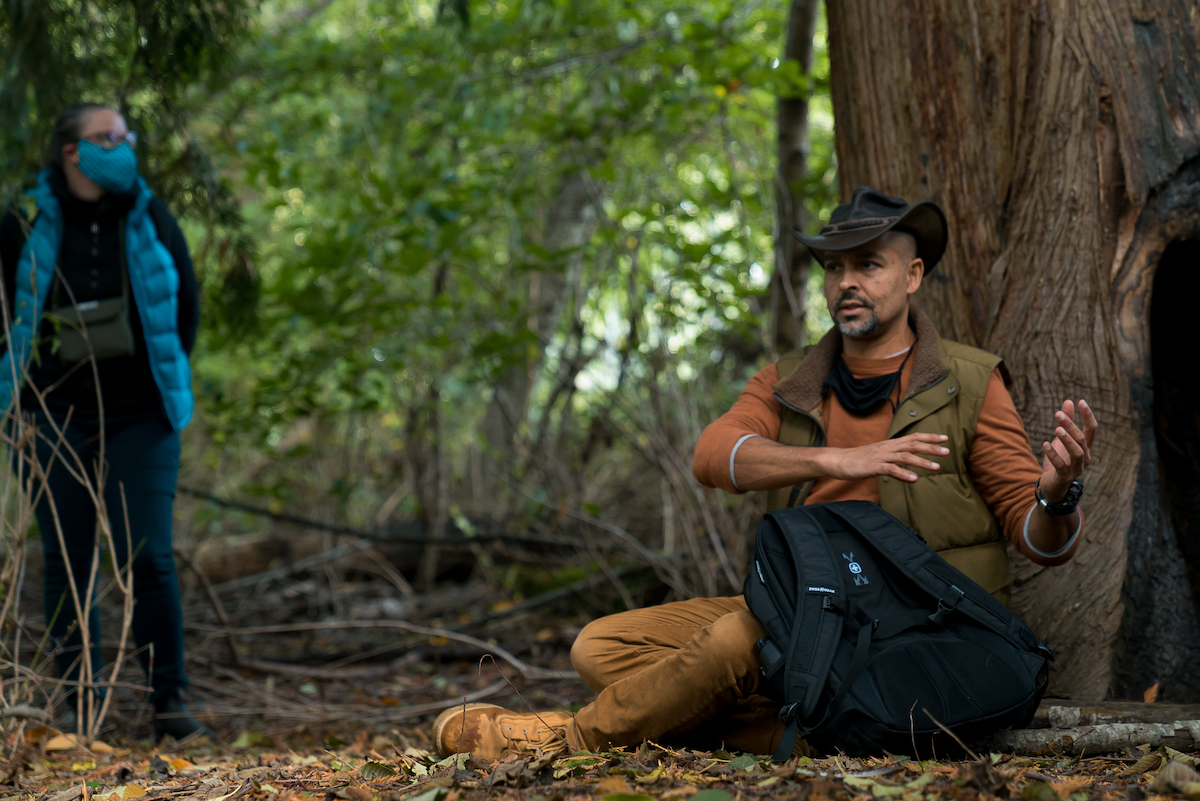
Learning happens in a location relevant to the topic or theme. This may be facilitated by an intentional visit to a local ecosystem, community organization, or First Nations’ territory. Place-based learning is process-focused and learner-centered, where the environment or land becomes vital to the learning experience.
Education is tied to place; the two cannot be separated.
Jo chrona
What is Place-based Education?
This resource on place-based education (PBE) provides an overview of this teaching approach, with clear connections made to the importance of Indigenous ways of understanding and decolonial practices. PBE takes teaching and learning into environments germane to the topic or class theme, and shifts students from consumers of knowledge to creators of knowledge.
Community building, learning about self, and holistic learning are central to this work. Supported by evidence-based research and a glossary, this website outlines the benefits and provides clear implementation strategies. The reader will also find PBE examples taught at KPU and a detailed resources page. Reflection questions are given throughout.
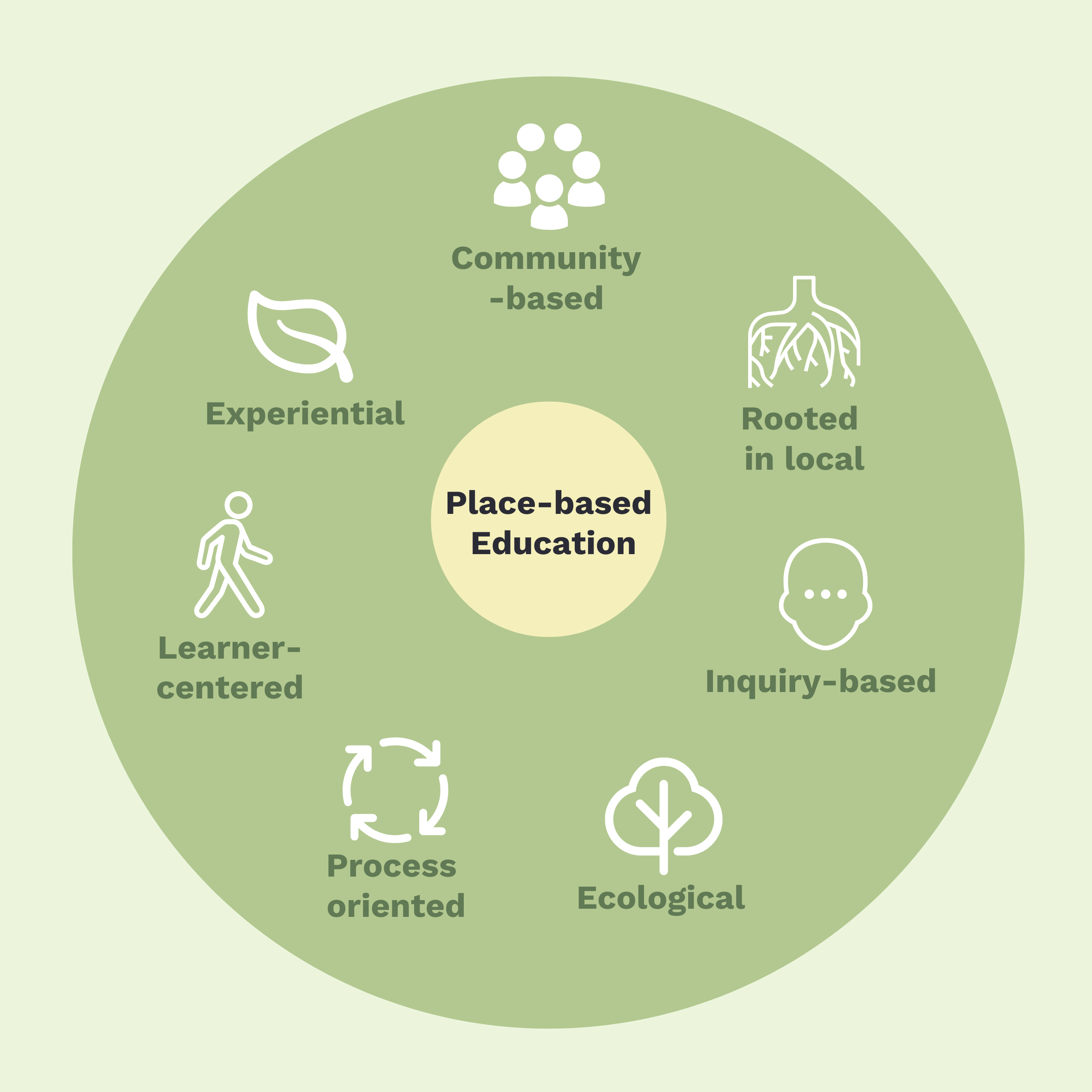
left: Common elements of place-based education. Created by Lee Beavington.
Key Aspects of Place-based Education
Rooted in the local
Learning experiences occur in locations that hold meaning to the learner and community, often with applications to global issues.
Community-based
The community—both human and more-than-human—take a central role in the learning process, and learners become active in the community.
Experiential
Students learn through direct experience and reflect upon these experiences.
Learner-centered
Student curiosity and engagement are encouraged, and learners take an active role in co-creating the experience.
Process-oriented
The direct experience, community connections, and student inquiry are emphasized and valued more than lecture or content.
Relationship building
Reciprocal connections are fostered with natural environments, local communities, or knowledge keepers.
Why not replace textbooks with communities?
Imandeep Grewal, Director of the Office for Place-Based Education at Eastern Michigan University
Place-based Education in Practice
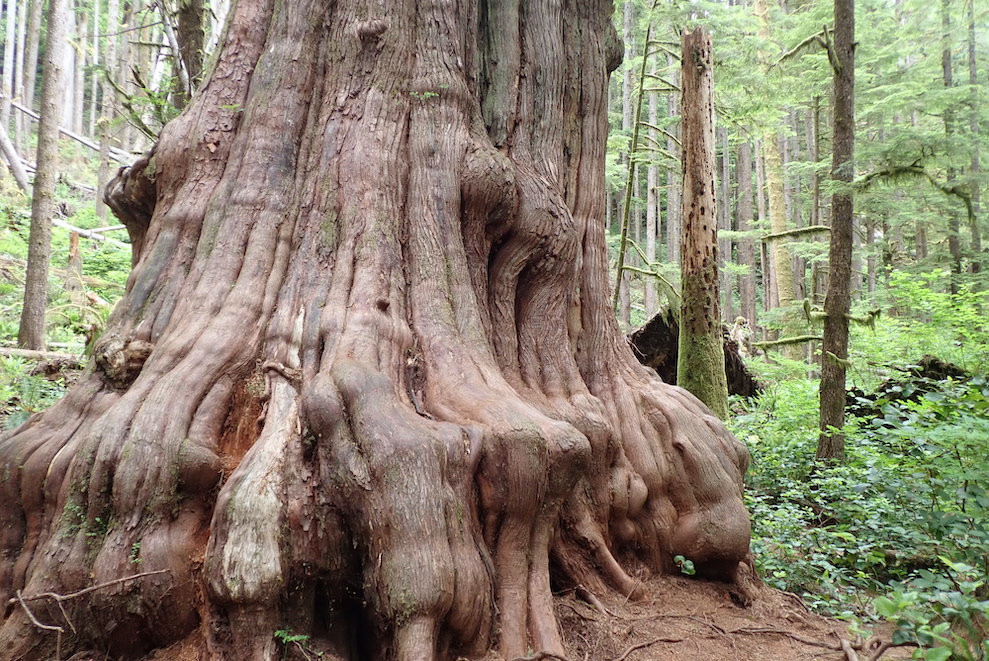
Place-based learning can take many forms. A field trip to the river to learn fluvial geomorphology, consulting with a local knowledge keeper to learn traditional ecological knowledge, walking city streets to learn urban planning, visiting a local business to better understand business management, exploring the university campus to assess and improve accessibility, going to a forest—or a single tree on campus grounds—to learn plant biology, taking the telescope outside during a full moon to study astronomy, campus as a living lab, volunteering to clean up and pull invasive weeds from a shoreline to practice sustainability. These are all examples from KPU.
The community or environment where place-based learning occurs should not simply be a backdrop or static companion. Rather, as Robin Wall Kimmerer writes in Braiding Sweetgrass: “We don’t have to figure out everything by ourselves: there are intelligences other than our own, teachers all around us.” Thus to engage in land-based learning, or the Wild Pedagogies idea of nature as co-teacher, you go with respect to the river to learn fluvial geomorphology from the river, go to the forest to learn plant biology from the forest, clean up the shoreline and learn sustainability from the water and the weeds. This underscore the reciprocal nature of PBE, and the agency of both the learner and the subject. The teacher becomes less an expert, and more a storyteller or mediator between students and place.
Land-based engagement is the work of Indigenous educators with deep connections to cultural spirituality, Elders, oral stories, and/or traditional ecological knowledge. Place-based education is a term with a larger umbrella, more broadly applicable to Indigenous and non-Indigenous folks alike.
However, land-based and place-placed learning are both pedagogies of place: they aim to build community through hands-on experiences outside the classroom in local environments. The textbook, PowerPoint, lab, or other more conventional instructional materials are exchanged for community members, local knowledge keepers, the mountain, forest, or waterways, or even a field or city streets.
The importance of linking education to the physical and cultural environment in which students and schools are situated has special significance in Indigenous settings, where people have acquired a deep and abiding sense of place and relationship to the land in which they have lived for millennia.
Ray Barnhardt and Angayuqaq Oscar Kawagley
Positionality and Intention
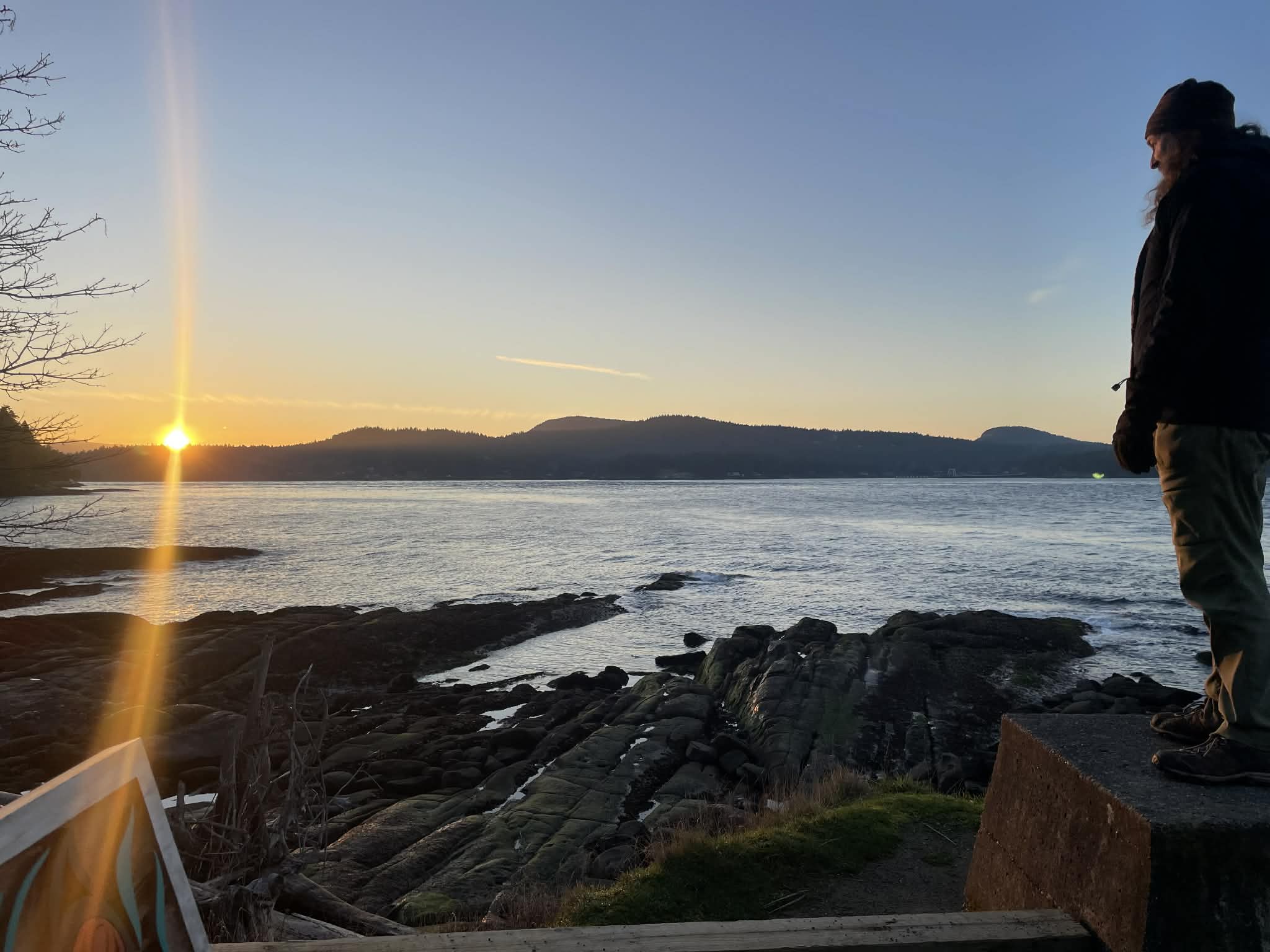
My name is Lee Beavington. I am a third-generation colonial-settler with European ancestors, living on the unceded territories of the Coast Salish Peoples, on SḴŦAḴ (Mayne Island). This website aims to help educators understand and implement place-based learning, with clear connections to decolonization and reconciliation. Indigenous voices and the land are frequently centered in this work. I believe that a holistic approach that honours the whole learner can disrupt dominant power hierarchies in university and inspire students to engage and find meaning in their studies.
My work at KPU has included creating the Decolonizing Educational Practices website. I am also the coordinator of KPU Wild Spaces, an interdisciplinary team focused on ecological place-based learning. I am still learning on this journey.
This website is a collaborative effort done in consultation with Indigenous colleagues at KPU. We hope to provide learning environments and experiences that better support and include Indigenous students.
Reflection Questions
- In what ways are your teaching practices based in anthropocentric or colonial narratives?
- “Where are my habitual ways of doing things still limiting possibilities?” ~Wild Pedagogies
- How can I engage in educational practices that foster connection with, and care for, community or place?