

This Action Plan would include connecting with local 3D printer owners, collecting their scrap PLA (polylactic acid), cleaning and sorting it, shredding the PLA, re-melting it to produce more filament to 3D print with, and getting the new spool of filament back to someone who can use it. These steps are shown below in a story board.

Zukowsky, 2020
[The 3D printing market] will rise from $5.8 billion in 2016 to $55.8 billion by 2027, an aggressive annual growth rate of 23.0%. The 3D printing market is beginning to transition into a maturing business environment and has earnt an important position as a design and prototyping tool, and in the production of complex tooling and moulds.
Smithers, 2017
With 3D printing becoming increasingly popular, and PLA being the cheapest and easiest material to work with, making it the most common 3D printing material, the amount of PLA that will be produced and used in the future is expected to skyrocket. Establishing a PLA recycling system is imperative now more than ever before. With an estimated “6.7 million 3D printers sold by the year 2020,” and assuming an “average of 10% waste per 3D printer” (lower end of the test results), more than “8 million kilograms” of PLA waste will be produced in the year 2020 out of the “more than 80 million kilograms of plastic filament [that] is needed to sustain the [3D printing] market” (Toor, 2019). For reference, 8 million kilograms of plastic equates to approximately 1067 elephants, weighing around 7.5 (metric) tonnes each (University of Georgia, 2017).
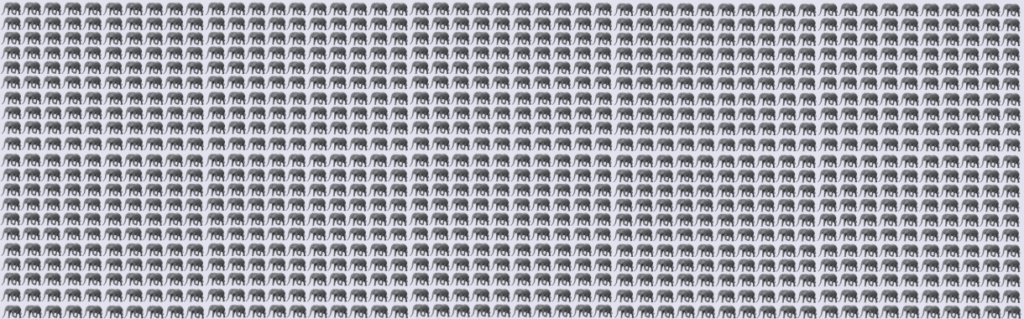
Modified from Luce, 2016
PLA comes from natural resources (starch, typically from corn), and there are many agricultural issues with this. Research is being conducted to find more sustainable was of creating PLA, such as from food waste (more information on my blog post here). Currently, PLA is being thrown away and is ending up in landfills or the ocean when there is potential to recycle it and give it a second, third, fourth, fifth life, and so on. Below is a flowchart of the PLA life cycle from raw material to a recycled product that can be 3D printed with again.

Cosate De Andrade, M. F., Souza, P. M. S., Cavalett, O., & Morales, A. R., 2016
FABCYCLE, a local company founded by Irina McKenzie, is already doing what this project hopes to achieve but with textiles. FABCYCLE focuses on diverting “textile waste from the landfill by engaging [the] community, connecting with the industry and working with national and international partners” (FABCYLE).
Benefits:
– Relatively similar chemical makeup between brands of PLA
– PLA is the easiest, cheapest, and most common 3D printing material (more info on my 3D printing blog post here)
– The Wilson School of Design, other people across North America, and I have already collected boxes full of PLA in anticipation of a project like this
– Creating a network of local 3D printer owners
– PLA does not release harmful off-gasses like some other plastics
– Create a second, third, fourth, etc. life for the material
Downsides:
– Limited amount of plastic that can be recycled
– Unknown contaminants on PLA from the public
– Potential of someone claiming the plastic is PLA or accidental mixing of plastics
– Potentially damaging the extruding machine due to improperly cleaned plastic
– COVID-19 transmission without proper washing of the PLA (preventable)
In conclusion, attempting to create a network of local 3D printer owners would help engage the local 3D printing community and would be beneficial for all those involved. This path is more straightforward and the most environmentally friendly as the PLA would become a zero-waste material for 3D printing, release no harmful off-gasses, and create multiple lives for the material, enabling the same plastic to be used multiple times.
Below are links to more information on topics in the form of blog posts.
My Two Sent.’s: After initially publishing the Action Plan page, I received feedback that visually, Plan #1, my preferred plan (because it was my vision from the beginning), came off as obvious and that it was written with bias, which I believe to be true, even though I was not conscious of it while writing the Action Plan page. After receiving the feedback, I updated the page to reflect a more unbiased stance (which is the current version you see above), and as you can see, I did not end up choosing Plan #1 for feasibility reasons, despite the overwhelming favorability of it from both myself and nearly everyone that participated in the feedback.
Cosate De Andrade, M. F., Souza, P. M. S., Cavalett, O., & Morales, A. R. (July, 2016). Life Cycle Assessment of Poly(Lactic Acid) (PLA): Comparison Between Chemical Recycling, Mechanical Recycling and Composting. Journal of Polymers and the Environment, 24(4), 372-384. https://doi.org/10.1007/s10924-016-0787-2
McKenzie, I. (February, 2020). Founder Story: The Beginning of FABCYCLE by Founder Irina McKenzie. FABCYCLE. https://www.fabcycle.shop/blogs/journal/beginnings
Smithers. (May, 2017). Three Reasons Why 3D Printing is Reaching the Mainstream. https://www.smithers.com/resources/2017/jul/reasons-why-3d-printing-is-reaching-the-mainstream
Toor, R. (November, 2019). The 3D Printing Waste Problem. Filamentive. https://www.filamentive.com/the-3d-printing-waste-problem/
University of Georgia. (July, 2017). 8.3 billion metric tons: Scientists calculate total amount of plastics ever produced. https://phys.org/news/2017-07-billion-metric-tons-scientists-total.html
Cosate De Andrade, M. F., Souza, P. M. S., Cavalett, O., & Morales, A. R. (July, 2016). PLA Composting Phases [JPG]. Journal of Polymers and the Environment. https://doi.org/10.1007/s10924-016-0787-2
Luce, L. (August, 2016). Conceptual image of 1,000 elephants for reference [PNG]. Medium. https://medium.com/@leanne_luce/waste-in-garment-manufacturing-explained-three-ways-fd5eb3bdd3d8
Zukowsky, B. (September, 2020). Re-PLAy Vancouver Storyboard [JPG]. Richmond, BC. https://wordpress.kpu.ca/birkzukowsky/project-scope/