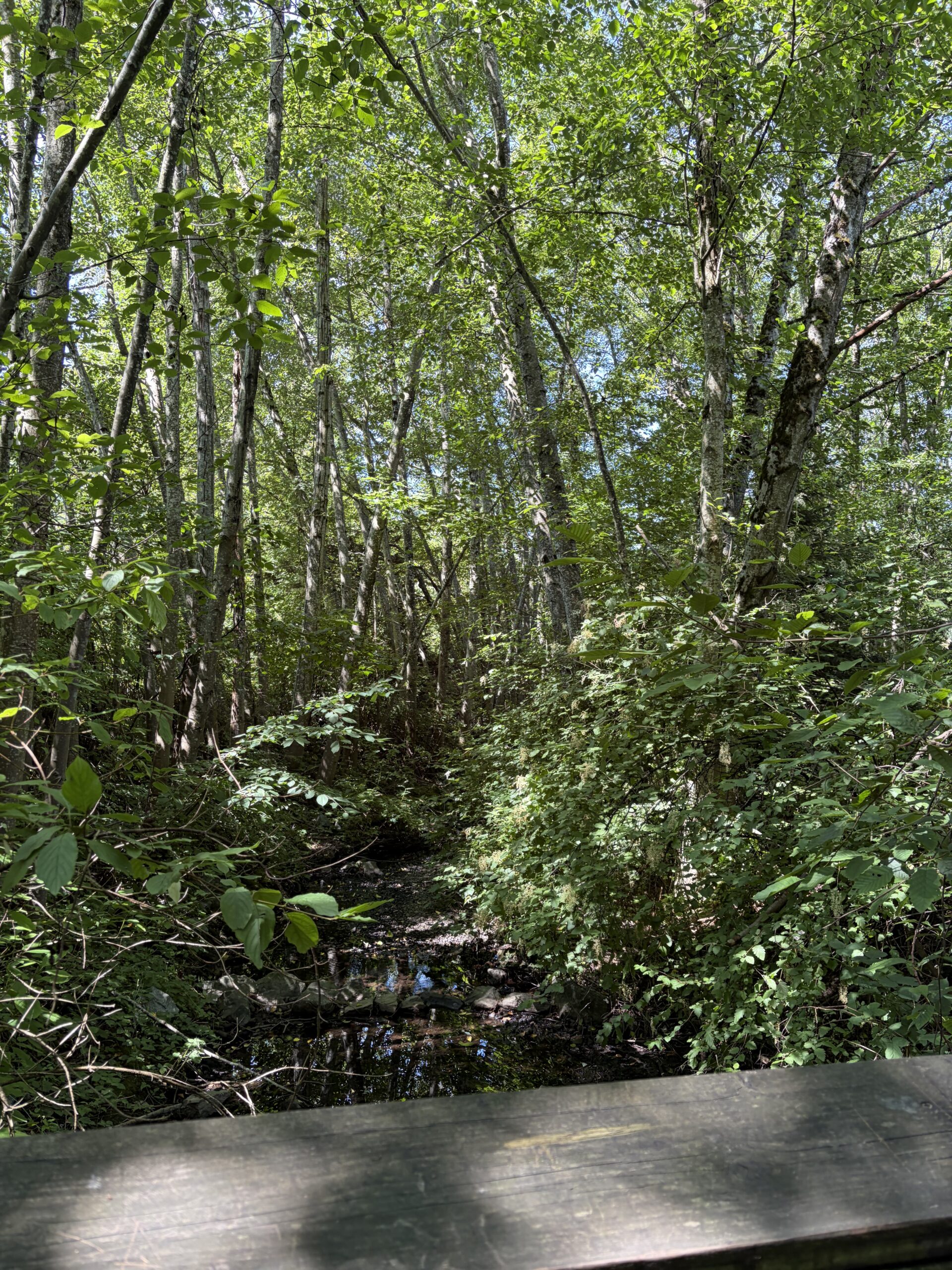
Since the first blog post only three weeks are left of class this semester, our garden has gone from being just begun to grow has developed from seedlings into healthy plants . As we reach the final weeks of the semester, both our garden and my understanding about green criminology has grown from learning something new from guest speakers to going on a field trip. Taking care of the plants with my group has allowed me to learn that even a small ecosystem depends on balance, patience, and care. Even things like watering the plants regularly and making sure not to forget, or the weather becoming too hot or cold , we could see the effects on our garden bed. This has made me realize that how interconnected nature really is.
A field trip to the Cougar Creek Park strengthened my understanding of environmental harm and how we humans urbanize everything and make this topic often gradual and normalized. Going on this trip changed my perspective and made me look at the park in an ecofeminist way, which helped me understand attitudes that encourage domination over people who can encourage it over nature over time. And instead of viewing nature as something we can always exploit or control, this perspective has emphasized care, respect, and responsibility. It showed how environmental justice is so closely connected to the ecosystems that require changing the way we think about our relationship with nature.
Also, the guest speakers helped me connect the course with real-life experiences, like the presentation on Mother Earth Is Our Elder. This discussion moved me when they talked about how Indigenous knowledge and the idea that water is sacred rather than simply a resource to be used. Learning about the long-term effects of uranium mining showed me that environmental harm can continue across generations and disproportionately affect Indigenous peoples. Another guest lecture from Andrea Greenwood about the legal protection of animals in BC, where she told us that the BC SPCA focuses not only on animal welfare where animals are removed from harmful situations, but it also focuses on educating owners and improving animal welfare before taking any legal action. In addition to this I learned:That animals can experience distress through inadequate food, water, shelter, or veterinary care, not only through physical abuse. This helped me understand that Green Criminology recognizes animals as victims of harm, even when society or the law does not always treat them that way.
Overall, I think that Green Criminology is a much broader term than I first thought before taking this class. It is not just about environmental crimes but also about questioning harms that remain legal, understanding, how power plays a role in environmental decisions, and recognizing that people, animals, water and ecosystems are all interconnected. This term is not just about protecting the environment with more stronger laws, but it requires respect, responsibility, and a willingness to see as something with value beyond what it provides to humans.
*This blog was proofread using ChatGPT*

Hi Meher,
I really enjoyed reading your reflection because it highlighted how green criminology can be understood through everyday experiences rather than only through major environmental issues. Your discussion about caring for the class garden stood out to me because it showed how even simple tasks, such as watering plants consistently and observing changes in the weather, demonstrate the interconnectedness of ecosystems. It reminded me that environmental harm is often gradual and can result from neglect as much as from deliberate actions.
I also appreciated your reflection on the Mother Earth Is Our Elder presentation. Your point about water being viewed as sacred rather than simply a resource connects well with the Introduction to Green Criminology, which explains that green criminology encourages us to rethink traditional ideas of harm by considering the relationships between humans, other species, and the natural world. Instead of focusing only on acts defined as crimes, it asks us to recognize environmental harms that often go unnoticed. Your blog reinforced this idea by showing how respect, responsibility, and prevention can be just as important as responding to environmental damage after it occurs.
Source
Introduction to Green Criminology (Course reading)
Simmons, G., Stevenson, R., & Vardy, M. (2023). “Chapter 13: Green criminology.” In S. Hassan & D. Lett (Eds.), Introduction to Criminology.” KPU Pressbooks.
Hi Meher,
I really enjoyed reading your reflection because it highlighted how Green Criminology can be understood through everyday experiences rather than only through major environmental issues. Your discussion about caring for the class garden stood out to me because it showed how even simple tasks, such as watering plants consistently and observing changes in the weather, demonstrate the interconnectedness of ecosystems. It reminded me that environmental harm is often gradual and can result from neglect as much as from deliberate actions.
I also appreciated your reflections on the Mother Earth Is Our Elder presentation. Your point about water being viewed as sacred rather than simply a resource connects well with the Introduction to Green Criminology, which explains that green criminology encourages us to rethink traditional ideas of harm by considering the relationships between humans, other species, and the natural world. Instead of focusing only on acts defined as crimes, it asks us to recognize environmental harms that often go unnoticed. Your blog reinforced this idea by showing how respect, responsibility, and prevention can be just as important as responding to environmental damage after it occurs.
Source
Introduction to Green Criminology. Course reading. Simmons, G., Stevenson, R., & Vardy, M. (2023). “Chapter 13: Green criminology.” In S. Hassan & D. Lett (Eds.), Introduction to Criminology.” KPU Pressbooks.
Hi Meher,
I enjoyed reading your reflection because it shows how your understanding of green criminology developed through both hands-on experiences and the course discussions. Your point about seeing the effects of weather and regular care on the garden really stood out to me because it demonstrates how even small environmental changes can have significant impacts on ecosystems. I also found your discussion of Cougar Creek Park interesting, especially how the ecofeminist perspective encouraged you to think differently about the relationship between humans and nature instead of viewing the environment as something to control. Your post reminds me of Chapter 23 of the rights of nature reading, which explains the “Rights of Nature” movement. This movement tries to change our laws from being human-centered to nature-centered, giving ecosystems an “intrinsic right” to exist and thrive. Your mention of Mother Earth connects to how countries like Ecuador and Bolivia put the rights of Pachamama into their laws. Specifically, your ideas about sacred water relate to New Zealand’s Te Awa Tupua Act, which treats the Whanganui River as a living person with its own rights. Using a guardianship model where people speak for the environment can help stop the long-term harms like uranium mining that you described. Overall, recognizing biocultural rights is a powerful way to rethink our responsibility to the planet.
Reference:
Newton, E., & Killean, R. (2025). Global rights of nature movements. In R. C. Brears & J. Lindley (Eds.), The Palgrave handbook of environmental policy and law (pp. 403–420). Palgrave Macmillan.