Roots Grow Deep, New Discovery
Reflection on me and my groups gardening
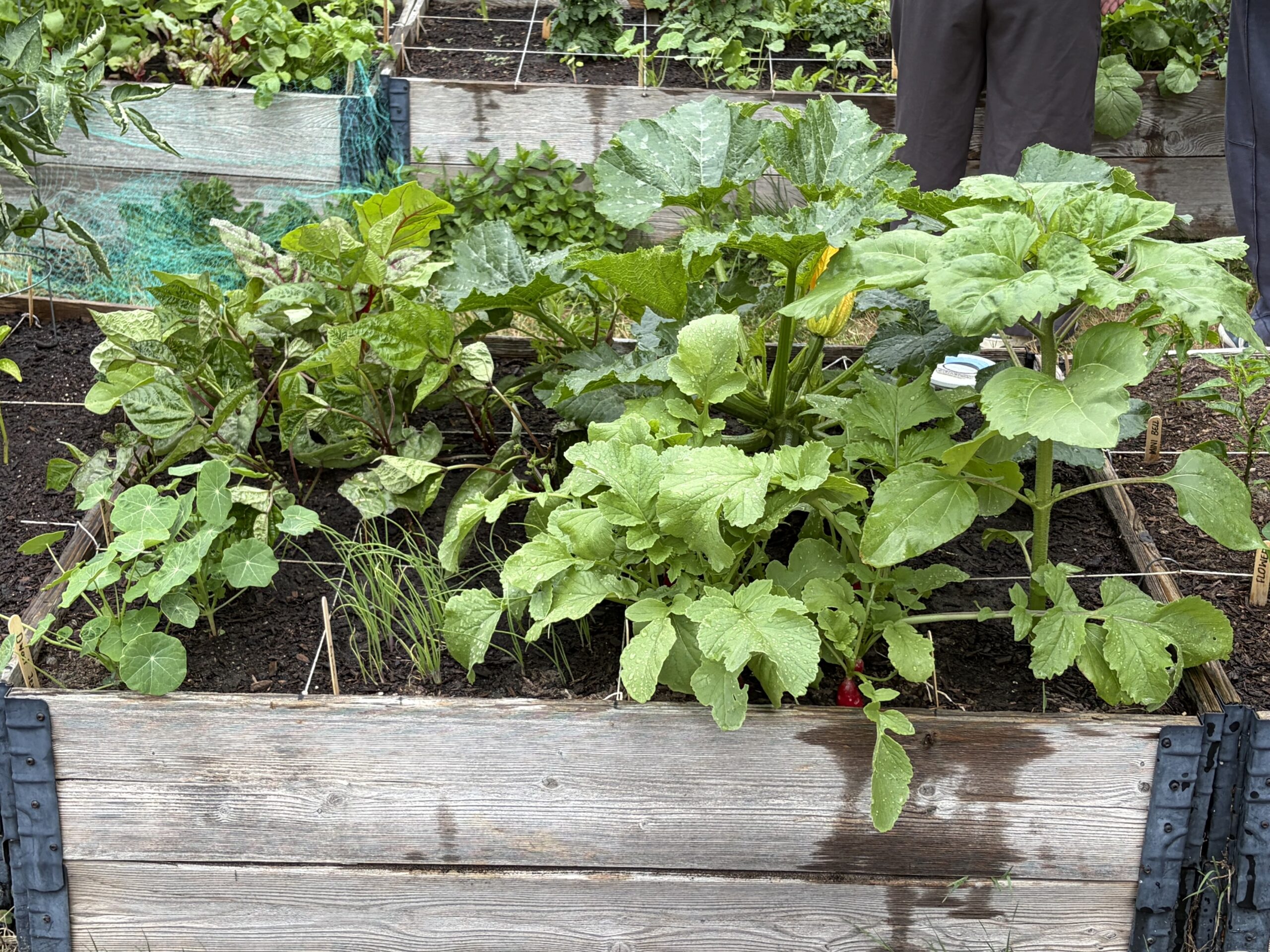
I didn’t believe I would be a good gardener, it’s surprising to see our garden grow so fast in such a short amount of time. To be honest I didn’t believe that our plants would grow because me and my group didn’t have any gardening experience prior to this class and expected our plants to not grow at all. We also believed that because it was summer it would make it more difficult because we all had to water the plants constantly before any of them dried up and eventually died, however that was not the case.
Slowly but surely we learned many new things about gardening and how to properly maintain our garden so that our plants can thrive and produce food. We had all formed a schedule to water the plants and we all followed that rigorously and made sure everyone played their part. In addition to learning about gardening we also learned about green criminology and how it all connects to gardening and our gardening project. For example,Lafferty, Catherine (2026) explains that “many large corporations continue to rely on fossil fuels even though they know it causes serious harm to the environment”. This relates to our garden because of the fact that we are making our plants in a natural way and not an artificial way that most multi million dollar corporations are doing which results in artificial food and hurts our environment. Another example can be from Killean (2025) explains “that ecocide is the serious destruction of the environment and that many people believe it should be treated as an international crime because of the harm it causes to nature and people”. This made me realize how important it was to take care of our garden and the environment through small actions to prevent our environment from destroying itself.
Overall I believe we learned a lot from gardening and will continue to garden because I believe it is a calming pastime that anyone can do and has no sort of age limit and does not require any sort of heavy equipment or great amount of money in order to maintain. So far it seems very easy to maintain and definitely changed the way I view gardening but also the way I view the earth and the environment around me. I will be sure to help out the environment and make sure we have a safe and healthier planet for the further generations to come.
References
Lafferty, Catherine (Katlia) (2026) “Chapter 8 Corporate Criminals” In: Mother Earth Is Our Elder: A Northern Indigenous Perspective on the Climate Crisis. McClelland & Stewart.
Killean, R. (2025). Ecocide law and policy. In R. C. Brears & J. Lindley (Eds.), The Palgrave handbook of environmental policy and law (pp. 385–399).
Grammarly and AI was used to grammar check *

Hi Anveer,
I really enjoyed reading your blog post; I found myself relating to various topics you addressed, such as the connection between gardening and corporate crime, and the importance of understanding ecocide and learning ways to counter the injustice. As you mentioned, my group also wondered whether our plants would reach the harvest stage, given the extremely high temperatures this summer. Nevertheless, without a doubt, here we are, with both groups reaching the harvest stage.
When you mentioned Lafferty’s (2026) article, I found myself reflecting on the idea of corporations continuing to engage in harmful environmental practices that degrade our ecosystems, and I came up with an example that also reflects green criminology concepts: toxic waste being dumped into our ecosystem, harming our environment and agriculture. I asked this question to the agricultural student we visited to see if they had any knowledge; she explained that, although KPU Farms itself had not experienced toxic spillage to her knowledge, the City of Richmond has faced fines for releasing toxic metals and compounds into BC rivers within the last six months (https://www.biv.com/news/environment/bc-firm-penalized-for-predictable-release-of-toxic-cocktail-into-fraser-river-11978399, if curious).
Connecting to Lafferty’s (2026) argument, this example shows how government institutions and those in political power often proceed with environmental ecocide, even though they are well aware of the long-term effects and harm inflicted on the environment. The City of Richmond was fined only $21,114 for illegally dumping tons of toxic waste into the Fraser River, though this ecocide was pre-determined, planned, and then executed with intent.
Overall, I gained a thorough understanding from your blog of how many environmental crimes are committed by those in positions of power; the penalties and consequences imposed on those who commit ecocide and remain in power are typically minor and disproportionate compared to the severity of their crimes.
References:
Lafferty, Catherine (Katlia) (2026) “Chapter 8 Corporate Criminals” In: Mother Earth Is Our Elder: A Northern Indigenous Perspective on the Climate Crisis. McClelland & Stewart.
Killean, R. (2025). Ecocide law and policy. In R. C. Brears & J. Lindley (Eds.), The Palgrave handbook of environmental policy and law (pp. 385–399).
*AI was used to grammar check*
**Correction**
It was not the City of Richmond that contaminated the water, but a Richmond-based company.
Hey Anveer,
I found your blogpost really interesting and relatable as your perspective on gardening also changed throughout the project. Being in a same group and gardening in box 18 cleared many doubts for both of us, as whether our plants would survive, especially with hot summer weather and assigning the responsibility of watering them regularly. It gave a sense of accomplishment when I saw our gardens grew with the help of teamwork and consistency.
I also like how you connected gardening to green criminology. I enjoyed reading your example as it is completely true and painful when we see that large corporations often prioritize large profits over environmental sustainability. Gardening gave us firsthand experience of how much care and effort is required for keeping our plants safe along with maintaining healthy small ecosystem we created, which makes it easier to understand why protecting them becomes so important. Even though our garden is small, it shows how individual and group efforts can contribute to protecting the environment.
While concluding, one this is clear by reading your blogpost that this project was much more than growing plants. It helped building teamwork, responsibility and gave sense of achievement. Lastly, I enjoyed reading your perspective and strongly agree that such an activity can positively impact individuals as well as the environment.