Before visiting the KPU Richmond Farm, I thought the trip would mainly be about learning how fruits and vegetables are grown. Instead, I left with a new understanding of how farming, sustainability, and environmental responsibility connect to green criminology. Our class met at the Richmond farm and was divided into small groups, with every two criminology students paired with an agriculture student who works on the farm throughout their program. Learning directly from someone with hands-on experience made the visit much more meaningful.
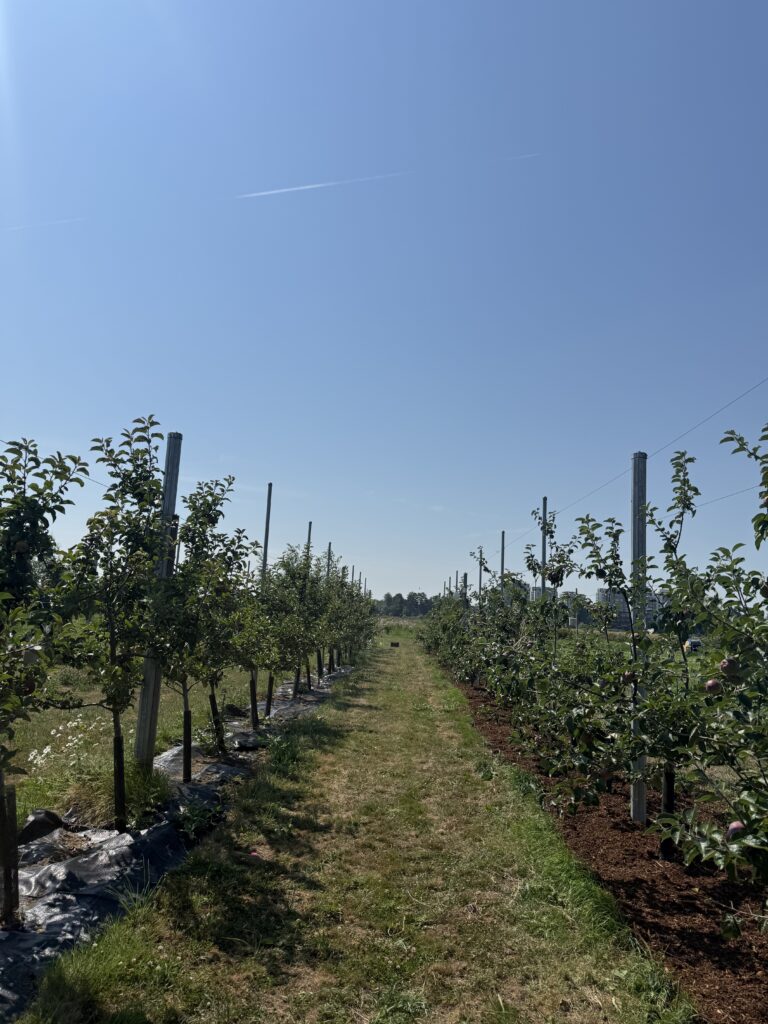
KPU FARM RICHMOND
As we walked through the farm, we visited the orchard, raspberry fields, garlic, corn, and other growing areas. I was surprised by how much planning and care goes into producing healthy food. We learned that raspberries grow larger with enough water and that ripe berries are easy to pick because they separate naturally from the plant. We also learned about the importance of healthy soil and soil bacteria, as well as why garlic flowers are removed so the plant can direct more energy into growing larger bulbs.
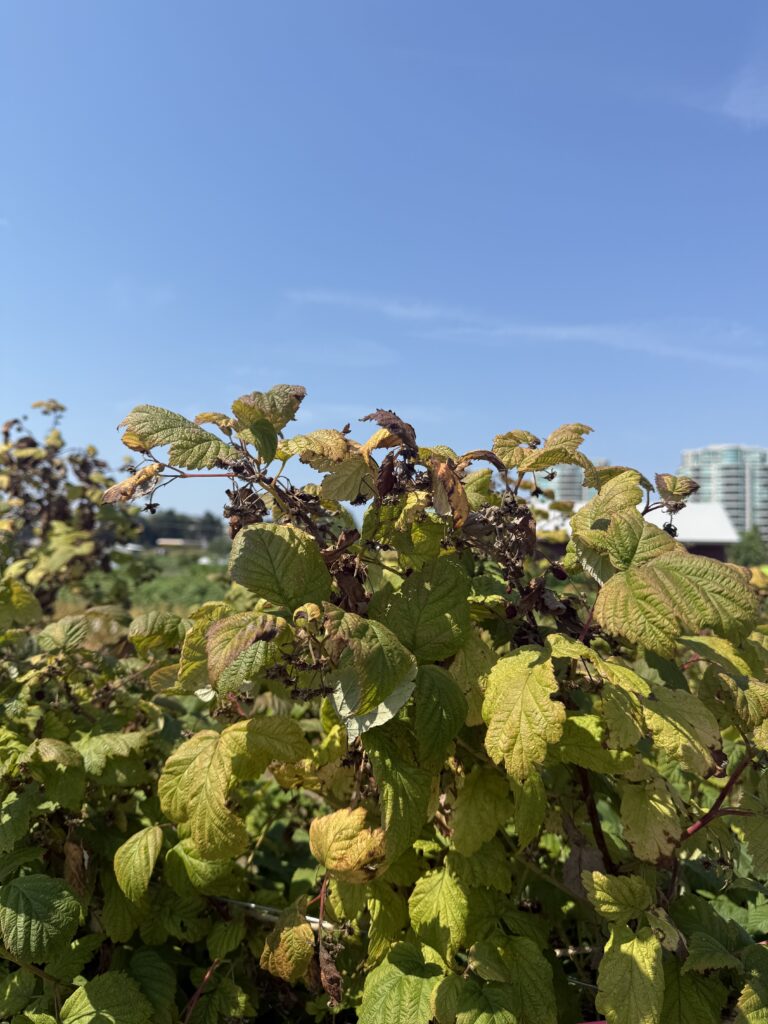
Raspberry plants
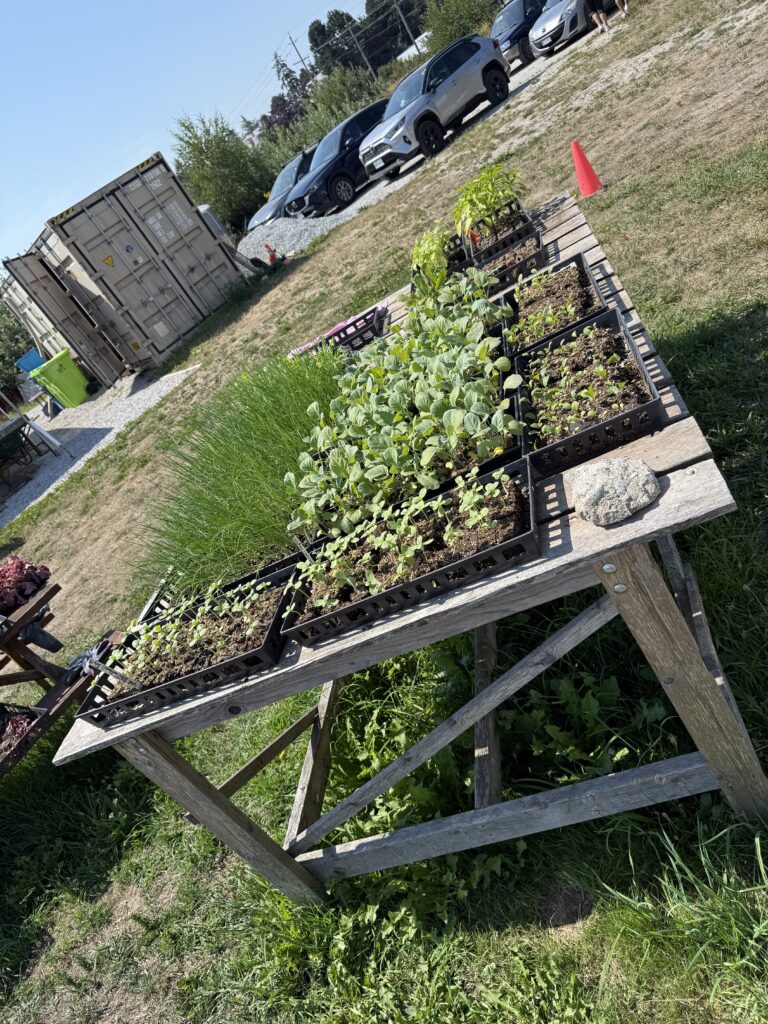
Plant starters
One of the most interesting parts of the visit was seeing how the farm manages wildlife and insects. In the orchard, reflective plates were hung from trees to discourage birds and other animals from damaging fruit without harming them. We also saw a red apple-shaped insect management device used to monitor or reduce pest activity. These simple practices showed me that farming does not always have to rely on harmful methods to protect crops.
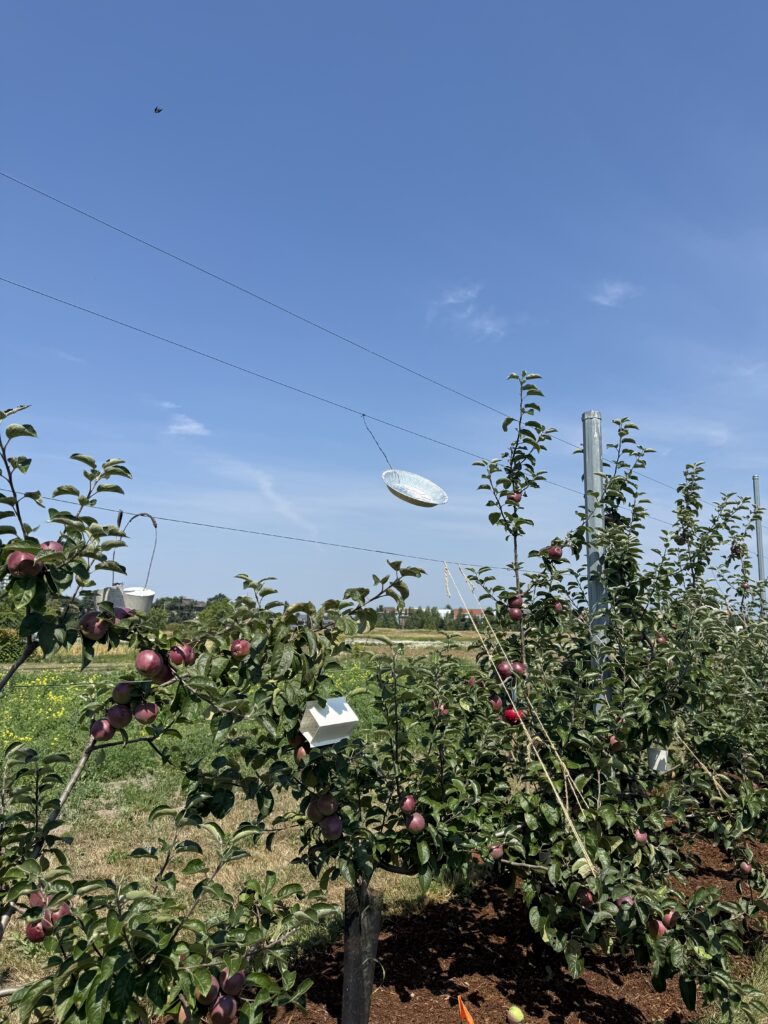
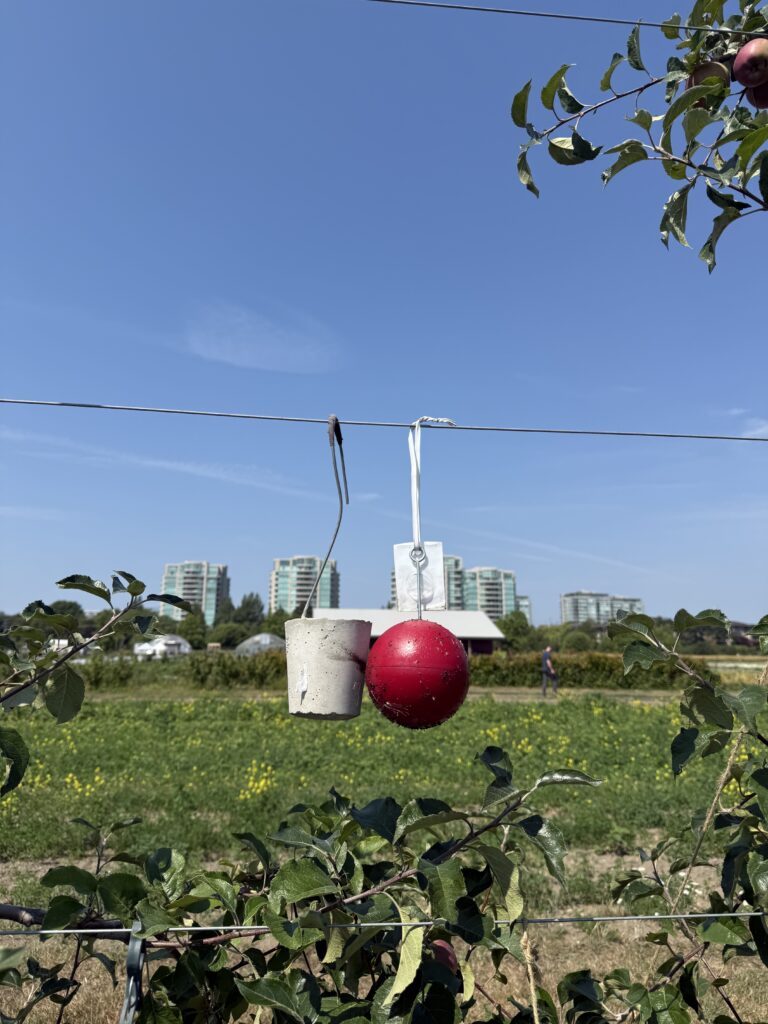 Reflective Plates in the Orchard and Red Apple-looking Ball for insect management
The Introduction to Green Criminology explains that green criminology challenges traditional ideas of crime by focusing on harms affecting humans, animals, and the natural environment rather than only illegal acts. That perspective helped me see the farm differently. The visit was not about preventing crime in the traditional sense, but about preventing environmental harm through sustainable farming practices. Caring for soil, monitoring weather conditions, conserving water, and reducing harm to wildlife all contribute to healthier ecosystems.
The chapter Food Crime and Green Criminology expands this idea by arguing that food systems should be evaluated by the harms they create for consumers, producers, animals, and the environment—not simply by whether laws have been broken. Visiting the KPU Farm showed me a positive example of food production that aims to reduce those harms through education, biodiversity, and sustainable growing practices.
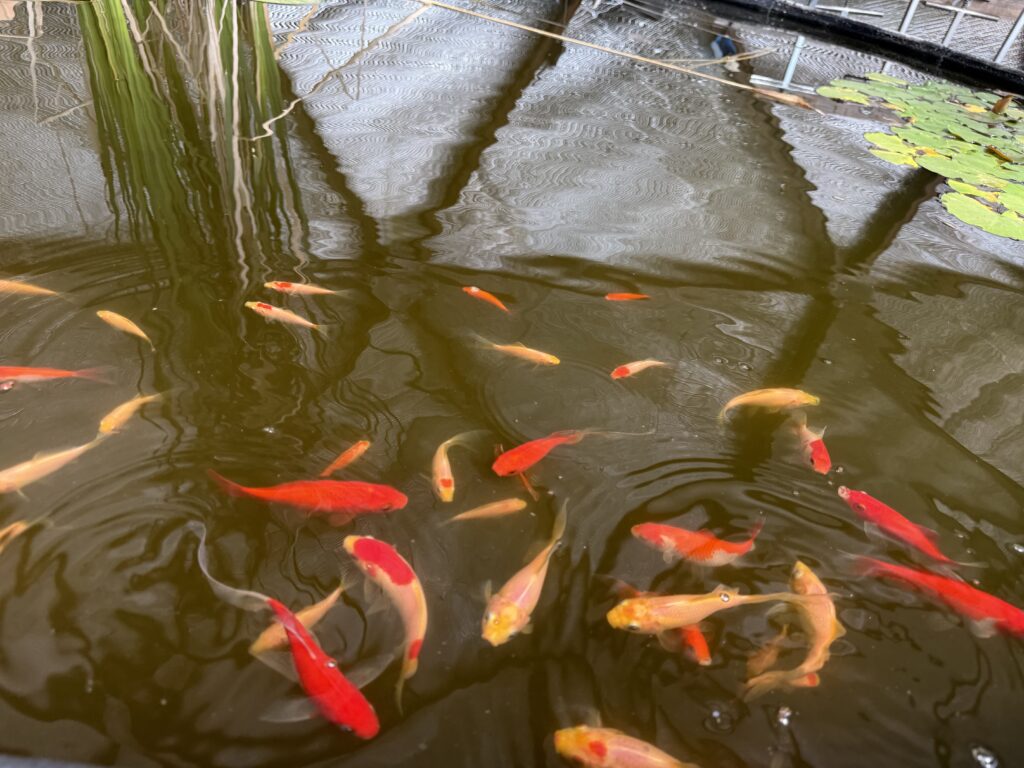
Fish in the pond
This field trip changed my perspective on farming. I now understand that producing food responsibly involves much more than growing crops. It requires protecting ecosystems, respecting wildlife, and making thoughtful decisions that reduce environmental harm. Seeing these practices in action helped me better understand how green criminology can be applied to everyday environmental issues.
Sources
- Introduction to Green Criminology (course reading).
- Tourangeau, Wesley, & Fitzgerald, Amy J. Food Crime and Green Criminology (course reading).

Hi Sehaj,
I really enjoyed reading your blog because even though we were both on the KPU Farm field trip, I liked seeing it from your perspective. One thing that stood out to me was how you explained the different ways the farm protects crops while still caring for the environment, especially the reflective plates in the orchard and the insect management methods. I remember seeing those during the tour, but I didn’t really think about how they connected to Green Criminology until I read your post.
Your blog also reminded me that Green Criminology isn’t just about environmental crimes. It’s also about preventing environmental harm through sustainable practices. Like White (2017) explains, Green Criminology looks beyond whether something is legal and focuses on how people, animals, and ecosystems are affected. I also thought your connection to Food Crime and Green Criminology was interesting because Tourangeau and Fitzgerald (2020) explain that food systems should be evaluated based on the harm they cause or prevent. The KPU Farm is a good example of how sustainable farming can reduce those harms while still producing healthy food. Overall, your post made me appreciate the field trip even more because it helped me think about details I didn’t fully notice during the visit.
References:
Tourangeau, W., & Fitzgerald, A. J. (2020). Food Crime and Green Criminology.
White, R. (2017). Critical Green Criminology.
Thank you for providing such a detailed blog that discusses your experience. You mention doing hands-on work at the KPU farm in Richmond. I strongly believe I learn more by being hands- on rather than relying on a textbook and I’m sure many students can also relate to this. Not only is it rewarding because you feel this sense of accomplishment, but you also learn a lot more. Additionally, by having reflective plates, red apple looking balls, and containers which are filled with beer to keep insects and other animals away from the garden is great because it demonstrates how issues that arise pertaining to the environment can be addressed without causing any harm to living organisms. Tourangeau and Fitzgerald discuss how industrial animal agriculture is solely responsible for all the harm done on living organisms and the environment (Tourangeau & Fitzgerald, 2018). Therefore, having these harm free methods that you mentioned demonstrates the lack of care these massive industries choose to have for animals and the environment because they prioritize their profits over safety and sustainability. Lastly, I was quite shocked to discover after all I have learned in this class relating to environmental harm and animal harm that Canadian animal laws are still old and outdated (Tourangeau & Fitzgerald, 2018). This just goes to show how the government chooses not to care and act because it disadvantages the big corporations they profit off despite having so many individuals advocate for fairness and change.
Acknowledgment of AI for editing and grammar
Tourangeau, W., & Fitzgerald, A. J. (2020). Food crime and green criminology. In Routledge international handbook of green criminology (pp. 205-221).
Hi Sehaj. It was great reading your blog because it reminded me of some things I learned at KPU Farm that I had almost forgotten. I liked how you mentioned working with agriculture students because they brought a different perspective to the field trip. Another plus was being able to share what we learned about green criminology with students who work with the environment every day. My favourite thing about the farm was learning about the irrigation system that watered the roots directly instead of spraying water everywhere. Until then, I had no idea how important it is to help crops grow while still using water efficiently. Additionally, I was fascinated to learn that ladybugs can effectively control pests without chemical pesticides. Hearing this made me realize that farming and protecting the environment can be prioritized equally. Overall, your blog helped me understand how these farming practices relate to green criminology. As White (2018) explains in his article, green criminology looks beyond just what is legal or illegal. Instead, it encourages us to consider how our everyday actions can have an impact on the environment. The KPU Farm is a great example because many of its practices are designed to prevent environmental harm. By saving water through the irrigation system and using ladybugs to control pests, the farm showed us how simple practices can help protect the environment. Overall, your blog has helped me understand how much planning and care goes into growing food sustainably.
White, R. (2018). Critical green criminology. In W. DeKeseredy & M. Dragiewicz (Eds.), The Routledge handbook of critical criminology (pp. 120–131). Routledge.
* Grammarly was used to edit *