Before enrolling in this course and starting our gardening project, I never thought much about food production as something connected to crime or harm. I mostly just saw food as something people buy, cook, and eat without thinking much about where it comes from or the systems behind it. However, after learning the process of starting a garden and gaining further knowledge from the class readings, I began to think differently about the relationship among food, the environment, and harm. Seeing how much labour, resources, and care go into growing vegetables and flowers in our small on-campus garden boxes made me reconsider what “crime” actually means when it comes to food systems.
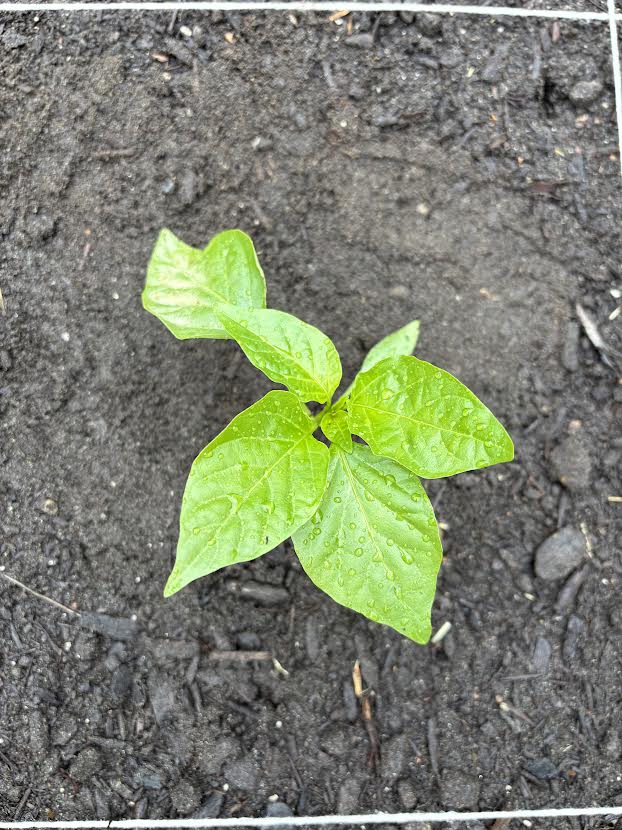
Photo of a pepper plant at the KPU garden.
One thing that stood out to me in the garden preparation was how intentional every step is and how much you can plant in a small space. The garden box is about 3ft x 4ft, and no space was wasted when we planted our seeds and starters. My group decided to plant tomatoes, peppers, basil, beets and marigolds. We were able to plant 2 tomato starters, 2 pepper starters, 2 basil seeds, 32 beet seeds, and 8 marigold seeds. The garden was planted using a grid system, which allowed us to maximize the space and help with proper spacing for each plant. Having a small garden space like the ones we are using at KPU makes me feel much more connected to the community and the ecosystem around it, compared to industrial agriculture and buying produce at the grocery store. It makes me think about how modern food systems often prioritize efficiency and profit over environmental wellbeing, because they are just focused on producing as much as they can as quickly as they can.
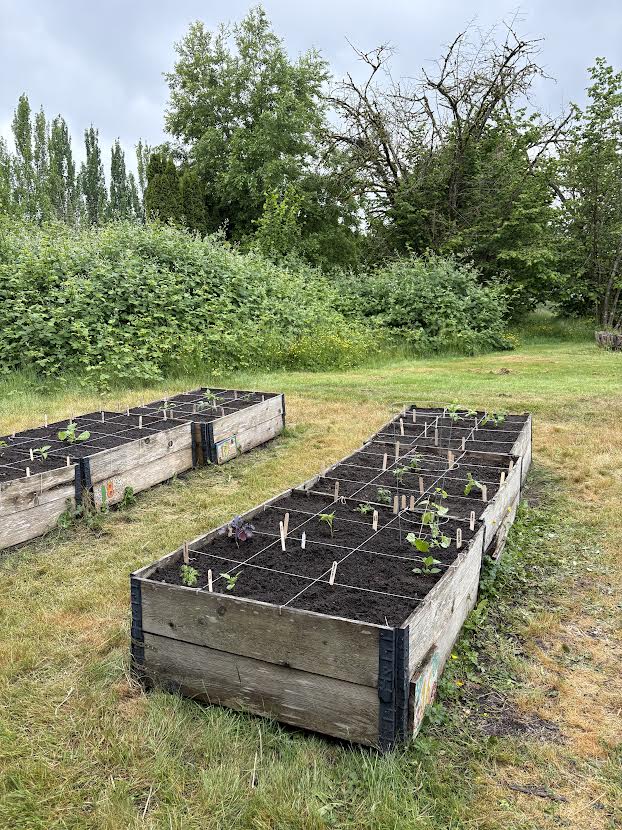
Photo of the garden boxes at KPU.
This idea connects to one of the class readings, “Critical Green Criminology” by Rob White. White explains that green criminology focuses not only on illegal acts, but also on environmental harms that negatively affect ecosystems, animals, and communities, even when those harms are considered legal. He discusses concepts like the “treadmill of production,” where capitalism constantly pushes for more production and consumption regardless of environmental consequences. Industrial agriculture often treats nature as something to exploit for profit, while smaller-scale gardening emphasizes care, balance, and long-term sustainability. White’s discussion of the commodification of nature also stood out to me because modern food systems often treat land, animals, and even water as products rather than parts of interconnected ecosystems.

Photo of a group member planting a pepper starter.
Another reading, “Food Crime and Green Criminology” by Tourangeau and Fitzgerald, also helped me understand these issues differently. The authors argue that many harmful food practices are completely legal even though they still harm animals, workers, consumers, and the environment. This reading made me think more critically about industrial farming and food production. It was interesting to learn that green criminology challenges traditional ideas of crime by focusing on harm instead of just legality. The gardening project makes this idea feel more real because it allows us to get hands on with alternative ways of producing food, rather than buying into the harmful practices discussed in the reading. Instead of mass production and environmental exploitation, the garden focuses on local responsibility, sustainability, and respect for the environment.
*This post was edited using Grammarly
References
Tourangeau, W., & Fitzgerald, A. J. (2020). Food crime and green criminology. In Routledge international handbook of green criminology (pp. 205–221). Routledge.
White, R. (2018). Critical green criminology. In Routledge handbook of criminology (pp. 120–131). Routledge.

Hi Kyla, I really enjoyed reading your blog. I enjoyed your idea of rethinking food: from consumer to producer. While reading, I realized that I had not thought about everything that happens in detail before food reaches our plates. Another part of your post that stood out to me was your discussion about the labour, resources, and care that go into growing vegetables and flowers in the small on-campus garden box. It made me realize how much work goes into producing food, how it is overlooked, and taken for granted.
Your post also made me think differently about what “crime” actually means in relation to the food systems. This connects to White’s (2018) explanation of green criminology, which encourages us to look beyond an action being legal and to think about the harm it can cause. For instance, people, animals, and the environment. Also, your comparison between the on-campus garden and industrial agriculture stood out to me. It is because it made me realize the different approaches to food production that can lead to different environmental impacts. Overall, your blog reminded me to appreciate the time, effort, and environmental resources that go into food production, which leads to the food on our plates every day. Also, I had been focusing on growing the plants of our garden project rather than thinking about what goes into producing food.
*Grammarly was used to edit for grammar and word suggestions*