I used to think gardening was simple.
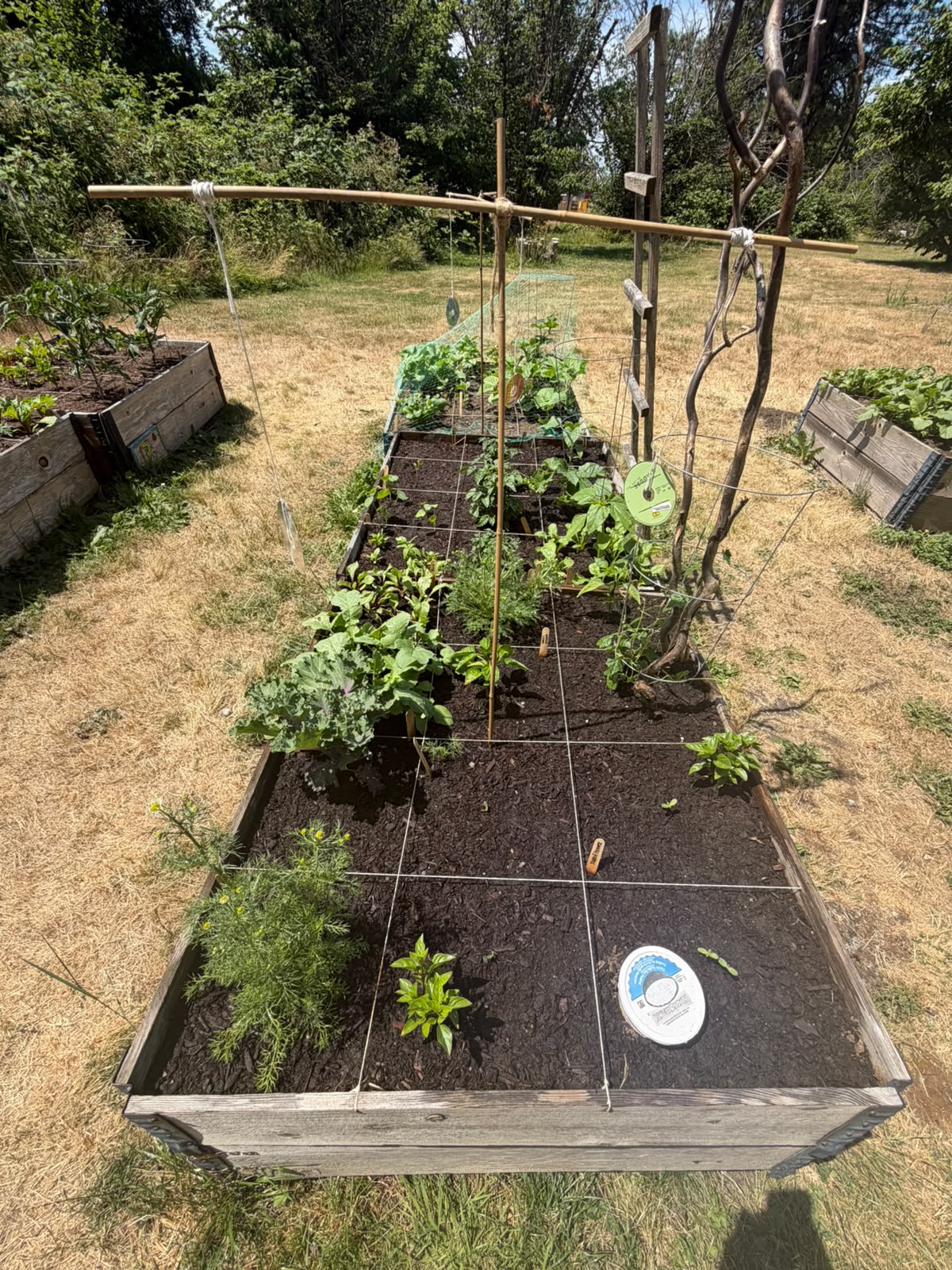
You put a seed in the ground, water it, and wait. That was my understanding before this course. But spending weeks tending to our garden box in the Westerman Garden at KPU Surrey has completely changed how I think, not just about plants, but about people.
Every time I crouch down to check on our kale or dill, I am doing something small that takes real patience and attention. And lately, that simple act has been making me think about the people who do this work not as a class assignment, but as a way of survival: migrant farmworkers who grow the food that ends up on Canadian grocery store shelves, often under conditions most Canadians know nothing about.
Before this course, I never asked where my food came from or whose hands touched it before mine. Growing up in India, I saw small farmers working their own land. Coming to Canada, that connection disappeared completely. Food just appeared, packaged and priced, and I stopped thinking about the labour behind it.
Gabriel Allahdua’s book Harvesting Freedom woke me up to what that labour actually looks like in Canada. He describes what he calls the Twenty Injustices faced by migrant farmworkers, from tied work permits that bind workers to a single employer, to the constant threat of deportation if they speak up, to family separation that lasts for months at a time (Allahdua, 2023). These are not accidents or isolated incidents. They are built into the system. As Allahdua writes, migrant workers are doing the “dirty, difficult, dangerous, and non-unionized jobs” that Canadians do not want to do. Yet, they are denied the basic rights that other workers take for granted (Allahdua, 2023).
What makes this even more troubling is that most of these conditions are completely legal. And that is exactly where green criminology becomes important. Tourangeau and Fitzgerald (2020) argue that food crime cannot be limited to what the law defines as illegal. There is a whole category of what they call “food offences,” harmful practices that violate moral standards even when no law is technically broken. The exploitation of migrant farmworkers fits perfectly into this framework. It is not prosecuted. It is not even called a crime. But the harm is real.
Tending our little garden box every week has given me a small, quiet reminder of how much work food actually requires. The kale does not grow itself. Someone has to show up, day after day, in the heat or the rain, and take care of it. For migrant workers, that someone is often far from home, living in overcrowded housing, unable to complain, unable to leave.
I came for the criminology. The garden taught me to ask better questions.
Tourangeau, W., Tourangeau, W., Fitzgerald, A. J., & J. Fitzgerald, A. (2020). Food crime and green criminology. In A. Brisman, & N. South (Eds.), Routledge international handbook of green criminology (2nd ed., pp. 205-221). Routledge. https://doi.org/10.4324/9781315207094-11 Allahdua, G. (2023). Harvesting freedom: The Life of a Migrant Worker in Canada. Between the Lines.

Provide Feedback