Guest Speaker and New Knowledge:
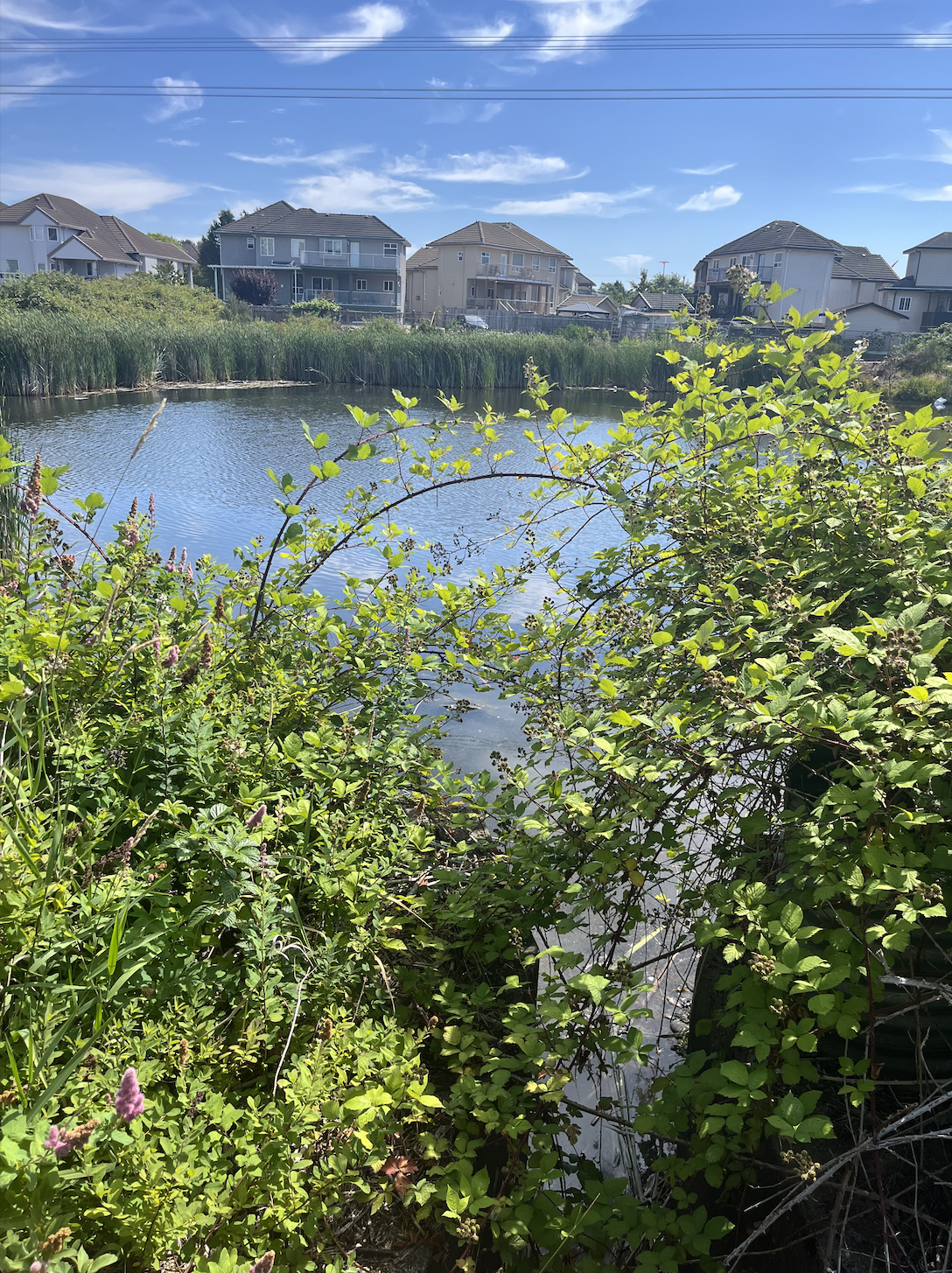
This week we had a field trip led by Deb Jones who is a volunteer for Cougar Creek Streamkeepers. Although I was born here and have lived in Delta for most of my life I had never been to Cougar Creek before. This amazed me because it was right beside the elementary school I went to.
This field trip started off with a 30-minute presentation where I learnt about the 3-30-300 rule. This means that we should be able to see 3 trees from our house, live in an area with 30% tree canopy covering, and have 300m of quality green space. “[W]ith the goal of creating greener and healthier cities for everyone” (UBC Magazine). This rule is built so we can help reduce climate change and enrich our environment more. After the presentation we started our walk towards the creek. It was an extremely hot day but when we got near the creek, I realised that it was very nice and cool. This was due to the trees and the shade that they provide us which help decrease the temperature a bit. We had several stops and learnt a lot about the creek. These stops mainly were over small bridges that crossed over the creek.
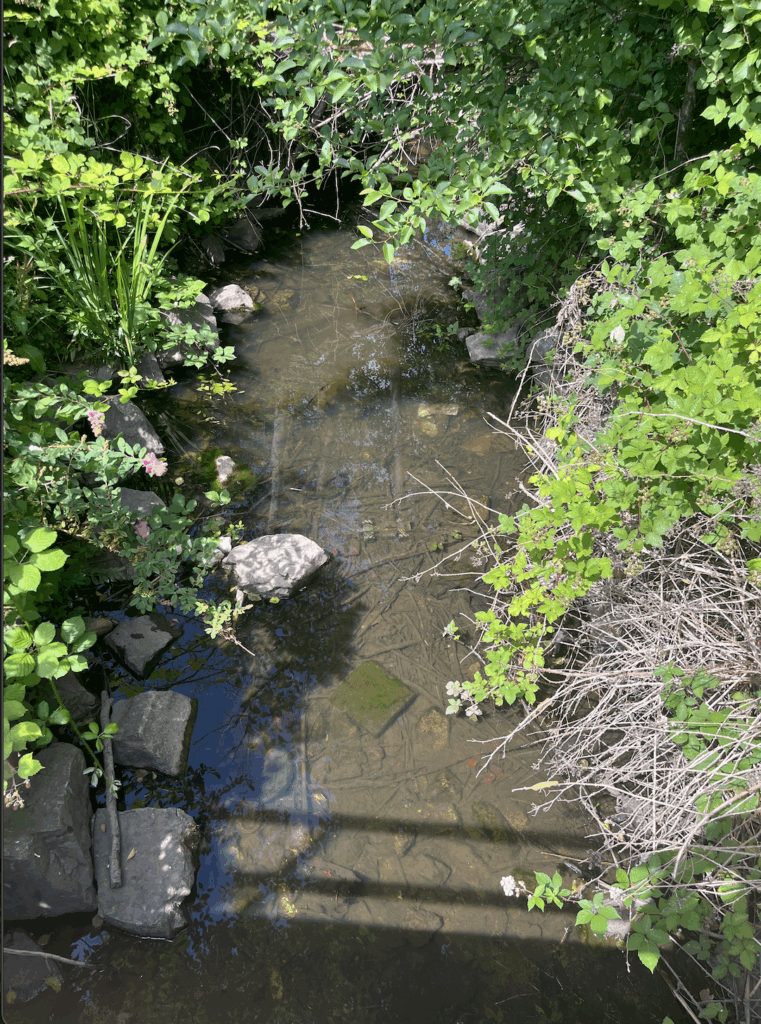
(An image of one part of the creek)
Cougar Creek:
Yes, there was water in the creek, but the water levels were low, in some parts the creek had dried up. Which makes sense because Deb mentioned how we were going through a drought as we did not have many rainy days. She also mentioned how this is the effect of climate change.
Katlia also shared how her Elders had told her that climate change has always existed, but we humans have just increased it! This felt real especially seeing the creek dried up in several spots. It is very sad to see how because of climate change the creek water levels are extremely low and how in many areas there is no water. It makes me think about all the fish that rely on this creek and how hard it must be for them. Fish are not the only ones that use this creek, we saw several ducks and were told that spawners have been seen too sometimes, all of which are impacted due to climate change and the actions of humans.
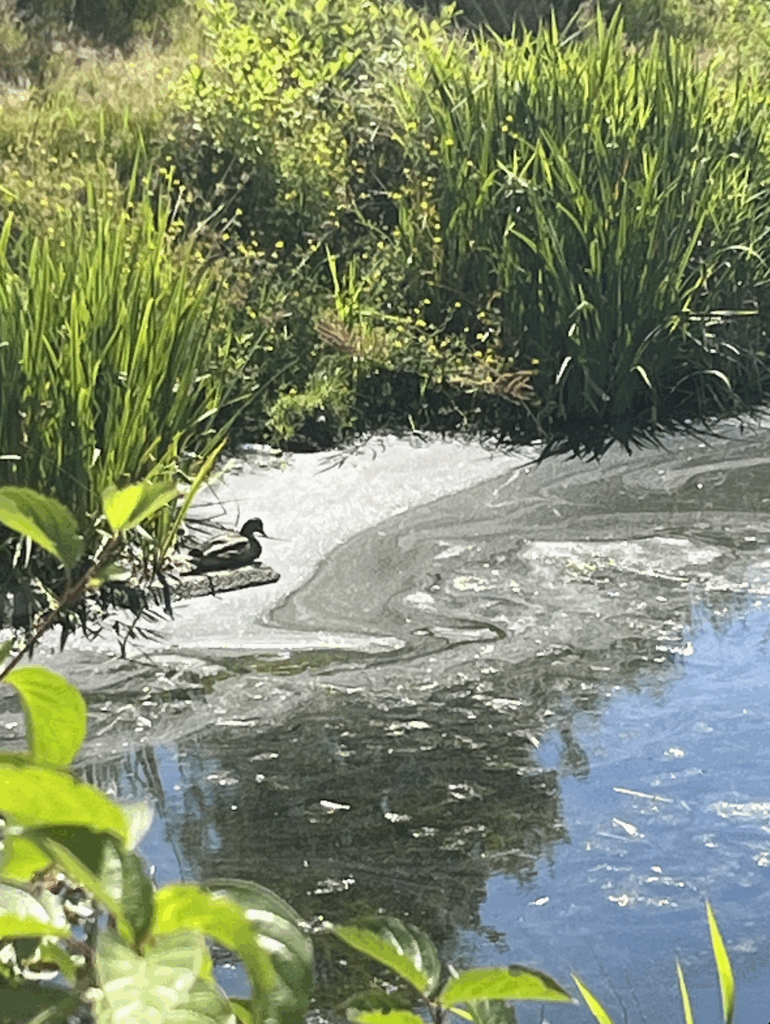
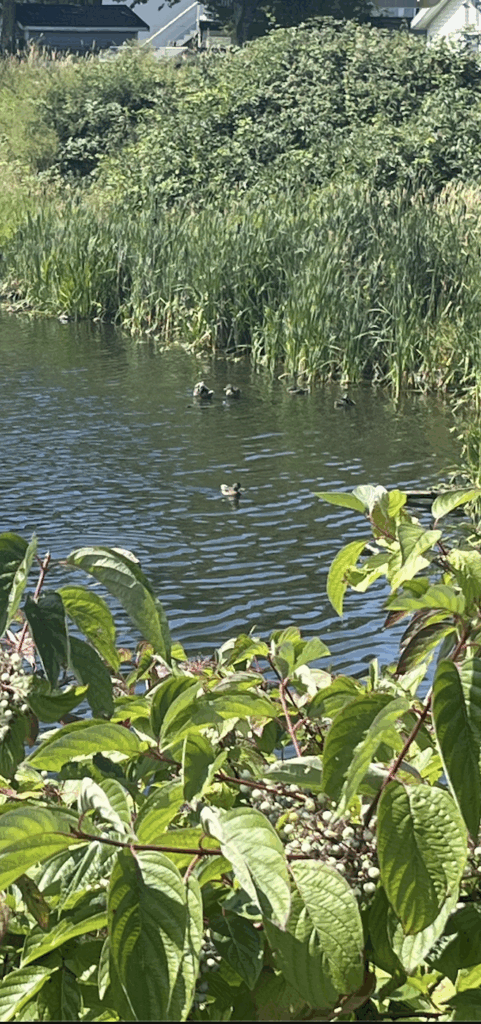
(Images of ducks seen in and around the creek)
“…masculinised humanity outside of a feminised nature not only grants men superiority over the environment, nonhuman animals, and women; it also gives men licence to dominate, control, and use these groups as instrumental means to their own ends” (Burrell & Pedersen, 2025, p. 383). This connects to creeks/water bodies in general because Deb mentioned how we have lost many streams. (Below is a picture, the red lines show us streams that do not exist anymore/had dried up). This connects to Burrell and Pedersen as communities evolved the drainage systems which then affected the streams and how they used to flow. This new drainage system and usage of water impacted these streams causing them to not exist. This approach shows the result of the decisions that we had make which impacted the nature that we should have been caring about. These non-existing streams teach us how it is important that we protect urban ecosystems and maybe turn towards feminist approaches which are more considerate of the environment.
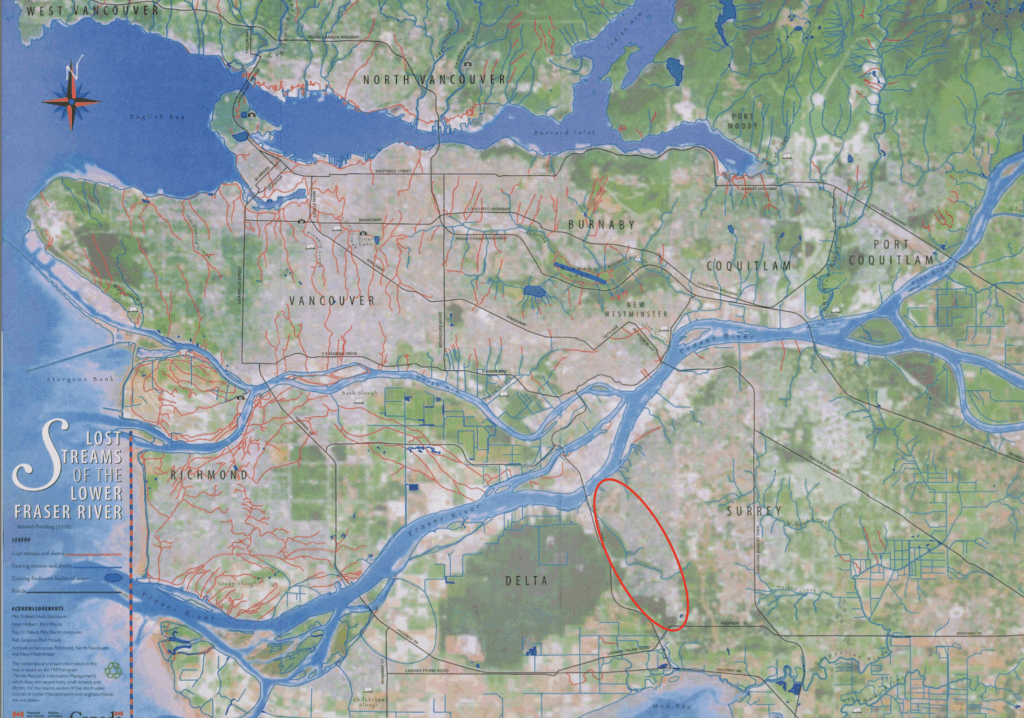
(An image of creeks that had existed before but now don’t)
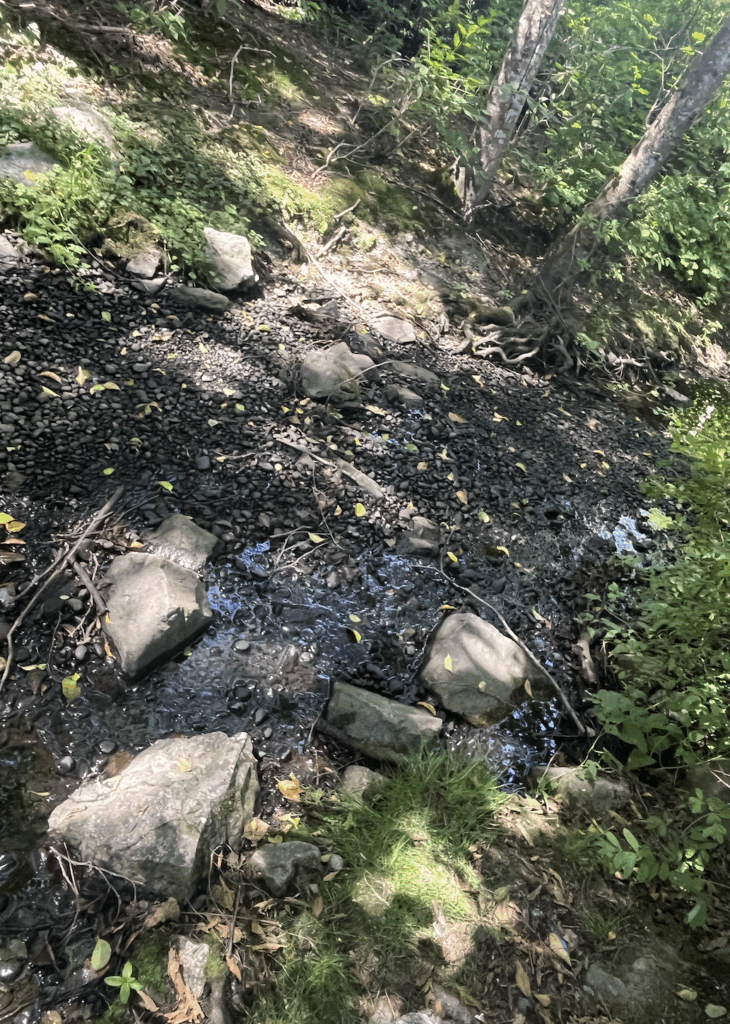
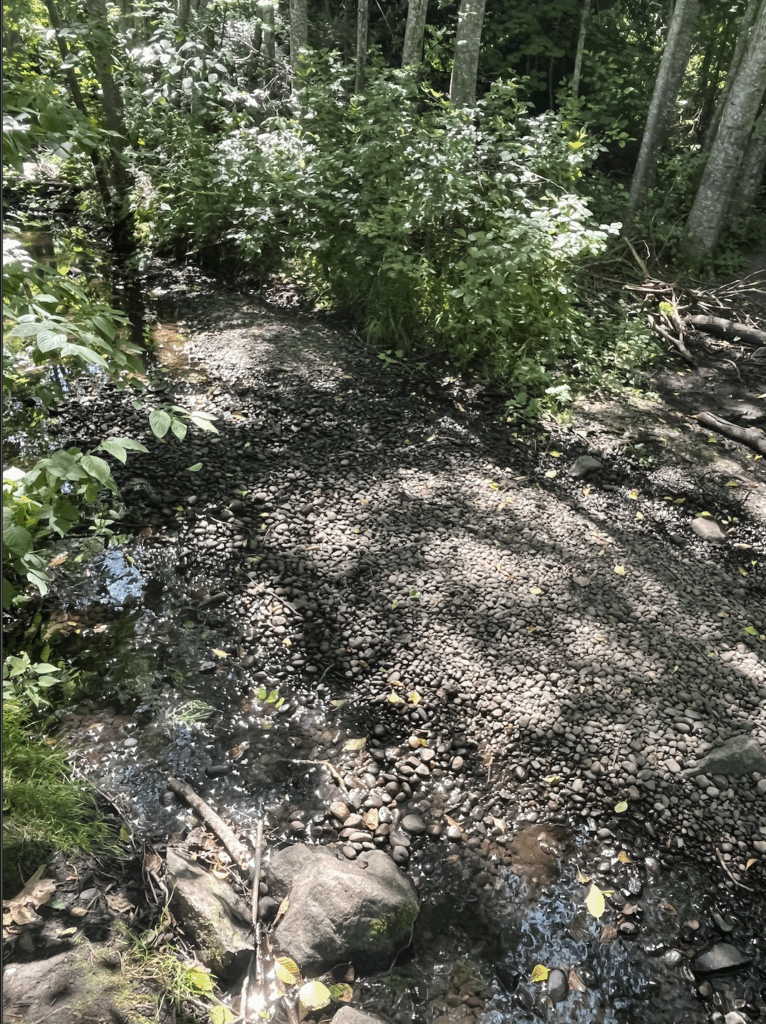
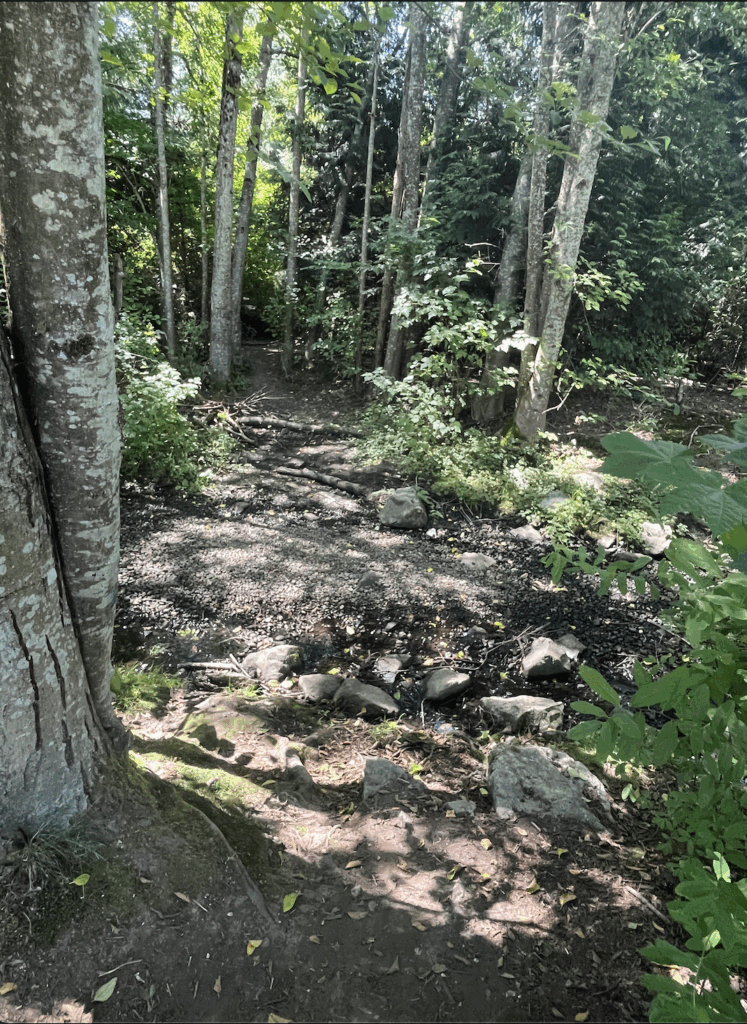
(Images of dried up areas in the creek due to the drought we are facing/climate change)
Community Littering:
Throughout the walk I also noticed a lot of garbage thrown near the creek. One step towards helping the creeks can be by taking care of it. We should maybe put signs of no littering and as a community clean the surrounding areas near creeks. We should also make sure that we do not flush down chemicals down the drains because most of it gets flushed into these creeks and lakes and endangers the species that call it their home. This all connects to an article by Jeff Ferrell. “[G]reen criminology…requires an appreciation of how harm is socially and historically constructed” (Ferrell, 2020, p. 640). This can be seen in terms of Cougar Creek as this sentence tells us that harms are created by us and not natural. All of this littering and harmful chemicals that are dumped are done by us humans with intention, we turn a blind eye to the issues that we know will be caused from our actions. All of this harm/environmental damage is due to the infrastructure and human decisions.
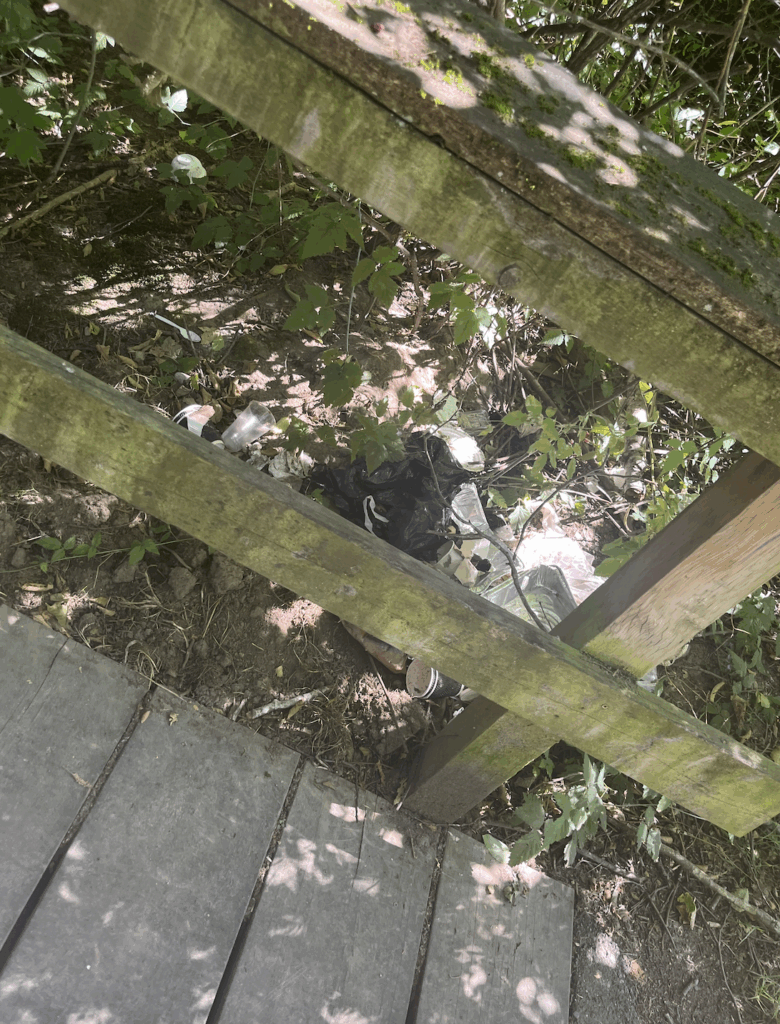
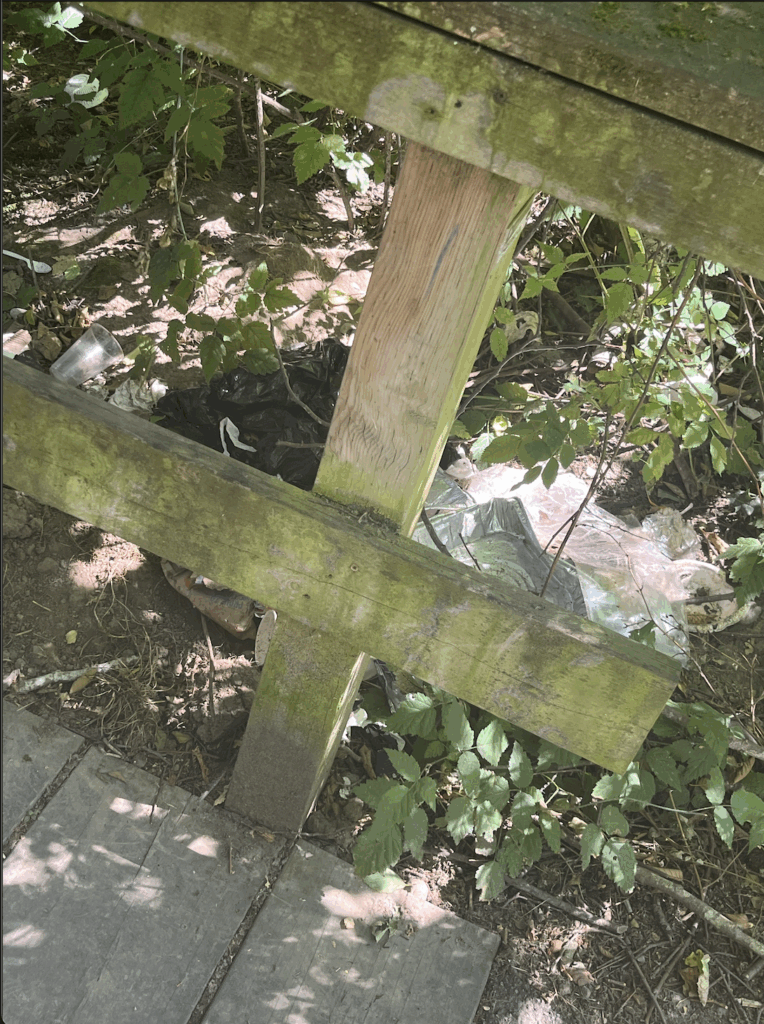
(A couple of images of the littering that people have done)
Conclusion:
Going to Cougar Creek has allowed me to learn so much more about this creek that I had never been to before. It has also helped me appreciate nature more by seeing how beavers build dams and their advantages and how blackberries bushes are invasive species that also protect the environment around them. This whole experience was very knowledgeable and made me understand green criminology through a better lens, understanding how climate change is moving faster because of our actions and how we humans add to the endangerment of so many species, including species that rely on small water bodies such as creeks.
To learn more about Cougar Creek and to learn how we can further protect our creeks, visit: https://cougarcreekstreamkeepers.ca/you-can-help/tips-for-home-and-garden/
References:
Burrell, S. R., & Pedersen, C. (2025). From men’s violence to an ethic of care: Ecofeminist contributions to green criminology. Journal of Criminology (2021), 58(3), 372-388. https://doi.org/10.1177/26338076241293145
Ferrell, J. (2020). Consumed by the crisis: Green criminology and cultural criminology. In Routledge international handbook of green criminology (2nd ed., pp. 638-657). Routledge. https://doi.org/10.4324/9781315207094-37
The 3-30-300 rule. (2022, June 6). UBC Magazine. https://magazine.alumni.ubc.ca/2022/spring-2022/environment-health-humanities/3-30-300-rule

Hi Simrit, I am also shocked by the fact that despite living all my life here, I didn’t know we had lakes around here. I found it intriguing to learn about the 3-30-300 rule as you mentioned: “we should be able to see 3 trees from our house, live in an area with 30% tree canopy covering, and have 300m of quality green space.” Seeing the water droughts firsthand was meaningful to me because it visually reinforced what our human activities are doing to the environment. Seeing the droughts helped me connect to our readings and understanding of species being at risk for extinction because of environmental factors, for example, water droughts, forest systems being destroyed, etc. All the pictures you’ve given provide more emphasis and reinforce the main message you are trying to spread. I think your connection to climate change was brilliant, as our actions towards environmental harm create a domino effect that contributes to climate change. Overall, great connection to class material and the field trip; great work.