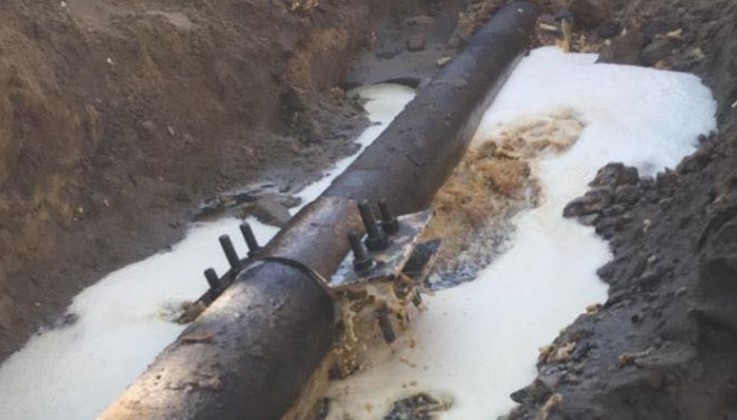
I was watering my garden not too long ago when i went home and decided to do some of the assigned readings for the week. Upon reading the pipeline portion, it struck me to be very egregious about the pressure that exists for the construction of pipelines (Cornell, Drobnies and Bray 2024). The most egregious harm without a doubt, in my opinion, is that of the lack of consent that these projects are treated with (Cornell, Drobnies and Bray 2024); in particular, those of first nations groups (Cornell, Drobnies and Bray 2024).
I myself could not imagine the garden being torn up for a pipeline project but despite such feelings of indignation, it pales in comparison to the much grander operation happening against the lands of first nations groups, which in addition are unceded (Cornell, Drobnies and Bray 2024). Well over 500 kilometers of indigenous land is being violated (Cornell, Drobnies and Bray 2024). To put that into a context that can well express the feelings of anger, people should feel at this violation; that would be the equivalent of a violation of an average person’s property well into the thousands of times.
In a very disturbing way, this undermines Canadas efforts at reconciliation with first nations groups as these underhanded plays belie Canada’s efforts of a genuine reconciliation. Instead, these could be used as arguments for why Canada is still a colonial nation. Especially when you take into consideration all the other affronts indigenous peoples face such as poor reserve maintenance and overrepresentation in jail populations ( https://indigenousfoundations.arts.ubc.ca/reserves/ and https://www.justice.gc.ca/socjs-esjp/en/ind-aut/uo-cs).
All this shows that we have a lot of work to do and in that respect it’s not hard to admire Tim Bray. Who would go on to be arrested in 2018 due to protest (Cornell, Drobnies and Bray 2024). While I’m not proposing that everyone should go out and get arrested, it’s the fact that Tim Bray went as far as he did and the fact that he choose to go further than just expressing discontent in the comfort of his own home (Cornell, Drobnies and Bray 2024). In addition, all too often people protest when an issue affects them directly. Living in surrey for some time now I can see people protesting about Palestine, nurse issues and so on but I have yet to see a protest about pipelines through indigenous lands.
Being able to care for a garden has sort of opened up an appreciation for nature, and it has helped me to become more sensitive to the issues that pipelines pose to the environment but to also the violations they represent to the people who were here first, the first nations.
Reference:
Cornell, R., Drobnies, A., & Bray, T. (Eds.). (2024). Standing on High Ground: Civil Disobedience on Burnaby Mountain. Between the Lines.

Hey Rajan,
I thought it was great how you linked a much more significant problem, like pipelines crossing Indigenous lands, to something as personal as nurturing your garden. It illustrates how most people would never tolerate that type of invasion on their own property, yet Indigenous peoples have endured it for generations; your parallel made the effects seem more real. I completely agree that when these initiatives take place without real consent, they undermine reconciliation. Burrell and Pedersen’s (2025) concept of an “ethic of care” was one thought your post brought to mind. They argue that thinking of land as something to control or exploit, rather than as something we are related to and obligated to care for, frequently results in environmental harm. That concept, in my opinion, is a good fit for your thought, as gardening inspires us to take our time, create a connection with the environment, and recognize its worth beyond profit. Like you, this project has increased my awareness of the connection between environmental challenges and justice, particularly in light of the ongoing disregard for Indigenous rights and connections.
References:
Burrell, S. R., & Pedersen, C. (2025). From men’s violence to an ethic of care: Ecofeminist contributions to green criminology. Journal of Criminology, 58(3), 372–388. https://doi.org/10.1177/26338076241293145
Hello Rajan!
I liked your post because you discussed Indigenous peoples and their right to the land. This is something that I feel like we learn about a lot in criminology courses, but never to the extent that we have learned in this class. You mentioned that over 500 kilometres of Indigenous land is being affected by these pipeline projects, and that’s very unfortunate to hear, especially because of Indigenous peoples’ past traumas and history with colonization (Cornell, Drobnies and Bray 2024). Also, where you spoke about the connection between caring for your garden and also becoming more environmentally aware is something I can relate to. I believe it’s because we created something all on our own by simply caring for it and respecting it, and I think it teaches us a much bigger lesson than we would have ever thought. Reconciliation was something that you mentioned in your post, and It’s one of those things that can’t be undermined. I think it’s interesting that reconciliation is talked about a lot, but when we compare it to the actions that the government and people in power take, it doesn’t add up. Thank you for your post!
Cornell, R., Drobnies, A., & Bray, T. (Eds.). (2024). Standing on High Ground: Civil Disobedience on Burnaby Mountain. Between the Lines.