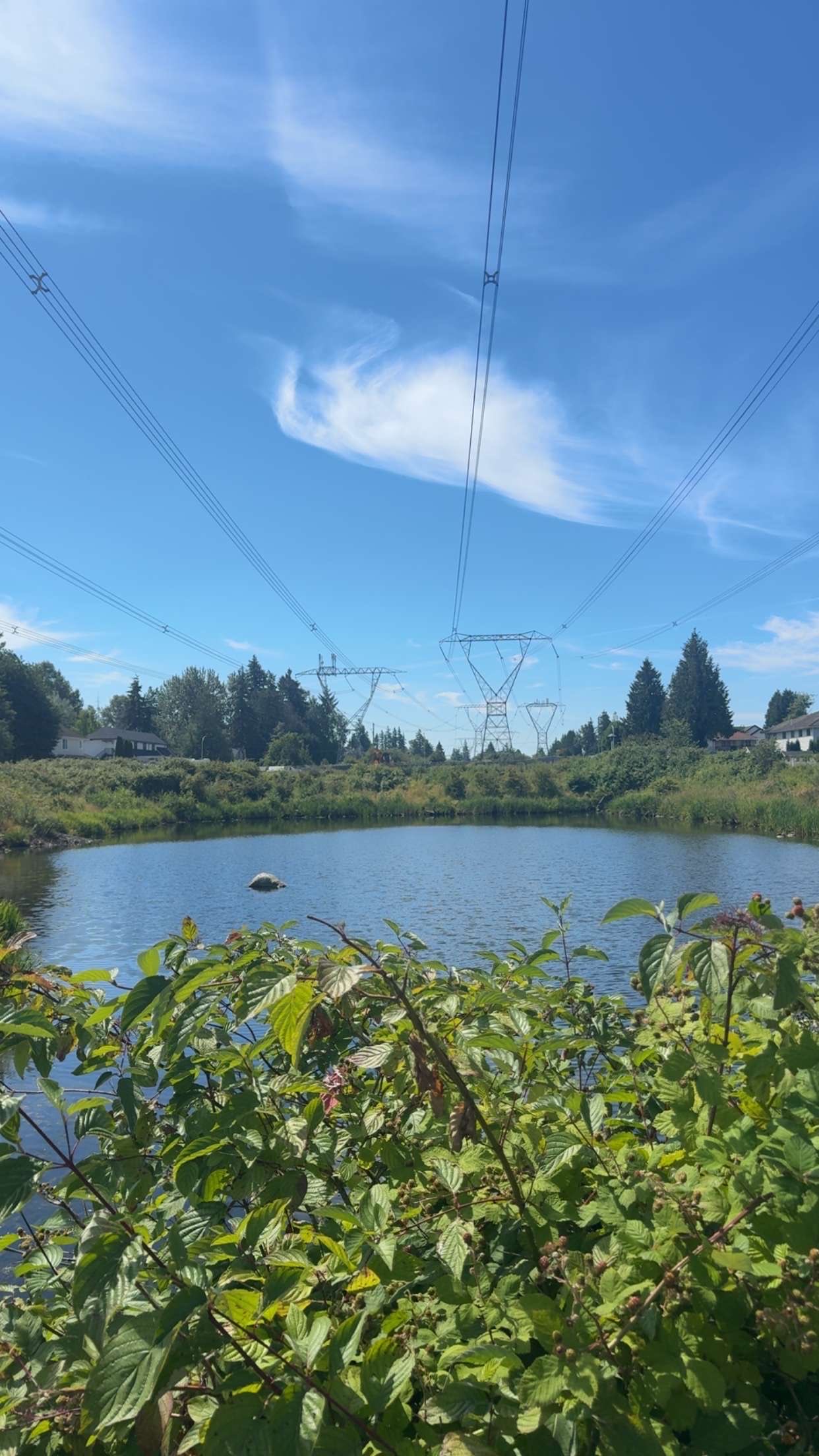
Introducing Katlia and Indigenous Knowledge
Author and writer Katlia explains her perspective on climate change through an Indigenous scope: The author explains how the Earth’s resources (the land, the water, the animals) were more than just resources to her family – they were elements that directly linked Katlia to her roots and traditional practices; Indigenous culture established respect for their land, making it sacred and cared for.
Katlia describes her family’s lifestyle in her book; her grandmother explained to her young that in order for them to wash their clothes, gain warmth in cold times, and cook meals, they must honour and recognize the core elements of the world, and not use the land in a way that is ignorant and dishonourable.
Katlia recognizes that living a traditional life is not something that is expected of, but it must be respected, as this way of life has been used for generations in Indigenous cultures and is still practiced to this day.
“Our language is land-based, people need to go on the land to speak the language and learn the culture” – Katlia.
What’s happening?
Indigenous communities and land are being torn apart. Meanwhile, government housing is often built in ways that are substandard and don’t consider how Indigenous communities have traditionally adapted to the harsh Northern winters (Allary, Shallard and Fayant, 2025).
To explain, the government has torn land apart to extract resources and they’ve built “housing”, but the “housing” is so inadequate that it is essentially uninhabitable.
Indigenous traditions are often built around hard work and resilience, making modern housing not only unadaptable, but unsuitable for Indigenous living.
Combining unadaptable housing and rising global temperatures, living conditions are extremely harsh for Indigenous communities. The rise in temperature also affects food scarcity, as it puts stress on the plants and animals Indigenous peoples traditionally harvest, adding more hardship to that many Indigenous communities already face.
What to understand:
Indigenous communities continuously respect the land and their environment, treating it as sacred and a gift. That being said, Indigenous communities are torn apart due to environmental ecocide and government expansions. Not only is this an injustice, but it is also inhumane and arbitrary – why should a community that puts such emphasis on respecting and cherishing land be forced to give up their home and land for companies and corporations that initiate environmental ecocide and white corporate crimes?
Right of Nature
Right of Nature:
Elizabeth Newton and Rachel Killean (2025) explain how the right of nature is both a practical legal tool and vehicle for ideological change (Newton & Killean, 2025). This ideology creates value for the right of nature, as being able to understand the importance of environmental care will prolong the longevity of our planet and allow ecosystems to remain habitable for our future generations.
I was able to connect this theory to our field trip led by Deb. The right of nature calls for recognition and appreciation for our land, water, and ecosystem, which was something I was able to experience while exploring the creek. I was able to understand that our land goes beyond just what humans need; the wildlife within the creek is supported through the environment and land. The creek illustrated a clear picture of an ecosystem and habitat, as animals such as beavers, fish, and birds can all be found living within the creek as an ecosystem. I was able to gain a sense of respect and admiration for local ecosystems like Cougar Creek, as it showed how important it is to protect our environment for future generations and wildlife.
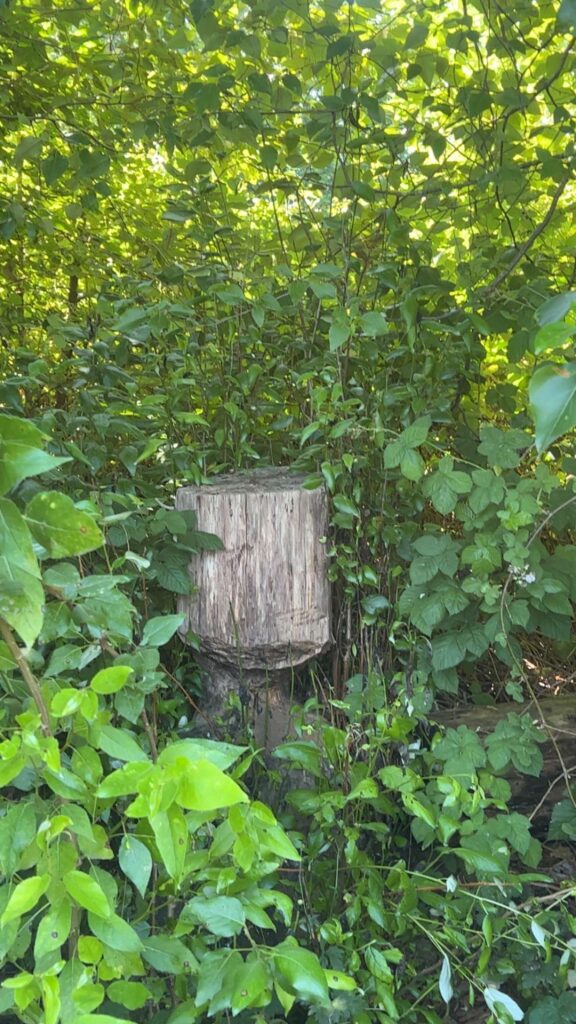
Here is a photo I took at Cougar Creek showing a log chewed through by beavers. This shows how diverse our land is, as beavers, ducks, and birds can all be seen sharing the ecosystem and the land.
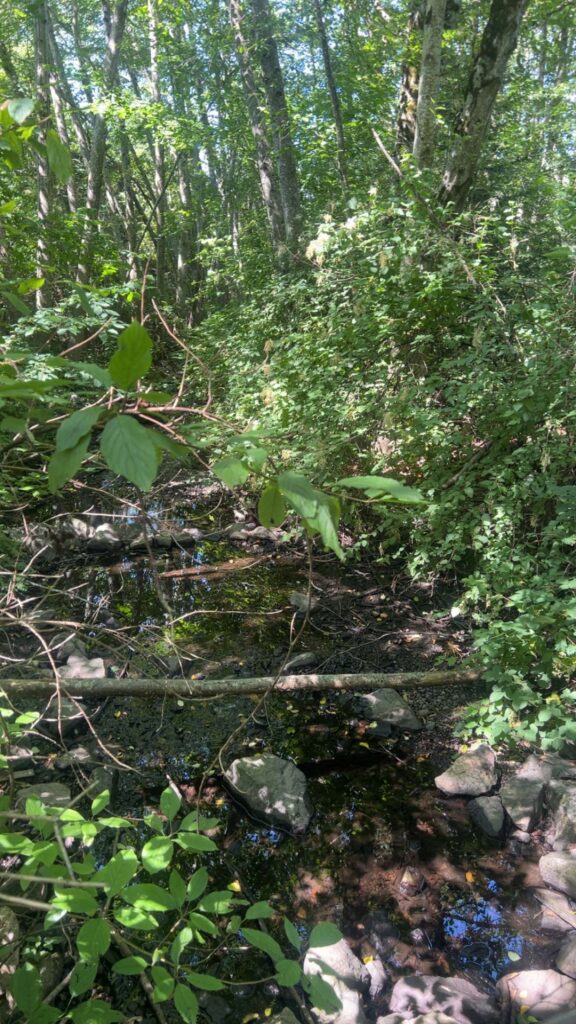
Finally, I have added a picture of one of the many streams located at Cougar Creek. The stream plays a critical role in the ecosystem, as it serves as a source of fresh water for wildlife. We must show respect and value for our water, as it is the foundation of the land and protects wildlife
Reference: Lafferty, C. (2026). Corporate criminals. In Mother Earth is our elder: A Northern Indigenous perspective on the climate crisis (pp. 207–225). McClelland & Stewart. Newton, E., & Killean, R. (2025). Review of Global Rights of Nature Movements. Palgrave Studies in Sustainable Futures, 403–420. https://doi.org/10.1007/978-3-031-55387-5_4 Killean, R. (2025). Ecocide law and policy. In R. C. Brears & J. Lindley (Eds.), The Palgrave handbook of environmental policy and law. Palgrave Macmillan.

Hi Gavin,
I found your blogpost to be very informative on both the course material, especially the Indigenous knowledge, as well as how you connect the course material to your experience with the Cougar Creek field trip. As you break down the environmental injustices Indigenous communities are currently suffering through the indigenous perspective, supported by the topics discussed by and within Katlia’s book. The Indigenous scope is also a very important lens in which I had also written my own blog post. Their traditional values of respect and treating the land as “sacred” have demonstrated the standard of how one should care for the land, knowing it is shared by more than just humans (Drissi, 2020). However, the unethical practices stemming from western culture have continued to damage and harm the natural environment. Ecocide, for example, is a concept that refers to “the killing of our home”, which is evident especially through excessive resource extraction and exploitation (Killian, 2025). I appreciate the emphasis you put on how Indigenous communities are specifically being destroyed rather than just mentioning the harms to the environment. As you acknowledge that not only is the construction of modern housing resulting in the destruction of the environment but also creating unsuitable living conditions for Indigenous communities that have historically relied on and cared for their sacred land. In its entirety, I thought you articulated your thoughts in a clear and well understood manner that layer out the foundations of the concepts connected to indigenous communities and the environment, all while providing an insightful connection between the “right of nature” and your experience with Cougar Creek, well done!
References
Drissi, S. (2020). Indigenous peoples and the nature they protect. In UNEP. United Nations. https://www.unep.org/news-and-stories/story/indigenous-peoples-and-nature-they-protect
Killean, R. (2025). Ecocide Law and Policy. In: Brears, R.C., Lindley, J. (eds) The Palgrave Handbook of Environmental Policy and Law. Palgrave Studies in Sustainable Futures. Palgrave Macmillan, Cham.