

Due to the socially driven negative environmental side effects of corn and other starch-based crops, scientists are looking to lignin, cellulose, chitin, food waste, and other non-petroleum-based resources for more sustainable ways of producing PLA.
Cheap hazardous fertilizer, GMOs, and the dedication of crops are some of the reasons why, although made from natural resources and biodegradable, the bioplastic PLA is not as environmentally friendly as it could be. Research is being conducted on different natural resources that can be used to create PLA, such as lignin, cellulose, chitin, and food waste.
Lignin is an organic polymer that gives cell walls their rigidity is being used by Oak Ridge National Laboratory to research the ways it can be used to combine with ABS (which can be recycled) to 3D print with. More information can be found here in an article by Engineering.com.
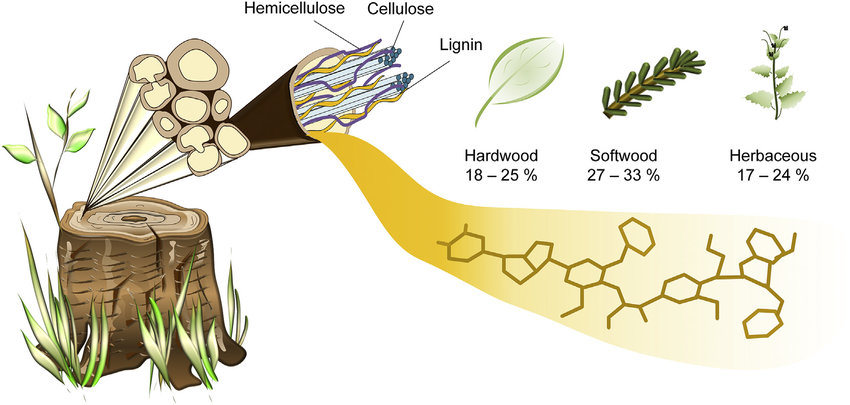
https://www.researchgate.net/figure/Occurrence-of-lignin-in-nature-Terrestrial-plants-contain-substantial-fractions-of_fig1_332244323
Cellulose is “the most abundant organic polymer on the planet,” and is the main substance found in plant cells. Below is a picture depicting where cellulose lives in a plant cell.
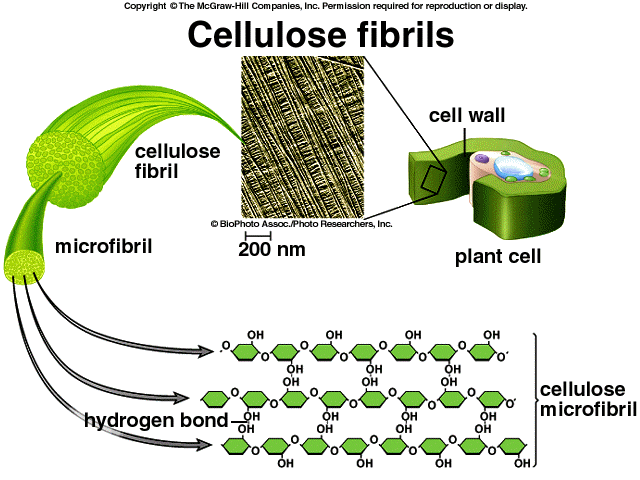
https://socratic.org/questions/why-is-cellulose-important-in-our-diet
Chitin is “a major component of the insect cuticle (skin)” (Slack, 2013). Chitin is found in the beaks of squids, the scales of fish, the exoskeletons of crustaceans and insects to name a few, and is being looked at and experimented with for 3D printing.

https://ibiologia.com/chitin/
Food waste can also be processed into PLA, which can be used not only for 3D printing, but also for textile manufacturing, keeping the same biodegradable qualities.
Video by: CityUSEE
My Two Sent.’s: I believe this is the future of PLA production. As more people start boycotting big companies like Cargill (who own NatureWorks, which in turn runs Ingeo) because of the terrible environmental practices, people will be looking to support companies that offer alternative renewable resources utilization.
Molitch-Hou, M. (July, 2018). Plant-Based 3D Printing Material Developed by ORNL. Engineering.com. Retrieved from https://www.engineering.com/3DPrinting/3DPrintingArticles/ArticleID/17251/Plant-Based-3D-Printing-Material-Developed-by-ORNL.aspx
Slack, J. (2013). Chapter 436 – Viral Cathepsin. Handbook of Proteolytic Enzymes, 2, 1902-1906. https://doi.org/10.1016/B978-0-12-382219-2.00435-X
Hi Birk, this is a great video! I had no idea that food waste could be turned into PLA. This could help to form a circular economy between food and food packaging. What an exciting area of research, I can’t wait to see what you learn next!