First Thoughts
Originally, I had simply taken an interest in the green criminology course offered at KPU based on the recommendation of my peers that were a part of the class last year. I did not really understand how gardening and the concepts of green criminology would relate to one another at first but as we enter the fourth week of class my understanding has drastically changed. Of course I did not expect this course to be taught like the usual lecture or seminar criminology course but I also failed to account for how diverse and unique the experience was going to be.
Current Progress
So far, we’ve worked in groups to choose seeds and starts, plant those seeds/starts, and from then on till the end of the semester continue to grow and take care of our plants. In terms of personal results from the past three weeks, our “grand rapids” lettuce as well as the cosmos “candy stripe” flowers have begun to grow.
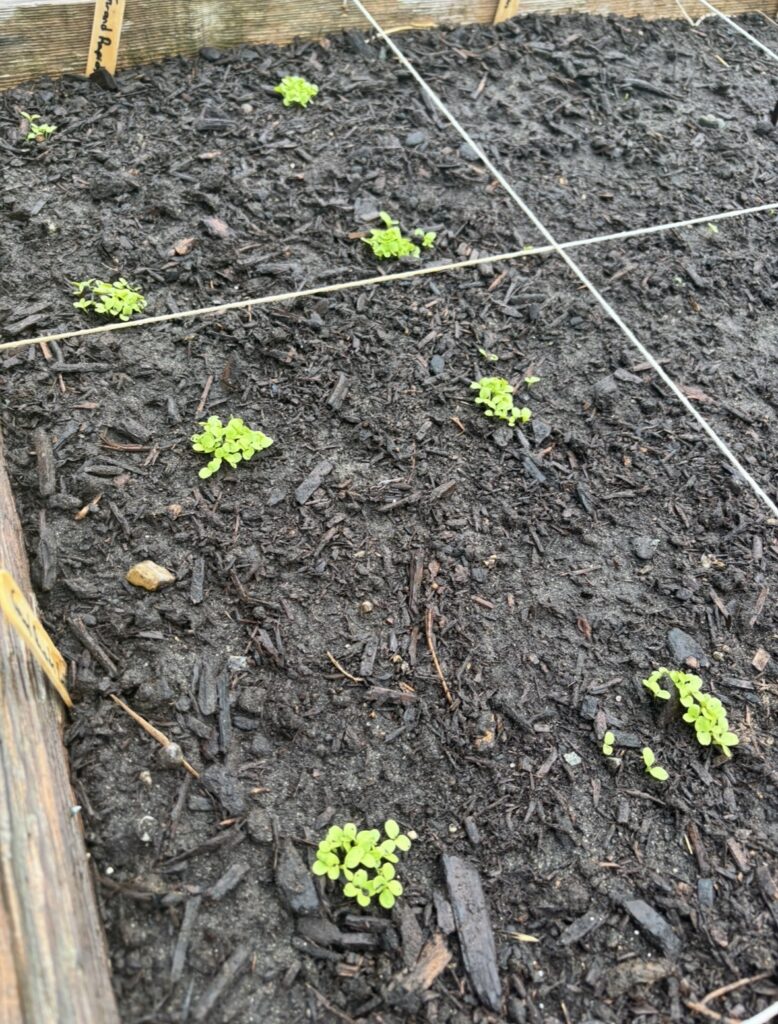
Grand Rapids Lettuce Early Growth
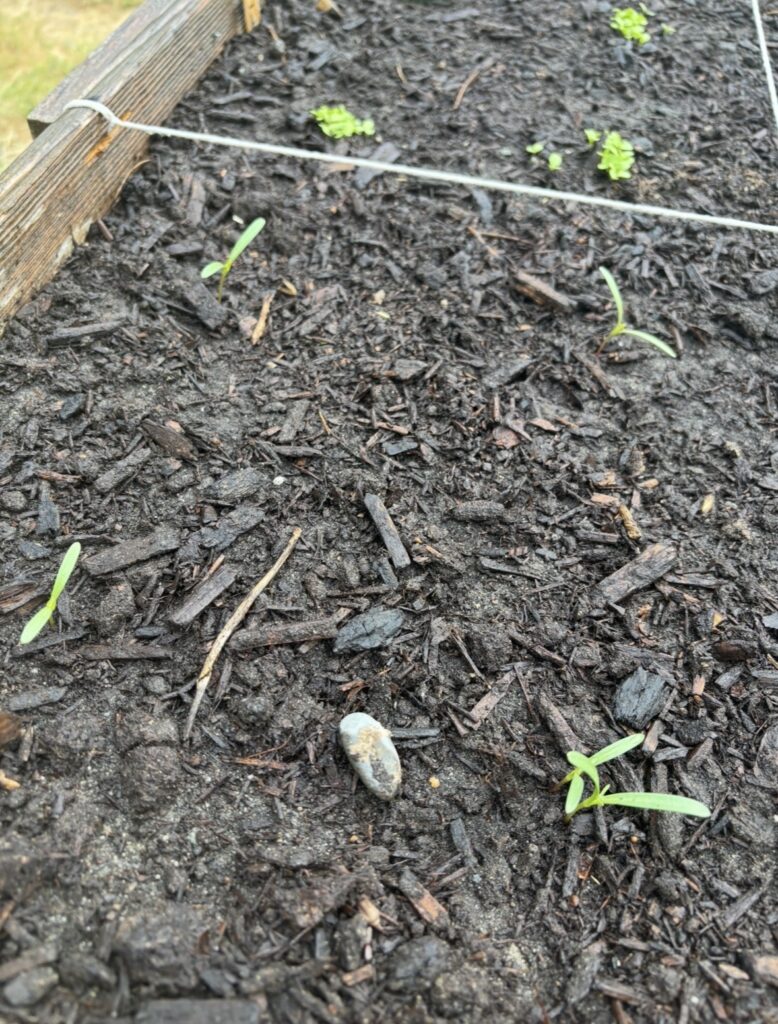
Cosmos “Candy Stripe” Flowers Early Growth
My Understanding and Application
Besides the growth of the plants there has also been a growth in my understanding of this course. The responsibility of taking care of my own plants has garnered my attention to accountability and action, especially that of big corporations who claim that they positively contribute to the environment. The term “greenwashing” reveals how big corporations create “a false sense of social partnership [that are] invoked to present an impression of improved environmental behaviour [to] reassure consumers” (Brisman & South, 2018, p. 135). False and deceptive marketing mislead the public and most importantly they unethically void accountability for corporations because there should be no “participation trophies” for people using such strategies through banners, advertisements, and slogans. To be real, there must be action. This was a problem I knew existed because social media is very accessible and visible in today’s society, yet I never would have considered its connection to gardening had the concept not been intertwined as one of the concerns for green criminologists.
The opportunity to care for my own garden has also led me to further be mindful of various types of harms that occur in relation to food justice. Many criminology theories and concepts applied in the field are often in relation to the offender, which creates certain gaps of information that otherwise would be filled if we also looked past the offender. Justice in green criminology is not just about focusing on the environment, but also the crimes committed against the “food consumers”, “food producers”, and “animals” (Tourangeau & Fitzgerald, 2020, pp. 206-209). For example, food fraud “refers to any intentional act of altering, mislabeling, misrepresenting, substituting, or tampering with any food product” (Tourangeau & Fitzgerald, 2020, p. 206). This would be considered a crime against consumers because it can profoundly impact their health and well-being. It is often done for financial gain or some sort of manipulative practice during any point of the supply chain. As a consumer myself, I would not want to deal with such issues, so having this type of crime considered through the green criminology lens sheds light on finding solutions. The exploitation and harmful working conditions food producers bear is also a crimethat needs to be addressed more often, especially regarding slaughterhouses and farmworkers (Tourangeau & Fitzgerald, 2020, p. 207). Because as I’ve been working on my garden, I’ve grown to show more appreciation for the individuals that spend their time, effort, and labour on environmental sustainability and growth.
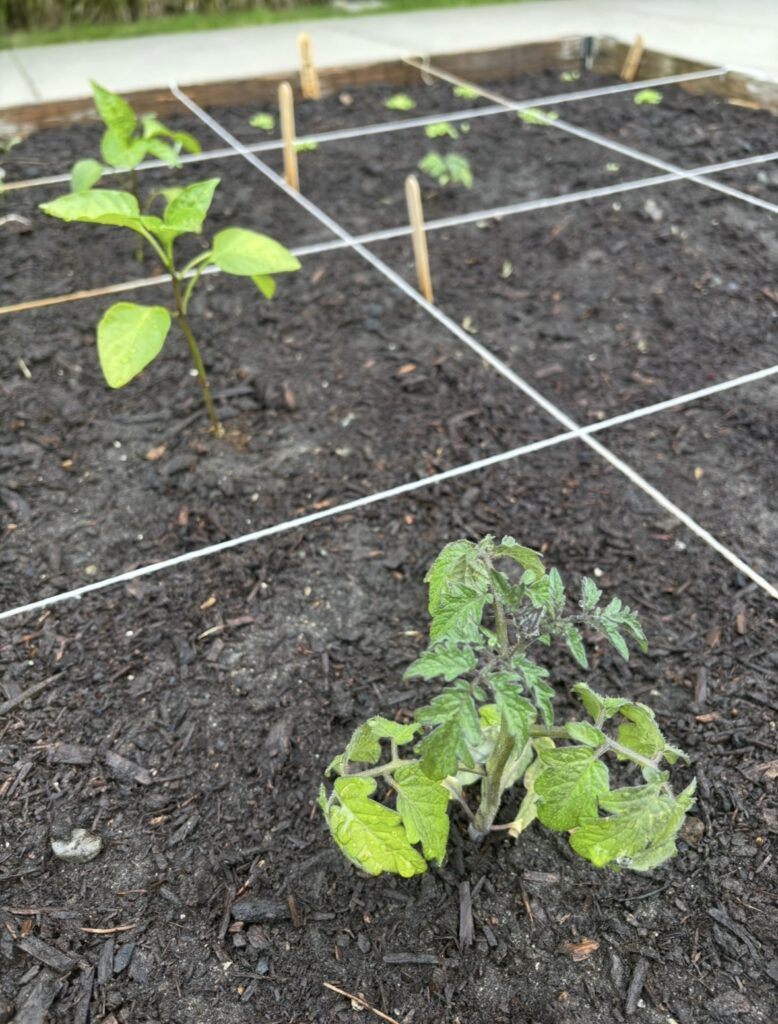
Plants at KPU Garden Boxes
Conclusion
As a whole, I believe that my mindset has shifted in terms of comprehending the importance of finding deeper and more systematically routed problems through the lens of green criminology. By participating in the gardening assignment, I continue to learn and reinforce those ideas.

Hi Jass, it’s great to see the appreciation you have for green criminology and the various connections you have made throughout your blog post. It’s great to see your gardening project is going well, and to recognize the effort that goes into nurturing your crops. With that being said, I really like how you made the connection to the working conditions these food producers endure, which are usually overlooked. These workers endure a lot of physical pain that takes a massive toll on their mental health. As a result, this can cause burnout, strained relationships, ptsd, etc. I believe you did a great job in explaining other green criminological terms, such as greenwashing and food fraud, from the assigned readings. Overall, great work and can’t wait to see how your garden project turns out in the end.