A New Perspective on Food and the Environment
Before taking Green Criminology, I never thought about the connection between gardening and environmental issues. I saw gardening as a hobby growing up, and a way to grow plants and vegetables. I grew up learning how to do gardening with my grandpa; that is the most precious memory I had with him. I learned the basics of planting, and I will always be grateful for that. However, after learning about Green Criminology, I began to understand how everyday activities can be connected to larger environmental concerns.
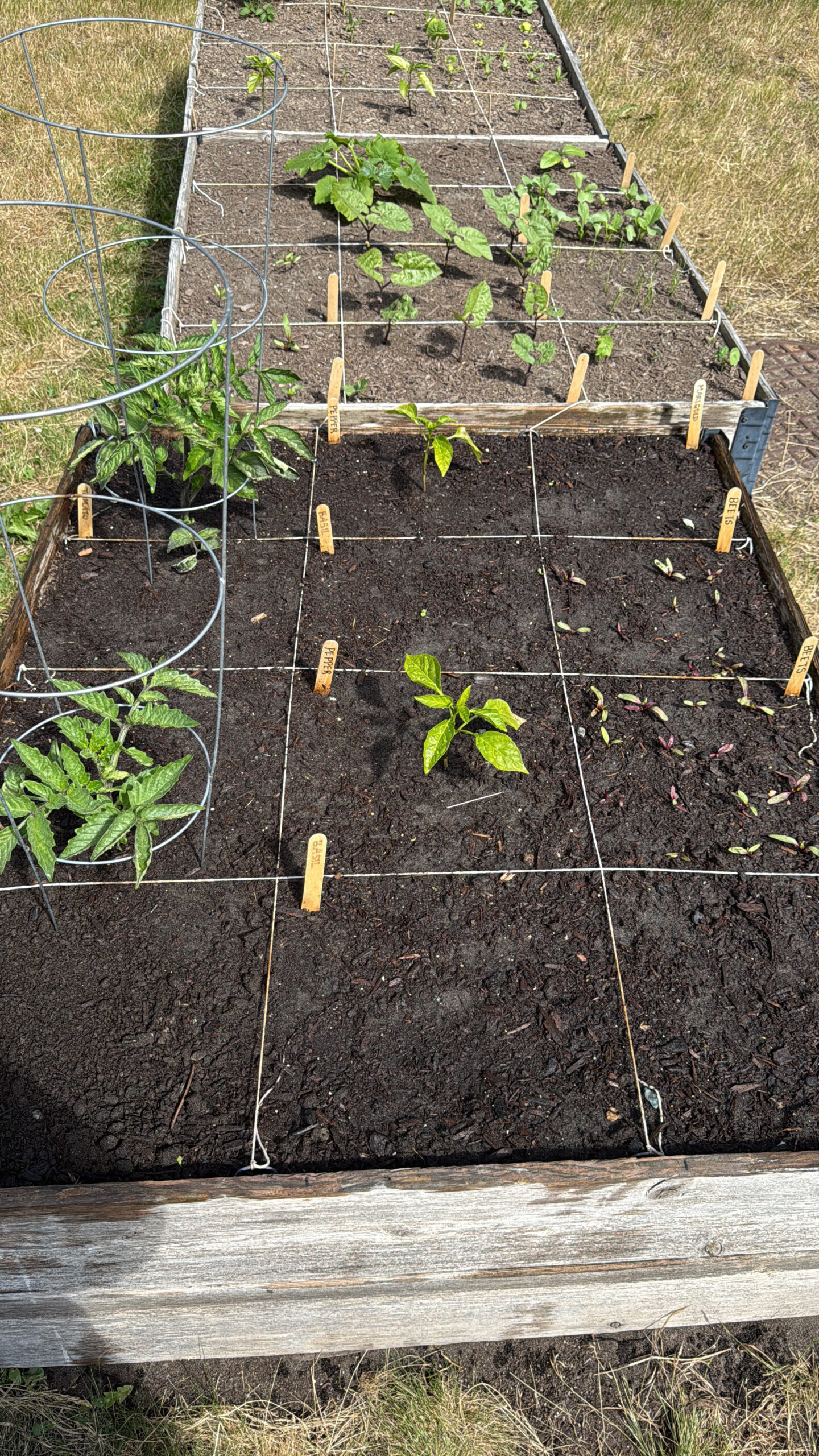
Our garden contains vegetables such as tomatoes, peppers, basil, beets and marigolds. Looking after these plants and vegetables has helped me think more about where food comes from and the resources required to produce it. I have learned so far that Green Criminology teaches us that environmental harm is not always recognized as a crime, even when it negatively affects ecosystems, animals, or communities. Learning about these issues has made me more aware of the environmental impacts of large-scale food production, transportation, and waste. (Tourangeau & Fitzgerald, n.d)
Gardening has also taught me about sustainability. Growing food at home can reduce reliance on food that has travelled long distances and requires significant packaging and transportation. Although my garden is small, it reminds me that individual actions can contribute to reducing environmental harm and promoting more sustainable ways of living.
One of the important lessons I have learned from Green Criminology is that humans are connected to the natural world. Looking after these plants for a few weeks now has given me a greater appreciation for the environment and the responsibility we have to protect it. Gardening has shown me that sustainability is not only about large policies and global issues, but also about the choices we make in our everyday lives.
Through the course readings, I have learned that green criminology encourages us to think beyond traditional crime and consider the environmental and social harms connected to everyday systems. (Tourangeau & Fitzgerald, n.d)
*Edited using Grammarly
Tourangeau, W., & Fitzgerald, A. J. (n.d). Food crime and green criminology.

Hey! It was a pleasure reading your blog because your blog explains how gardening can help us learn about environmental problems. Just like you, I had never considered the idea that the daily routine we go through has anything to do with the environment. Your talk about sustainability and food production was really insightful.
One idea from chapter 13 that I find interesting that correlates to your discussion is that green criminology provides an opportunity for a critique of the conventional concepts of crime and harm through the consideration of the harm done to people, other animals, and nature (Simmons et al., 2023). Your example of producing food locally shows how green criminology promotes thinking about the harm done by various systems, including agriculture, transport, and waste management.
Your point regarding sustainability being a daily affair was also quite insightful because gardening does not only offer food; it helps create an attachment to the environment among people who realize their obligation to care for the environment. You have highlighted that environmental change is not only about policy changes but small decisions made by people on a daily basis.
Hi Farzana, I enjoyed reading your post, and the part that stuck with me most was the memory of learning to garden from your grandfather. It made me think about how much the knowledge of food sustainability and growing used to be passed down informally through families and communities, rather than taught as some super-specialized, optimized skill. Gladkova talks about this when she describes how industrial farming has changed food production to focus on the profit and the efficiency rather than the kind of attentive labour that small scale, traditional growing requires (Gladkova, 2023). Reading your post, it struck me that the disconnect between people and food is not just environmental, it also takes the shape of a loss of skill and relationship that gets passed down generations. The lessons from your grandfather feel like a kind of quiet resistance to that loss of skill, even if that was not the intention. It also makes me wonder how much knowledge has already been lost as fewer and fewer people grow their own food.
Sources:
Gladkova, E. (2023). The harms and crimes of farming/food. Oxford research encyclopedias, criminology and criminal justice. Oxford University Press. https://doi.org/10.1093/acrefore/9780190264079.013.776