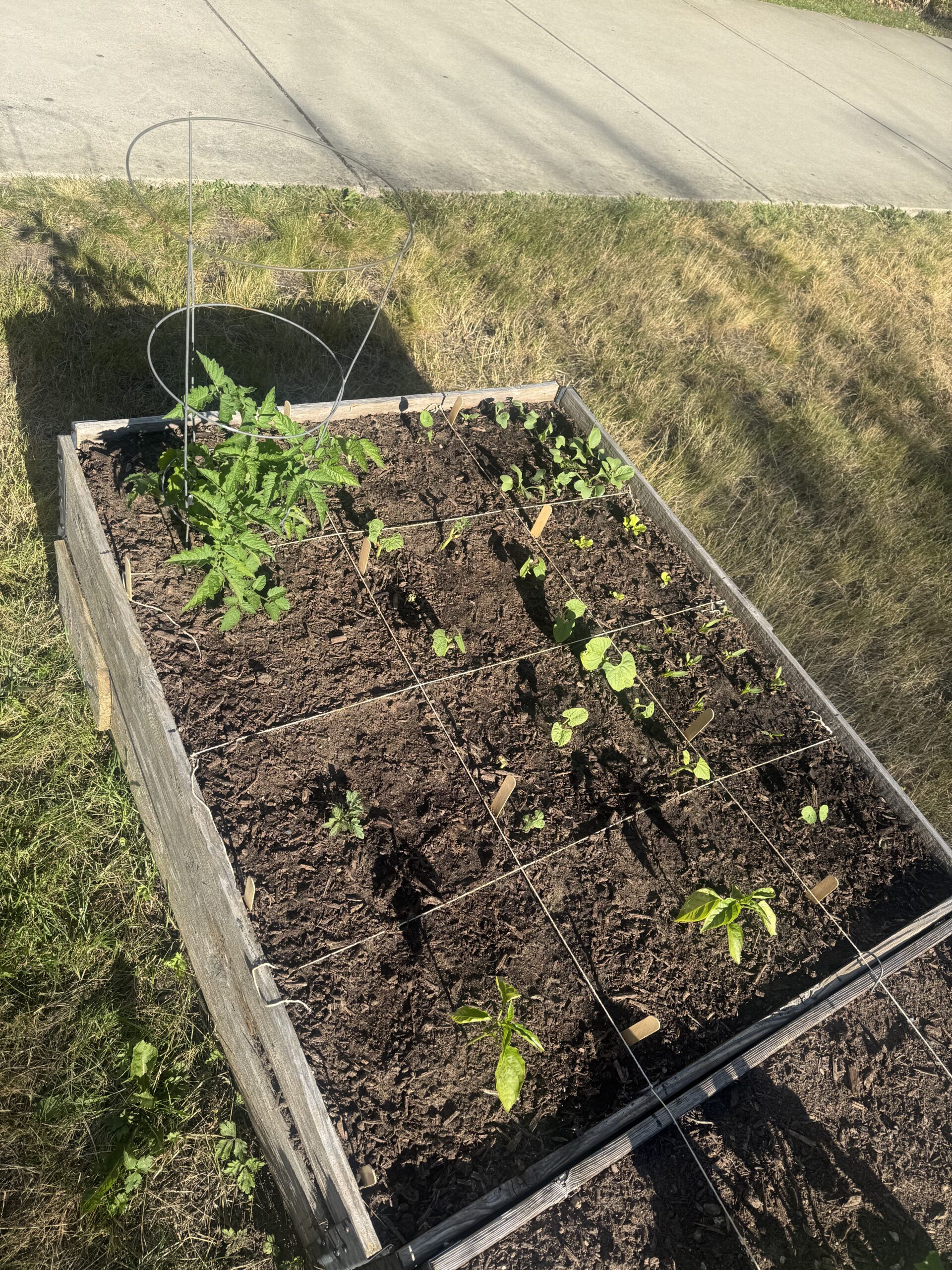
When people hear that my parents own a farm, they usually assume I know how to grow food. The truth is, I’m still completely new to it. I never had much interest in farming or gardening growing up. That only started to change last year when I took an Indigenous Food Sovereignty class and visited the UBC Farm. Listening to people speak about the spiritual relationship between humans, plants, and land made me see trees and crops as something more than just resources. Since then, I haven’t looked at nature the same way. Even with that new perspective, I had never actually grown anything myself. So when we planted our first seeds in the garden, it felt like taking a small but meaningful step into a world I had only observed from a distance. I finally understand why people say, “My plants are my babies”. I constantly worry about whether I’m watering them enough or not while checking on them more often than I expected. That experience also made me think differently about the larger food system. If someone like me (who never cared much about gardening) can become attached to a few seedlings in such a short time, how do people who work with food production every day allow powerful corporations to exploit their land and the living things they depend on?
Reading about food crime made this contradiction impossible to ignore. Tourangeau and Fitzgerald explain that many harmful practices, including preventable animal suffering and deaths during transportation, are often accepted simply as the cost of doing business rather than treated as serious harms. That realization was frustrating because it showed how profit can outweigh care. The readings on green cultural criminology pushed my thinking even further. Brisman and South argue that modern consumer culture encourages endless consumption while disconnecting people from the environmental consequences of their choices. Instead of respecting nature, it is now considered a commodity that exists only to be bought, sold, and exploited. Looking at our tiny plants, I found it difficult to imagine treating living things as disposable products. My experience in the garden also connects with cyan criminology, which combines green and blue criminology by recognizing that environmental harms on land often affect water systems as well. The choices made in agriculture (whether through pesticides, pollution, or corporate practices) do not stop at the edge of a field. They flow into rivers, lakes, and oceans, affecting ecosystems far beyond where the harm begins. More than anything, this garden experience has made environmental issues feel personal instead of abstract. It reminded me that caring for even one small plant creates a sense of responsibility. If more people had that connection, perhaps it would be harder to ignore the environmental harms caused by industries that prioritize profit over the health of the land, animals, and communities that they depend on
Generative AI Acknowledgement: AI was used to fix the grammar and improve the flow – the central idea and reflection was created by the author.
Sources
- Brisman, A., & South, N. Green Cultural Criminology. (Course reading)
- Tourangeau, W., & Fitzgerald, A. J. Food Crime and Green Criminology. (Course reading)

Hi JJ! I enjoyed reading your blog post because it made me think differently about the connection between people and the environment. I thought it was interesting how taking an Indigenous Food Sovereignty class and visiting the UBC Farm helped shape the way you see trees and crops as something more than just resources. It shows how a simple experience can change the way we think about nature and our relationship with it. What stood out to me most was your point about becoming attached to your seeds after spending time caring for them. It made me realize how easy it is to overlook the care, time, effort and energy that goes into growing the food we eat. Your discussion of food crime was also really interesting to me. Tourangeau and Fitzgerald (2018) explain that green criminology encourages us to think about harms to animals and the environment, even when those harms are legal and considered normal practices. I also liked your connection to the green cultural criminology reading because it shows how consumer culture can make people less aware of the environmental impacts of their choices (Brisman & South, 2018).Overall, your post reminded me that developing a connection with nature can make environmental harms feel more personal and much harder to ignore.
References
Brisman, A., & South, N. (2018). Green cultural criminology. In Routledge handbook of critical criminology (pp. 132-142). Routledge.
Tourangeau, W., & Fitzgerald, A. J. (2020). Food crime and green criminology. In Routledge international handbook of green criminology (pp. 205-221). Routledge.
*Edited Grammar and improved flow using GenAI*
Hi, I liked your personal connection and how you showed that experience can change our perspective over time. I found it interesting that growing up on a farm did not automatically create a connection to nature until you took the Food Sovereignty course. Sometimes it takes learning from a different perspective and having hands-on experiences to see things differently.
The part that stood out to me was when you talked about becoming attached to your plants. I think a lot of people can relate to it even if they have never did gardening before as one has a responsibility to take care of them everyday even if it’s just watering one’s plants. This also made me think that how disconnected many of us are rom where our food comes from. We buy fruits and vegetables from stores without thinking about everything that
Is involved in producing them. Your experience showed me that when people have a direct connection to nature, environmental issues become much more personal instead of feeling like distant problems.
Secondly, I liked the you made a point about corporations and food production, it is very wrong that corporations prioritize profit over environment and animal welfare. One thing I have learned so far is that these things are often not seen as a crime are a considered legal and normal within this industry. Green criminology challenges us to look beyond just the legal point of view and think of all these practices cause in our society to ecosystems, communities and animals.
Lastly, your reflection reminded me that environmental harm is not always easy to recognize because many harmful practices have been normalized and that building a personal connection with nature can change the way we think about food production and our responsibility toward the environment.
*This comment was proofread using ChatGPT for grammar*