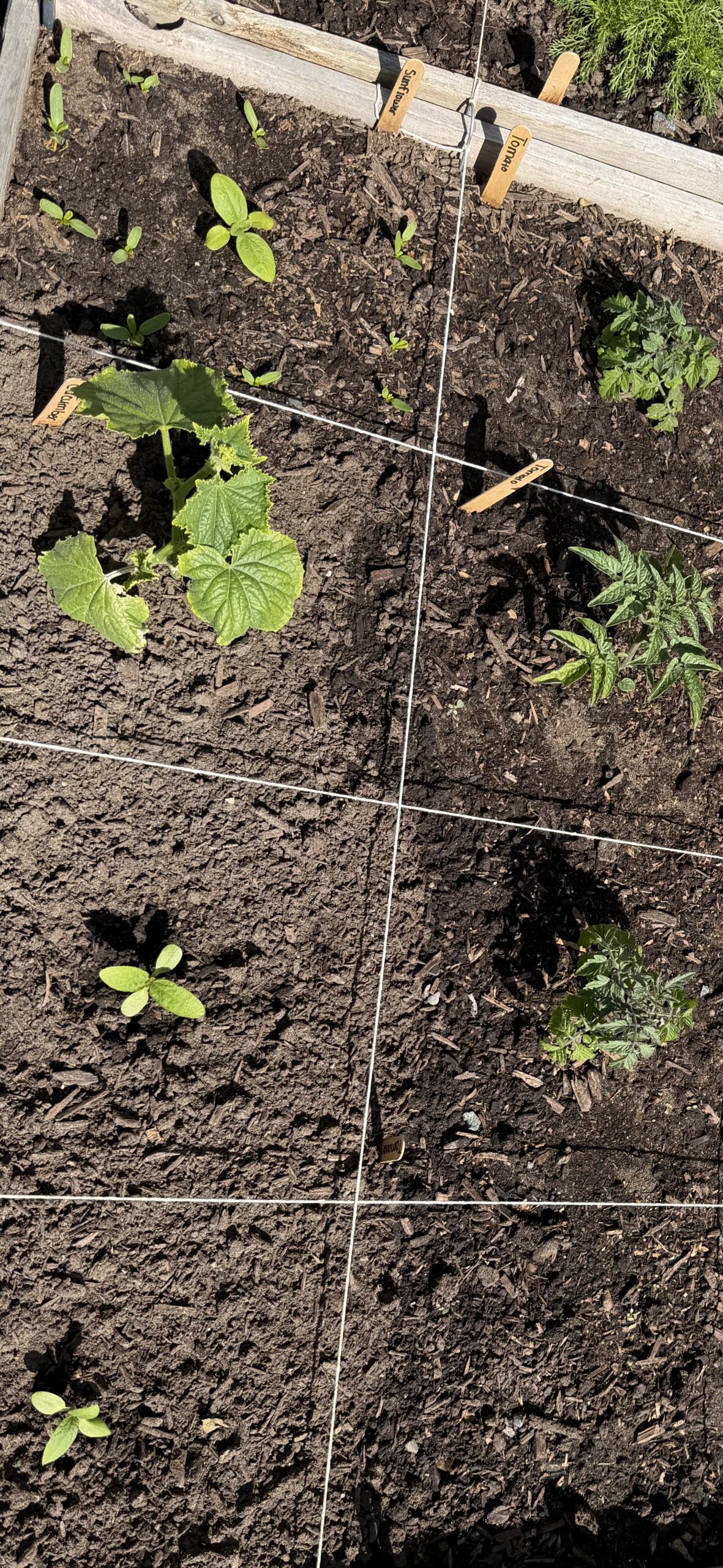
Throughout the process of starting our garden, there were a few main concerns I had. The first few days directly after seeding, it was quite cold and rainy and I was worried that this would negatively affect the starts of our garden. However, the rain turned out to have a positive affect on our growth. Due to the fact that the raindrops were quite light and that it was not heavy rain, it did not over water our garden, or push the seeds out of the garden. The rain allowed for more time for germination, and the extra watering job was less for us in the beginning. Once the rain cleared, we had extremely hot weather which then encouraged growth. Although we had to reseed a few of our squares that had flower seeds in them, we have been successful in growing and there is varying growth of seedlings in every square. With the extremely hot weather we had, it allowed our plants to grow extremely large, but not all plants faced the same level of growth which slightly concerned me, as some larger ones could possibly be blocking the smaller seedlings and preventing them from growing.
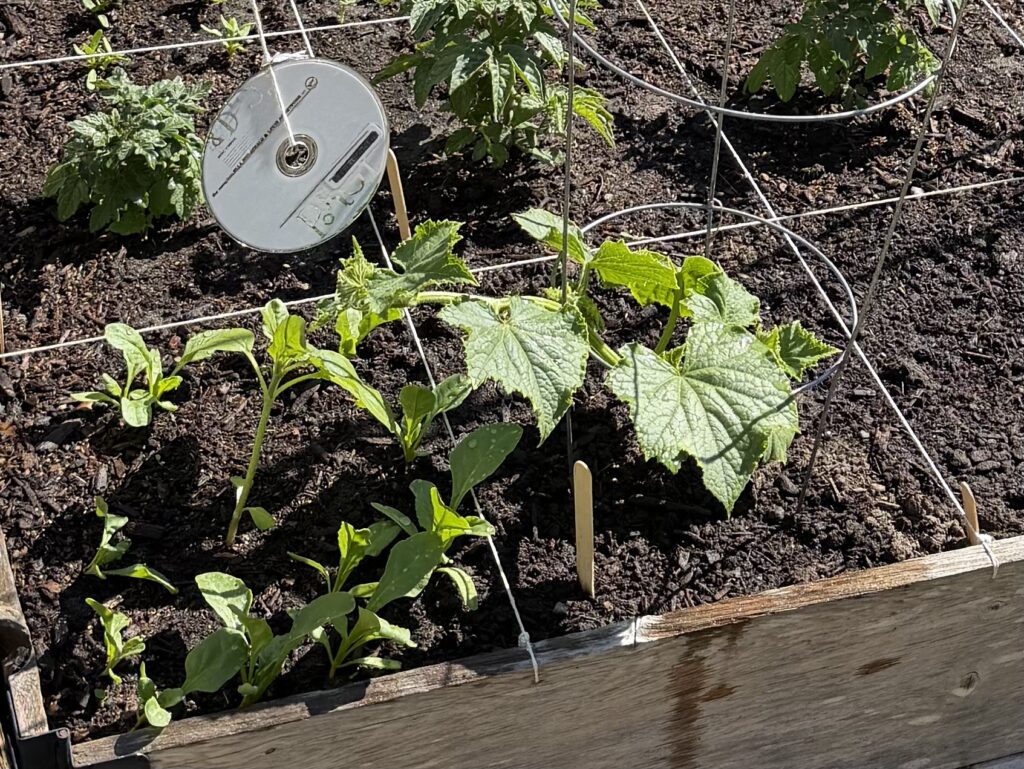
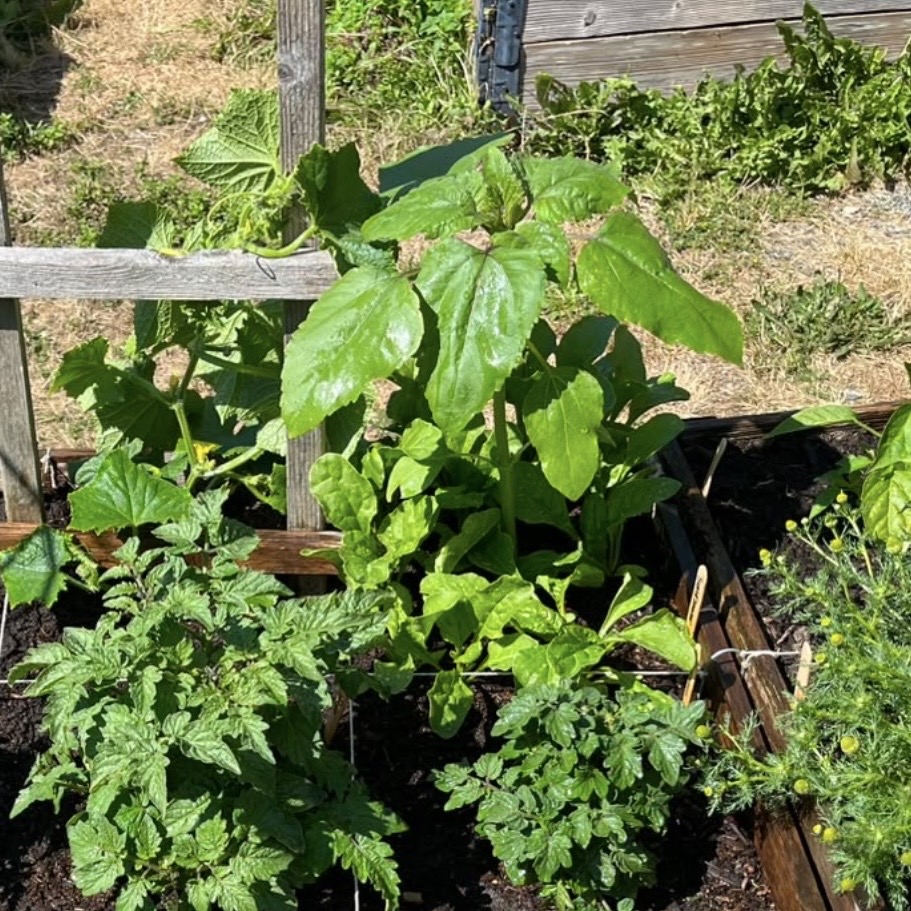
Our Sunflower, (in the middle on the left) on June 19th Our sunflower on June 29th! it has grown like crazy
Our Negatives With Too Much Sun
Although warm weather has a lot of positive affects there was a few drawbacks I noticed. The first was that after a few days of extremely hot weather, we noticed burn marks on the leaves of our cucumber plant. This was an indication that the top temperatures reached were a little bit too much heat for the plant. With plants on these days. If we didn’t water slightly more on these days, our garden was completely dry within a few hours.
A Closer Look Into Local Environmental Justice
While reflecting on how our local climate affects our gardens, we also learnt about local environmental justice movements, and climate justice movements in Canada. An example is the resistance against the Trans Mountain Pipeline. Often times Indigenous communities are blamed for overuse of resources, and are expected to reduce emissions. When in reality the blame is on large corporations and governments that have profited from fossil fuel extraction for decades (Katlia, 2024 pp. 210-213). The civil disobedience on Burnaby mountain demonstrates how Indigenous land defenders challenged both the destruction of their environment and the unequal power structures that protect corporate interests while ignoring Indigenous rights and consent (Cornell., 2024 et al., pp. 3-7). This movement is also a strong example of collective action and how Indigenous communities respond to harm and protect their land.
Resources Cornell, R., Bray, T., & Hall, B. (Eds.). (2024). Introduction and backround. In standing on high ground: Civil Disobedience on Burnaby Mountain (pp. 1-11). Between the Lines Katlia. (2024). Corporate Criminals. In Mother Earth is our elder (pp. 206-225) McClelland & Stewart

Hi Krista,
I can relate to your struggles with watering the garden. As beginners in gardening, it was challenging to find the right time to water the garden due to the unpredictable weather in British Columbia. As the weather got warmer, our lettuce also had burn marks due to the extreme heat. That indicated that we as a group needed to figure out a time to continuously water the garden to prevent the plant from dehydrating. The hot weather allows the plant to evaporate water faster, which causes the plant to dehydrate.
As one of our readings explained, “With higher temperatures, more frequent and extreme weather events, shortages of food and fresh water, increasing poverty and inequality, forced migration and exposure to armed conflict, climate change generates more stressors—or strains—that lead to crime as an attempt to escape from these strains, seek revenge or alleviate negative emotions.” (Kramer & Bradshaw, 2020, pg 2) This reading gave me further insight into how rising temperatures affect not only gardening but also agriculture as a whole. Climate change can reduce crop production, making it more difficult for farmers to grow healthy food while also affecting their livelihoods and the availability of fresh produce in the market.
Our guest speakers’ experience on the Trans mountain pipelines helped me understand why our society should engage with protests that take place. Indigenous communities want to protect their land, water, and environment just so they can protect the damage that can be caused by the pipeline project. I think this also made me realize how important it is to listen to indigenous communities when decisions are made about projects that impact their land.
Kramer, R. C., & Bradshaw, E. A. (2020). Climate crimes: The case of ExxonMobil. In R. White (Ed.), The Routledge international handbook of green criminology (2nd ed., pp. 242–254). Routledge.