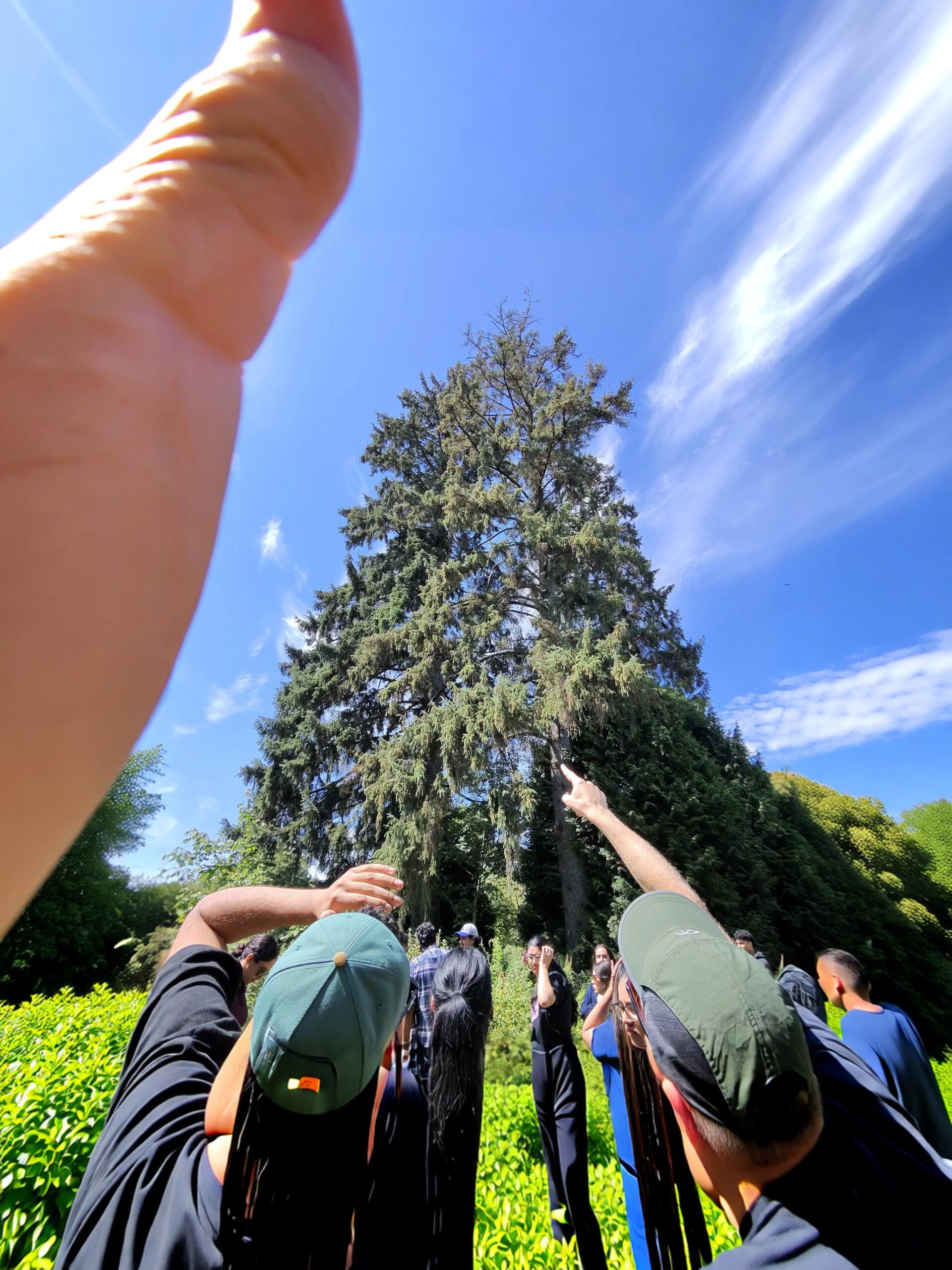
When I enrolled in Green Criminology, I expected to learn about pollution, climate change, and environmental crime. I never imagined that one of the biggest changes would be the way I look at ordinary places around me. Over, the semester, our garden bed at KPU and our field trip to Cougar Creek taught me that environmental harm and environmental care are often hiding in plain sight.
Voice matters,
The guest lecture by Katlia, Emilie Smith and Tim Bray left a lasting impression on me. It is concerning that voices calling for environment protection receive far less attention than celebrity news, political arguments or social media trends. Looking back I realize that this course has changed my point of view. Now, I look at things that really matters, i.e. the environment in which we live, the air we breathe, the crops we plant and we eat, and most important thing is that we all humans, plants and animals share this globe and it is essential to respect each other’s existence.
Watching our garden grow,
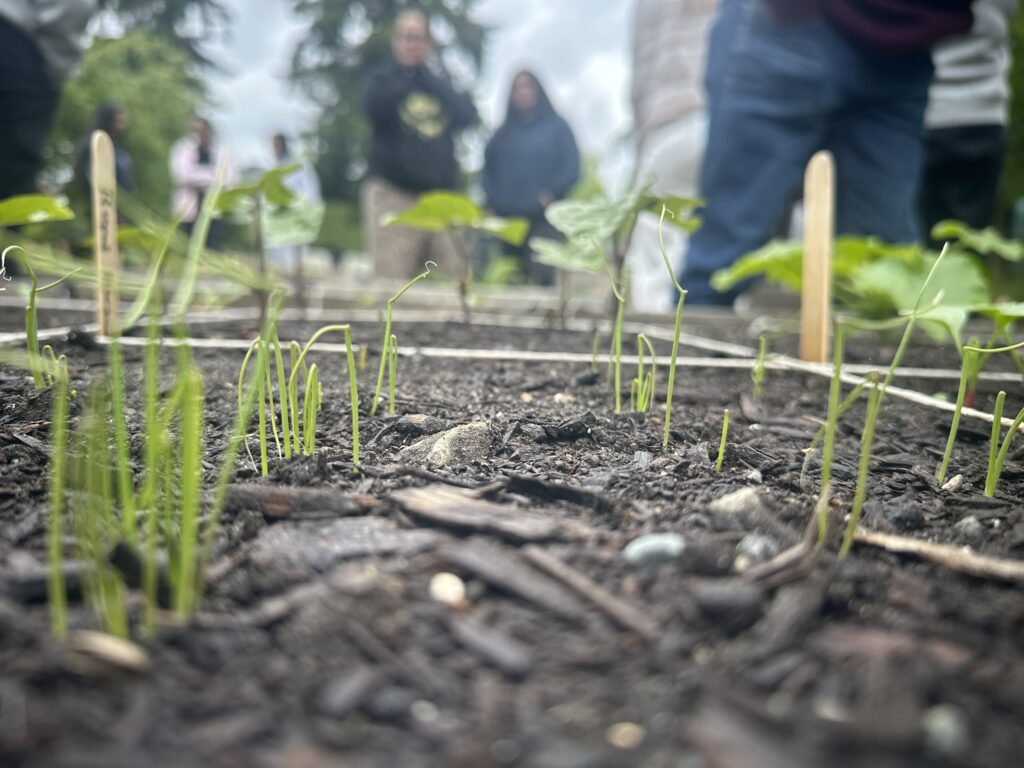
When my group started working in garden box 18, it was difficult to imagine that a few tiny seeds would grow in so quickly and without using any chemicals. Initially, we prepared the soil, planted seeds and watered them every two days and waited. In about two weeks, we even wondered that some of the seeds had died because noting seemed to happen, we also thought if we watered the seed too much. Whereas, little green stem started appearing. Soon those stems became healthy plants. The highlight of our garden box was definitely the two hue Zucchinis that grew from what had once looked like empty soil. Although, we noticed few insects eating few leaves, in response to that, we built simple insect traps to protect the plants, as the result the damage stayed minor.
A walk with valuable talk,
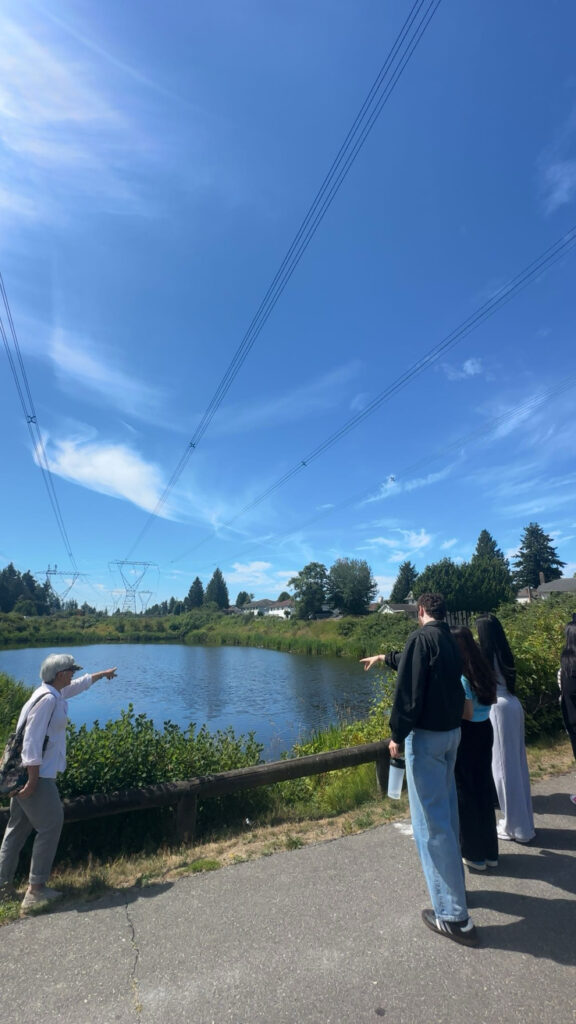
The Cougar Creek field trip changed my perspective in a different way. Before, the trip Cougar Creek was simply another park to me. During our walk, I started noticing things which were completely ignored before, as we saw small beaver dams, tree protected with wire mesh to prevent beavers from chewing the trees, ducks using creek as habitat, an eagle’s nest above the trees, and saw tress which are planted purposefully in the creek along with other native trees. One surprising thing was stormwater ponds, as they help to manage rainwater, reduce flooding and protect nearby ecosystems. I also discovered that BC Hydro also work in coordination with environment conservation organizations and use it’s land for environmental cause. Additionally, I realized that Green Criminology is not only about identifying environmental harm, it teaches us to recognize the people and organizations which work on a daily basis to repair damaged ecosystem before problems become worse.
Seeing Nature Through a Different Lens,
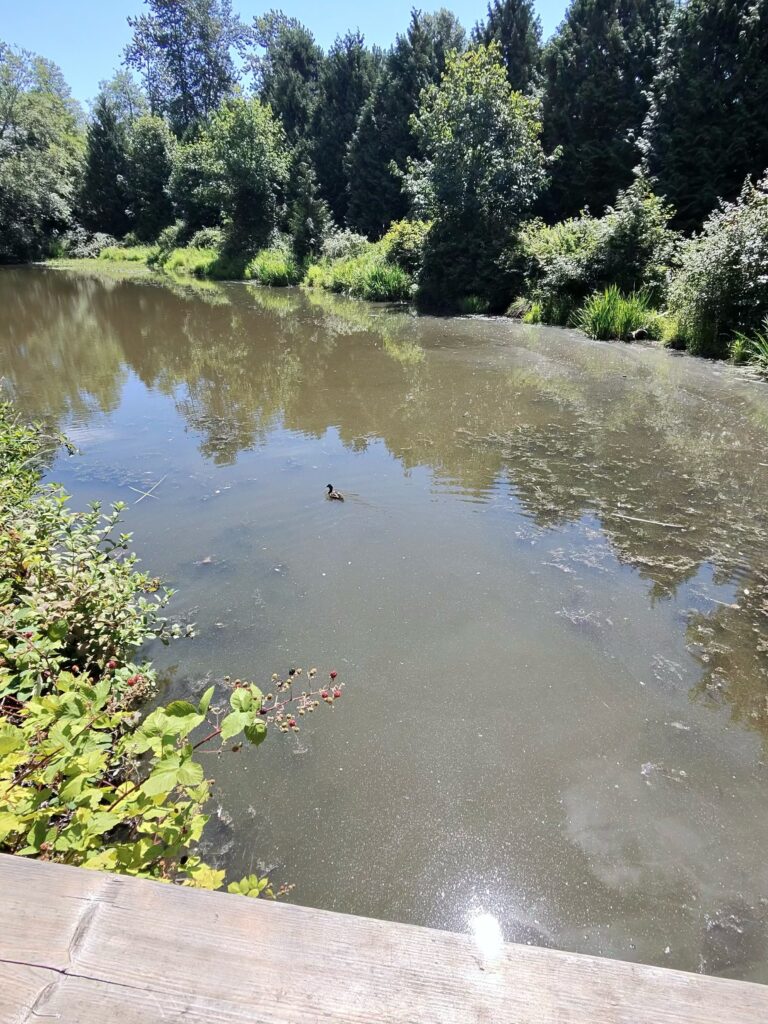
The concept of Ecological Law is connected strongly with gardening and Cougar Creek, as ecosystems should not only be protected because its is useful/valuable for humans. But rivers, forests, and wildlife have their own value and they deserve to be protected. Looking at our garden taught me that healthy plants completely depend on healthy soil, water, protection and sunlight. Walking through Cougar creek showed me that the same idea applies on a much larger scale. Each salmon stream, beaver, bird, tree and wetland forms an ecosystem, if one is disturbed, everything else is affected.
References
Lafferty, C. (2026). Corporate criminals. In Mother Earth is our elder: A Northern Indigenous perspective on the climate crisis (pp. 207–225). McClelland & Stewart. Newton, E., & Killean, R. (2025). Review of Global Rights of Nature Movements. Palgrave Studies in Sustainable Futures, 403–420.
Burrell, S. R., & Pedersen, C. (2025). From men’s violence to an ethic of care: Ecofeminist contributions to green criminology.

I really enjoyed reading your post because it shows how your perspective changed throughout the semester. I had a similar experience as well with the gardening project and the cougar creek field trip. Before the course, I never really paid much attention to how everything in our ecosystem is connected but now I notice how even small actions can either protect or harm the environment. Your point about the environment and how voices are not getting enough attention is important because issues affecting nature often receive less public focus than other topics, even though they impact everyone.
I also liked how you connected your experiences to ecological law. Your examples of the garden and cougar creek show that nature has value beyond what it provides to humans, which connects very well with the rights of nature movement discussed by McClelland and Stewart (2025). It also relates to Burrell and Pedersen (2025), who argue for an ethic of care that encourages and motivates people to protect the ecosystems through responsibility and respect opposed to only responding after environmental harm has occurred. Overall your post clearly demonstrates how green criminology can change the way we see and interact with the natural world.
References
Burrell, S. R., & Pedersen, C. (2025). From men’s violence to an ethic of care: Ecofeminist contributions to green criminology.
McClelland & Stewart. Newton, E., & Killean, R. (2025). Review of Global Rights of Nature Movements. Palgrave Studies in Sustainable Futures, 403–420.