Seeing the Progress
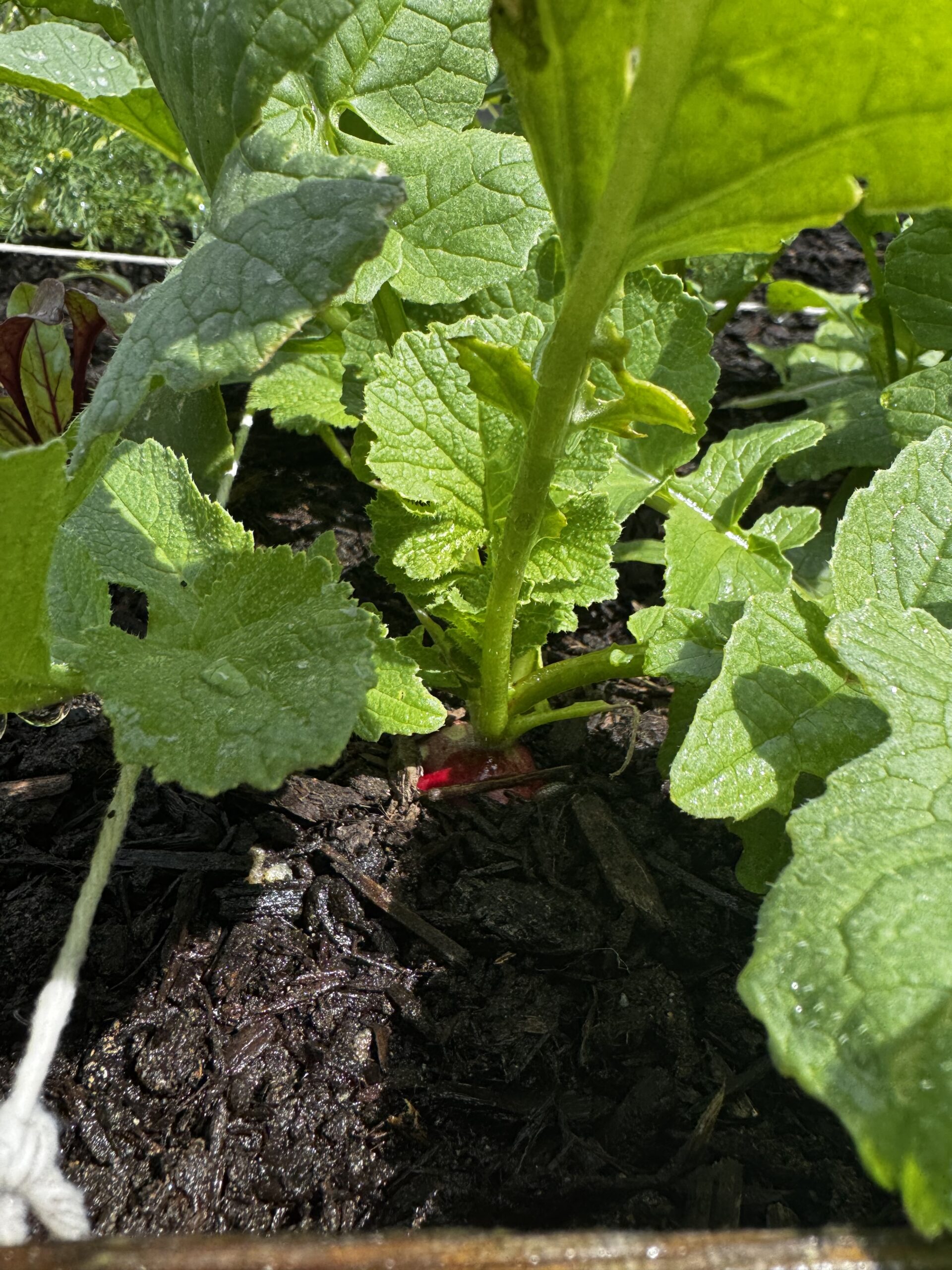
We are now in our last few weeks of the semester, and our garden looks completely different from where we started! Since my last blog post, we have harvested radishes and chamomile. We also noticed aphids on some plants, specifically the chamomile, sunburns on some of the leaves, and how quickly the heat can affect everything if watering is inconsistent. Comparing our picture from Day 1 to our garden today really goes to show how much can change when you give something ongoing care.
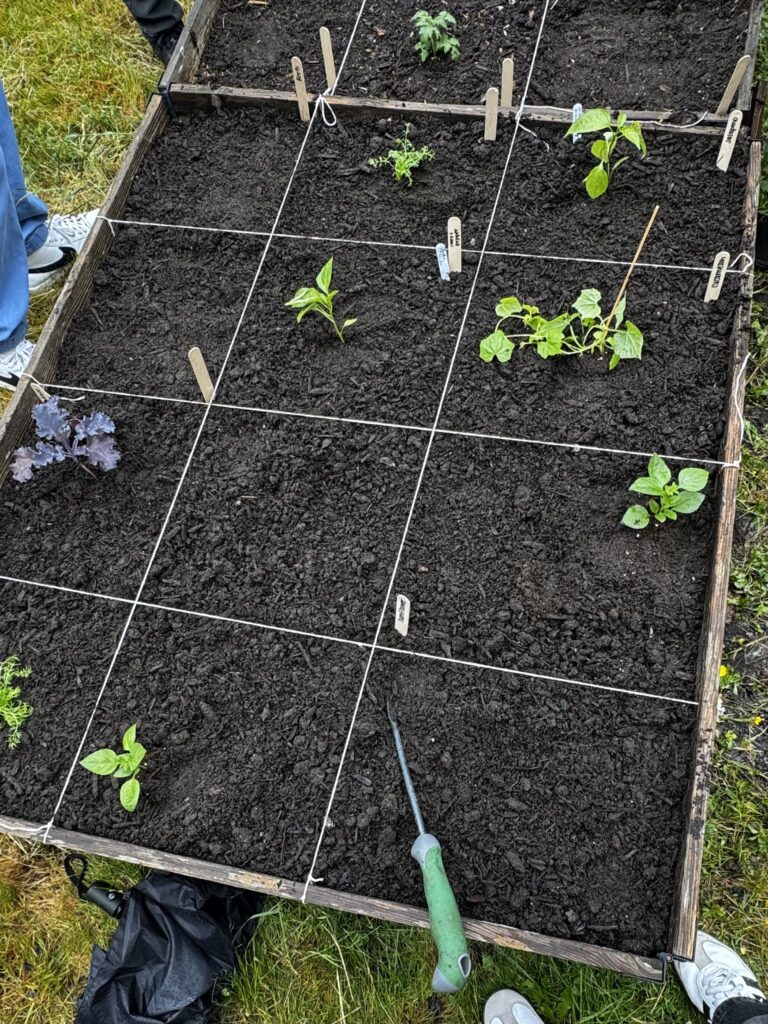
Our garden on day 1
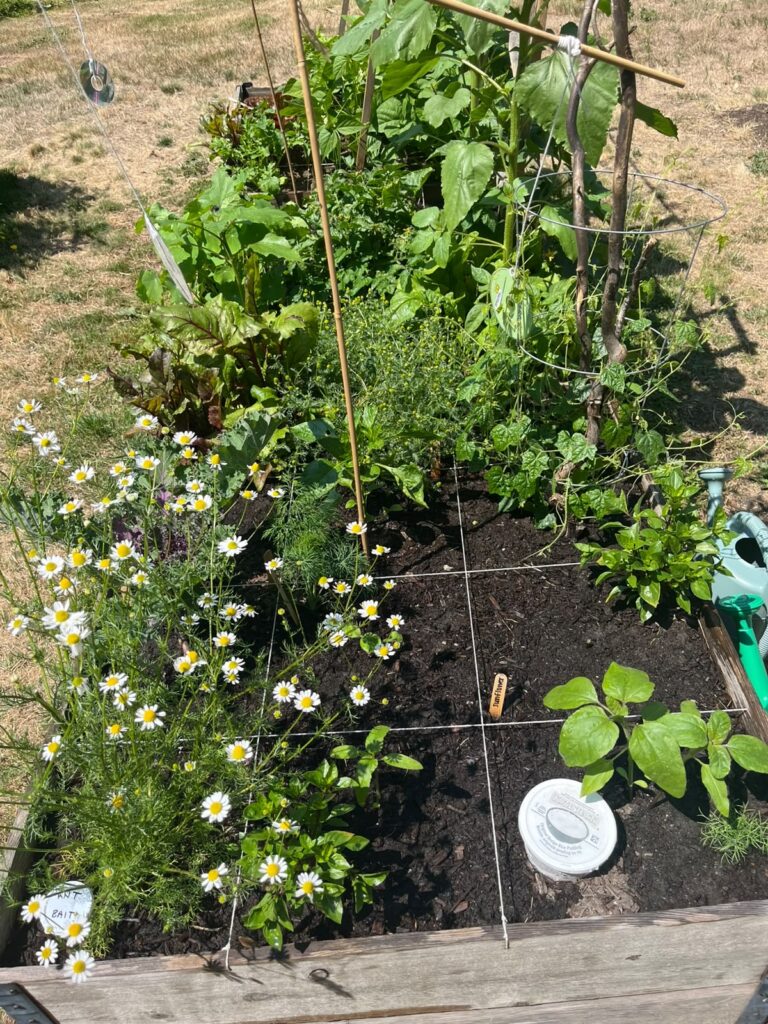
Our garden today
When the Law Still Allows Harm
One of the things I’ve learned so far in Green Criminology that I find very important is that an action does not have to be illegal to cause environmental harm. Before this course, I just assumed that environmental laws were designed to protect the environment. Montini (2021) explains that environmental laws can be followed without actually solving the environmental problem. So, a company or project might legally meet the required standards while pollution, habitat destruction and biodiversity loss continue.
I found this to be important because it shows the difference between following a rule and achieving a meaningful result. Montini also argues that environmental law needs to become ecological law. Ecological law would prioritize the health and safety of the entire ecosystem, rather than just managing how much harm is allowed. This can also shift people away from the view of nature being something to dominate and move towards recognizing our responsibility to protect it and show respect.
Should Nature Have Rights?
The idea of this connects to Pasternak and Walters’ (2023) discussion on the Rights of Nature. In this report, they explain that Canadian environmental law separates ecosystems into their own individual resources that can be managed, developed and used. This ignores how water, land, plants, animals and humans are all dependent on each other.
The authors discuss whether the Fraser River Estuary should receive legal personhood and rights of its own. Corporations already have legal personhood, even though they are not actual people, so why shouldn’t the Fraser River Estuary?
The Raincoast Conservation Foundation’s Rights of Nature page helped me understand how recognizing the estuary as a rights holder can allow decisions to focus on long-term health instead of just the value it has for economic development.
My Main Takeaway
The biggest thing I have taken from this course is that the importance of nature shouldn’t just matter because of what it gives to humans. Protection of the environment needs more than just controlling the damage after it has already occurred; it requires the recognition that ecosystems have their own value and we have responsibilities for them.
Although our garden is much smaller than the Estuary, it has still helped me understand the idea behind all of this. Everything that lies within an ecosystem is connected; if one piece is harmed, the effects of this don’t always stay isolated. Green Criminology has encouraged me to think beyond just the legal aspects, but also whether or not it is fair or healthy for the planet.
Resources:
Montini, M. (2021). The transformation of environmental law into ecological law. In K. Anker, P. D. Burdon, G. Garver, M. Maloney, and C. Sbert (Eds.), From Environmental to Ecological Law (pp. 11–22). Routledge.
Pasternak, A., & Walters, K. E. (2023). Rights of Nature: Pathways to legal personhood for the Fraser River Estuary. Raincoast Conservation Foundation.

Hi Taylor! I enjoyed reading your post and your garden has come out great. I do agree that we shouldn’t focus on environment repair only when it is needed, rather we should always be thinking of ways to protect it. This course has also opened my eyes in regards to what environmental harm is actually about, it’s not just about pollution, and trees, but it goes beyond that and it includes every single aspect. Like how we learnt about the rivers, and protecting our local salmon, before the walk I had no idea that it was even an issue.
Hi Taylor, I really enjoyed reading your blog. I also had no idea that just because something is legal does not necessarily mean it is morally right. Before reading your post, I always assumed environmental laws existed to prevent environmental harm, but your discussion helped me realize that legality does not always equal justice. It made me think about how industries such as agriculture, farming, and large production factories can legally comply with environmental regulations while still harming ecosystems. As well, your blog also reminded me that every part of an ecosystem is interconnected because if one part is harmed, it can affect plants, animals, and even humans. For example, according to Burrell and Pedersen’s discussion, an ethic of care encourages people to move away from dominating nature and instead recognize our responsibility to care for the environment. As you mentioned, protecting nature should not only be about following laws but also about considering whether our actions are fair and beneficial to the ecosystem as a whole.
Burrell, S. R., & Pedersen, C. (2025). From men’s violence to an ethic of care: Ecofeminist contributions to green criminology. Journal of Criminology, 58(3), 372–388. https://doi.org/10.1177/26338076241293145