Memories from Childhood
My blog post is going to be on the garden that I am growing with my group and the struggles and upsides of gardening. My dad always had a garden at our house, and he is the gardener in our family. He makes sure to water the plants every day during the spring and summer. Growing up, it was a routine for me and my sisters to wait for him outside at 7:30 p.m. because we knew that was when Dad was going to be home from work, and then we would all help him water the garden. We would fight over who got to water the front yard and who had to water the back garden because the front had all the nice pink and colourful flowers that we had all helped choose at the nursery. I remember our home garden as my dad’s summer project, alongside the never-ending renovations that always seemed to be happening at our house. It was a moment of peace and bonding for me, my sisters, and my dad.
Creating Our Own Garden
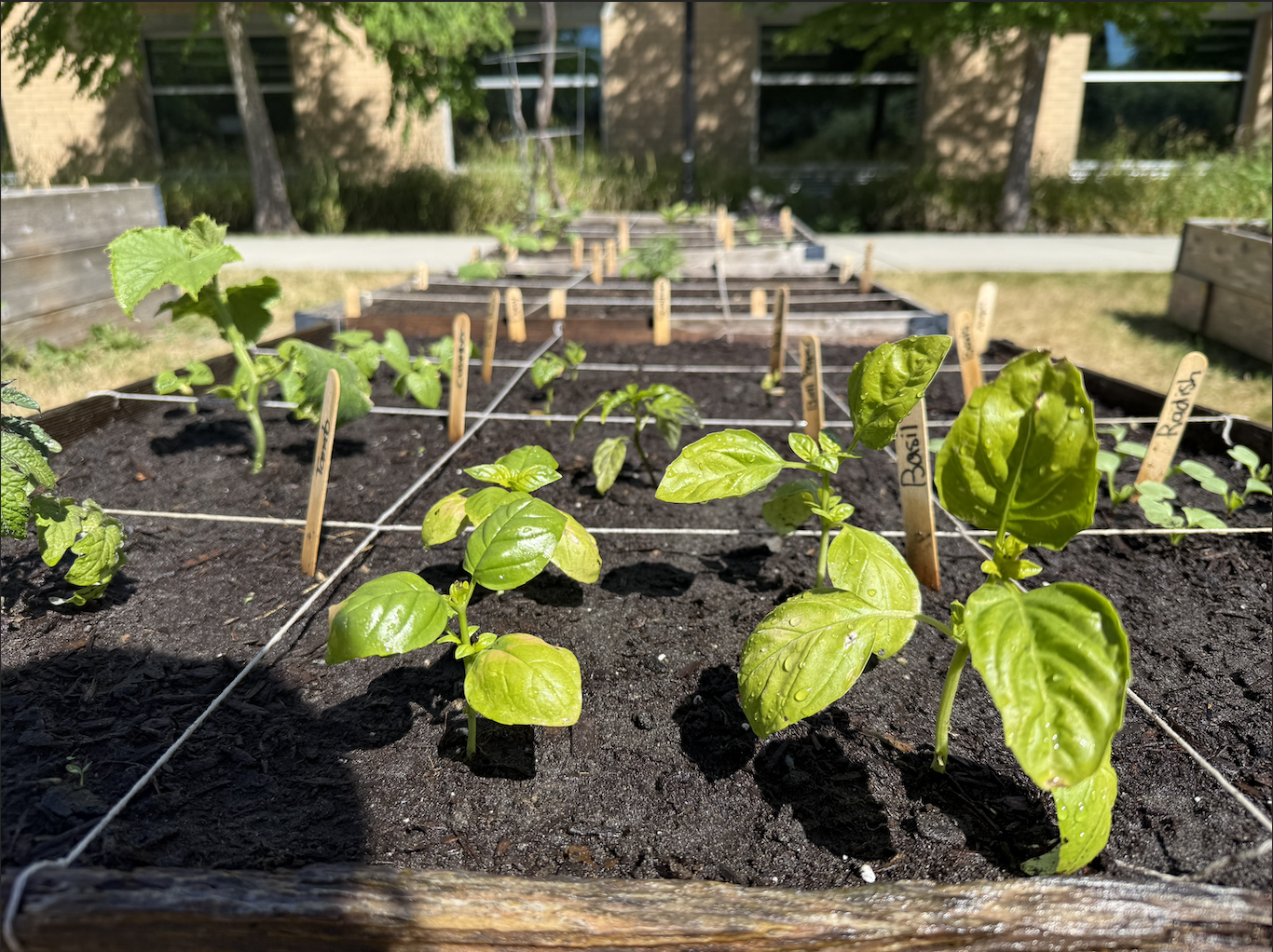
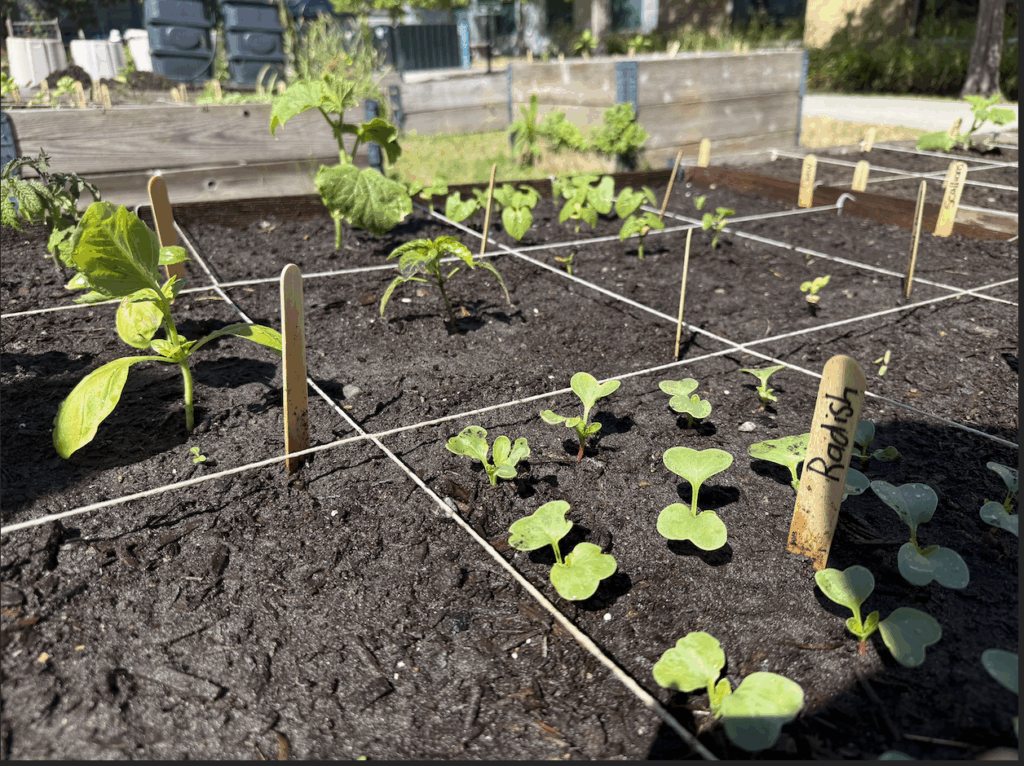
Applying that to my own garden that I’m growing with my four group members, it kind of brings back the nostalgia of gardening with my dad, and it’s exciting to see the progress our garden has made from When we planted the garden to Week 4 as seen in the pictures below. Before, I was never excited about the idea of being anywhere near campus on a Saturday or Sunday, but now, since my watering days are Saturday and Sunday, I actually look forward to it. One of my sisters always joins me when I come to campus, and we actually walk there since we live so close. On the weekends, if it’s sunny, we are expecting to do a lot more as the days get warmer after the rainy week we had in the Lower Mainland. Seeing our garden grow has given me a sense of pride because this garden is something that I’m watching bloom right infront of me. It’s very interesting to see what has sprouted over the course of the week and how much a plant can really grow overnight. I have also noticed that we need to water the garden a lot, and I found the instructions we received on watering really insightful. We have taken a picture every single day to document our journey, and we make sure to share it with our group. We are currently growing Sparky Mix Marigolds, Italian Classic Basil, Tiny Tim Tomatoes, Cherry Belle Radishes, Mini Bell Peppers, Marketmore Cucumbers, Bulls Blood Beets, Royal Burgundy Bush Beans, Blue Lake Pole Beans, Arugula, Apache Scallions, and Oopsy DaisyCalendula.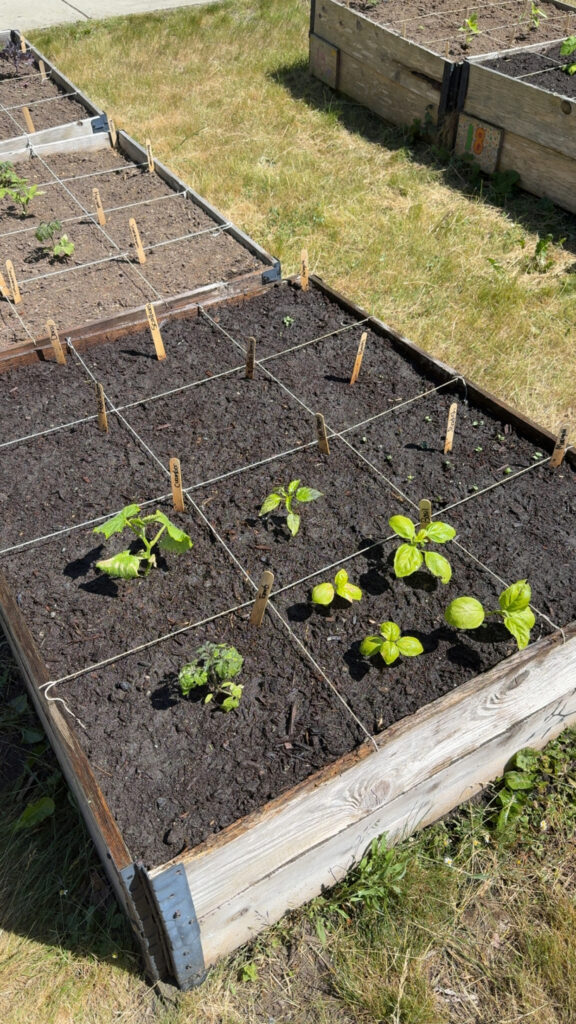
Looking Ahead: Challenges and Growth
I personally cannot wait to see what becomes of our garden, and in a way, I’m also preparing for some challenges because I know there might be slugs or other small animals, like bunnies and squirrels, that may get into our garden. Right now, as of weeks 5–6, we are still waiting for our Marigolds to sprout, and we want to see more growth in the rest of our plants as the days get sunnier. I hope to see all of the changes that are still to come, and I’m excited to watch our garden continue to grow over the next few weeks.
Connecting Gardening to Green Criminology
Working on this garden has also made me think differently about food and our relationship with the environment. Before this project, I never really considered how much time, care, and resources go into producing food because it is so easy to buy vegetables at the grocery store. However, growing our own plants has given me a greater appreciation for the process and has helped me understand some of the ideas discussed in Green Criminology. According to Tourangeau and Fitzgerald (2020), food-related harms are not always illegal, and Green Criminology encourages us to think about the impacts that food production can have on people, animals, and ecosystems. Similarly, Gladkova (2023) argues that many harmful practices within food systems have become normalized, and Green Criminology challenges us to look beyond legal definitions of crime and consider broader issues of sustainability and environmental justice. Although our class garden is small, it has helped me understand how interconnected soil, water, plants, insects, and humans really are. More than anything, this experience has given me a greater appreciation for the environment and for the amount of work that goes into producing the food we often take for granted.
References:
Tourangeau, W., & Fitzgerald, A. J. (2020). Food crime and green criminology. In Routledge international handbook of green criminology (pp. 205-221). Routledge.
Gladkova, E. (2023, February 22). The Harms and Crimes of Farming/Food. Oxford Research Encyclopedia of Criminology.
*Titles Generated and Edited Grammar using GenAI*

Hi Jessica, I really enjoyed reading your blog post, and loved how you incorporated a personal story about gardening growing up. It has almost been a full circle moment for you, with helping out with your dad’s garden with your sisters, and now your sisters are helping you with yours. You mentioned how exciting it is to see your plants sprout and grow over the weeks, and how the successes are so exciting and the non-successes are a little disappointing; I have those same exact feelings when I check in with my garden.
Your blog connects well to the ecofeminist reading by Burrell and Pedersen (2025), which argues that environmental care should be grounded in an ethic of responsibility and interconnectedness rather than in domination over nature. The authors explain that humans should recognize their relationship with ecosystems instead of viewing nature as something to control or exploit. You touched on this in your blog and mentioned your new understanding of how interconnected everything is. Your appreciation for the time and effort required to grow food reflects this ethic of care because it shows respect for the environment and the many living systems involved in food production.
*This response was edited using Grammarly
References
Burrell, S. R., & Pedersen, C. (2024). From men’s violence to an ethic of care: Ecofeminist contributions to green criminology. Journal of Criminology. https://doi.org/10.1177/26338076241293145