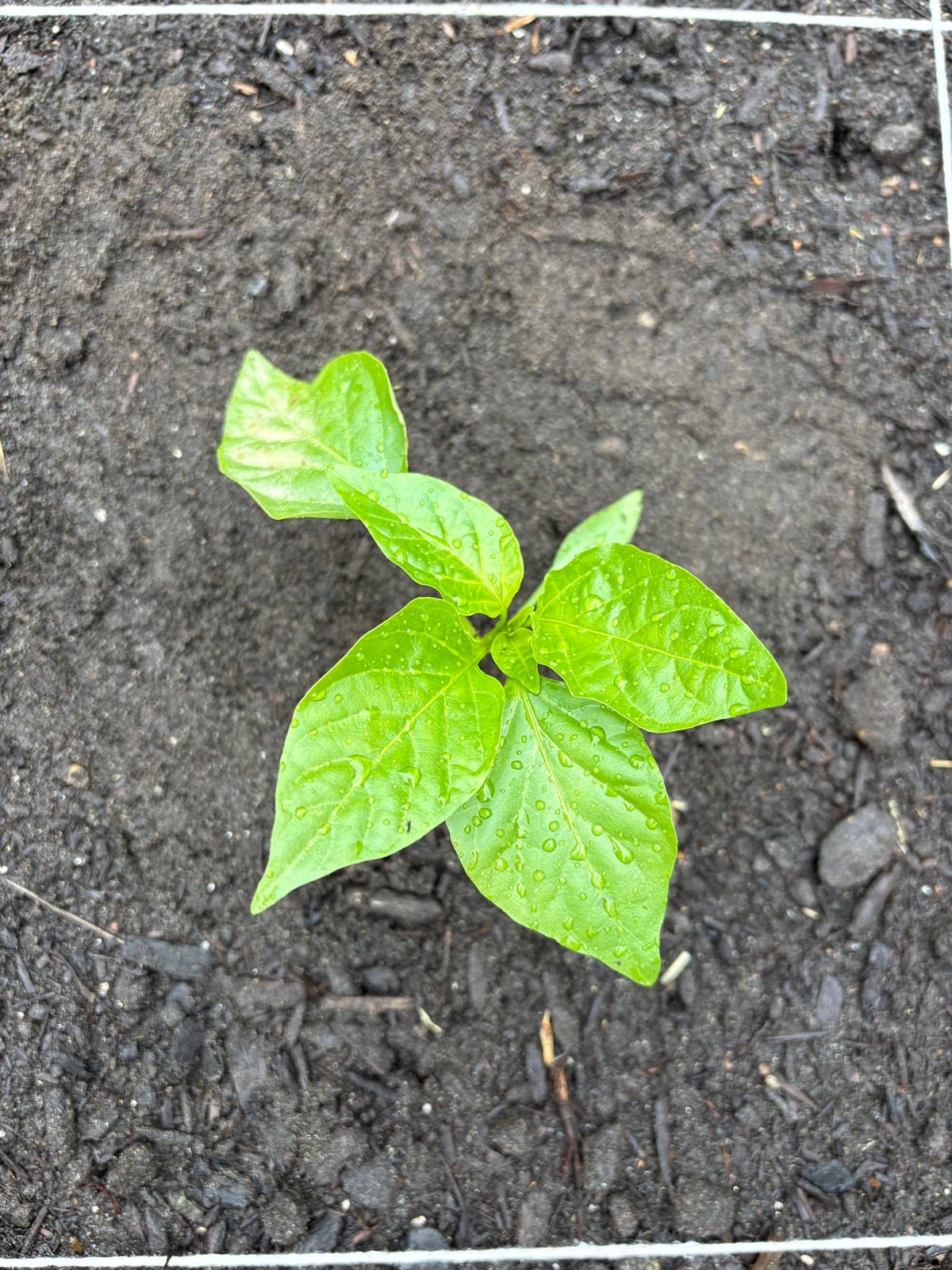
Planting seeds
What the garden taught me about green criminology
Before taking this class, my perspective of gardening was simply that it was about growing plants. I never really thought about how something like gardening could connect to criminology. After spending time in the garden with my classmates, I have learned to see gardening differently. During the first few weeks, we worked together to prepare the soil, add water, and plant seeds that we hope will eventually grow into healthy plants. These simple tasks helped me better understand some of the main ideas within green criminology.
One idea I learned from Lynch et al. (2017) is that green criminology challenges the traditional idea that criminology should only focus on crimes that break the law. Instead, green criminology also examines environmental harms and how human activities can damage ecosystems, animals, plants, and communities. Before working in the garden, I did not spend much time thinking about how much humans depend on healthy environments. While planting seeds, I realized that food production depends on natural systems working together. Healthy soil, clean water, and living organisms all play a role in allowing plants to grow. If these systems are damaged through pollution or other environmental harms, the effects can impact not only nature but also the people who rely on these resources.
The garden also made me think differently about our food systems, which connects to Tourangeau and Fitzgerald’s discussion of food crime and green criminology. They explain that green criminology allows us to examine food-related harms that may not always be considered illegal but can still negatively affect people, animals, and the environment. Before this experience, I usually only saw food as something that came from grocery stores without thinking about the process behind it. Planting our own seeds made me feel more connected to the process of growing food and helped me understand that food production depends on the health of the environment. This experience also made me think about how disconnected many people have become from nature. It is easy to forget about the amount of time, resources, and care that goes into producing food when we only see the final product. Gardening showed me that even small actions, like taking care of soil and plants, can help us better understand larger environmental issues.
Even though we only started working on our garden, this experience has already changed the way I think about environmental harm. Preparing soil and planting seeds may seem like simple actions, but they represent larger ideas within green criminology. Gardening has shown me that humans are connected to the environment and that protecting ecosystems starts with recognizing how much we depend on them. Green criminology is not only about studying environmental crime is not only about understanding our relationship with nature and the systems that support life.
AI Acknowledgement Grammarly was used as a writing support tool to review grammar, spelling, and sentence structure. The ideas, reflections, and connections to course materials are my own. Lynch, M. J., Long, M. A., Stretesky, P. B., & Barrett, K. L. (2017). Green Criminology: Crime, Justice, and the Environment. Tourangeau, W., & Fitzgerald, A. J. (2018). Food Crime and Green Criminology.

Hi Jasvir, I thought your post was well done and referenced some important issues with relation to environmental injustices and how the responsibility we have to maintain our own gardens this semester has led us to become more aware of these injustices. I appreciate how you acknowledged the various ways of crimes that occur in food justice and who they impact, such as animals, ecosystems, and us as human beings.
As Tourangeau and Fitzgerald discuss the harms done to food producers, consumers, animals, and the environment by mentioning the exploitation and overworking of workers on farms and slaughterhouses, as well as how unethical practices such as mislabeling/tampering with food products have negatively impacted consumers health (2020, pp. 206-208). As you mention “[i]t is easy to forget about the amount of time, resources, and care that goes into producing food when we only see the final product”. I find this similar to what I have experienced prior to working on this gardening assignment, in the sense that I may have taken certain things such as produce for granted and never really paid attention to the sacrifices, crimes, and hardships the individual factors (humans, environment, animals) must have endured because I only see the product in its final stage at the grocery store.
As a whole, I really admire your passion for this gardening assignment as visible in your connections between the green criminology concepts and gardening. I’m curious to see how it continues to evolve and grow throughout the semester and wish you the best of luck in this journey!
References
Tourangeau, W., & Fitzgerald, A. J. (2020). Food crime and green criminology. In Routledge international handbook of green criminology (pp. 205-221). Routledge.
Hello Jasvir, I totally agree with you that green criminology is very insightful as it helps us understand the harms that can happen outside of the traditional criminological context. It was also nice to hear that gardening made you appreciate how much we really need a strong and healthy ecosystem. I definitely think that this lack of first hand experience about how much work it takes to make food production and all the critical environmental factors help to sort of keep people in ignorance about the very real dangers of ecocide.
Relating it to Lynch, I think it’s a very big step forward that green criminology is now a multi-national study subject and that the literature has exploded in size. (Lynch 2022).
A question that I would like to ask you would be, how can we help send green criminology’s message to a wider audience?
Hello, Jasvir
I really liked reading your reflection because it showed how a simple thing like gardening can completely change the way we think about environmental issues. One point i really thought was good was was your realization that healthy soil, water, and ecosystems are all connected. It showed me that environmental harm is often very easy to ignore because we usually notice the final product instead of everything that makes it possible.
Your post also made me think about how community garden can be a good way to address some of the concerns we talked about in green criminology. They not only encourage people to care for the environment but also help build stronger communities by teaching sustainability and showing how are our everyday choices affect nature. Small actions, such as planting seeds or taking care of a garden, may seem insignificant, but when many people participate, they can contribute to a broader culture of environmental responsibility.
Overall, thought your reflection was awesome, and i loved how you connected your personal experiences to green criminology.