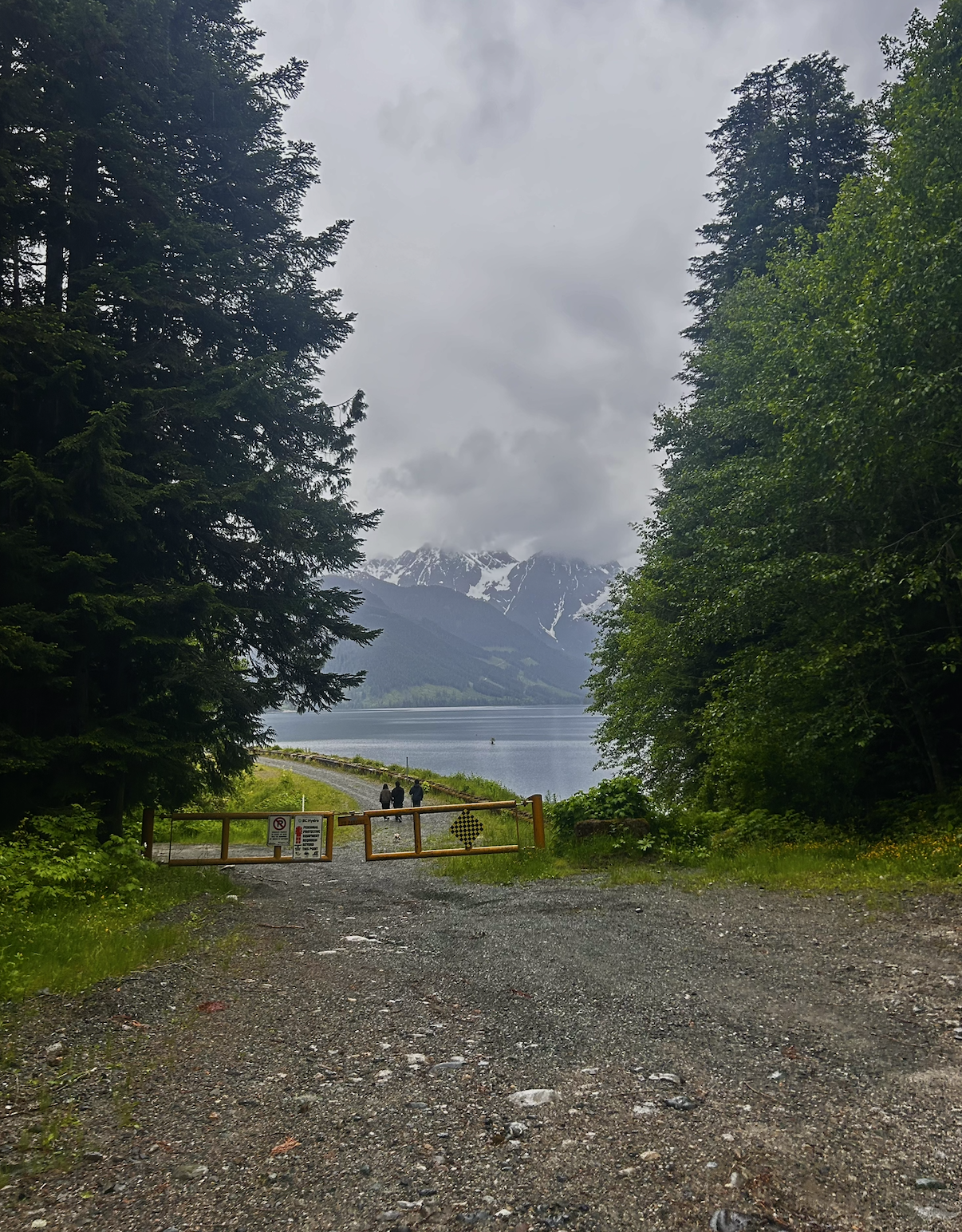
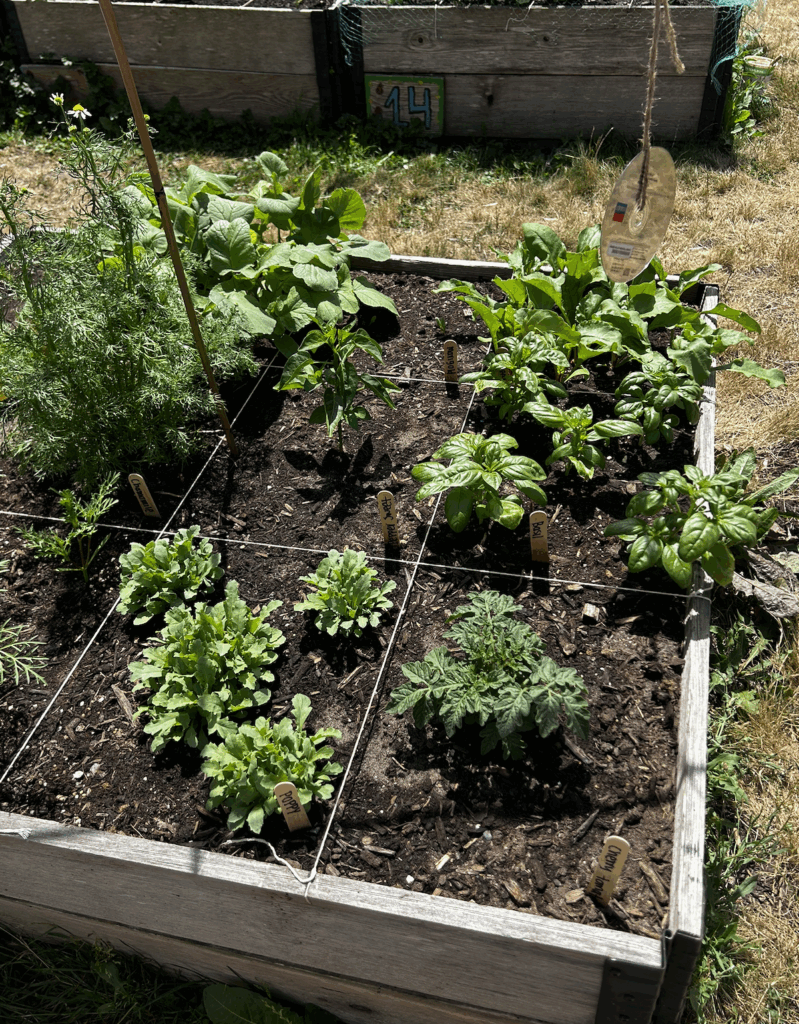
Garden process
During these past few weeks, I’ve had both patient and impatient moments while caring for our garden. During the first couple of weeks, our basil leaves were drying out, and some of our flowers weren’t growing. We realized we had overwatered them, but we learned from our mistake. The garden has become a special place because it reflects the effort we have put into creating and maintaining it. Thankfully, there haven’t been any slugs eating our crops, but I have noticed butterflies and ladybugs visiting our garden, which is nice because it shows that our garden is attracting wildlife.
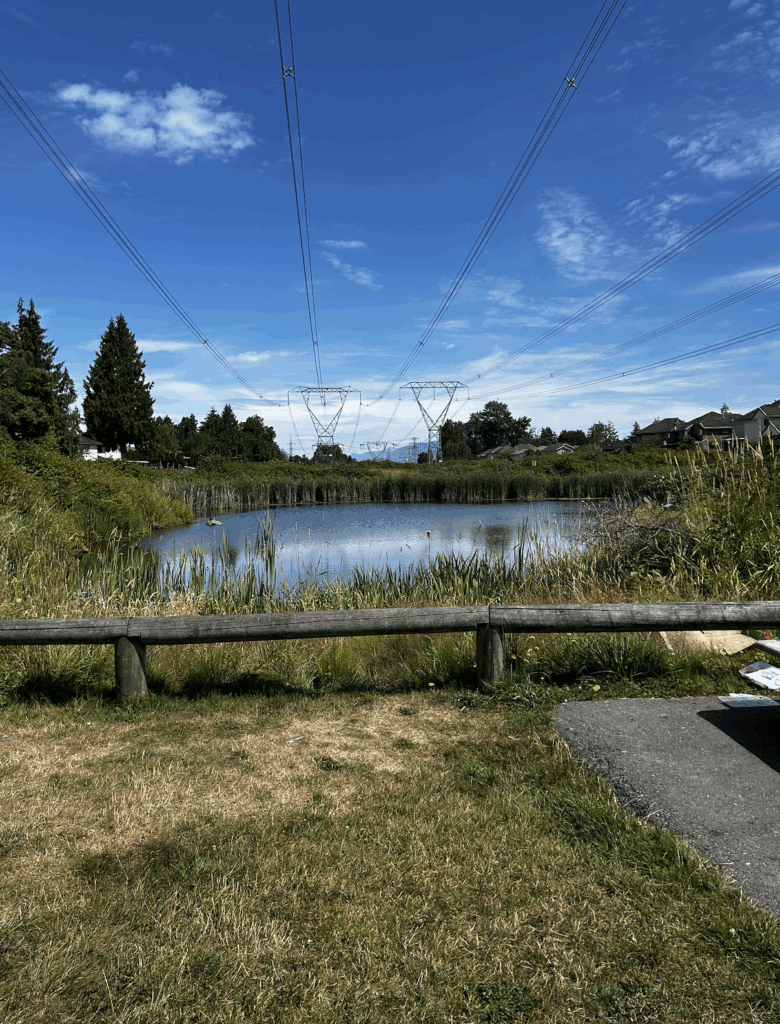
Our little walk
As well, guest speakers have been coming to class and have been very eye-opening. Walking through Cougar Creek with Deb helped me understand that it was not always just a creek, but was once more like a lake up until a beaver dam was dynamited in 1926. After learning about ecofeminism, I found myself thinking about it differently. Burrell and Pedersen (2025) argue that ecofeminism promotes an ethic of care, encouraging people to build respectful relationships with nature rather than treating it as something to be dominated. Their arguments explain how many environmental problems start from humans viewing nature and animals as something to control for their own benefit. I find the idea of an ethic of care especially interesting because reducing this mindset of domination and cruelty toward the environment could lead to a more sustainable world. After walking through Cougar Creek, I gained a better understanding of this idea. Seeing the creek and wildlife and learning about its history showed me that caring for nature means protecting ecosystems and respecting the people and animals that depend on them, even as many in society continue to view nature as something to profit from.
Furthermore, before this class, I mostly thought about environmental issues in terms of pollution and climate change. After hearing our guest speaker, Katlia, share stories about indigenous communities protecting their lands, I realized that environmental justice is also about respecting the people who have lived in relationship with these ecosystems for generations. Learning about UNDRIP helped me better understand this perspective, as it demonstrates that Indigenous nations have the right to protect their traditional lands and that many affected nations did not consent to the pipeline (Cornell et al., 2024). This is also connected to what I learned about ecofeminism because it made me understand that our society often prioritizes economic development and profit over caring for the land. In doing so, people often forget about the harm it causes to nature, wildlife, and indigenous communities that have depended on these ecosystems for generations. I think this relates to the idea of an ethic of care because it reminds us that the environment should be respected and protected rather than viewed simply as something to profit from. Looking back on the field trip to Cougar Creek, I realized that caring for the environment also means respecting the people who have cared for and protected these lands long before us.
References
Burrell, S. R., & Pedersen, C. (2025). From men’s violence to an ethic of care: Ecofeminist contributions to green criminology. Journal of Criminology, 58(3), 372–388. https://doi.org/10.1177/26338076241293145
Cornell, R., Drobnies, A., & Bray, T. (Eds.). (2024). Standing on high ground: Civil disobedience on Burnaby Mountain. Between the Lines.

Provide Feedback