When I first signed up for this class, I thought green criminology was mostly about environmental crimes and protecting the environment. I never imagined that gardening, walking through a local park, and listening to guest speakers would completely change the way I think about green criminology.
Watching the Garden Grow
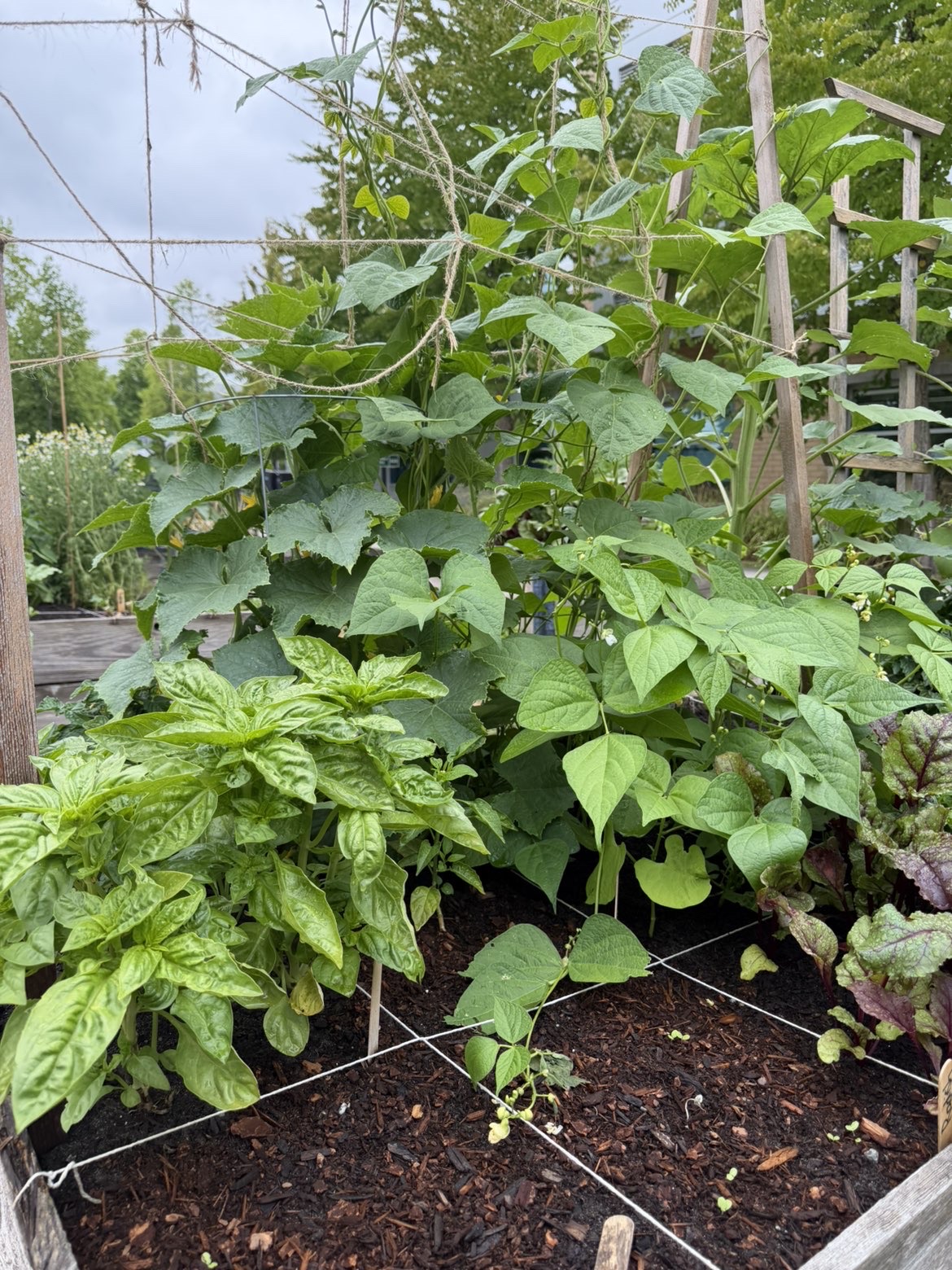
One of my favourite parts of this class was watching our garden grow. At the beginning of the semester, it was just a patch of dirt in a box. We were getting ready to plant seeds and the starts to begin what would become the garden it is today. Looking back now, it is amazing to see how much it changed because of the care that everyone in our group put into it. Before this class, I honestly thought you could just toss a bunch of seeds into the ground and they would grow into a wonderful garden. Instead, I learned that every seed needs different spacing and different depths it’s planted in and that pollinating flowers are just as important because they help the garden thrive to its fullest potential. These are things I never would have known if I had not taken this class, and I know I will use this knowledge when I start my own small vegetable garden at home. It is bittersweet knowing our time gardening at KPU is coming to an end, but I am grateful for everything Melissa and Mark taught us. This experience also helped me understand that green criminology is connected to how we produce and value food, not just environmental crimes (Tourangeau & Fitzgerald, 2020).
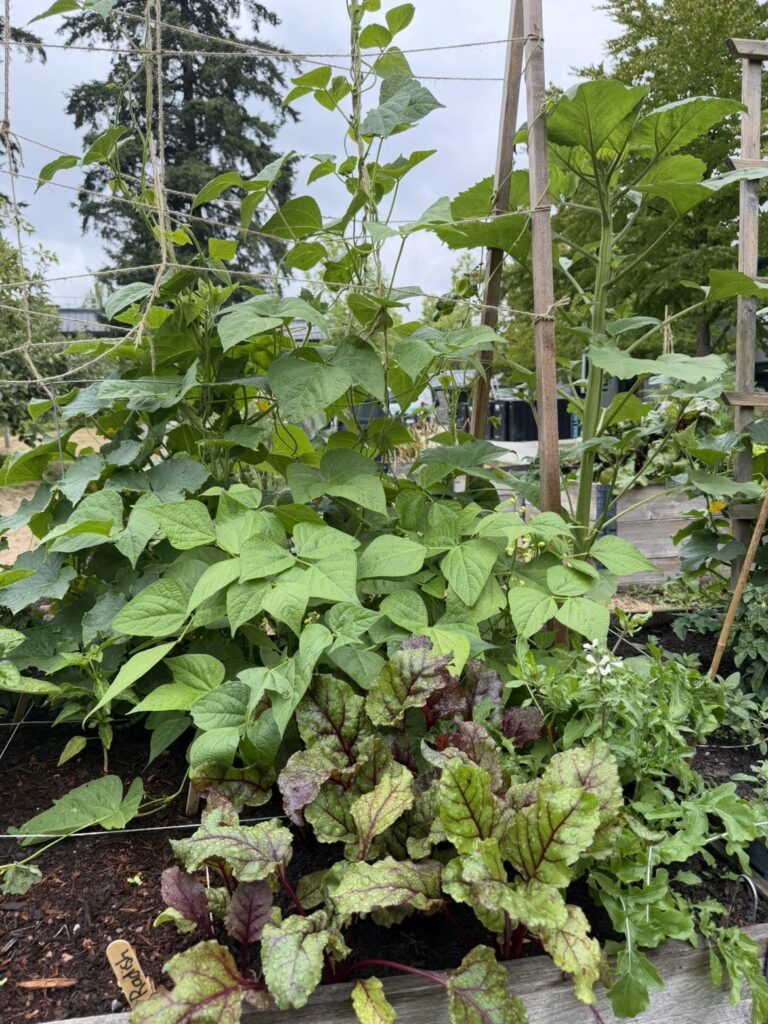
Garden now
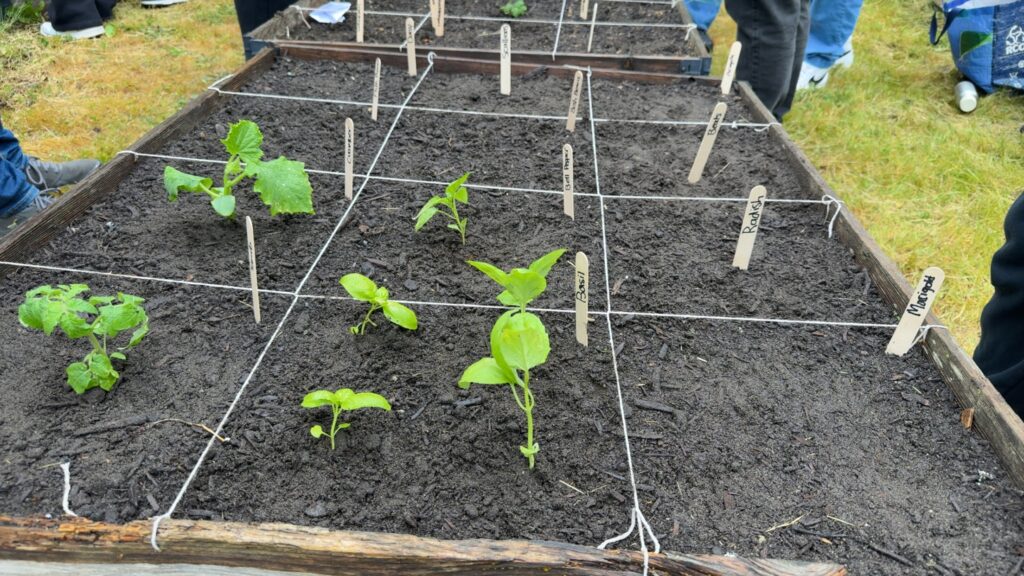
Garden Before
Weekend Visits
My watering days were every Saturday and Sunday, and I made sure I never missed one because I knew how important it was to keep the garden healthy. I even brought my sisters with me at times. They loved walking around and seeing everyone’s gardens and how much everything had grown throughout the semester. We also always saw squirrels and bunnies around the garden, which reminded me that these spaces are not only important for us but for the animals too. My sisters even said they hope they can take a class like this when they go to university because seeing students outside learning instead of only sitting in classrooms made post-secondary education seem much less intimidating for them and I’m glad that CRIM 3911 was able to show that to them through me.
Discovering Nature Close to Home
Another experience in CRIM 3911 I really enjoyed was the field trip through Cougar Creek Park with Deb Jones. I loved learning about an area that is so close to my home. I have walked those trails many times growing up, but I never realized how much nature surrounded me or how important the creek is to the local ecosystem. Now, every time I walk those trails, I remember the places where we stopped and talked about the environment and the surroundings. This experience helped me realize that green criminology is about recognizing environmental harms that often go unnoticed and understanding our relationship with the natural world (Letourneau, 2023).
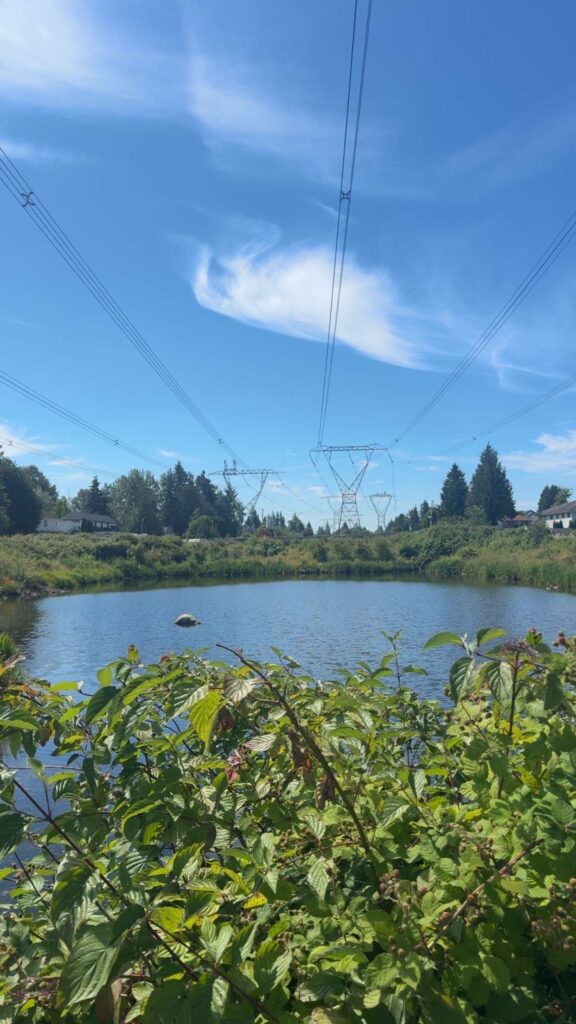
Walk to Cougar Creek Park
Looking at Animals Differently
I also want to reflect on Andrea Greenwood’s guest lecture on animal cruelty because I believe when someone thinks of green criminology, everyone assumes it is only about plants and the environment. This lecture very much reminded me that animals are also a very important part of green criminology. Learning about the Prevention of Cruelty to Animals Act and how the BC SPCA investigates cases of animal distress showed me that protecting animals is just as important as protecting the environment. It made me realize that green criminology is not only about protecting ecosystems but also about recognizing that animals can be victims of harm as well. Before this class, I had never really thought about animal cruelty as part of green criminology, but now I understand that protecting animals is another way of protecting our communities.
A New Perspective on Green Criminology
Throughout the semester, all the readings and activities helped connect these experiences together. Tourangeau and Fitzgerald (2020) explain that green criminology encourages us to think beyond what is legally considered a crime and recognize harms affecting animals and the environment. Letourneau (2023) also explains that green criminology asks us to rethink how we define harm and who is affected by it. Looking back, I realize this class has changed the way I see the world around me forever. Whether I am gardening, walking through a local park, or thinking about animals, I now understand that green criminology is about recognizing and preventing harm in many different forms.
References:
Letourneau, A. M. (2023). ‘To Preserve and Promote’: Gendering Harm in Green Cultural Criminology. In Gendering green criminology (pp. 267-288). Bristol University Press.
Tourangeau, W., & Fitzgerald, A. J. (2020). Food crime and green criminology. In Routledge international handbook of green criminology (pp. 205-221). Routledge.
*Edited using Generative AI*

Hi Jessica!
I really enjoyed reading your blog post, especially since you used several different class connections. When I first registered for this class, I wasn’t too sure what this course would be about, but now I can confidently say that this is one of my favourite classes, where I am learning valuable material through readings but also hands on learning.
Going to the KPU farm, I further understood how important biodiversity is, such as growing a few flowers near a garden as it allows more insects and bees, which help the other nearby plants grow more as you also mentioned in your blog.
I also liked how you mention the BC SPCA, I found your sentence about protecting animals is a way to protect our communities very powerful as I had not thought about that before. Prior to the presentation by Andrea, I honestly had never heard about the BC SPCA. I also learnt a lot during that presentation and was able to connect such issues under green criminology and how it is not only related to wildlife but also domestic animals.
Going to Cougar Creek was also very valuable to me, one thing that stood out to me was the lack of fish. You mention environmental harm that goes unnoticed, which I think is powerful. One reason for all of this is human actions that cause a loss of habitat for the wildlife, “For the vast majority of species, the threat of extinction was not produced by smuggling and poaching but rather by the loss of habitat” (Lynch et al., 2017, p. 184). An example of this can be the salmon in Cougar Creek. Overall, I loved reading your blog post, you did such a great job by using several different examples from the course and showing your understanding of green criminology. Your blog post has also allowed me to learn more about this course that I had not thought about before! Thank you for such a great and detailed blog post!
Lynch, M. J., Long, M. A., Stretesky, P. B., & Barrett, K. L. (2017). Chapter 8: Wildlife Trafficking, Smuggling and Poaching. IN: Green Criminology: Crime, justice, and the environment. University of California Press.