
Assessment Design
- Guidelines for Designing UDL-Aligned Assessments
- Chunking & Scaffolding
- UDL Considerations in Designing Forms of Assessment
- Presenting Assessments in Different Formats
- Designing UDL-Aligned Rubrics
- UDL Informed Feedback
- Compassionate Care in Providing Feedback
Understanding Assessments from a UDL-Focus
Welcome to the Assessment Design and UDL section of our resource for instructors. This section is dedicated to helping you understand how to design assessments that best support your students by integrating the principles of Universal Design for Learning (UDL). Effective assessment design is crucial for creating an inclusive learning environment where all students can demonstrate their knowledge and skills in ways that work best for them.
By integrating UDL principles into your assessment design, you can create a more inclusive and effective learning environment that supports all students. This section will guide you through the process of designing assessments that are fair, flexible, and supportive, helping you to foster a learning experience that is both engaging and equitable for everyone.
CAST has also created a great resource on UDL Tips for Assessment (clicking will take you to the page), covering topics such as alignment, engagement, and authentic opportunities – all related to designing UDL-based assessments. See also their blog post, UDL Tips for Assessment (clicking will take you to the page), for additional resources.
For a podcast-style audio overview of the entire Assessment Design section, please listen below (captioning available and transcript downloadable under the player):
UDL-Focused Constructive Alignment of Assessments
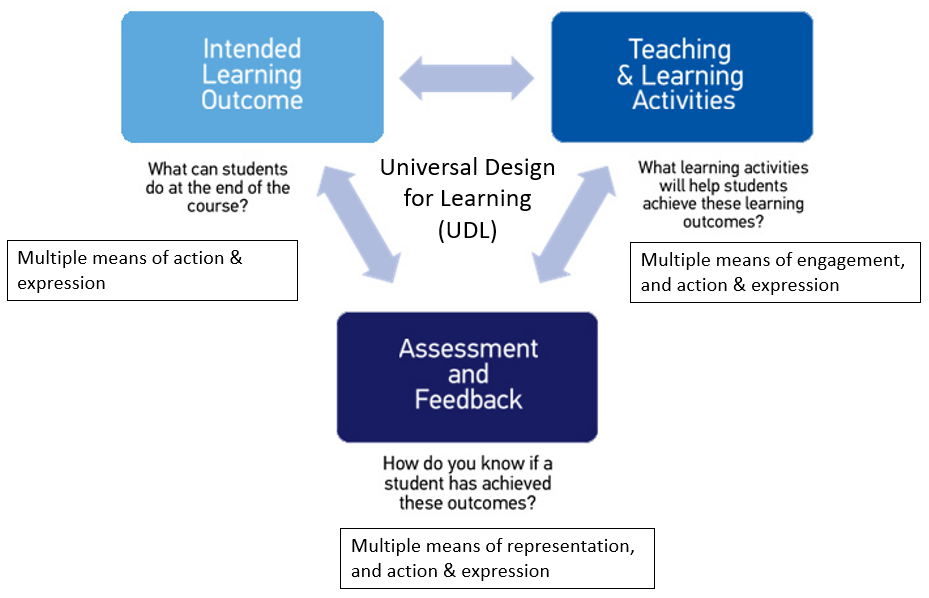
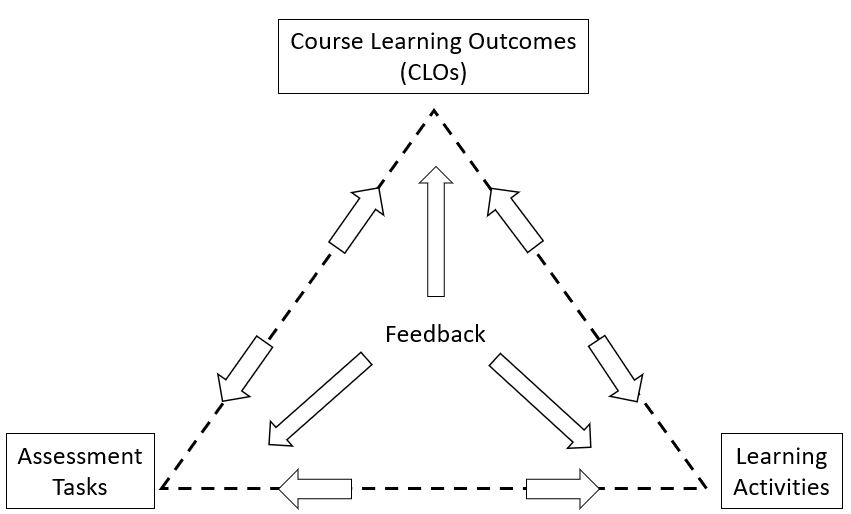
Constructive alignment offers a framework for quality assurance and enhancement across a whole institution. Just as constructive alignment offers a framework for quality assurance, UDL also provides a framework to improve and optimize teaching and learning for all people based on scientific insights into how humans learn. Regular evaluations of course design, teaching methods, and assessment tasks can ensure they are aligned with the intended learning outcomes, improving teaching quality (Biggs & Tang, 2011).
Student perceptions can act as motivational factors, boosting their confidence and engagement in the classroom. Understanding how students perceive their progress allows educators to adjust teaching methods and materials in real-time to better meet learning objectives (Kuhn & Rundle-Thiele, 2009). Similarly, Biggs and Tang (2011) emphasize the importance of student feedback in informing ongoing course adjustments. For example, if students provide feedback that they are struggling to understand a particular concept, the instructor could adjust their teaching methods or provide additional resources to help students grasp the concept.
Of course, the principles of UDL can be seen in all three of the course elements of constructive alignment, but in the above illustration, we can see specific considerations and questions when designing each of these elements in considering constructive alignment and in support of UDL.
Kuhn and Rundle-Thiele (2009) recommend that educators integrate students’ perspectives when setting learning outcomes to ensure that these outcomes are clear, achievable, and aligned with students’ expectations. They also advocate for the use of regular student feedback to inform ongoing course adjustments. This practice not only supports continuous improvement in instructional methods and course design, but also fosters a more inclusive and student-centered learning environment.
This practice not only supports continuous improvement in teaching methods and course design but also fosters a more inclusive and student-centered learning environment (Biggs & Tang, 2011). In fact, findings from Kuhn & Rundle-Thiele’s (2009) research suggests that students who perceive themselves as achieving the learning outcomes tend to perform better academically. Understanding how students perceive their progress allows educators to adjust teaching methods and materials in real-time, providing multiple means of action & expression, the third UDL principle, by offering various ways for learners to express what they know.
Some easy recommendations include having students introduce themselves (such as through a short video or ePortfolio post), diagnostic, pre- and -post assessments, exit cards, and of course, reflections (on the learning). Overall, it is recommended to gather student feedback at the start of the course in case of the need for any adjustments (which could include for accessibility or accommodations but also based on students’ depth of prior knowledge), certainly at the end, but also throughout the course. This helps you as the instructor to continuously receive feedback on the progress of your learners, both the successes and stretches. It is particularly powerful when combined with UDL as instructors have the opportunity for a wide variety of examples and evidence of student demonstration of learning across assessments and activities.
This practice not only supports continuous improvement in teaching methods and course design but also fosters a more inclusive and student-centered learning environment (Biggs & Tang, 2011). In fact, findings from Kuhn & Rundle-Thiele’s (2009) research suggests that students who perceive themselves as achieving the learning outcomes tend to perform better academically. Understanding how students perceive their progress allows educators to adjust teaching methods and materials in real-time, providing multiple means of action & expression, the third UDL principle, by offering various ways for learners to express what they know.
Some easy recommendations include having students introduce themselves (such as through a short video or ePortfolio post), diagnostic, pre- and -post assessments, exit cards, and of course, reflections (on the learning). Overall, it is recommended to gather student feedback at the start of the course in case of the need for any adjustments (which could include for accessibility or accommodations, but also based on students’ depth of prior knowledge), certainly at the end, but also throughout the course. This helps you as the instructor to continuously receive feedback on the progress of your learners, both the successes and stretches. It is particularly powerful when combined with UDL as instructors have the opportunity for a wide variety of examples and evidence of student demonstration of learning across assessments and activities
next tab
When considering the alignment of assessments within a course, an instructor is also setting the student up for academic success and skill progression, not just through the course, but in laying the foundation for their advancement through the program and post-graduation. Thoughtfully designed assessments using UDL principles significantly contribute to students’ academic success and skill progression (CAST, 2018). By diversifying these aspects, educators can accommodate the diverse needs of learners, thereby promoting inclusivity and equity.
This approach also aligns with the concept of expert learners, as proposed by Carol Dweck (2006), which emphasizes the development of proactive, resourceful, and knowledgeable learners.
- Multiple Means of Engagement: Engagement refers to the ways students are motivated to learn. For instance, allowing students to select topics of personal interest for their projects can increase intrinsic motivation, leading to a higher level of engagement and commitment to learning (Smith & Throne, 2007b). This strategy, combined with chunking—breaking down complex information into smaller, manageable parts—can enhance students’ ability to process and understand the material, fostering the development of expert learners
- Multiple Means of Representation: Representation involves presenting information in various formats, including visual aids, audio content, and interactive activities. By diversifying how information is presented, educators can support comprehension and retention for every learner. The use of scaffolding—providing temporary support to students as they learn new concepts—can further enhance understanding and facilitate the progression towards mastery
- Multiple Means of Action and Expression: This principle refers to offering students diverse ways to demonstrate their knowledge. Alternatives like video presentations, portfolios, or oral exams provide a broader perspective on student learning (Meyer, Rose, & Gordon, 2014). By offering multiple ways for students to express their knowledge, educators can more accurately assess student learning. This flexibility also supports the development of expert learners, who are capable of using various strategies to express their understanding
next tab
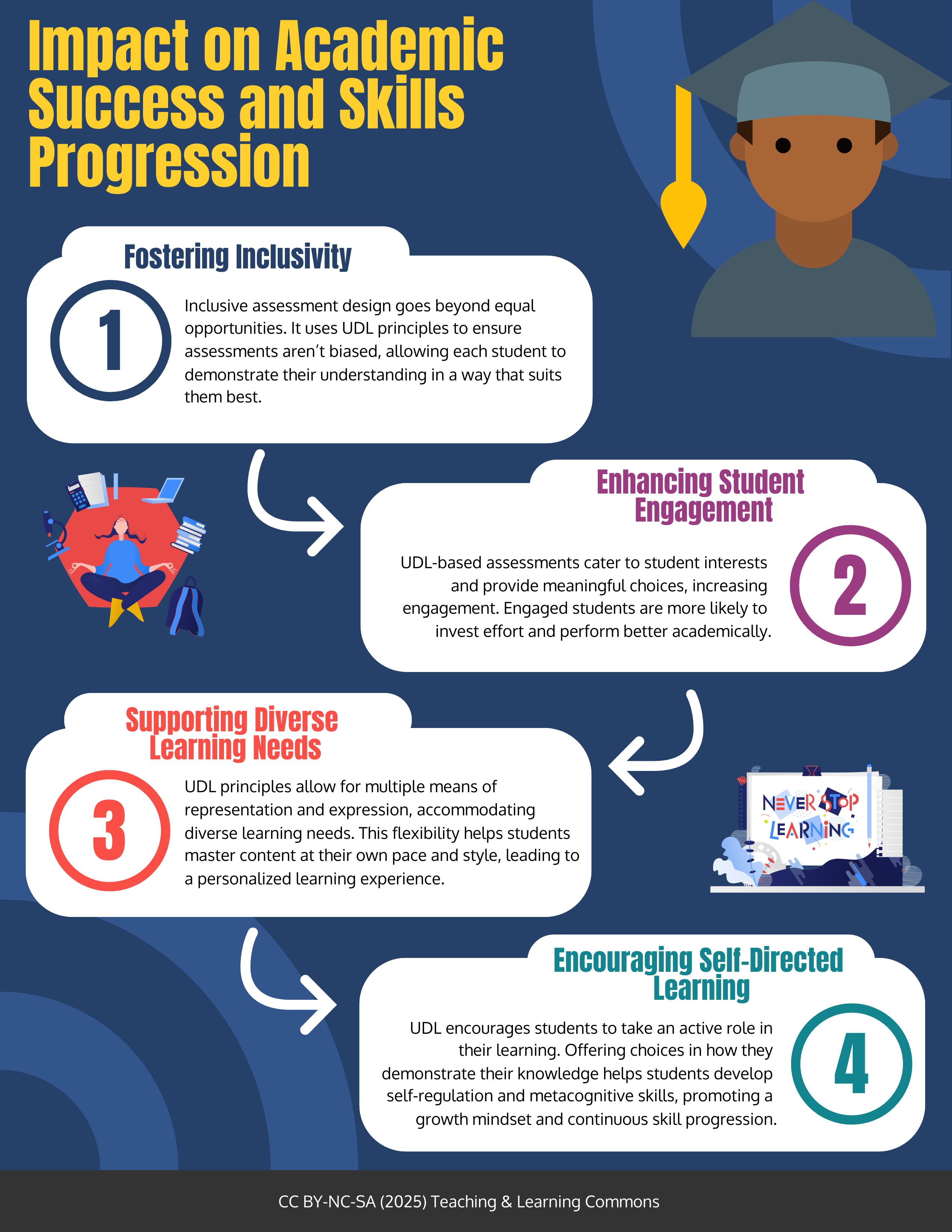
Inclusivity in assessment design is not just about providing equal opportunities; it’s about designing assessments that can accurately measure a student’s progression towards mastery. By integrating UDL principles, we ensure that assessments are not biased towards a particular learning style or ability, allowing each student to demonstrate their understanding and progression in a way that best suits them (CAST, 2018).
UDL-based assessments increase student engagement by catering to their interests and providing meaningful choices. When students are more engaged in their learning process, they are more likely to invest effort and perform better academically (Deci & Ryan, 2000). By considering student preferences and interests, educators can design assessments that are not only more engaging but also more effective in measuring student learning and facilitating progression towards mastery.
Using multiple means of representation and expression allows students with different learning needs to both grasp information and demonstrate their understanding effectively. This flexibility can help students master content at their own pace and in their own learning style, leading to a more profound and personalized learning experience (Rose & Meyer, 2002). This approach acknowledges and values the diversity of learners in a classroom, and it supports the progression towards mastery by accommodating diverse learning needs.
UDL encourages students to take an active role in their learning. By offering choices in how they demonstrate their knowledge, students can develop self-regulation and metacognitive skills, essential for lifelong learning (Zimmerman, 2002). This empowers students to take ownership of their education and promotes a growth mindset, contributing to continuous skill progression and mastery. This approach aligns with the concept of expert learners, who are proactive, resourceful, and knowledgeable, and who continuously strive for mastery (Dweck, 2006).
The integration of UDL principles in the design of assessments can lead to significant improvements in academic success and skill progression. By fostering inclusivity, enhancing engagement, supporting diverse learning needs, and encouraging self-directed learning, UDL-based assessments provide a robust framework for achieving educational equity and excellence. Through thoughtful design and implementation, assessments can become powerful tools for fostering academic achievement and promoting skill mastery for all students.
UDLing Assessments
1. Guidelines for Designing UDL-Aligned Assessments
The following seven steps represents suggested guidelines for designing UDL-aligned assignments based the concepts outlined throughout this resource (as based on academic and evidence-based research) and the spirit of the UDL principles, guidelines, and checkpoints.
Understand the UDL Framework
Universal Design for Learning (UDL) is a scientific and research-based framework for proactively designing flexible and engaging instruction for all learners. It is made up of 3 principles, with 3 guidelines each, and a total of 31 checkpoints over all 3 principles (about 9-12 each). It focuses on proactively addressing learner variability and reducing barriers for students; ultimately supporting their learning and academic success. UDL is based on the premise that obstacles to learning are not inherent in the abilities of learners, but instead arise from the environment (CAST, 2018; Evmenova, 2018; Fornauf & Erickson, 2020).
Apply the Three
UDL Principles
The three UDL principles are multiple means of engagement, representation, and action & expression. They address both academic and socio-emotional aspects of learning. These principles are based on neurocognitive networks in the brain and are designed to provide multiple pathways to learning – addressing the diversity of learners and their needs (CAST, 2018; Evmenova, 2018; Fornauf & Erickson, 2020).
Provide Clear
Instructions
Clearly articulate the assignment objectives, expectations, and grading criteria. Consider providing written, spoken, and visual instructions to accommodate different learning preferences. This can be facilitated by using a format-agnostic rubric to organize this information (CAST, 2018; Evmenova, 2018; Fornauf & Erickson, 2020; Sanger, 2020; Zhang, Takacs, Truong, Smulders, & Lee, 2021; University of Iowa, 2023).
Offer Multiple Options
Provide students with choices on how they can demonstrate their understanding of the material. This could include options such as written essays, oral presentations, multimedia projects, artistic creations, or hands-on demonstrations. Offering multiple options allows students to engage with the material, demonstrate their understanding, and express their learning in ways that align with their strengths and preferences (CAST, 2018; Evmenova, 2018; Fornauf & Erickson, 2020; Sanger, 2020; Zhang, Takacs, Truong, Smulders, & Lee, 2021; University of Iowa, 2023).
Use Varied Formats
Presenting assignment materials in multiple formats, as well as freedom to choose the format in which they present their work, can further enhance their engagement and understanding. Formats such as text, audio, and video, and varied visual aids such as diagrams, charts, and infographics. (CAST, 2018; Evmenova, 2018; Fornauf & Erickson, 2020; Sanger, 2020; Zhang, Takacs, Truong, Smulders, & Lee, 2021; University of Iowa, 2023).
Inclusive Pedagogy
UDL has been most often used to support accessibility and accommodations (including culturally/linguistically diverse learners), but it really aims to facilitate an environment where all learners can find success. By advocating for adaptability, accessibility, inclusiveness, autonomy, and differentiated instructional practices, UDL fosters an atmosphere where all learners can flourish (CAST, 2018; Evmenova, 2018; Fornauf & Erickson, 2020; Sanger, 2020; Zhang, Takacs, Truong, Smulders, & Lee, 2021; University of Iowa, 2023).
Continuous Reflection and Improvement
Reflect on the effectiveness of the UDL-aligned practices and make necessary adjustments for continuous improvement. It also involves using feedback from formative assessments to influence instructional decisions and help determine how the options supported learners to achieve the intended goals (Nicol & Macfarlane‐Dick, 2006; CAST, 2018; Evmenova, 2018; Fornauf & Erickson, 2020; Sanger, 2020; Zhang, Takacs, Truong, Smulders, & Lee, 2021; University of Iowa, 2023).
See below a shorter downloadable version of the above steps:
UDL-Aligned Assignment Guidelines
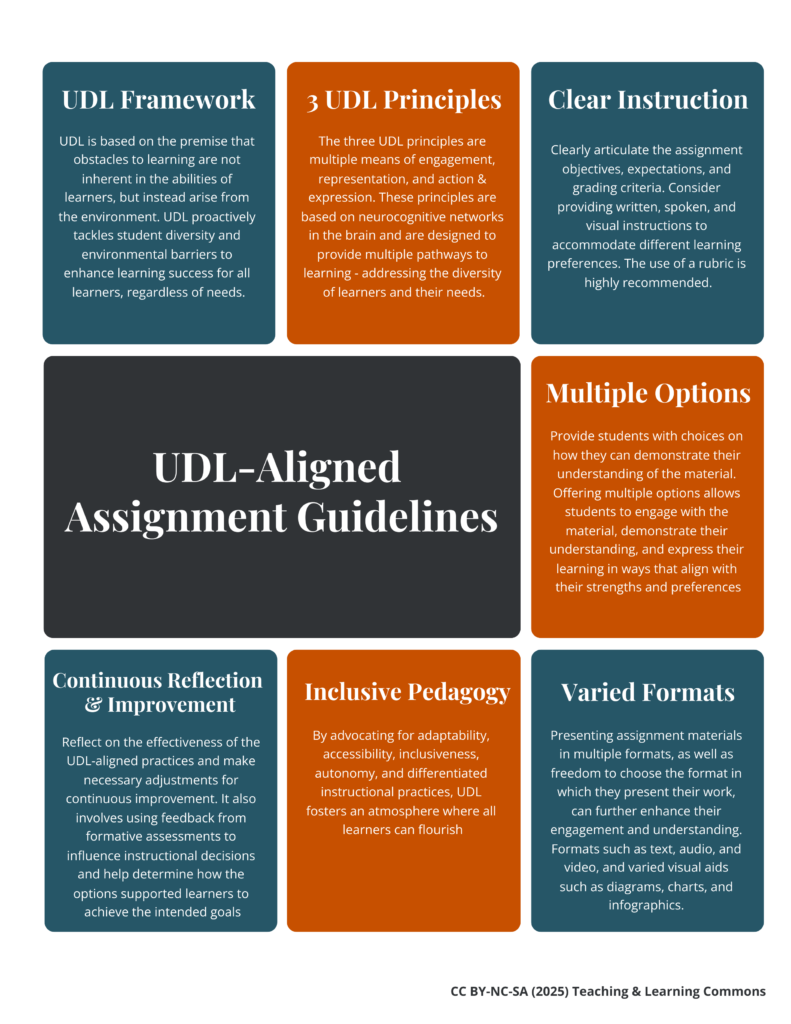
The following represents suggested guidelines for designing UDL-aligned assignments based the concepts outlined throughout this resource (as based on academic and evidence-based research) and the spirit of the UDL principles, guidelines, and checkpoints.
2. Chunking & Scaffolding
Chunking and Scaffolding are two strategies that are quite effective for enhancing student learning and engagement. These two strategies will be discussed in more detail in the following sections.
Chunking is a strategy that breaks down complex information into manageable ‘chunks’, making it easier for students to process and understand. It’s about managing cognitive load and ensuring that the information is neither too simple nor too complex for the students’ current level of understanding.
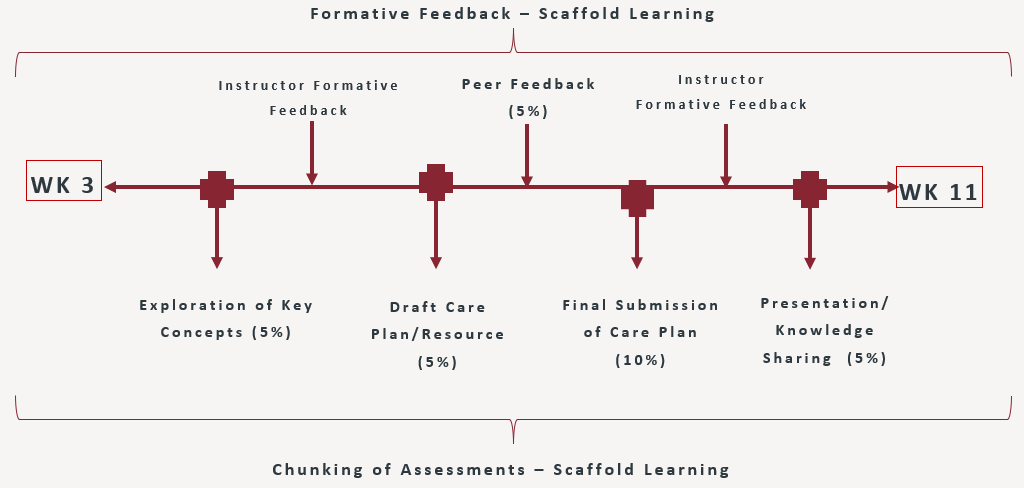
On the other hand, scaffolding involves providing a structured support system to enable students to achieve learning outcomes that they would not be able to reach independently. It’s about providing support and gradually increasing independence as students develop their understanding and skills.
Both strategies align with the principles of Universal Design for Learning (UDL), aiming to create an inclusive and effective learning environment that supports all students in their educational journey. While they serve different purposes, when used effectively, chunking and scaffolding can significantly enhance the learning experience for university students.
In the context of Universal Design for Learning (UDL), chunking is designed to support the principles of providing multiple means of engagement, representation, and action and expression (CAST, 2020). By chunking out assignments, instructors can create a more inclusive learning environment that supports the diverse needs of their students. It allows for greater accessibility and provides multiple pathways for students to engage with the content, practice their skills, and demonstrate their learning in ways that are meaningful to them (CAST, 2018).
Chunking is a powerful instructional design strategy that, when aligned with UDL principles, can significantly enhance the learning experience for university students. It supports cognitive processing, fosters active learning, and promotes a flexible and inclusive educational environment. By carefully designing chunked assignments, instructors can facilitate deeper understanding and more robust demonstration of learning among their students.
When chunking an assignment, instructors should first identify the core concepts foundational to the subject matter. These foundational chunks should be presented before more complex ideas, allowing students to build a solid understanding before moving on to more challenging material (Meyer, Rose, & Gordon, 2014). Instructors can organize these chunks in a logical sequence, ensuring each segment is concise and focused on a single concept or skill. This approach helps prevent cognitive overload and allows flexibility in teaching, accommodating different learning paces and styles (Meyer et al., 2014). To implement chunking effectively, instructors should consider the cognitive load of each chunk, ensuring it is appropriate for students’ current level of understanding. Clear instructions and objectives for each chunk help students grasp the material’s purpose and relevance (Sweller, Ayres, & Kalyuga, 2011). Integrating active learning opportunities within each chunk enhances engagement and retention. This could include low-stakes assignments, group discussions, or hands-on activities (Bonwell & Eison, 1991). Chunked assessment methods, such as short quizzes, reflective writing, or project-based tasks aligned with content chunks, offer students various ways to demonstrate their understanding (Wiggins & McTighe, 2005).
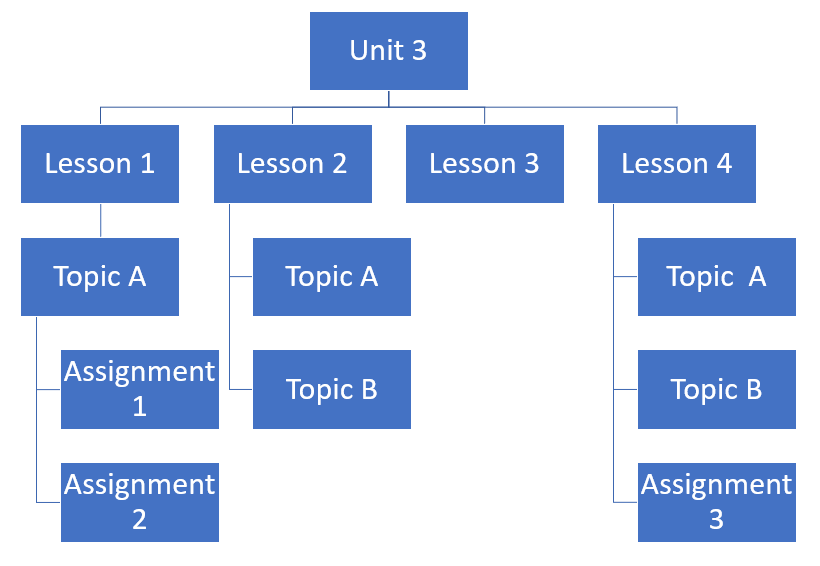
In the context of Universal Design for Learning (UDL), chunking supports principles of multiple means of engagement, representation, and action and expression (CAST, 2020). By chunking assignments, instructors create more inclusive environments that support diverse student needs, promoting accessibility and providing multiple pathways for engagement and learning (CAST, 2018). Chunking, aligned with UDL principles, enhances learning by supporting cognitive processing, fostering active learning, and promoting flexibility and inclusivity. Carefully design
Scaffolding is an instructional strategy that creates a support system enabling students to achieve learning outcomes they wouldn’t reach independently. It supports student achievement and task effort (van de Pol, Volman, Oort, & Beishuizen, 2015). The effectiveness of scaffolding hinges on group independent working time and student effort. The Institute of Education Sciences (IES) highlights scaffolding as a key evidence-based practice, providing temporary support to enhance learning outcomes. This approach parallels building construction, where scaffolds support workers as they build or repair structures (Sweetland Center for Writing, 2020).
To scaffold effectively, instructors should identify desired learning outcomes and break down complex tasks into manageable components, sequenced from simple to more complex. For instance, assigning a literature review first helps students understand a topic’s context before tackling more complex tasks like a research proposal (Sweetland Center for Writing, 2020).
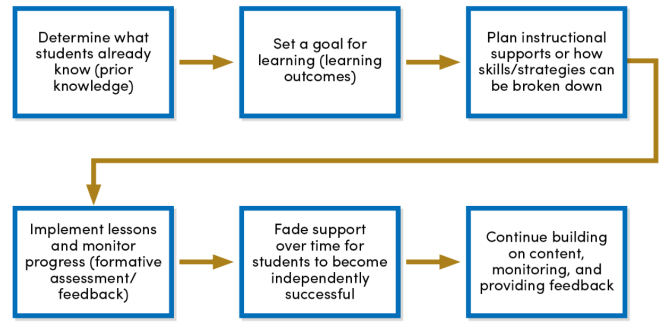
Scaffolding should provide students with varying levels of support that are gradually removed as they become more proficient. This could include providing clear instructions, examples, checklists, or rubrics that guide students through each step of the assignment. It is also essential to offer formative feedback throughout the process, which helps students reflect on their learning and make necessary adjustments (DePaul University, 2024).
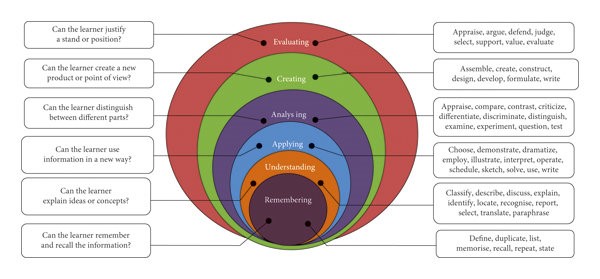
Scaffolding in education supports students to achieve learning outcomes they wouldn’t reach independently, by breaking tasks into manageable components and providing temporary support (van de Pol et al., 2015; Sweetland Center for Writing, 2020). Using Bloom’s Taxonomy, early activities target lower levels like remembering and understanding, while later tasks focus on analyzing, evaluating, and creating.
Aligned with Universal Design for Learning (UDL), scaffolding offers multiple means of engagement, representation, and action and expression (CAST, 2020). This includes presenting information in various formats and allowing diverse methods for demonstrating learning (Cornell University Center for Teaching Innovation, 2024). For instance, a written report could also be presented through a digital presentation or creative project.
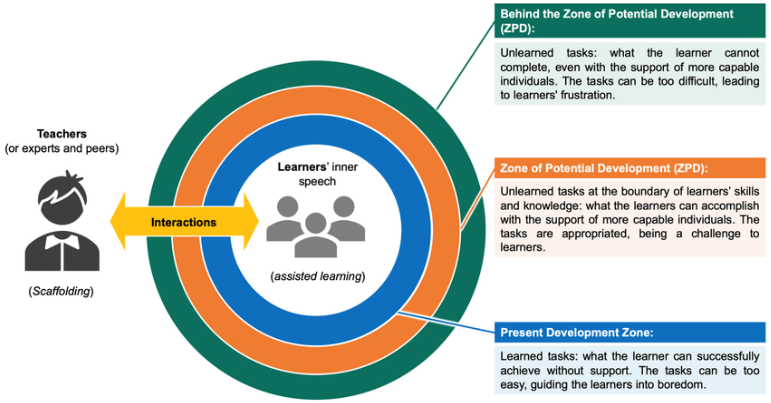
The concept of scaffolding is closely related to Vygotsky’s theory of cognitive development and his concept of the Zone of Proximal Development (ZPD). The ZPD refers to the difference between what a learner can do without help and what he or she can achieve with guidance and encouragement from a skilled partner (McLeod, 2024). Scaffolding is a way of operationalizing the ZPD, providing the necessary support to move the learner from what they can currently do to what they are potentially capable of doing with help.
By breaking down assignments into structured and sequential components, providing appropriate supports, and allowing for diverse means of demonstrating learning, instructors can create an inclusive and effective learning environment that supports all students in their educational journey and inclusive learning environment? Consider the strategies and tools you would employ to accommodate the diverse needs of learners. Outline your plan, focusing on specific instructional activities, varied learning methodologies, and the integration of educational technology to enhance accessibility and motivation. The intention of your approach is to foster overall learner success by promoting engagement, understanding, and practical application of knowledge.
3. UDL Considerations in Designing Forms of Assessments
This section will provide an overview of each of the assessment types, explore UDL considerations when designing each, as well as the value as a whole of implementing each.
Diagnostic assessments play a crucial role in identifying students’ strengths, weaknesses, and knowledge levels. Diagnostic assessments are generally used at the beginning of a learning experience, such as a new semester or concept. They help educators understand their students’ strengths, weaknesses, knowledge level, and skillset prior to beginning instruction (Delaney & Hata, 2020; Wong, 2023; Bhagia, 2024). These assessments are “low-stakes” because they are non-graded and do not determine whether the student moves to the next educational level instead, they provide a baseline for teaching (CAST, 2020b; Delaney & Hata, 2020; Wong, 2023).
When designing these assessments, one could include adaptive questioning, where the difficulty of questions changes based on the learner’s response, to more accurately capture the range of a student’s knowledge without causing undue frustration or boredom; along with gaining a better idea into the specific needs of the students going forward (CAST, 2020b; Delaney & Hata, 2020; Wong, 2023; Bhagia, 2024). For instance, in a mathematics course, adaptive questioning might involve a series of progressively challenging problems that test various levels of algebraic understanding. In a history course, it might involve analyzing primary sources with increasing complexity.
Additionally, using a variety of question types, such as open-ended responses, simulations, or even portfolio reviews, can provide a richer understanding of a student’s starting point (CAST, 2020b; Delaney & Hata, 2020; Bhagia, 2024). For example, in a biology course, a diagnostic assessment could include identifying parts of a cell or classifying organisms based on a given taxonomy. In a literature course, it might involve analyzing the themes of a short story or recognizing literary devices.
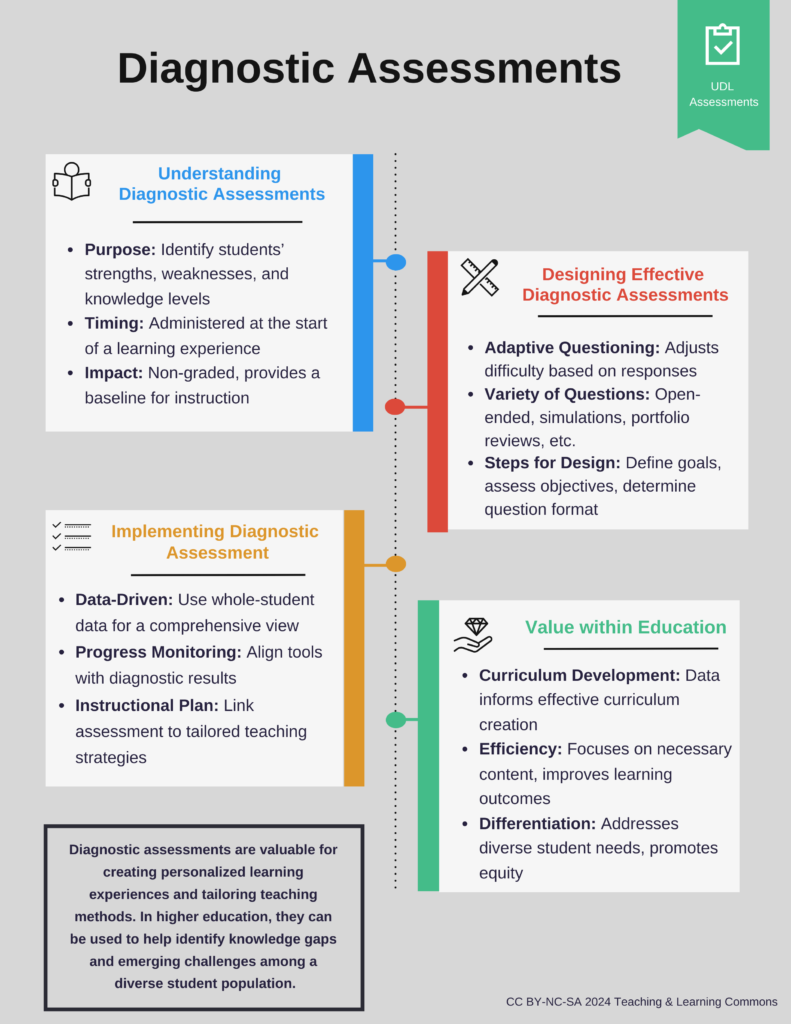
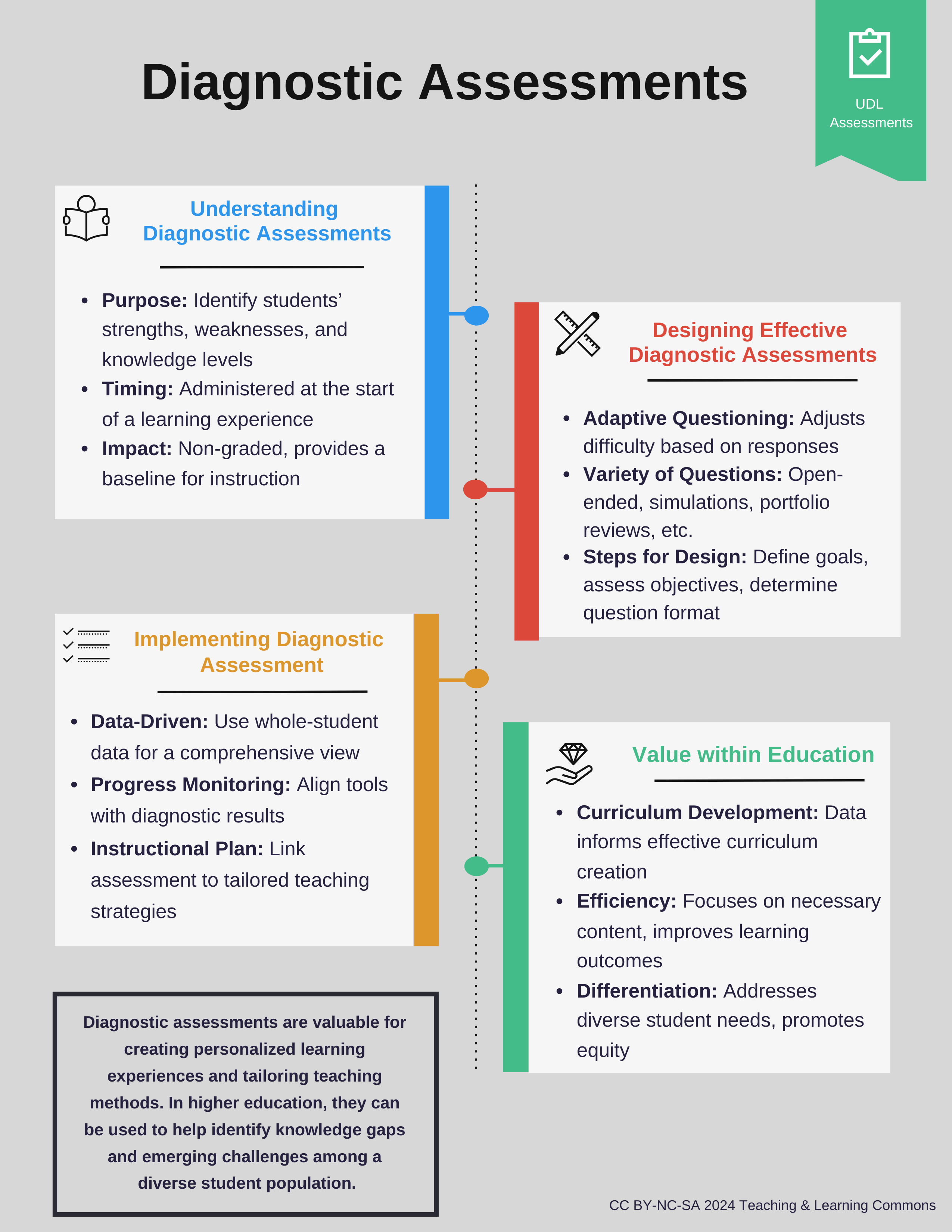
When designing diagnostic assessments, the following considerations by Lynie Wong (2023) on “How to Create Effective Diagnostic Assessments” align well with UDL:
- Define your goal: Clearly define your goal for using a diagnostic
- Identify impact on course design: Determine whether or not the results of the diagnostic will change the course design and in what way
- Assess learning objectives: Evaluate the learning objectives that the diagnostic assessment will measure
- Determine question format: Decide on the format of the questions that will be included in the diagnostic assessment
- Develop a message to learners: Craft a message to learners about the purpose and importance of the diagnostic assessment
next tab
Here are some tips for successfully utilizing diagnostic assessments:
- Use data to guide diagnostic assessments: By using whole child data, you ensure that a learner’s success is being supported through many interconnected, data-informed lenses (CAST, 2020b; Wong, 2023; Bhagia, 2024)
- Ensure progress monitoring alignment: Make sure that the progress monitoring tools align with the diagnostic assessment (CAST, 2020b; Wong, 2023; Bhagia, 2024)
- For instance, in a nursing program, it might result in additional lab sessions for students who need more hands-on practice with certain procedures
- Connect diagnostic assessment to a specific plan: Link the results of the diagnostic assessment to a specific instructional plan (CAST, 2020b; Wong, 2023; Bhagia, 2024)
- For instance, in a computer science course, results from a diagnostic assessment could lead to a tailored module on programming basics for those who need it
- Create a plan for tracking fidelity: Develop a system for tracking the implementation of the instructional plan (CAST, 2020b; Wong, 2023; Bhagia, 2024)
next tab
Diagnostic assessments provide substantial data for creating an effective curriculum that improves learning outcomes for students (CAST, 2020b; Delaney & Hata, 2020; Wong, 2023). They make the teaching and learning process more efficient by zeroing in on content that needs to be taught; creating a rewarding and amicable learning environment for the teacher and the students (CAST, 2020b; Wong, 2023; Bhagia, 2024).
Expanding on their value, diagnostic assessments not only play a role in individualized learning paths but also contribute to differentiating instruction (CAST, 2020b; Wong, 2023; Bhagia, 2024). In a higher education setting, where you have a diverse student body with varying backgrounds and knowledge, diagnostic assessments can help pinpoint specific areas where there are gaps between different student groups and individuals. This can also inform the need for supplemental instruction or resources to level the playing field for all learners. Moreover, diagnostic assessments could also include pre-course surveys and self-assessments that capture students’ attitudes, motivations, and study habits, which are critical for adult learners who often juggle multiple responsibilities outside of their studies.
next tab
What is formative assessment? According to Black & Wiliam (1998):
…all those activities undertaken by teachers, and by their students in assessing themselves, which provide information to be used as feedback to modify the teaching and learning activities in which they are engaged. Such assessment becomes ‘formative assessment’ when the evidence is actually used to adapt the teaching work to meet the needs. (p. 140)
Formative assessments are used throughout the learning process to monitor student understanding and adjust instruction accordingly – they provide immediate feedback to both the teacher and the student, allowing for real-time adjustments to teaching strategies and student approaches to learning (Black & Wiliam, 1998; Swan, 2015; CAST, 2020b; UDL on Campus, n.d.)
Consider the following table from Wiliam & Thompson (2007):
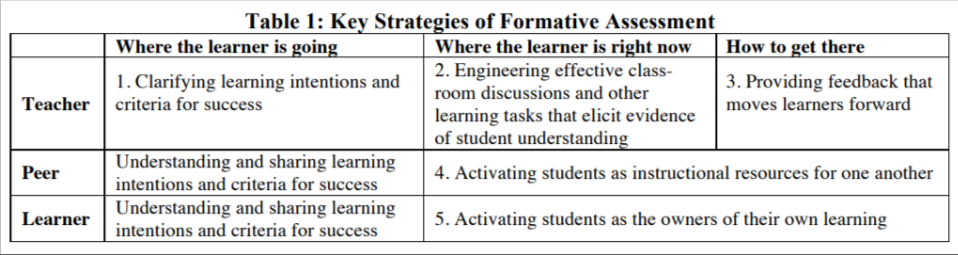
In the context of UDL, formative assessments go beyond just tracking academic progress. They also provide insights into how students are engaging with the material and with different learning strategies. Through reflective exercises, learners can grow in metacognition, understanding not just what they are learning but how they learn best, which aligns with the UDL principle of encouraging self-awareness and self-regulation (CAST, 2020b; UDL on Campus, n.d.). Integrating formative assessments such as concept maps, process journals, or learner-created quizzes, can also foster engagement and allow students to express their understanding in diverse ways, aligning with the UDL principle of providing multiple means of action and expression (CAST, 2020b; UDL on Campus, n.d.).
next tab
It’s essential to craft formative assessments that are frequent and varied, such as just-in-time teaching strategies that adjust the upcoming class content based on student feedback gathered at the end of a previous session. Additionally, peer assessment techniques, such as reciprocal teaching where students take turns teaching a concept to each other, can be powerful formative tools that also develop communication and critical thinking skills in a collaborative learning environment (Swan, 2015; CAST, 2020b; UDL on Campus, n.d.).
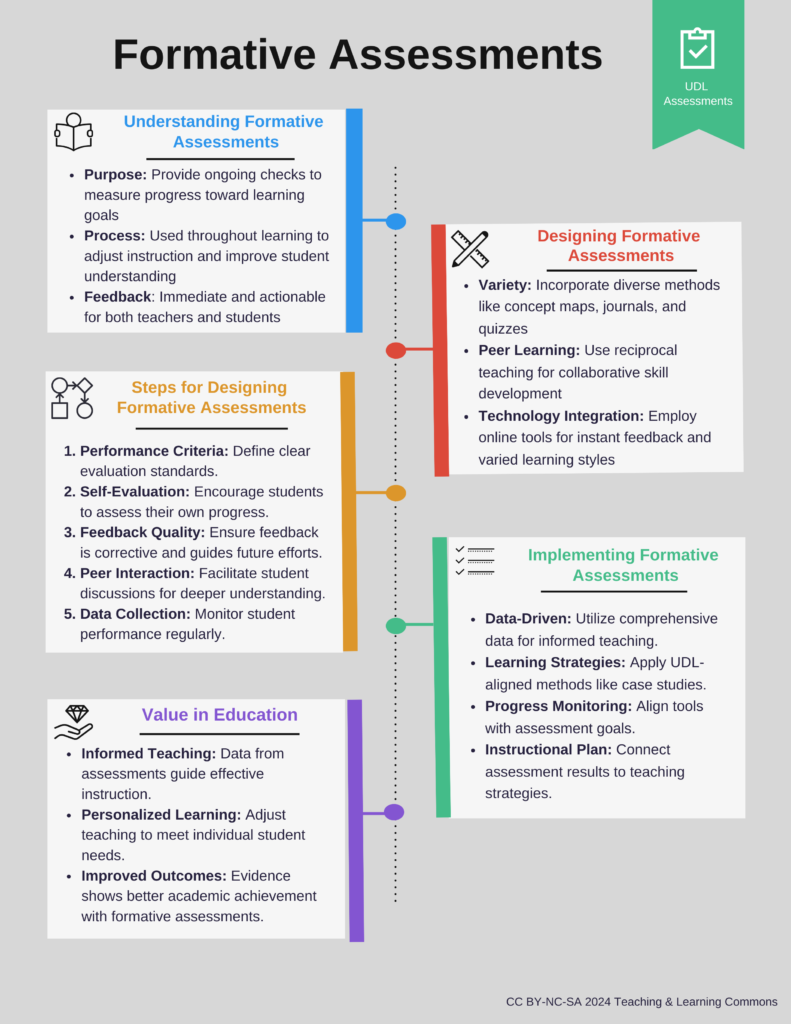
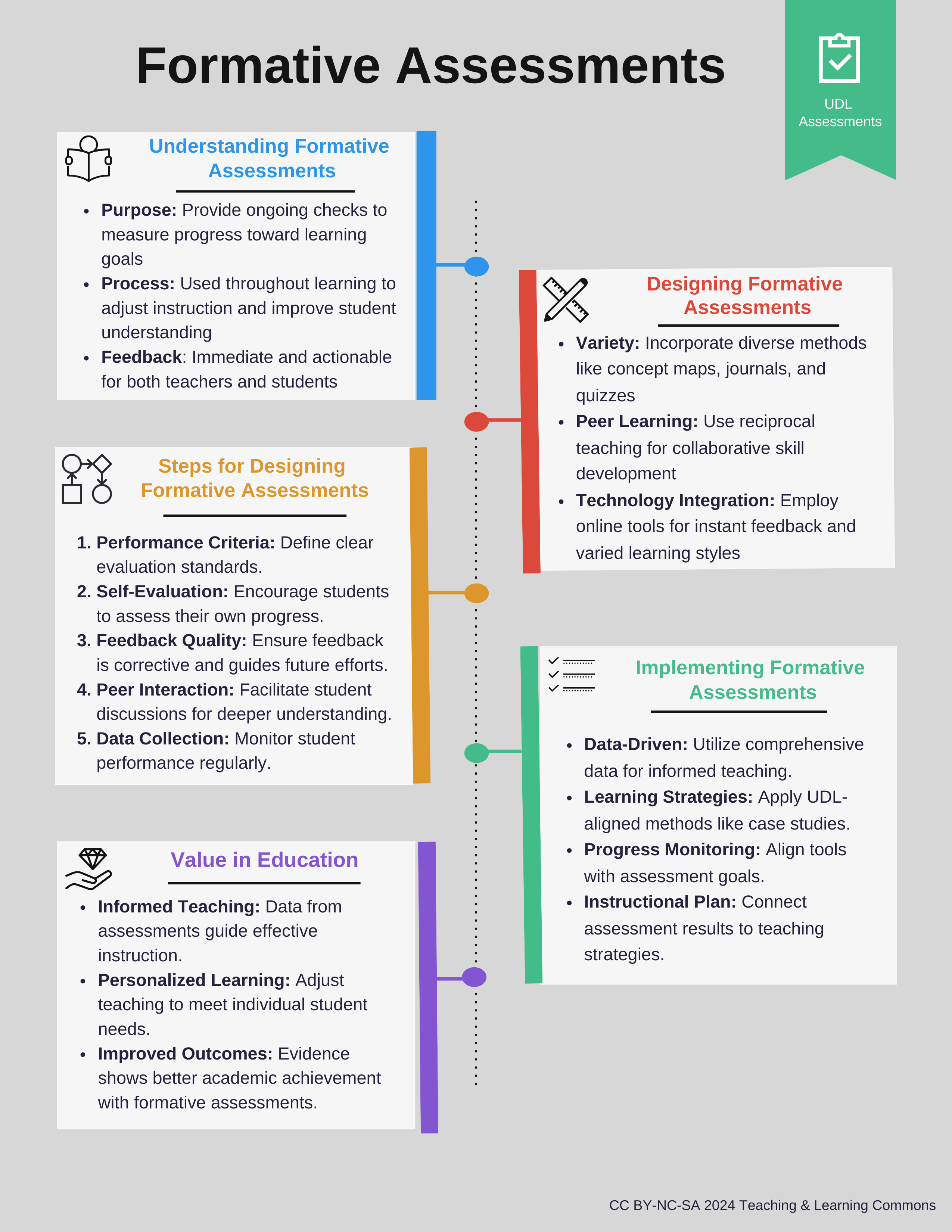
When designing formative assessments, consider the following:
- Define Performance Criteria: Clearly define the performance evaluation criteria for students.
- Boost Students’ Self-Evaluation: Encourage students to use the preset criteria to evaluate their own progress.
- Provide Comprehensive Feedback: The best feedback is corrective and forward-looking.
- Encourage Peer Discussions: Promote discussions among students to enhance learning.
- Integrate Technology: For instance, integrating online quizzes and interactive modules can provide immediate feedback and cater to different learning preferences.
- Collect Constant Data: Regularly collect data on student performance to monitor progress.
You may prefer to watch a video of this content instead. Please see this brief video, “Formative and Summative Assessment,” by Dr. Erin O’Connor Marsano (2018), Lecturer in the School of Education at Baylor University.
next tab
Here are some tips for successfully utilizing formative assessments:
- Use data to guide formative assessments: By using whole child data, you ensure that a learner’s success is being supported through many interconnected, data-informed lenses.
- Diverse Learning Strategies: Integrate diverse learning strategies that align with UDL principles, such as using case studies or problem-based learning to encourage application of knowledge in real-world scenarios.
- Ensure progress monitoring alignment: Make sure that the progress monitoring tools align with the formative assessment.
- Connect formative assessment to a specific plan: Link the results of the formative assessment to a specific instructional plan.
- Create a plan for tracking fidelity: Develop a system for tracking the implementation of the instructional plan.
next tab
Formative assessments provide valuable data that can be harnessed to drive effective teaching and optimize student learning. In order for this data to be useful, the feedback derived from the formative assessment must be “specific and reliable, based on a detailed description of what happed in each lesson” (Swan, 2015). They enable educators to make informed decisions, personalize instruction, and create a dynamic learning environment that caters to individual needs (Black & Wiliam, 1998; CAST, 2020b; UDL on Campus, n.d.).
next tab
Summative assessments focus on learner performance after instruction has occurred, such as unit exams, course summative tests, final project artifacts, or chapter summaries. They are often used for accountability purposes, criterion for admittance, or to compare learner performance. Summative assessments in a UDL framework can also encompass collaborative projects, where students apply their knowledge in team settings, reflecting real-world work environments. Another important aspect is to offer students a choice in how they demonstrate their mastery, whether through traditional exams, papers, presentations, or projects. This aligns with the UDL goal of providing multiple means of action and expression, catering to different talents and skills among students.
In higher education, especially at the graduate level, one could design summative assessments that are integrative, requiring students to synthesize knowledge from various courses or disciplines. This could take the form of capstone projects or comprehensive exams that require application, analysis, and synthesis over rote memorization. Moreover, integrating self-reflection components as part of summative assessment can enhance lifelong learning skills, allowing students to assess their progress and set goals for continued development beyond the course.
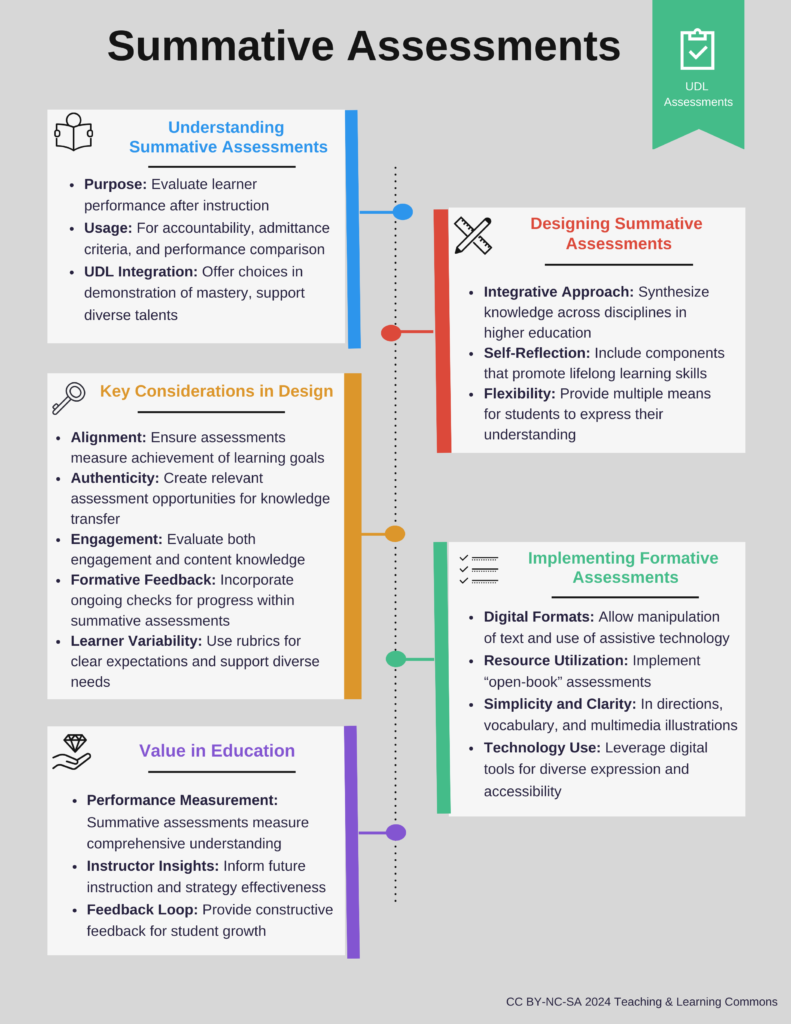
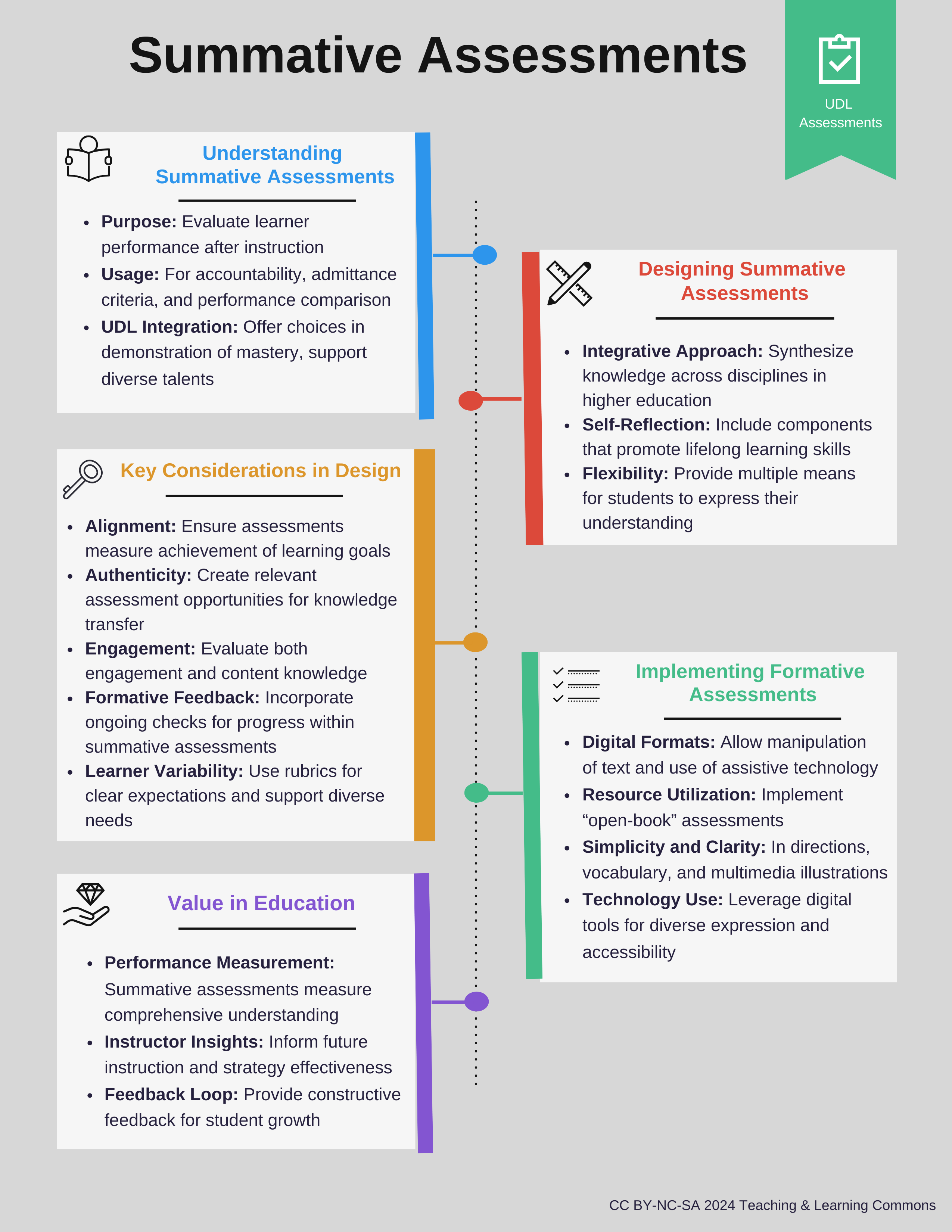
When designing summative assessments, consider the following:
- Align assessments to learning goals: When the learning goals are clear, the assessments should align so they measure whether learners have achieved the intended goal.
- Offer authentic opportunities for assessment: Offering relevant, authentic options for assessment can help learners transfer usable knowledge and understand the “what,” the “how,” and the “why” of their learning.
- Assess engagement as well as content knowledge: We know that engagement is essential for learning. Assessing engagement in the learning process can invite metacognitive reflection, so learners have the opportunity to assess their own learning process.
- Include frequent formative assessments: Formative assessments are ongoing, frequent checks to measure learners’ progress toward the targeted learning goals.
- Feedback in Summative Assessments: While summative assessments are typically seen as the end point of a unit or course, they can also provide valuable feedback for students. This feedback can help students understand their strengths and areas for improvement, and can guide their future learning strategies. In a UDL framework, feedback should be timely, constructive, and personalized to each student’s needs.
- Support learner variability through flexible assessments: Use and share rubrics to clarify expectations.
next tab
Here are some tips for successfully implementing summative assessments:
- Allow students to utilize resources: For example, “open-book” assessments or use of other tools and resources (Fovet & Beck, 2014).
- Simplify directions: be clear in what you want the students to do and your expectations.
- Clarify vocabulary and symbols: ensure content is accessible for all students and provide definitions and explanations for symbols and other discipline-specific or technical jargon.
- Illustrate through multimedia: use images, videos, and audio to supplement text and oral instructions; provide multiple means for students to understand the assessment.
- Clearly align assessments with learning outcomes to measure student performance: Ensure that assessments measure student performance effectively (Fovet & Beck, 2014).
- Clear Instructions: Provide clear completion instructions and scaffolded practice leading up to summative assessments (Missouri Online, n.d.).
- Use of Technology in Assessments: Technology can offer diverse ways for students to demonstrate their learning. For instance, students could create digital portfolios, presentations, or videos. Technology can also support accessibility by providing options for text-to-speech, adjustable text size, and color contrast (CAST, 2020a; Missouri Online, n.d.).
- Feedback in Summative Assessments: While summative assessments are typically seen as the end point of a unit or course, they can also provide valuable feedback for students. This feedback can help students understand their strengths and areas for improvement, and can guide their future learning strategies. In a UDL framework, feedback should be timely, constructive, and personalized to each student’s needs (CAST, 2020a).
- Clear Expectations: Clearly communicate expectations for projects and assessments, including start and due dates, and staggered timelines for complex projects (Fovet & Beck, 2014).
next Values
Summative assessments provide valuable data that can be used to measure student performance after instruction has occurred. They are often used for accountability purposes, criterion for admittance, or to compare learner performance. They also provide an opportunity for students to demonstrate their understanding of the course material in a comprehensive manner (Takacs, Zhang, Lee, Truong, & Smulders, 2022). Summative assessments not only measure student learning, but they can also provide valuable information for instructors. They can help instructors identify areas where students are struggling, inform future instruction, and measure the effectiveness of teaching strategies.
By aligning assessments with learning goals, offering authentic opportunities for assessment, assessing engagement as well as content knowledge, and including frequent formative assessments, summative assessments can effectively measure student learning and provide valuable feedback for both students and instructors.
4. Presenting Assessments in Different Formats
As discussed throughout this resource, the adoption of Universal Design for Learning (UDL) principles into higher education can significantly enhance the learning experience by providing diverse means of engagement, representation, and action & expression (CAST, 2021; Ahmed, 2024; Evmenova et al., 2024; Meyer, Rose, & Gordon, 2014). A consideration for assignment design includes not only the opportunities the learner has to demonstrate their learning, but also the means by which the assignment is presented to the learner to begin with.
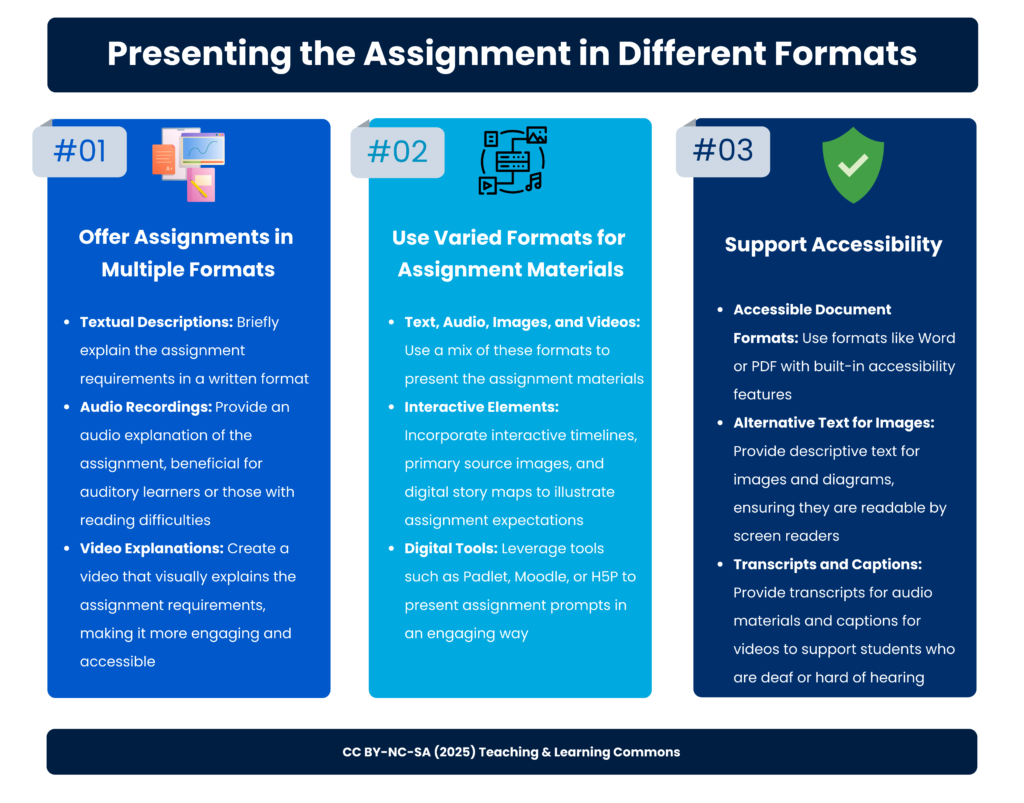
next Specific examples
Provide a detailed step-by-step written guide on how to solve a particular type of problem, including definitions, formulas, and sample solutions (Boaler, 2016). Use audio recordings explaining the problem-solving steps and reasoning behind each method used (Boaler, 2016). Short videos demonstrating problem-solving on a digital whiteboard, highlighting key steps and common mistakes. Infographics showing the relationship between different mathematical concepts or flowcharts outlining steps for problem-solving (National Council of Teachers of Mathematics, 2014). Use interactive graphs or dynamic geometry software (e.g., GeoGebra) to visually demonstrate how changing parameters affect solutions (National Council of Teachers of Mathematics, 2014)
next Nursing
Provide a detailed document outlining the case study assignment, including patient scenarios, care plan guidelines, and evaluation criteria (Ackley & Ladwig, 2017). Create an audio recording explaining the patient scenario, care plan requirements, and key elements such as patient symptoms and documentation procedures (Gulanick & Myers, 2016). Develop a video walkthrough of the case study, showcasing an example care plan, discussing diagnoses, and demonstrating documentation. Include captions (Yoost & Crawford, 2019). Design infographics or flowcharts illustrating the nursing process, from assessment to evaluation, including vital signs and patient history (Doenges, Moorhouse, & Murr, 2016). Use interactive PDFs or online simulations where students can input patient data, make clinical decisions, and practice care plan development (Karch, 2016)
next English
Clear guidelines on writing an analytical essay, including thesis development, textual evidence usage, and citation styles (Elbow, 1998). Recordings of discussions or lectures on the literary work and its themes, tone, and context (Manguel, 2013). A video walkthrough of the essay-writing process, including brainstorming, outlining, drafting, and editing (Purdue University, n.d.). Mind maps or visual organizers for essay structure, thematic analysis, and character relationships (Heard, 2007). Online discussion forums where students can ask questions and engage in peer reviews (Purdue Online Writing Lab, n.d.)
next Biology
Detailed lab manual with step-by-step protocols and safety guidelines for experiments (Marieb & Hoehn, 2018). Recorded step-by-step instructions for conducting experiments, including safety precautions (Smith, 2011). Tutorials on laboratory techniques and procedures, including visuals of proper equipment usage and experimental setups (Campbell, Reece, & Mitchell, 2008). Diagrams and infographics illustrating biological processes, structures, and pathways (Raven, Johnson, & Mason, 2013). Virtual lab simulations where students can practice techniques and experiment setups before actual lab sessions (Virtual Biology Lab, 2021)
next History
Comprehensive document detailing the structure and content requirements for a historical analysis paper (Rampolla, 2012). Podcasts discussing key historical events, contexts, and analytical methods (Hardy, 2018). Documentary-style videos explaining historical periods, key figures, and significant events with visuals and narrations (Zinn, 1995). Timelines and maps to contextualize historical events and their geographical and temporal relationships (Tindall & Shi, 2013)
next Business
Detailed guidelines on creating a business plan, including sections on market analysis, financial projections, and strategic planning (Sahlman, 1997). Recordings of case studies explaining successful business strategies and analyses (Christensen, 1997). Video presentations on financial forecasting, market segmentation, and strategic planning tools (Khan Academy, n.d.). Charts and graphs illustrating financial data, market trends, and business models (Kotler & Keller, 2016). Business simulation software where students can make decisions and see the effects on their virtual company (Harvard Business Review, 2021)
next Instructions
Universal Design for Learning (UDL) guides the creation of learning goals, materials, methods, and assessments to cater to diverse learners (CAST, 2018). When drafting assignment instructions, integrating UDL principles is essential to ensure all students can access and participate in meaningful learning experiences.
Assignment instructions typically include the purpose, tasks, format, criteria for success, and due dates (Thompson, 2013). Clarifying the purpose, tied to course objectives or real-world applications, helps students stay focused and motivated (Deci & Ryan, 2000). For example, explaining that an essay will improve critical thinking, writing, and research skills makes the task more meaningful and connects it to professional practices or future coursework (Thompson, 2013).
Integrating UDL principles in assignment design can lead to more inclusive and effective learning experiences. By considering the diverse needs and preferences of students, instructors can create assignments that not only assess student learning but also engage and motivate all learners effectively.
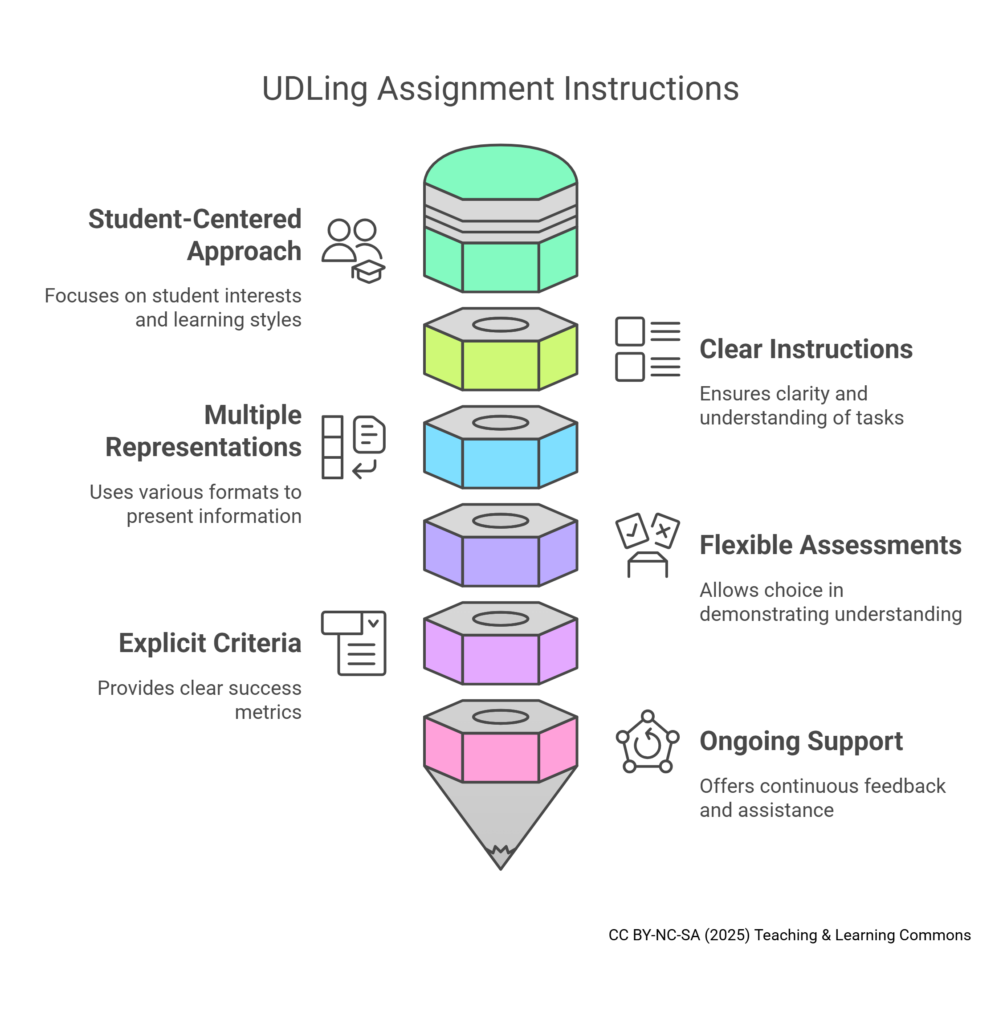
Student-Centred Approach
Clear and Concise Instructions
Multiple Means of Representation
Flexible Assessment Methods
Explicit Criteria
Ongoing Support and Feedback
By embracing UDL principles and integrating them into instructional design strategies, instructors can create a dynamic and flexible learning environment that is supportive of the needs of all learners. This approach not only respects the diversity of learners but also prepares them to thrive in a world that values adaptability and inclusive practices. As educators continue to explore and implement these strategies, they contribute to a more equitable educational landscape, where every student has the tools and opportunities to reach their full potential (CAST, 2021; Harvard University, 2021; University of Chicago, 2024; University of Waterloo, n.d.).
Downloadable infographic version:
UDLing into Practice
Scenario 1
Self-Reflection & Application
Reflect on a course you have previously taught or are planning to teach within your discipline. Using your what you have learned about UDL and instructional materials, consider your own instructional materials process – how do you create them, find them, and implement into your lessons? What are you currently doing that supports the principles of UDL? What strategies and tools would you employ to ensure equitable access to learning and engagement opportunities for all students? What celebrations and challenges do you foresee, and how will you address them? Reflect on how these changes can enhance student engagement and success in your course.
Scenario 2
Re-designing Assessments in a Current Course
Imagine you have been tasked with re-designing assessments of an existing course to align with UDL principles. What strategies and specific types of assessments would you recommend to ensure the course is inclusive and effective? Assess the course materials against UDL principles and identify areas where improvements can be made. How can integrating multiple means of representation, engagement, and action & expression support diverse learning needs and foster student achievement? Consider the potential impact of these changes on overall learner success.
Scenario 3
Designing Assessments for a New Course
As an instructor designing a new course within your discipline, how will you apply your understanding of UDL-focused assessments, constructive alignment, and chunking and scaffolding to create a dynamic and inclusive learning environment? Consider the strategies and tools you would employ to accommodate the diverse needs of learners. Outline your plan, focusing on specific instructional activities, varied learning methodologies, and the integration of educational technology to enhance accessibility and motivation. The intention of your approach is to foster overall learner success by promoting engagement, understanding, and practical application of knowledge.
5. Designing UDL-Aligned Rubrics
Rubrics are essential tools in education, serving as assessment guides that outline assignment expectations by listing criteria and describing levels of quality along a scale (Taylor, Kisby, & Reedy, 2014). They offer consistent feedback, decrease grading time, and provide students with clarity on what is being assessed and the standards expected (Arcuria & Chaaban, 2019).
Rubrics are effective for various assignments, including papers, presentations, and projects, offering objective and meaningful feedback (Arcuria & Chaaban, 2019). They help students understand performance expectations and standards for different levels of achievement (Ragupathi & Lee, 2020), supporting clear demonstration of learning.
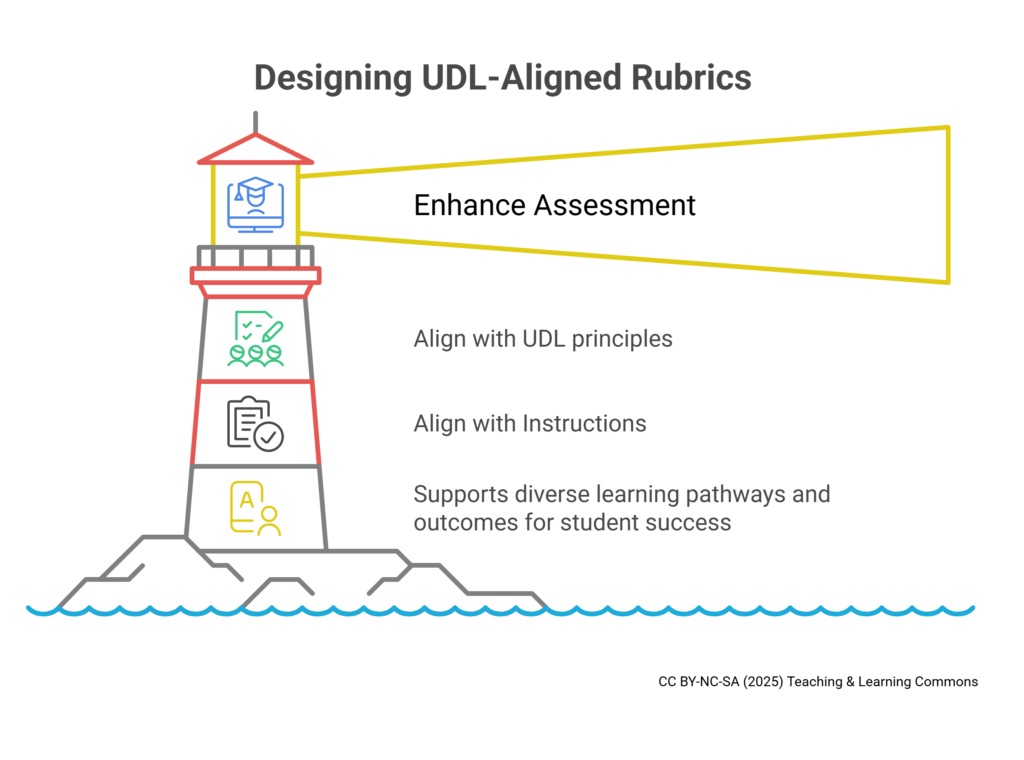
Integrating UDL principles into rubric design ensures accessibility and inclusivity (CAST, 2018). By aligning with UDL guidelines, rubrics can support diverse learning pathways and outcomes, becoming dynamic tools rather than conventional grading methods. Providing rubrics also helps students understand assignment expectations and track their learning progress (CAST, 2018). The following sections will explore rubrics and their alignment with UDL principles in more detail.
next rubric principles
Integrating UDL principles into rubric design ensures accessibility and inclusivity for all learners (CAST, 2018). Rubrics should reward students for demonstrating understanding in various ways, aligning with the principles of Multiple Means of Engagement, Representation, and Action/Expression (Rose & Meyer, 2002).
Key considerations include offering choices, encouraging collaboration, and recognizing effort. Feedback should be provided in multiple formats and tailored to meet diverse needs.
Allow students to demonstrate learning through various methods and tools, evaluating both content and presentation skills. This approach fosters engagement and supports diverse learning preferences, creating a more equitable learning environment (CAST, 2018; Rose & Meyer, 2002).
next rubric principles
Aligning rubrics to assignment instructions begins by designing the rubric alongside the assignment, ensuring it reflects the assignment’s goals and objectives (Andrade, 2005). Consistency between rubric criteria and assignment objectives promotes fairness and equity in grading (Brookhart, 2013; Panadero & Jonsson, 2013).
Clear articulation of expectations, listing criteria, and describing quality levels for each criterion guide students in their work, reducing ambiguity and ensuring shared understanding of performance standards (Andrade, 2005; Reddy & Andrade, 2010).
Sharing rubrics with students alongside assignments helps them better plan and structure their work. Rubrics serve as tools for self-assessment, enabling students to evaluate their progress and identify improvement areas (Panadero & Jonsson, 2013). Using rubrics as teaching tools clarifies expectations and promotes metacognitive skills (Andrade & Du, 2007).
Overall, aligning rubrics to assignment instructions enhances the reliability and validity of assessments, providing a fair and transparent evaluation basis.
6. UDL Informed Feedback
Feedback is a critical component of the learning process, serving as a bridge between instruction and learning, between teachers and students. It is through feedback that students understand the strengths and weaknesses of their work, gain insight into their learning progress, and receive guidance on how to improve (Hattie & Timperley, 2007).
In the context of Universal Design for Learning (UDL), feedback takes on an even more significant role. Feedback in UDL is not just about correcting errors; it’s about providing learners with information about their performance in a way that encourages positive learning outcomes and fosters a growth mindset (Dweck, 2006).
This section will further explore the various types of feedback, including diagnostic, formative, summative, intrinsic, and extrinsic feedback, and explore different means of providing feedback, such as verbal, written, peer, and digital feedback. Each type and means of feedback have its unique advantages and considerations, which we will discuss in detail in the subsequent sections.
What is Feedback?
Feedback is valuable because it helps learners understand what they did well, where they went wrong, and most importantly, how they can improve. It is through feedback that learners can reflect on their learning, identify gaps in their knowledge and skills, and take steps to close those gaps (Shute, 2008). This aligns with the UDL principle of engagement, promoting self-regulation and motivation in learners (CAST, 2018).
As Dr. Jolene Zywica (2024) notes:
“Feedback is part of an iterative and responsive process where students can learn and develop skills and mindsets – they reflect, evaluate their work, understanding, and skills, communicate with peers and teachers, and practice a growth mindset. The feedback cycle, when implemented effectively, is an active learning experience in its own right, as students practice and develop skills they will use the rest of their lives.”
Dr. Jolene Zywica (2004)
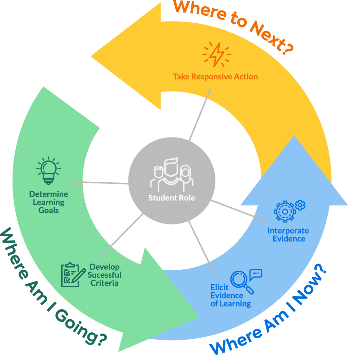
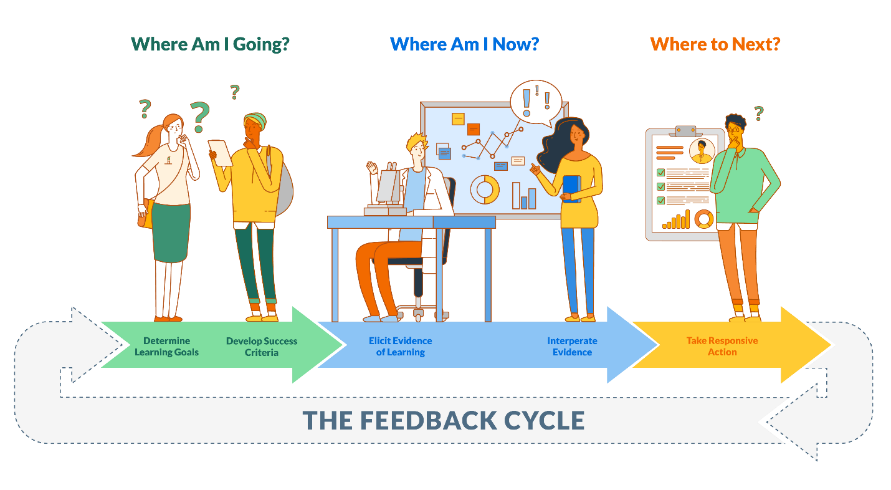
The feedback cycle, as described by Black and Wiliam (1998), involves three key questions:
Where am I going?
This involves determining learning goals and developing success criteria. It’s about setting clear, achievable objectives and understanding what success looks like.
Where am I now?
This involves eliciting and interpreting evidence of learning. It’s about assessing the current state of the learner’s knowledge and skills.
Where to next?
This involves taking responsive action based on the feedback. It’s about using the information gathered to guide future learning and improvement.
This cycle emphasizes the iterative nature of learning and the central role of feedback in that process. It’s important to note that for feedback to be effective, it needs to be timely, specific, understandable, and actionable (Wiggins, 2012). These characteristics resonate with the UDL principle of representation, ensuring information is accessible and comprehensible to all learners (CAST, 2018).
next Types of Feedback
Feedback in education can be categorized into several types, each serving a unique purpose and contributing to the learning process in different ways. Understanding these types of feedback can help instructors tailor their feedback strategies to meet the diverse needs of learners and enhance learning outcomes.
Below is an infographic representing 6 different types of feedback, with each type being further explored through the tabs on the left.
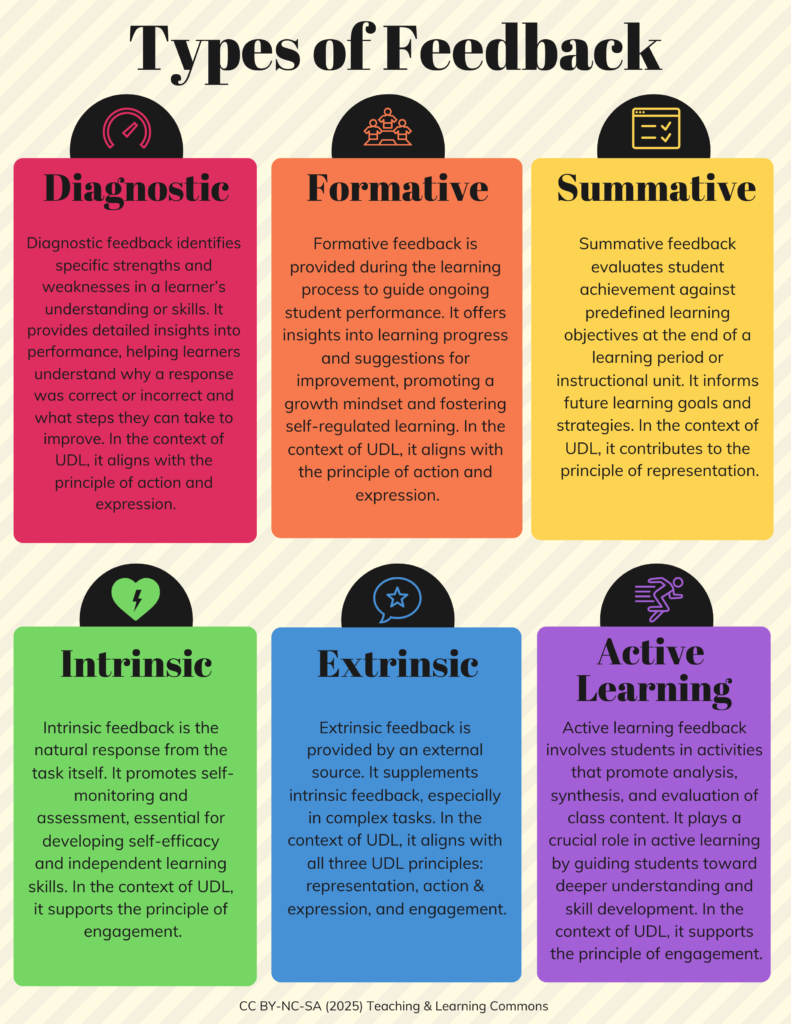
Diagnostic feedback is a type of formative feedback that focuses on identifying specific strengths and weaknesses in a learner’s understanding or skills (Brookhart, 2008). It goes beyond simply indicating what is correct or incorrect; it provides detailed insights into the learner’s performance, helping them understand why a particular response was correct or incorrect and what steps they can take to improve. It is especially useful in early learning stages, it helps identify knowledge gaps and misconceptions, fostering metacognitive skills through reflection and adjustment (Hattie, 2009). Here are some examples of diagnostic feedback:
- A math instructor providing detailed feedback on a student’s problem-solving process, pointing out where the student made a mistake in their calculations and explaining the correct method
- A language instructor correcting a student’s pronunciation and explaining the correct articulation of the sounds
- An art instructor giving feedback on a student’s painting technique, highlighting areas of strength and suggesting techniques to improve weaker areas
In the context of UDL, diagnostic feedback aligns with the principle of action and expression. It provides learners with multiple means of action and expression, allowing them to demonstrate what they know in different ways and receive feedback that guides their learning process (CAST, 2018).
next Type of Feedback
Formative feedback is provided during the learning process to guide ongoing student performance. It is often informal, immediate, and can be continuous (Black & Wiliam, 1998; Shute, 2008). The goal of formative feedback is to provide students with insights into their learning progress and offer suggestions for improvement, thereby promoting a growth mindset and fostering self-regulated learning. This aligns with the concept of active learning, which emphasizes the importance of student engagement and participation in the learning process (Bonwell & Eison, 1991). Here are some examples of formative feedback:
- An instructor providing written comments on a student’s draft essay highlighting strengths and areas for improvement
- During a math lesson, an instructor notices a student struggling with a concept and offers a brief, targeted mini-lesson to address the issue
- Peer feedback sessions where students review each other’s work and offer constructive criticism
In the context of UDL, formative feedback aligns with the principle of action and expression. It provides learners with multiple means of action and expression, allowing them to demonstrate what they know in different ways and receive feedback that guides their learning process (CAST, 2018).
next Type of Feedback
Summative feedback is provided at the end of a learning period or instructional unit to evaluate student achievement against predefined learning objectives (Harlen & James, 1997). It usually comes in the form of grades or scores and serves to inform future learning goals and strategies rather than immediate improvement. Here are some examples of summative feedback:
- Final grades on a transcript
- Scores on standardized tests or end-of-term exams
- A final project grade in a course that sums up all the learned skills and knowledge
Summative feedback, in the UDL framework, contributes to the principle of representation. It provides learners with a clear and comprehensive overview of their learning progress, helping them understand the big picture and see connections between different parts of the curriculum (CAST, 2018).
next Type of Feedback
Intrinsic feedback is the natural response from the task itself and occurs as learners engage with a task and notice the outcomes of their actions (Schmidt & Wrisberg, 2008). This type of feedback promotes self-monitoring and assessment, which is essential for developing self-efficacy and independent learning skills. It is closely related to the concept of “flow”, a state of deep enjoyment and total involvement with a task, which is associated with optimal learning experiences (Csikszentmihalyi, 1990). Here are some examples of intrinsic feedback:
- A student solving a puzzle realizes their error when pieces don’t fit together
- A runner adjusts their pace based on how their body feels during a race
- When practicing a musical instrument, a student hears a wrong note and corrects their playing
Intrinsic feedback supports the UDL principle of engagement. By providing immediate and direct feedback from the task itself, it helps maintain learner interest and motivation, fostering a sense of autonomy and promoting self-regulated learning (CAST, 2018).
next Type of Feedback
Extrinsic feedback, also known as augmented feedback, is provided by an external source such as a teacher, peer, or digital platform (Schmidt & Wrisberg, 2008). It is used to supplement intrinsic feedback, especially in complex tasks where the learner may not get enough information from the task alone. Here are some examples of extrinsic feedback:
- A coach giving instructions on how to correct a swimmer’s stroke technique
- An instructor’s comments and grades on a student’s written assignment
- Feedback from a language learning app that corrects pronunciation and grammar
Extrinsic feedback aligns with all three UDL principles. By providing additional guidance and support, it ensures that information is represented in multiple ways (representation), allows learners to express their understanding in different ways (action & expression), and keeps learners engaged and motivated (engagement) (CAST, 2018).
next Type of Feedback
Active learning strategies involve students in activities such as reading, writing, discussion, or problem-solving that promote analysis, synthesis, and evaluation of class content (Bonwell & Eison, 1991). Feedback plays a crucial role in active learning by providing students with information on their performance and guiding them toward deeper understanding and skill development. Here are some examples of active learning feedback:
- Group projects where students receive ongoing feedback from peers and instructors
- Interactive class discussions where the instructor poses questions and provides feedback on student responses
- Hands-on experiments in science classes where students receive real-time feedback on their procedures and results
Active learning feedback supports the UDL principle of engagement. It involves students in their learning process, promotes collaboration and community, and provides authentic and relevant learning experiences, all of which are key aspects of the UDL engagement principle (CAST, 2018).
7. Compassionate Care in Providing Feedback
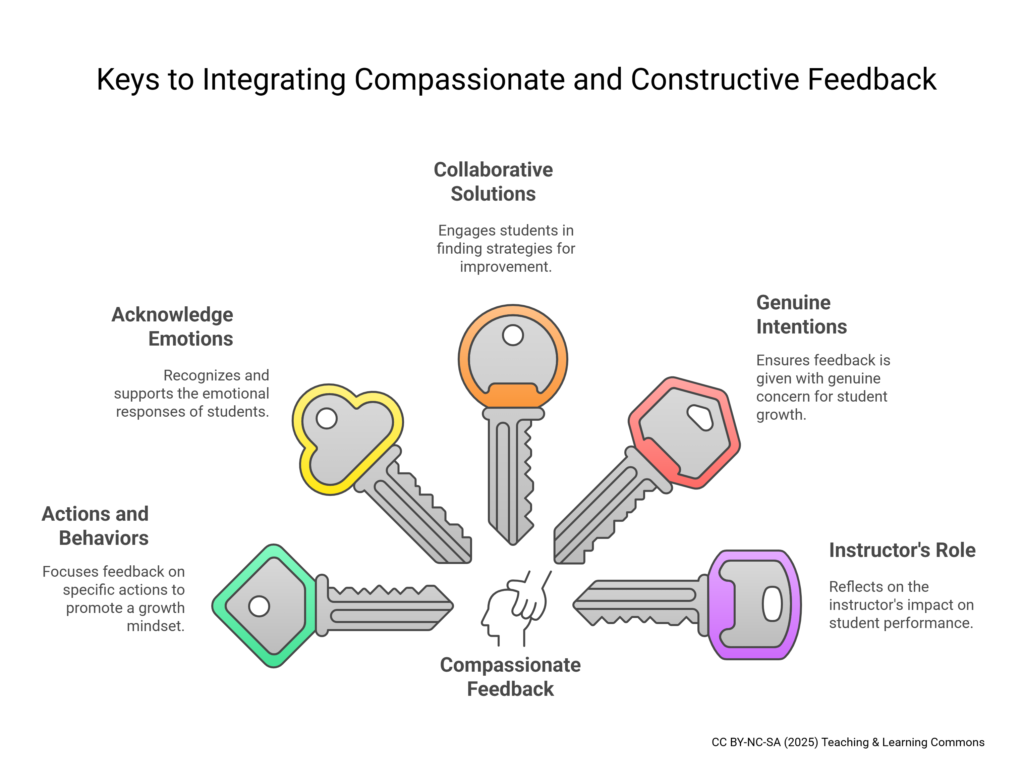
In the context of Universal Design for Learning (UDL), providing feedback to students is a critical component of effective teaching and learning. One approach that aligns well with UDL principles is compassionate care in feedback. This approach acknowledges the emotional experiences of students and provides feedback in a manner that is respectful, empathetic, and supportive (Mascaro et al., 2020). It emphasizes the importance of focusing on actions and behaviors, acknowledging emotions, collaborating to find solutions, providing feedback for the right reasons, and acknowledging the instructor’s role in the situation.
Integrating compassionate care in feedback involves a number of key practices:
- Speak in Terms of Actions and Behaviors: Focus feedback on specific actions and behaviors instead of judging the student’s character (Brookhart, 2008). Carol Dweck’s research on growth mindset stresses the importance of addressing effort and strategies (actions and behaviors) rather than innate abilities (Dweck, 2006). This helps students view challenges as opportunities for growth.
- Acknowledge Emotions: Feedback can evoke strong emotions in students. It’s important to recognize these emotions and offer support, validating their feelings and reassuring them (Mascaro et al., 2020). Krathwohl et al. (1964) highlight the affective domain in learning, emphasizing the significance of emotions. Goleman’s work on emotional intelligence (1995) further explains how feedback can address emotional needs.
- Be Collaborative About Finding Solutions: Work with students to identify strategies for improvement, such as study approaches or time management (Mascaro et al., 2020). Orsmond & Merry (2011) highlight the importance of making feedback understandable and actionable by engaging students in the process.
- Provide Feedback for the Right Reasons: Feedback should be given out of genuine concern for the student, aiming to support and enhance their learning (Mascaro et al., 2020). This approach aligns with Noddings’ (2005) ethic of care in education, which emphasizes creating caring educational environments where feedback is supportive and empathetic.
- Acknowledge Your Role and Place in the Situation: As an instructor, it’s important to recognize that your actions and behaviors can impact the student’s performance. Reflecting on how you can adjust your teaching practices to better support the student is a key part of providing compassionate feedback (Mascaro et al., 2020). This practice acknowledges the interconnectedness of the teaching and learning process and the role of the instructor in shaping the student’s learning experience.
Downloadable infographic version:
The perception and reception of feedback vary among students. Some may find written feedback beneficial as it allows them to review comments at their own pace, while others might prefer verbal feedback for its immediacy (Orsmond & Merry, 2011). Offering feedback in diverse formats is crucial to meet varying student preferences (CAST, 2018).
The interpretation and reception of feedback are essential. The impact depends on how well students understand and internalize it. If a student is resistant to a specific feedback method, the feedback’s quality becomes less impactful. This highlights the importance of providing feedback in multiple formats (Orsmond & Merry, 2011).
Integrating Universal Design for Learning (UDL) principles addresses these challenges. By offering feedback in varied formats—verbal, written, visual, audio, or digital—educators can cater to different learning preferences, ensuring that all students can understand and apply the feedback provided (CAST, 2018).
Additionally, providing feedback in diverse formats aligns with the UDL principle of multiple means of engagement. This encourages students to reflect critically on the feedback and promotes active learning, empowering them to take ownership of their educational journey (Moore, 2010).
By integrating UDL principles into the feedback process, educators create a more inclusive and supportive learning environment. Embracing multiple means of representation, action, and expression ensures that feedback is accessible, meaningful, and beneficial for all students (Rose & Meyer, 2002).
For additional context and insights into interpreting and receiving feedback, please visit the following blog posts:
next practice
In the context of compassionate care in providing feedback, instructors can adopt several strategies that align with the principles of respect, empathy, and support.
- Use Clear, Actionable Language: When providing feedback, use clear and specific language that focuses on actions and behaviors. This helps students understand exactly what they need to do to improve (Brookhart, 2008). For example, instead of saying “You need to study more,” you might say “Reviewing your notes after each class could help reinforce the material”
- Acknowledge Emotions: Recognize that feedback can often evoke strong emotions in students. It’s important to acknowledge these emotions and provide support to help students manage them. This might involve validating their feelings and reassuring them that it’s okay to find feedback challenging (Mascaro et al., 2020)
- Foster a Growth Mindset: Encourage students to view challenges as opportunities for development. Emphasize effort, persistence, and learning from mistakes in your feedback. This can help foster a growth mindset, which Dweck (2006) found to be beneficial for student motivation and achievement
- Collaborate to Find Solutions: Work with students to identify strategies for improvement. This could involve discussing different approaches to studying or brainstorming ways to manage time more effectively (Mascaro et al., 2020). Collaborative problem-solving can increase student engagement and ownership of learning (Hattie & Timperley, 2007)
next practice
Reflective practices are a crucial part of providing compassionate care in feedback. They allow instructors to continuously improve their feedback delivery by considering student perceptions and outcomes, and adjusting practices based on student needs. Reflective practices also involve acknowledging the instructor’s role in shaping the student’s learning experience and adjusting teaching practices to better support the student.
Regularly seeking student input can give instructors valuable insights into how their feedback is perceived and what impact it has on student learning (Orsmond & Merry, 2011). Being willing to adjust feedback practices based on student needs can enhance the effectiveness and supportiveness of feedback (Hattie & Timperley, 2007). Reflecting on how an instructor’s actions and behaviors impact student performance can help the instructor become more effective and compassionate (Schön, 1983).
Ultimately, integrating compassionate care in feedback fundamentally supports the principles of Universal Design for Learning (UDL), contributing to a more inclusive and supportive learning environment. By focusing on actions and behaviors, acknowledging emotions, collaborating on solutions, providing feedback for the right reasons, and acknowledging the instructor’s role, instructors can enhance student learning and development. Reflective practices further allow instructors to continuously improve their feedback delivery by considering student perceptions and outcomes, and adjusting practices based on student needs. Adopting these practices will help contribute to the creation of learning environments that cater to diverse student needs, aligning with the principles of UDL.
For a practical and easy-to-pick up activity, please visit the following blog post:
Further Learning Opportunities
For further information, please see our blogs on “Compassion” and “From Trauma-Informed Practices to a Compassionate Community“
UDLing into Practice
Scenario 1
Self-Reflection & Application
In the previous section you have looked at assessments as a whole within your course, now, consider a specific assignment. Reflect on an assignment you have previously taught or are planning to revise within your discipline. Using your understanding of UDL principles, consider what you are currently doing that supports UDL, and what strategies and tools you would employ to ensure equitable access to learning and engagement opportunities for all students. Address celebrations and any challenges you foresee in revising or designing the assignment and how you will overcome them. Reflect on how these changes can enhance student engagement and success in your course, guiding your approach to creating or revising assignments to ensure they are inclusive and supportive of all learners.
Scenario 2
Designing a New Assignment
As an instructor designing a new assignment, reflect on how you might integrate the principles of Universal Design for Learning (UDL) to create an inclusive and dynamic learning environment. Consider how you can apply UDL principles, such as providing multiple means of engagement, representation, and action & expression to ensure the assignment is accessible to all students. Think about what criteria you might use to evaluate student work in a way that is inclusive and fair. Outline your plan, focusing on how these elements and principles of UDL might come together to support overall learner success by promoting engagement, understanding, and practical application of knowledge.
Scenario 3
Supporting a Colleague’s Assignment
Imagine a colleague has asked you to evaluate an assignment in their course and provide suggestions for aligning it with UDL principles. The assignment requires students to complete a research-intensive project on a topic chosen by the instructor with unclear evaluation criteria, resulting in student frustration. Identify the primary issues with the current assignment design, such as lack of student choice and the intensive nature of the project. Suggest revisions to better align with UDL principles by integrating multiple means of representation, engagement, and action & expression. Discuss how these changes can support diverse learning needs and foster student achievement, providing a detailed evaluation and outlining your recommendations for a more inclusive and effective assignment.