The True Cost of Cheap Food.
Keeping something alive is so much harder than it looks. Spending time in the garden this semester has been a fun but humbling experience. The plants we are growing require specific amounts of water or things start to wilt, or pick the wrong spot and not enough sunlight gets onto them. With a basic garden, there aren’t many shortcuts, it takes attention, resources, and a decent amount of trial and error before it works well.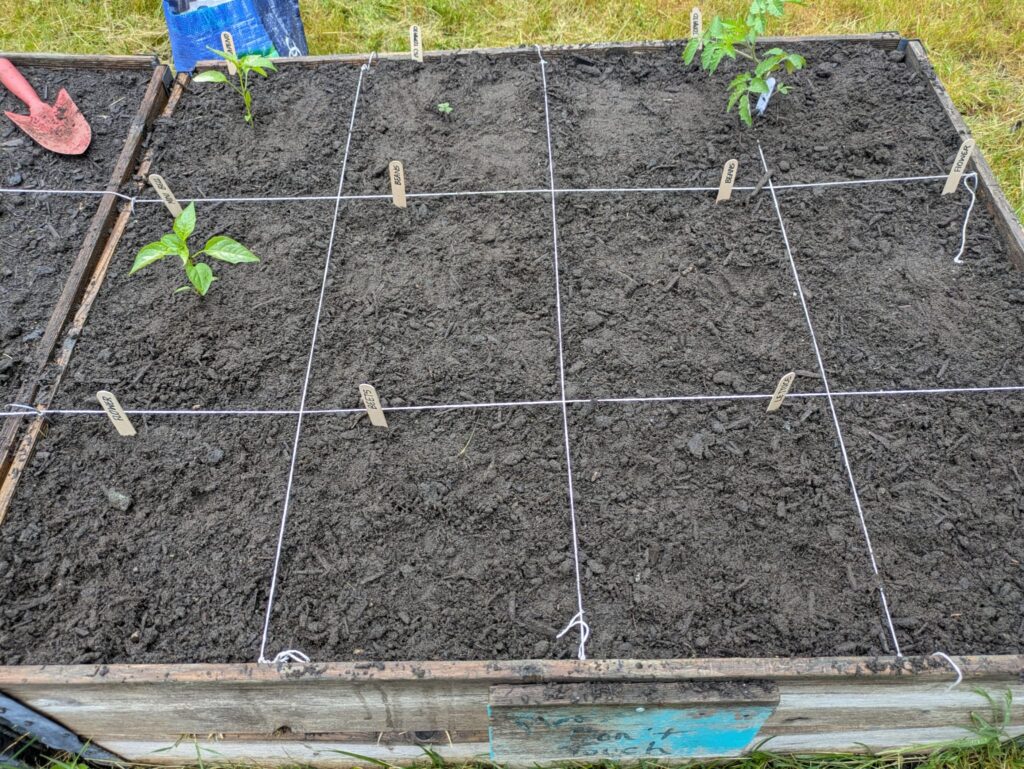
So Where Does the Cost Go?
This is exactly what made me start looking at grocery store prices differently. A head of lettuce for a couple dollars, bags of apples for four, loaves of bread for 3. When you see firsthand the effort and resources that go into growing a small garden require, those numbers start to seem more questionable. If growing food costs so little, are we accounting for the cost of water, the soil, the labor, or the land?
The answer is that we aren’t. According to the UN Food and Agriculture Organization, the global food system has around $12.7 trillion in hidden costs every year (FAO, 2023). That is around 10% of the Global GDP! That statistic is genuinely astounding, and in reality, that is never a cost that shows up at the checkout counter, but we will pay it one day. Through environmental damage, public health systems, and degrading land quality, the price in the store isn’t the real price, it is just a profitable one. This is by no means an argument saying food is cheap, it is an expensive commodity, but in reality is should be so much more expensive.
For the U.S. specifically, the true cost of food is triple what consumers pay (Rockefeller Foundation, 2021). If companies were actually absorbing the cost of soil care, responsible water use, and environmental stewardship, prices would reflect that. They don’t, and those costs are being given to other areas.
Legal Doesn’t Mean Harmless
This kind of food harm is called a food offence rather than a food crime, which means it doesn’t necessarily break any laws, but it does violate something real (Tourangeau, 2019). When agriculture is stripped of its soil quality, or when farm runoff creates algae that kill oxygen in rivers, no one is prosecuted, because it’s legal. It’s considered the cost of doing business in our modern world, except that bill still goes somewhere most people just never see.
There is a great article that talks exactly about this topic, explaining that industrial farming represents a harm that has been normalized by society, all based in a capitalist food system (Gladkova, 2023). The very fact that it is accepted, encouraged, and legal, doesn’t make it any less damaging to the environment.
What the Garden Actually Taught Me
The garden has changed my perspective on sustainable practices and what companies should be expected to do. If a company was genuinely invested in growing food, maintaining soil, using water more responsibly, and not pushing the costs onto the ecosystems around them, food would be significantly more expensive than it is. If those prices were to go up, it would speak to a much larger societal problem of affordability, but we do have to weigh up whether we want to make societal changes, or see nature itself change our societies in the future as we continue to damage it.
Sources:
Tourangeau, W. (2019). Criminology, Food, and Agriculture. In: Kaplan, D.M. (eds) Encyclopedia of Food and Agricultural Ethics. Springer, Dordrecht. https://doi.org/10.1007/978-94-024-1179-9_544
Gladkova, E. (2023). The Harms and Crimes of Farming/Food. In Oxford Research Encyclopedias, Criminology and Criminal Justice. https://doi.org/10.1093/acrefore/9780190264079.013.776
United Nations Food and Agriculture Organization (2023). The State of Food and Agriculture 2023. FAO.
Rockefeller Foundation (2021). True cost of food: Measuring what matters to transform the U.S. food system. https://www.rockefellerfoundation.org/reports/true-cost-of-food-measuring-what-matters-to-transform-the-u-s-food-system/

Provide Feedback