Not Just One Visit This Time
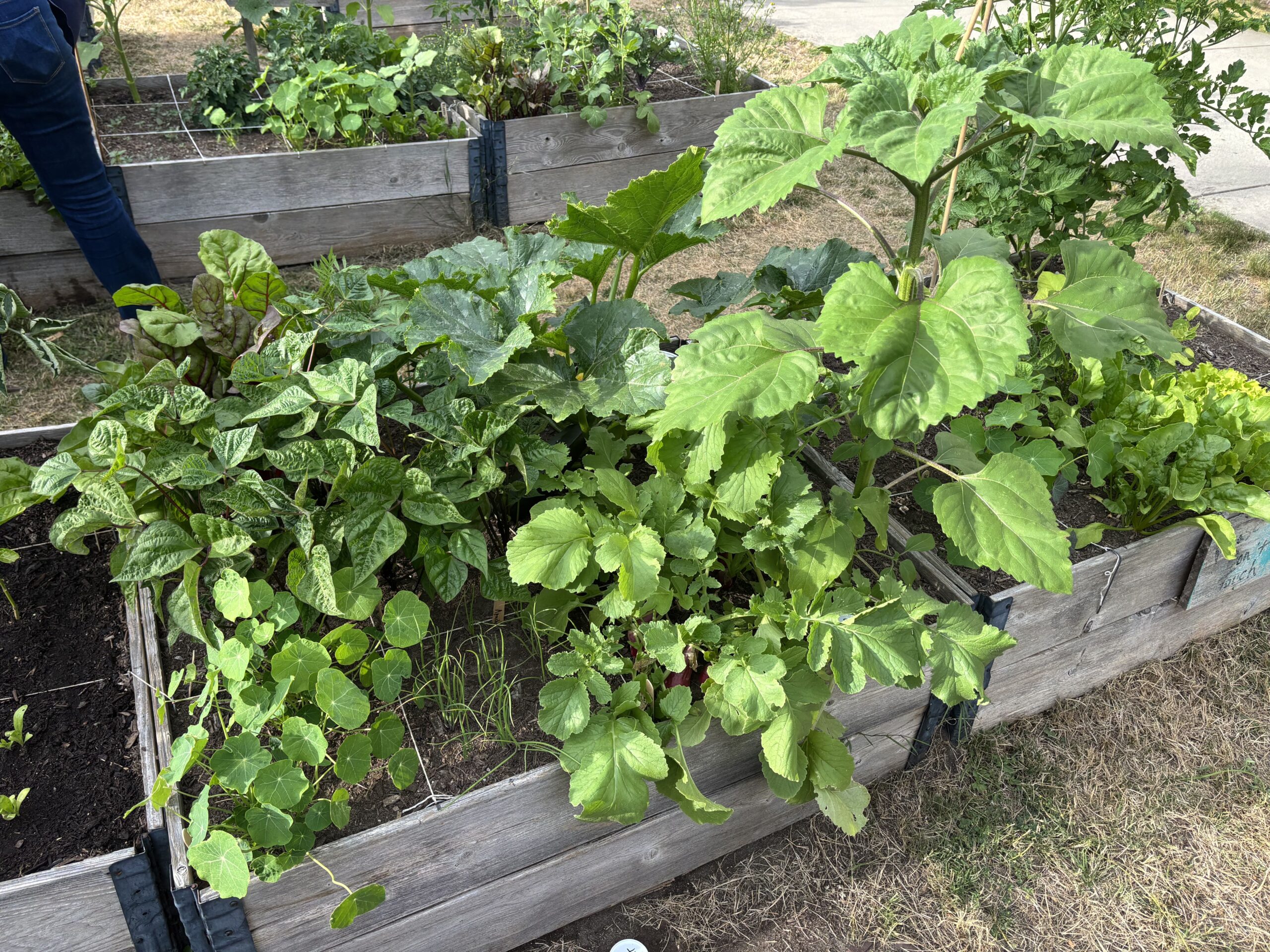
Unlike my first blog, this post isn’t about a single afternoon at the KPU Garden. It’s about the last few weeks, the routine of stopping by, watering the beds, and just watching things change. There’s something different about observing a garden over time instead of visiting it once. You start to notice the small shifts like a leaf curling, a flower opening, a stem finally strong enough to hold its own weight.
From Seeds to a Living System
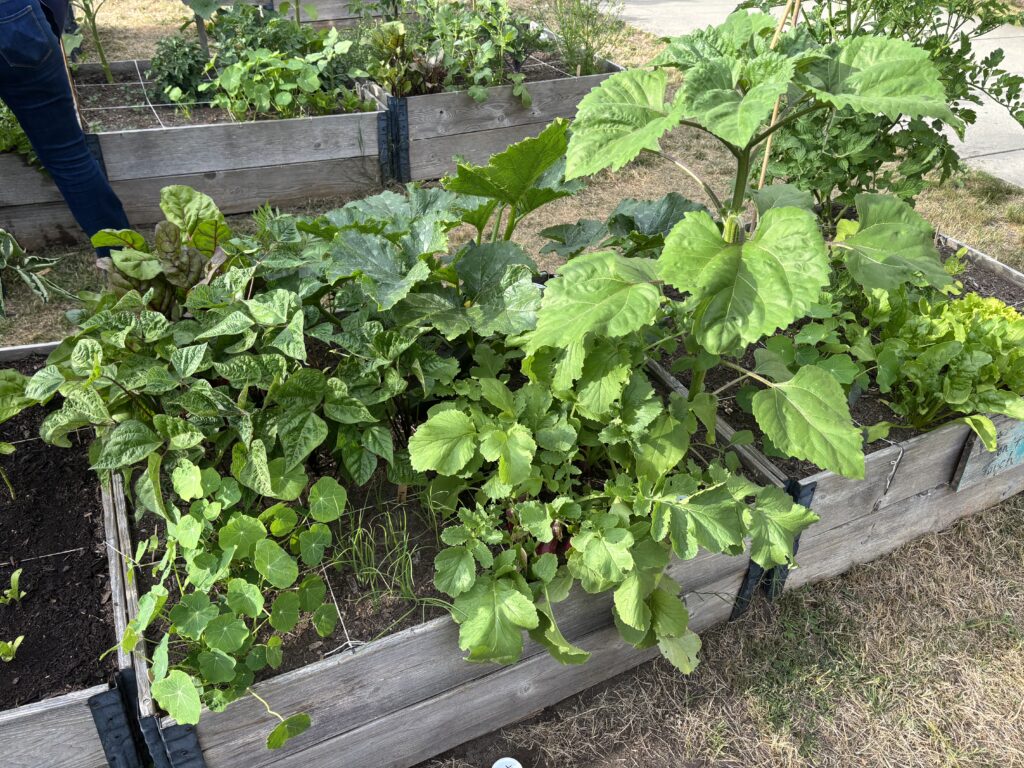
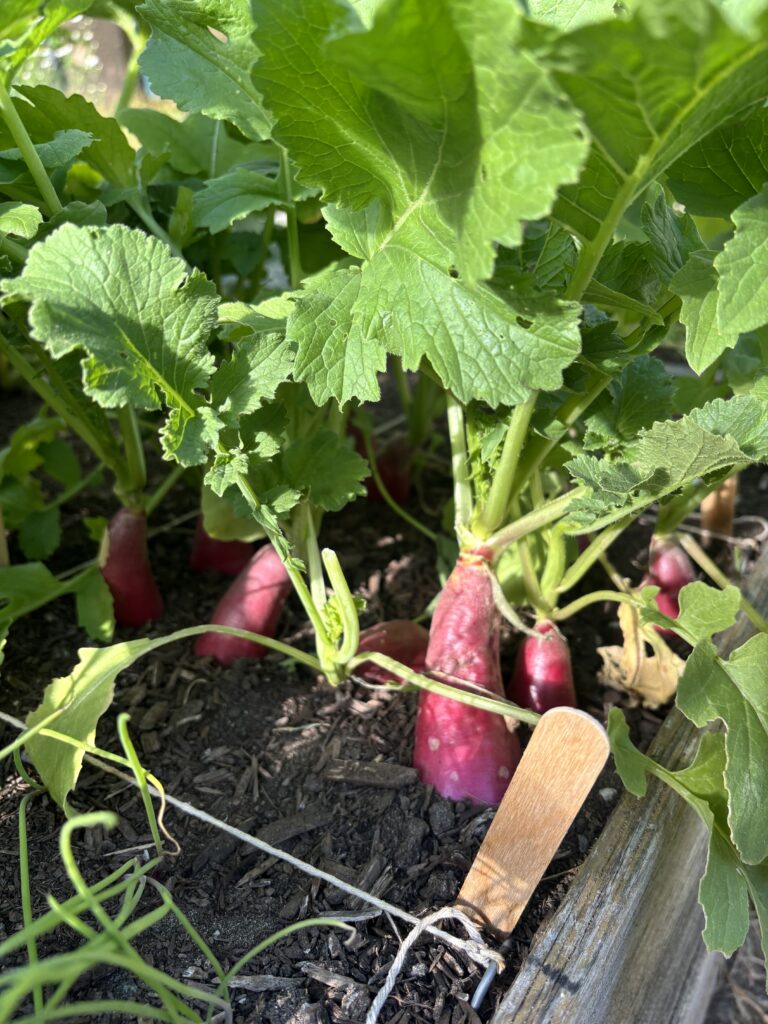
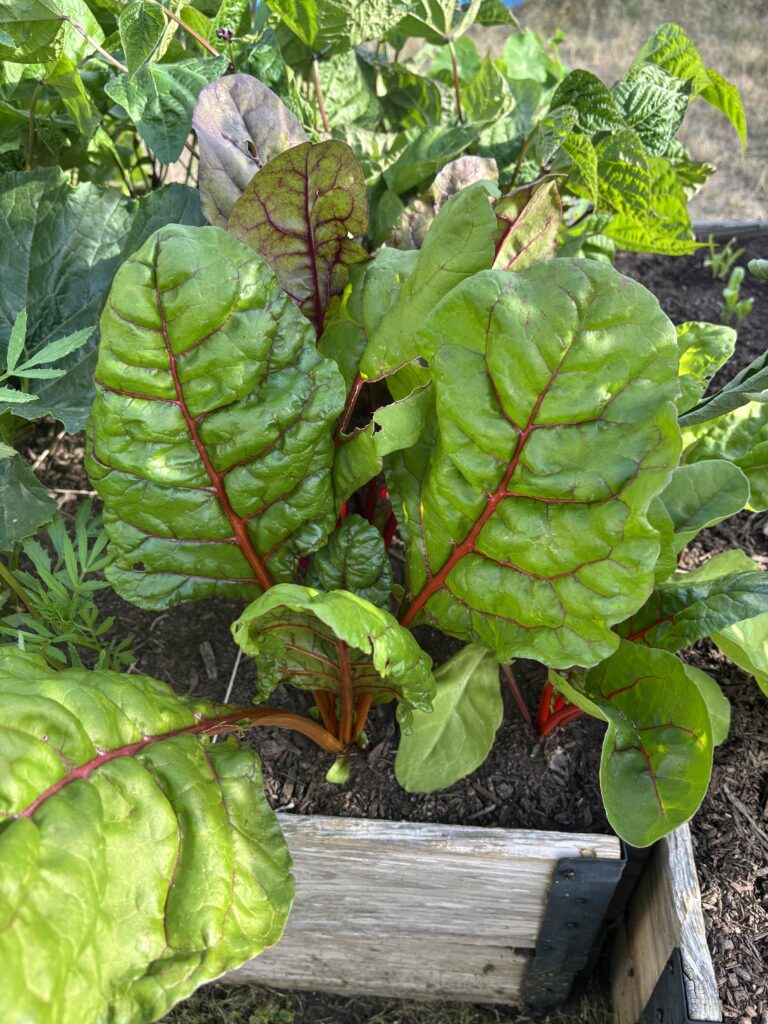
The seeds we planted earlier this semester are long gone as seeds, they’ve become an actual ecosystem. The zucchini plants have taken over their entire bed, their leaves so wide they shade out the soil beneath them and small zucchini are already forming underneath. Swiss chard leaves have grown thick and veiny, deep red running through the green. Radishes pushed themselves halfway out of the soil, ready to be pulled. None of this happened because I did anything dramatic. It happened because the garden was watered, left alone, and given time which is close to what Montini (2021) describes as an ecological law approach, one that treats ecosystems as having their own internal logic and worth, rather than existing only to be managed or extracted from for human benefit.
The Bugs Showed Up Too
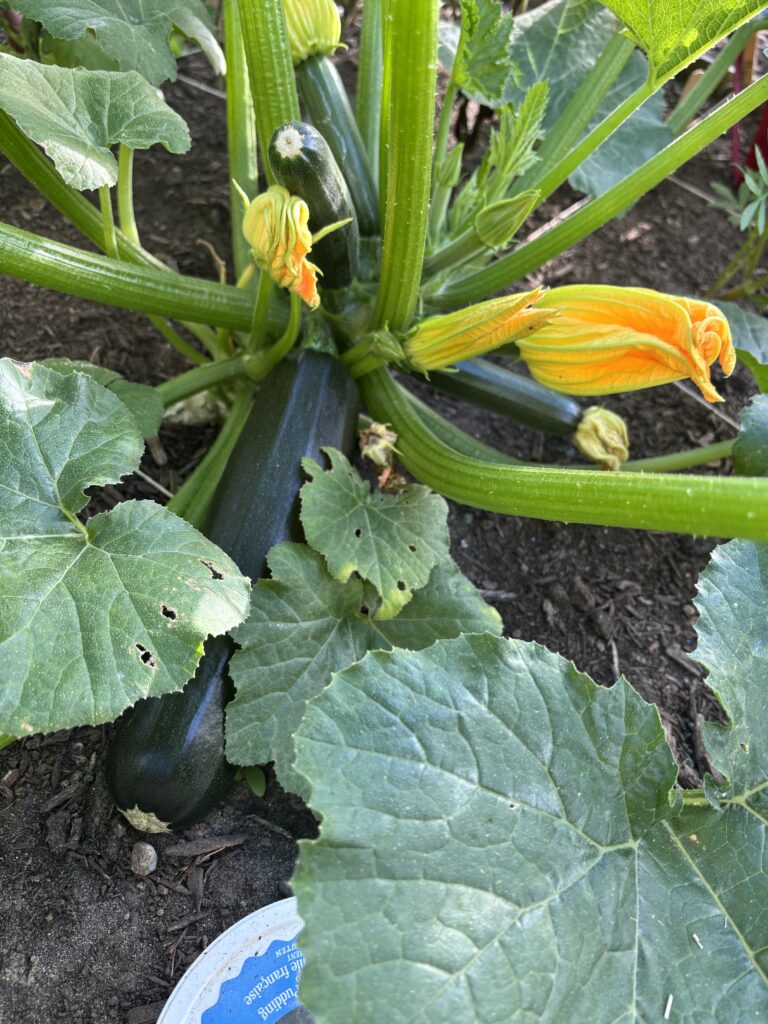
The most interesting thing I noticed over these weeks wasn’t the growth, it was the insects. Chewed holes started appearing in the zucchini leaves, and small bite marks worked their way across the chard. My first instinct was to think of this as damage, something to fix. But sitting with it longer, I started to see it differently. The insects are part of the same system as the plants, the soil, and the water I was pouring in every week. Nothing in the garden grows in isolation from the rest of it.
What the Land Owes No One
Reading Katłįà’s Sovereignty Is Not for Sale alongside this experience gave me a different lens. Her writing insists that land and water are not to be controlled, extracted from, or sold off, they carry their own worth, independent of what they produce for people. Our garden is obviously a much smaller and gentler situation than the pipelines, dams, and negotiations she writes about. But the underlying idea felt familiar about the garden wasn’t there to be dominated or perfected. It grew the way it grew, insects and all, and my job was mostly just to show up and support that process, not control it.
What I’m Taking From This
Looking back at these few weeks, the biggest shift for me wasn’t in the garden, it was in how I think about growth, damage, and care. A “perfect,” bug-free garden was never really the goal. Green criminology, and now cyan criminology, keep pointing me toward the same lesson about healthy systems are messy, interconnected, and not fully within our control, and that’s not a problem to solve.
Lafferty, K. (Katłı̨̀ą). (2026). Mother Earth is our elder: A northern Indigenous perspective on the climate crisis. Penguin Random House Canada. Montini, M. (2021). The transformation of environmental law into ecological law. In, 11–20. Routledge. Acknowledgment of use of AI for brainstorming and spelling/grammar.

Hi Keshav!
I really enjoyed reading your blog post because it shows how your perspective changed over time in this class. I liked how you explained that seeing bugs on the plants didn’t look like something that needed to be fixed or eliminated, but instead became part of everyone’s garden’s natural ecosystem. I think that is one of the biggest lessons from our class and gardens. We often see nature only in terms of what is useful or what looks perfect to the eye, but your experience showed that healthy ecosystems are messy and often interconnected.
Your connection to Katlia’s ‘Sovereignty Is Not for Sale’ from the book ‘Mother Earth is our elder’ really stood out to me. The idea that land has value beyond what humans can take from it fits well with your realization that the gardens in CRIM 3911 was not something to control, but something to care for and respect for (Katlia, 2026). I also liked how your ideas connected with Katlia’s Corporate Criminals as well, since both encourage us to think differently about our relationship with the land instead of seeing it only from a human perspective (Katlia, 2026). Your blog also reflects Montini’s idea of ecological law from the article ‘The transformation of environmental law into ecological law’, which encourages everyone to see themselves as part of ecosystems rather than believing humans should dominate and control nature (Montini, 2021). Your blog made me realize that simply spending time observing nature can change the way we think about it.
References:
Lafferty, K. (Katlia). (2026). Mother Earth is our elder: A northern Indigenous perspective on the climate crisis. Penguin Random House Canada.
Montini, M. (2021). The transformation of environmental law into ecological law. In, 11–20. Routledge.
*Edited using Generative AI*