Teaching green criminology through gardening, place-based education & reciprocity
What is Green Criminology?
Green criminology is concerned with both legal and illegal harms to the environment. Whereas traditional criminology focusses on individual humans as victims, green criminology expands the notion of victimhood to include plants, animals, and ecosystems. Indeed, green criminology includes all of nature, or what is often referred to as the “more-than-human.” As I and my co-authors explain in this introduction to green criminology, this shift away from anthropocentric, or human-centered, approaches to criminology is motivated by a deeply felt concern for justice.
Green criminology often takes a critical approach to understanding the environmental harms that flow from actions that are treated as legal. In doing so, it explores, for example, the relations between legal regimes and the appropriation of Indigenous territory for the extraction of private profit. Why is the mercury in Grassy Narrows treated differently than a “normal” murder weapon? Green criminology questions why some harms to people and the planet are not criminalized, even although they can be much more severe and widespread than the crimes that are the typical focus of the criminal justice system.
Why am I experimenting with place-based education?
When I had the opportunity to teach CRIM 3911: Green Criminology for the first time in Summer 2025, I took some time to learn about land-based education, which is one way that Indigenous peoples relearn and reclaim connections with the land that were intentionally severed through colonialism. I took the online course, “Learning from the Land,” which includes films made in conjunction with the First Nations University of Canada. In one of the films, an elder whose name is Mary Lee, spoke about learning from the land like it is a book. Another elder spoke about how when we walk on the land, the land awakens, which is why it is important to slow down and ensure that our hearts and minds are open to listening to what nature has to say. In addition to lessons about spiritual and emotional well-being, learning from the land includes learning how to identify the myriad of specific medicines and foods provided by different plants, how to harvest and use them, and how to hunt animals in good and respectful ways. One of the things I learned was the extent of my ignorance. I might know about the history of colonialism, and I might have a sense of the importance of reconciliation, but I don’t know how to fashion a fishing net from the bark of a cedar tree, or build a stone fish trap.
My ignorance of how to live through the gifts offered by the land is not a personal failing, but a product of the society in which I live. As the sociologist Émile Durkheim famously argued, the transformation of Western Europe from traditional to modern societies was accompanied by the increasing division and specialization of labour. And as Karl Marx argued, this same transformation was accomplished through the uprooting of rural farmworkers who — with their ties to the land cut through the enclosure movement — had no other option but to sell their labour in newly established manufacturing centers like Manchester. The upshot is, the hyperfocus on specialization within today’s economy, which privileges self-interest and private profit, means that very few people in modern society know how to actually live in nature.
When it comes to teaching CRIM 3911 as a settler, then, I do not have the wherewithal to lead land-based education. But I can, however, engage in place-based education. As Lee Beavington makes clear in his guide on the topic, place-based education involves leaving the classroom in intentional and mindful ways to learn from the people, places and ecosystems in the broader community. As such, there are some similarities between place-based education and land-based education, but there are also important differences, and the two should not be conflated. That said, and as Lee discusses here, one of the important principles that place-based education borrows from Indigenous peoples and land-based education is that of reciprocity.
Reciprocity means giving back to the nature. As Robbin Wall Kimmerer explains in this essay, reciprocity is a way of practicing gratitude for the gifts of the land that sustain and nourish us. Reciprocity is a way of relating to nature in non-extractive ways. It is a way of giving back to the abundance of relations that make life possible. There is a form of exchange, but as Leanne Betasamosake Simpson makes clear in her 2025 book, Theory of Water: Nishaabe Maps to the Times Ahead, reciprocity is not transactional.
“While reciprocity does indeed take place between individuals, families, communities and nations, it also attends to a relationality beyond the two individuals or entities involved. Within the network it is understood that when we are working well together and in balance, the needs of all living things will be met. When one engages in an individual act of reciprocity, one is feeding the network” (Simpson, 2025, p. 121).
As seen in the above quote, reciprocity involves attending to and caring for the web of life in which humans are one tiny part. And to the extent that reciprocity is a value that is practiced through place-based learning, I wanted to create a space in which students could engage in reciprocal relations with the transformation of sunlight, water and nutrients into vegetables.
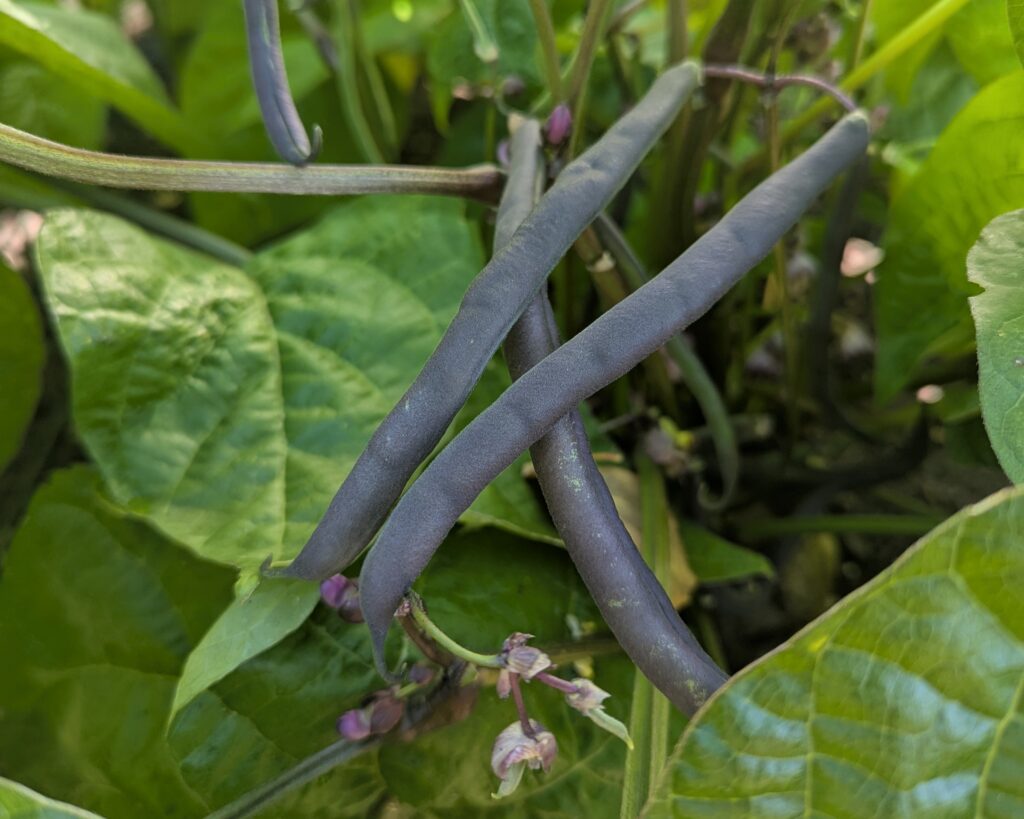
What connections can be made between green criminology and gardening?
Teaching students how to grow their own food from seeds and seedlings is a practical and active way to engage with the nature that sustains us while also reflecting upon and engaging with topics that are studied by green criminologists. There are a myriad of ways food and agricultural systems can be taken up and studied in green criminology in Canada. I expect students to do the work of finding connections that they find meaningful between food and environmental harm. But I can point to a few examples. Green criminology is used by Dr. Amy Fitzgerald to study the harms to animals caused by industrialized agriculture, by Dr. Wesley Tourangeau to explore the intersection of climate change, agricultural policies and power, and by Allison Gray to study food crime. In addition to academics, activists are also engaged in green criminological topics and food, such as the injustices faced by migrant farmworkers in Canada, as experienced and written about by Gabriel Allahdua.
So why are students in CRIM 3911: Green Criminology gardening?
To teach green criminology, I made gardening a class project for several reasons. One is to simply be outside with intention. Paying attention to seeds, sunlight and soil throughout a growing season offers a different kind of education that what is possible indoors. Second, in whatever small way possible, I want to chip away at the systemic disconnection from nature that is endemic in modern society. Third, I wanted a practical activity that students can connect to topics in green criminology. And fourth, learning how to grow food in ways that are less harmful than industrialized agriculture is a way of practicing reciprocity. If you have any thoughts, questions or responses to any of this, fill out the comment form below!
References:
Simpson, L. B. (2025). Theory of Water: Nishnaabe Maps to the Times Ahead. Random House.
Provide Feedback