
Your Learning Community
Community of Inquiry
The Community of Inquiry theoretical framework represents a process of creating a deep and meaningful learning experience through the development of three interdependent elements: social, cognitive, and teaching presence.
Within a Community of Inquiry, learners have two key roles:
- Maintaining a cognitive presence in the community. This requires a continual process of critical thinking.
- Developing a social presence in the learning community. This involves creating the open and mutual relationships that allow for learning and collaboration to occur.

Cognitive Presence and Critical Thinking
How does learning happen? Is it the result of reading, memorizing, and taking exams? While many learning experiences have these components, the best kind of learning involves constructing new knowledge in a learning community. This requires interacting with new information (for example, from readings, discussions, videos, and lectures). You may receive this information with instructors, from fellow students, or you may search it out to solve questions or problems. Then, together with your learning community, you make connections between this new knowledge and your prior experiences. You also determine how this new knowledge will shape your professional practice.
The Community of Inquiry supports this process through the exchange of ideas, supporting one another exploring connections, and challenging ways of thinking through thoughtful questioning.
Social Presence
If learning occurs in a collaborative community, how does this take place in an asynchronous or blended class model? Maintaining a social presence in an online environment involves allowing for open communication. Social presence allows you to risk expressing your ideas online, based on the knowledge that your classmates will be respectful and supportive. All members of the community commit to supporting each other in their learning. Though it may be difficult to express some nuances and emotions online, using emoticons can help. [1]
Group work is also a key part of the Community of Inquiry experience. The best online learning experiences happen when you are able to form connections within a team as you work towards your learning goals.
Understand the Role of Your Instructor
What is the role of your instructor in this learning community? Whether the course is held in-person or online, with a synchronous, asynchronous, or blended learning environment, your instructor’s role remains the same. Your instructor will design learning experiences for you and your fellow students, facilitate the content that will support your learning in the class, and direct you by answering your questions and challenging your assumptions to help you grow in your knowledge and skills.
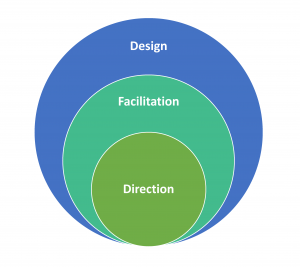
Teaching Presence
Your instructor provides the teaching presence by designing learning activities and assignments as well as guiding you towards readings and other learning materials that help you reach the course objectives. Your instructor carefully creates opportunities for you to learn the skills you need for your future career. As you review the course presentation, think about the reasons why your instructor may have selected these course components to contribute to your intellectual, personal, and professional growth.
By communicating with your instructor effectively, you will take full advantage of their role in guiding you on your journey.[1]