Communicate Effectively
Communication with instructors and classmates may happen in a variety of formats, including email and online forums. Effective communication in your courses allows you to engage well with others and provides you with a range of professional communication skills that support your broader personal and career development.
Connect with Your Instructor
Communicating with your instructor throughout the semester is an important part of being an active and engaged post-secondary student. Your instructor will inform you of their office hours and preferred format for email communication. As an adult learner, it is expected that you will take the initiative to contact your instructor when you have questions or are facing challenges in the course.

Tips for Using Office Hours Effectively
- Arrive on time to be respectful of your instructor’s and other students’ time
- Come prepared by having course materials easily accessible
- Prepare questions ahead of time
Tips for Writing an Effective Email
- Use your KPU student email account
- Include the course name and topic of your email in the subject line
- Use a professional greeting in the email
- Write your question or concern in short, clear sentences
- End your email with an appropriate conclusion
- Allow time for your instructor to respond (don’t expect an instant reply)

Communication Skills for Working in Teams
At KPU, you will work in teams throughout your program. Working in teams helps you to develop the interpersonal skills needed to work with others and effective communication is a key component of achieving your team’s goals.
Understand the Stages of Team Development
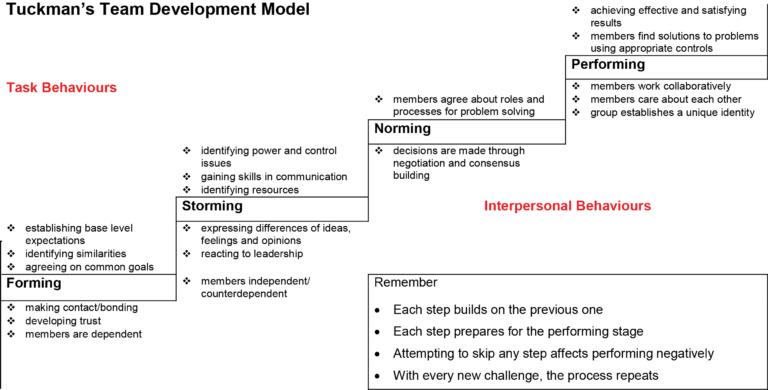
Tuckman (1965) identified a series of stages that teams go through in their journey together.
- Forming: The team is newly developing. The team works to form expectations and to develop trust.
- Storming: The newly formed team struggles with poser and control issues, expressing differences of opinion. At this stage, the team may wonder how it will move beyond these tensions. It is helpful to realize that this is a normal stage of team development, and if the team perseveres and maintains its commitment to the task and each other, the stage will pass.
- Norming: Members agree on processes for working together and can make decisions through negotiation and consensus.
- Performing: The team is working together collaboratively to achieve results. The team shares in a common identity.
- Adjourning: The team finishes its task and celebrates its success.