Resources
Here you find resources connected to place-based education. This includes websites, many from Indigenous scholars who work in land-based learning. There are also annotated bibliographies for both peer-reviewed articles and books that provide evidence for the effectiveness of place-based education, as well as teaching examples to put into practice.
Click the website or article titles below to read a summary.
Websites
Collective Works of Ray Barnhardt
Dozens of articles by Indigenous scholar Ray Barnhardt. Some topics include cultural responsiveness, Indigenous knowledge systems, higher education, and Indigenous education. Ray is professor emeritus of Cross-cultural Studies and Indigenous studies at the University of Alaska Fairbanks, and has worked in Native education for over 50 years.
Leanne Betasamosake Simpson’s website
Website of Michi Saagiig Nishnaabeg activist, writer, and scholar Leanne Betasamosake Simpson. Her book As We Have Always Done includes the chapter Land as Pedagogy, and her most recent book Theory of Water speaks to Indigenous knowledge, reciprocity, and our relations with water. She also works in music and film.
Students and Place (TeachWell Digital)
Concise information on relational learning and place-based learning. How place-based learning is connected to Indigenous pedagogies, essential characteristics, and ways to apply PBE are also outlined.
Created by the Treaty Education Alliance, this website discussed treaty rights and inherent rights, principles for learning on the land, and educational examples.
Walking Forward: Learning From Place
Resource created by local educators Gillian Judson and Heidi Wood that elaborates upon the Walking Curriculum with an Indigenous lens. Grounded in the First Peoples Principles of Learning, and connecting imagination and place, roughly twenty examples/ideas are provided for intentional outdoor walks. Examples: human impact walk, systems walk, nature by design, growth walk, and feeling rooted walk. Aimed at younger learners but adaptable for university.
Guiding Principles of Place-based Stewardship Education
A detailed guide for setting up place-based education in K-12. Divided into setting the focus, developing a pedagogical foundation, deepening impact, and skill development for participation in democratic practices. There are also resources on PBE benefits, implementing PBE, rubrics, and a glossary. Created by the Great Lakes Stewardship Initiative based in Michigan, USA.
Land as Teacher: Understanding Indigenous Land-based Education
Article that highlights land-based education being much more than going outside: storytelling, accountability, addressing colonialism and reconciliation, and being culturally relevant are central characteristics. Language and stories that come from the land are vital ways to engage in reciprocity. Land protection, queering land-based education, and the geography of stories are also discussed.
Podcast series focused on nature connection and outdoor learning. Highlighted here is “Land-based Learning: What It Is And Isn’t” which features a panelist of three Indigenous educators: Lindy Henderson, Nicki Ferland, and Daryl Kootenay. Moderated by Sarah Brown.
Interdisciplinary teaching and research team at Kwantlen Polytechnic University focused on ecological place-based education. They hold monthly outdoor events, aim to build community, and have decolonization and accessibility as priorities. Much of their work happens at or near KPU campuses, including at Cougar Creek, Logan Creek, KPU Farm, and the Westerman property.
Video
Articles
Tuck, E., McKenzie, M., & McCoy, K. (2014). Land education: Indigenous, post-colonial, and decolonizing perspectives on place and environmental education research. Environmental Education Research, 20(1), 1–23. https://doi.org/10.1080/13504622.2013.877708
These authors argue: place-based education that claims political neutrality can perpetuate European universalism. The ongoing influence of settler colonialism in education continues to justify the occupation of stolen lands by settlers. Land education puts Indigeneity at the center, and directly addresses issues of land rights, Indigenous agency, and Indigenous futurities.
Beavington, L., Huestis, A. & Keever, C. (2021). Ecology and colour in 1m2: A contemplative, place-based study. Cultural Studies of Science Education, 16, 763–781. https://doi.org/10.1007/s11422-021-10037-9
Three KPU instructors co-wrote this paper on doing site-specific learning in their local environments as part of two courses: Ecology and Colour Theory. Emphasized is interdisciplinary collaboration, nature connection, and applying Aldo Leopold’s teaching principles: curiosity and perception, tangible experience, critical thinking, integrating fields, communication, and science/ethics.
Gruenewald/Greenwood, D. (2008). The best of both worlds: A critical pedagogy of place. Environmental Education Research, 14(3), 308–324. https://doi.org/10.1080/13504620802193572
Article that considers the socio-cultural context in which place-based education occurs. The acts of decolonization in questioning dominant systems and recovering traditional culture and relationships, and reinhabitation to learn to live well in a place previously exploited, are explored.
Johnson, J. T. (2012). Place-based learning and knowing: Critical pedagogies grounded in Indigeneity. GeoJournal, 77, 829–836. https://doi.org/10.1007/s10708-010-9379-1
Drawing upon Paulo Freire, David Gruenewald (Greenwood), Deborah Bird Rose and others, this article argues that the placelessness in academic settings needs to shift to place-based pedagogy. This can bring Indigenous ways of understanding into university education. A critical pedagogy of place can decolonize educational practice and helps us reinhabit the storied histories of our landscapes.
Johnson, M. D., Sprowles, A. E., Goldenberg, K. R., Margell, S. T., & Castellino, L. (2020). Effect of a place-based learning community on belonging, persistence, and equity gaps for first-year STEM students. Innovative Higher Education, 45, 509–531. https://doi.org/10.1007/s10755-020-09519-5
The implementation of place-based learning and learning communities narrowed equity gaps and also boosted academic performance, sense of belonging, and persistence for first-year STEM students. The study took place at a university in California with 297 students.
Seawright, G. (2014). Settler Traditions of place: Making explicit the epistemological legacy of white supremacy and settler colonialism for place-based education. Educational Studies, 50(6), 554–572. https://doi.org/10.1080/00131946.2014.965938
Deconstructs notions of place rooted in Western worldviews that are anthropocentric, racialized, and capitalistic. White settler epistemologies of place persist in regard to private ownership and domination of land. Indigenous scholars such as Gregory Cajete emphasize reciprocity and the move toward eco-social justice as part of place-based education.
Simpson, L. B. (2002). Indigenous environmental education for cultural survival. Canadian Journal of Environmental Education, 7(1), 13–25. https://cjee.lakeheadu.ca/article/view/271/160
Anishinaabeg scholar Leanne Betasamosake Simpson outlines criteria for developing Indigenous environmental education programs at post-secondary. This includes: Indigenous knowledge as foundational, elders as experts, holistic approaches, connecting to the land, and making space for decolonial resistance. There is also a section on Western Science in Indigenous Environmental Education, emphasizing the inclusion of Indigenous instructors, real-world applications, critical evaluations of Western science, being process-oriented, and how to navigate conflicts between Indigenous knowledge and Western science.
Yemini, M., Engel, L., & Simon, A. B. (2025). Place-based education – a systematic review of literature, Educational Review, 77(2), 640–660. https://doi.org/10.1080/00131911.2023.2177260
Detailed study that examines how place-based education is implemented around the world. The practical challenges of implementing PBE, dimension of place, political-economic-social-cultural, biophysical, and geographical are all analyzed. Most PBE studies occur in English speaking countries, especially the United States.
If we are creating opportunity for land-based reciprocity that can help us to find and contribute to community, and increase access to local and more diverse foods, exercise, fresh air, and forest bathing, what other societal benefits await?
Jennifer grenz, nɬeʔképmx woman and UBC Assistant professor
Books
Click the book titles below to read a summary.
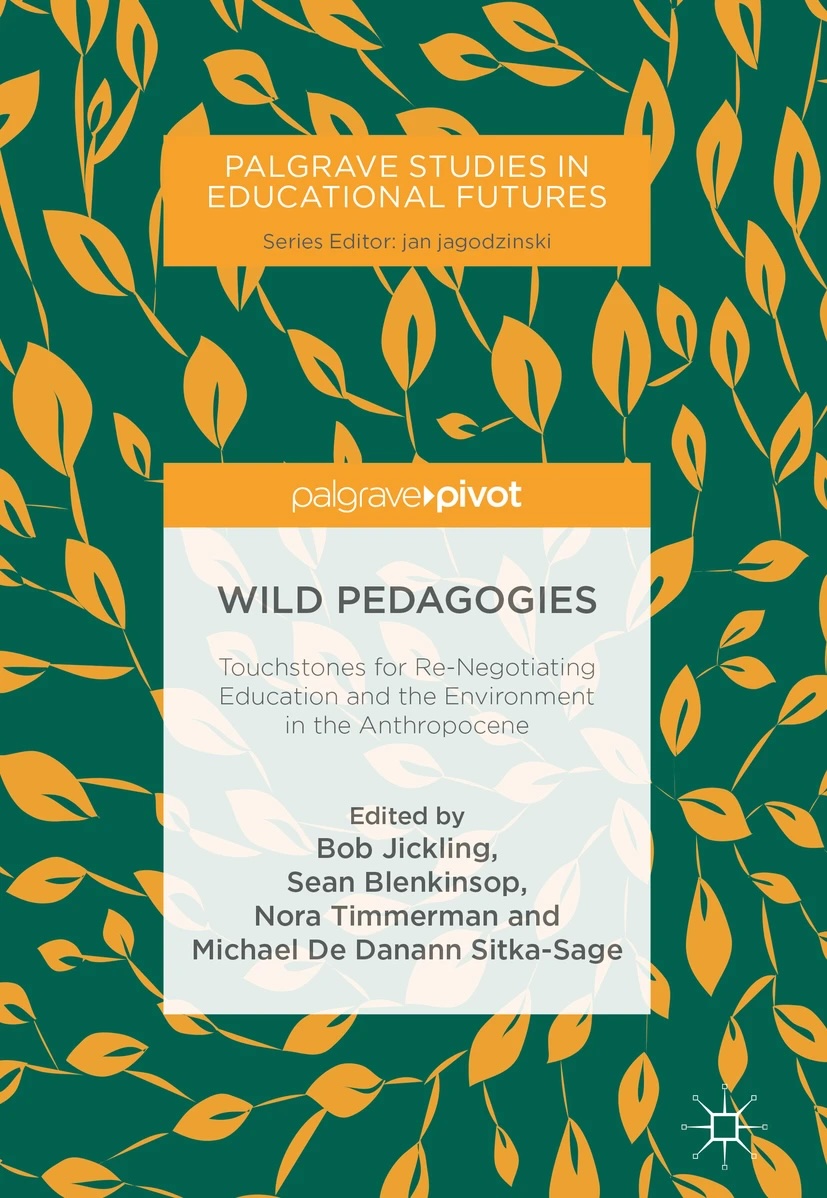
Wild Pedagogies: Touchstones for Renegotiating Education and the Environment in the Anthropocene edited by Bob Jickling, Sean Blenkinsop, Nora Timmerman and Michael De Danann Sitka-Sage.
This book encourages us to engage with the natural world with intention while questioning our cultural norms. Six touchstones are presented:
- Nature as Co-Teacher
- Complexity, the Unknown, and Spontaneity
- Locating in the Wild
- Time and Practice
- Socio-Cultural Change
- Building Alliances and the Human Community
This book is an educator’s guide on how to re-animate the world and help our learners feel the pulse of place. Wild Pedagogies is a wise, philosophical roadmap for engaging in this work. Read Lee’s review here.
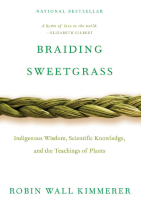
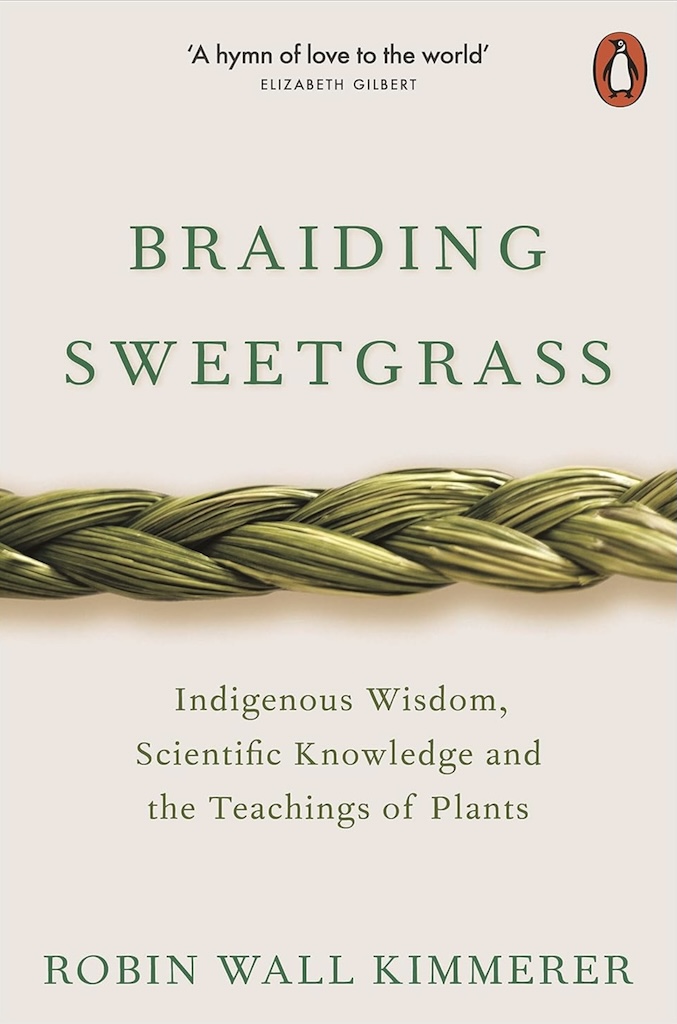
Braiding Sweetgrass: Indigenous Wisdom, Scientific Knowledge and the Wisdom of Plantsby Robin Wall Kimmerer
This groundbreaking work by Kimmerer weaves Indigenous and scientific understandings into a beautiful and poetic book that encourages us to transform our relationship with the world. Includes chapters on gratitude, reciprocity, plant medicine, land-based education, university science education, ecological wonders, Windigo, and more.
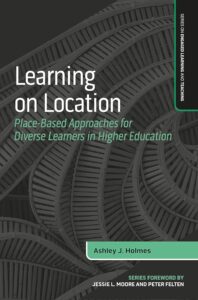
Learning on Location: Place-Based Approaches for Diverse Learners in Higher Education Paperback by Ashley J. Holmes
This book has a strong emphasis on equity, diversity and inclusion when engaging in place-based approaches at university. Includes examples from Canada and the USA, often for location-based writing assignments with the option to incorporate smart phones. Other topics include inclusivity and accessibility, walking and writing on location, rootless professors, ethically engaging with place, examples of place-based assignments, and logistics for implementation.
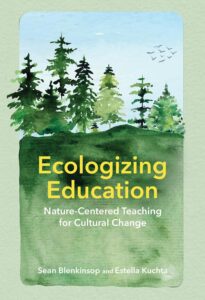
Ecologizing Education: Nature-centered Teaching for Cultural Change by Sean Blenkinsop and Estella Kuchta
Written by local educator-scholars, some topics include healing and reconciliation, how buildings can perpetuate power imbalances and behavioural expectations in students, the ecological philosophy of the forest, anxiety being rooted in relationship, Western culture being anti-environmental, and mutual flourishing. The focus is on K-12, but many/all of the concepts and ideas are applicable (or adaptable) to post-secondary contexts.

Land Education: Rethinking Pedagogies of Place from Indigenous, Postcolonial, and Decolonizing Perspectives edited by Kate McCoy, Eve Tuck and Marcia McKenzie
Considers land-based education, Indigenous cosmologies, and decolonization. Some topics include manifest destiny, urban education, Eurocentrism, and ‘eco-heroes.’ Also addressed are concerns for the potential of place-based education to perpetuate settler colonialism.
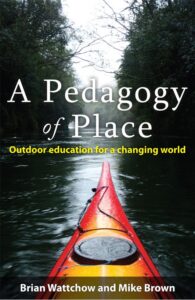
A Pedagogy of Place: Outdoor Education for a Changing World by Brian Wattchow and Mike Brown
Place-responsive outdoor education is presented as a participatory and experiential pedagogy, with four research case studies from Australia and New Zealand. Their four signposts: (1) Being present in and with a place, (2) The power of place-based stories and narratives, (3) Apprenticing ourselves to outdoor places, and (4) The representation of place experiences.
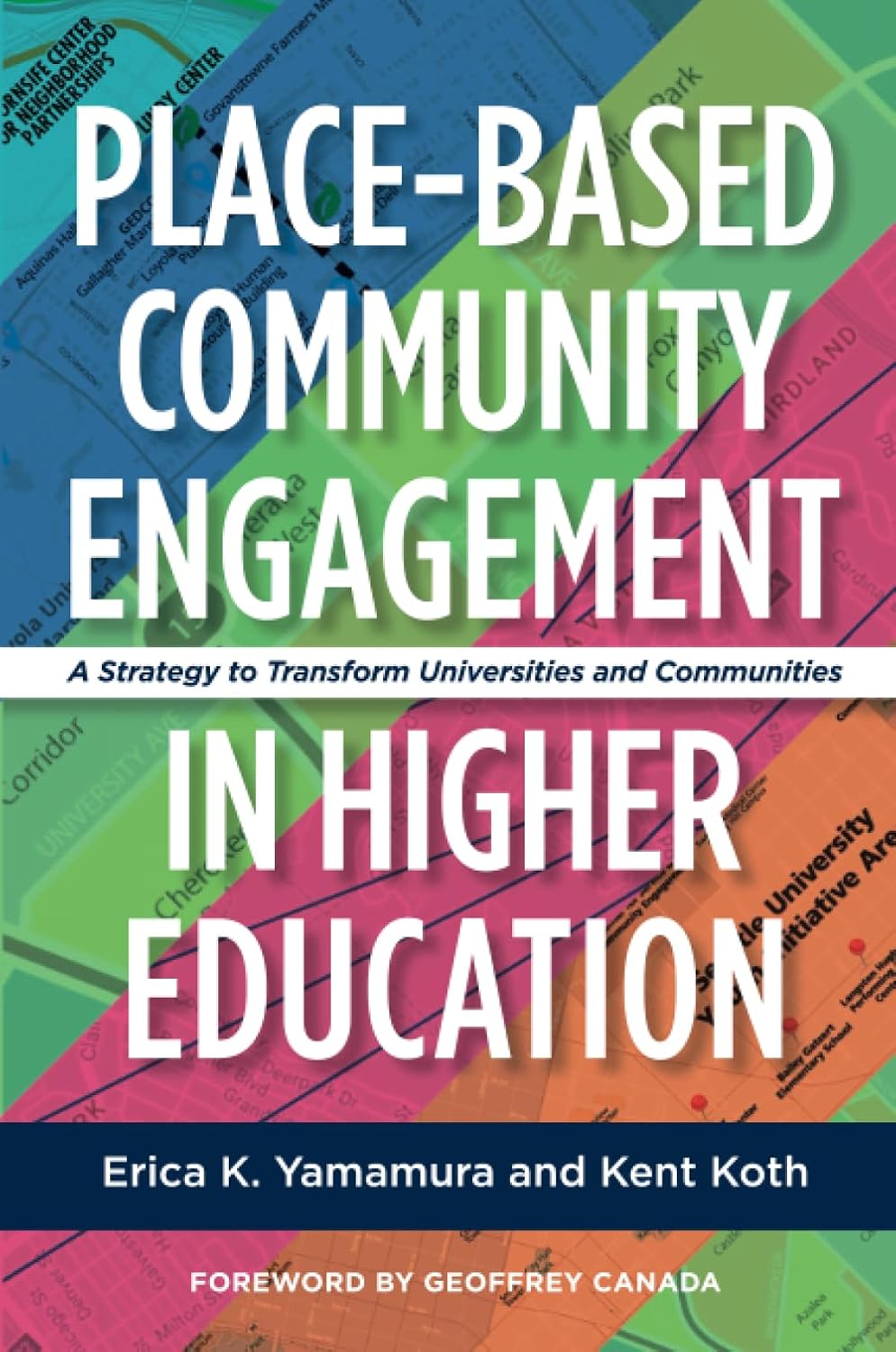
Place-Based Community Engagement in Higher Education: A Strategy to Transform Universities and Communities by Erica K. Yamamura & Kent Koth
Specific focus on place/community-based learning in universities. Aims for long-term community partnerships, through three phases: (a) Exploration where site location, intentions, and key questions around leadership and organization are considered, (b) Development where capacity, infrastructure, and resource-gathering occur, and (c) Sustaining where stabilizing funding, responsiveness to changing communities, and succession are mapped out. Written by scholar-educators at Seattle University.
Place-based Education in the Global Age edited by David Greenwood and Gregory Smith
Presents place-based education as a social movement, connects ecological awareness with cultural responsiveness and equity concerns, and includes examples. Chapter 6 by Ray Barnhardt is an example from the Alaska Native Knowledge Network: “Creating a Place for Indigenous Knowledge in Action.”
Interdisciplinary Approaches to Pedagogy and Place-based Education edited by Deric Shannon and Jeffrey Galle
Focused on higher education, this book provides examples of place-based education at universities in the USA. This includes documentary film education, teaching on the farm, science education, teaching literature, queering place, digital ecosystems, and more. The authors re-imagine the role of place in higher education with a movement toward hope and social justice.
Education as the practice of eco-social-cultural change by Mark Fettes and Sean Blenkinsop
Canadian authors Fettes and Blenkinsop call for “a radical transformation of education to focus on the mutual flourishing of human societies with the rest of life on Earth.” The book includes a thorough exploration of colonialism, Western epistemology, the wild, centering Indigenous knowledge, justice that includes the more-than-human, and transformative pedagogical practices, with design prompts provided. They challenge conventional teaching and learning outcomes and advocate for a path of transformation.

Ethics of taking land- or place-based education online
As a final word, Innu poet Rita Mestokosho reminds us that wisdom is found not only in books and academic articles. Rather, something perhaps deeper can be learned from the trees, streams, and the land:
My people wrote while walking
they had the library of the land with them
encyclopedias of rivers
dictionaries of mountains
geographies of forests