Introduction to the Climate Crisis
ARTS 1150 – Lee Beavington
Find the River
Summary:
Students connect with a local river, spend time connecting with the water and reflecting on their connection to the stream, and respond through writing or another creative method.
Description
This assignment provides an example of a place-based activity that incorporates relational teaching, such as direct experience, reflection, and connection to local land and waters.
For this assignment you will find and visit a local river! While at this river, you will make some observations, take some photos, and then reflect on these. You will connect this experience to some of the readings/resources/guest lectures for this week.

1. If you haven’t done so already, read the ORION article and listen to the “What on Earth” podcast. Take some notes that will be helpful for your reflection.
2. Locate the closest stream/river to your home. (If you were in class you would have already done this.) If you do not have a river close to home (hint: you actually do) you can use one of the KPU campuses instead (i.e., find the stream/river closest to KPU Richmond/Surrey/Cloverdale/Civic/Tech). Google maps may be helpful for this process.
OPTIONAL: Use class walk to Cougar Creek as your river. In other words, you can take photos and make observations during our Cougar Creek walk which you can use for this assignment.
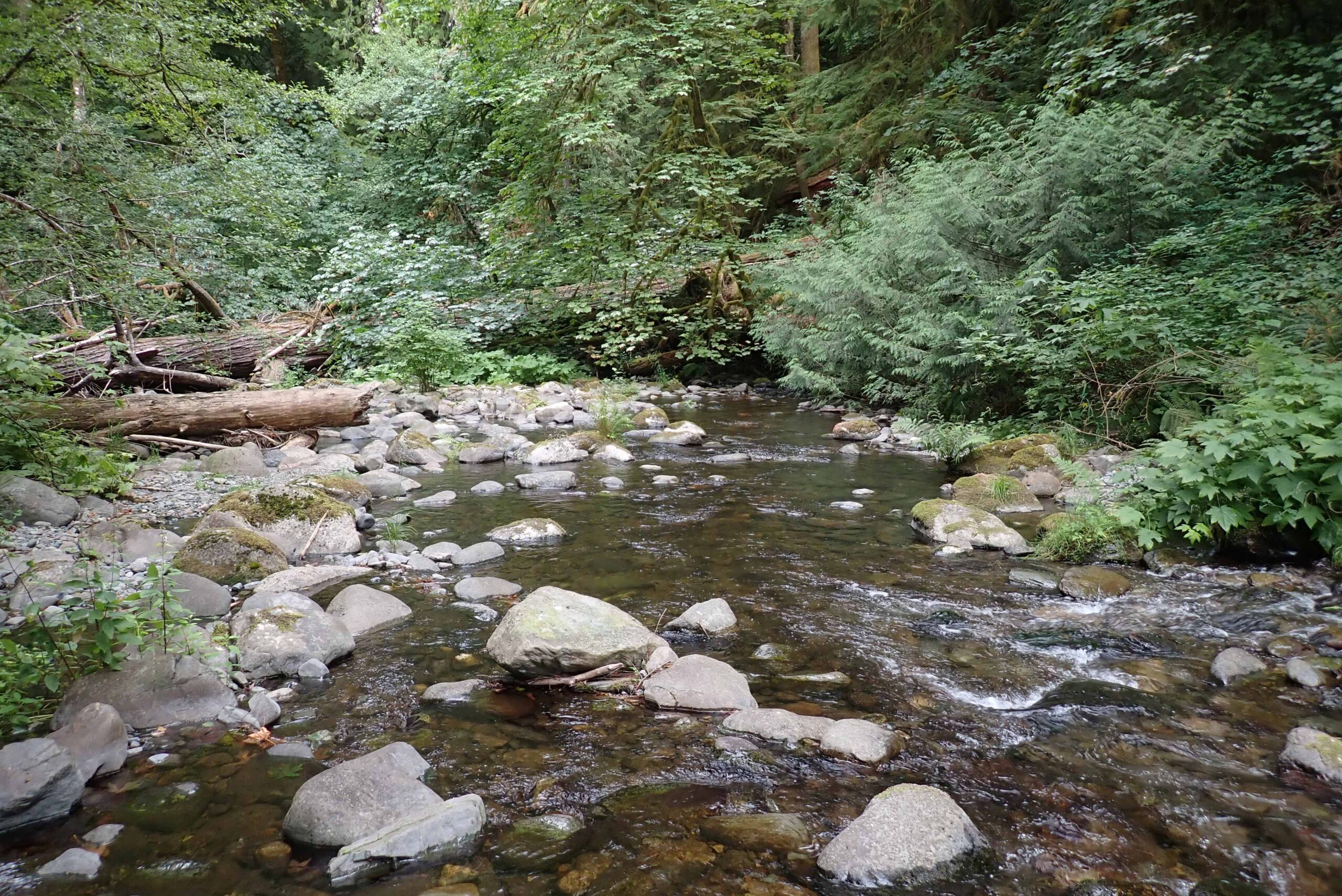
3. Go to this river. Try to find the actual stream. Walk along part of the river. Spend some time with this body of water.
4. Take photos of this place. Include yourself, in some fashion, in at least one of the photos. In addition, you might also take a screenshot of Google maps (or similar) showing this stream location. Embed your photos into your Word file (or similar) that you use to write your reflection. Be sure to provide a brief description (or context) for each photo.
5. While at this place (the stream), make notes on some of the following:
Which direction does this stream flow? How do you know?
What body of water does this stream flow into? The stɑl̓əw̓/Fraser, the Pacific Ocean, something else?
Use your senses to engage with the stream. How does it sound and smell? Are you able to put your hand in the water? What does it feel like? Do not drink the water. Unless you are experienced with treating water and do this first, you will be unable to taste the stream, as any urban stream will not be safe to drink.
Can you see any signs of life in or near this river?
Can you see any signs of humans/humankind in or near this river?
Write about this stream. How long did it take you to find it? Does it appear to be healthy? How do you feel at this place? What action could you take to benefit the health of this stream?
Aim for at least 400 words. Make some connections to climate via the podcast, reading, guest lecture with Dr. Luna Khirfan, and/or the walk with Cougar Creek Streamkeepers. A creative response is also an option.