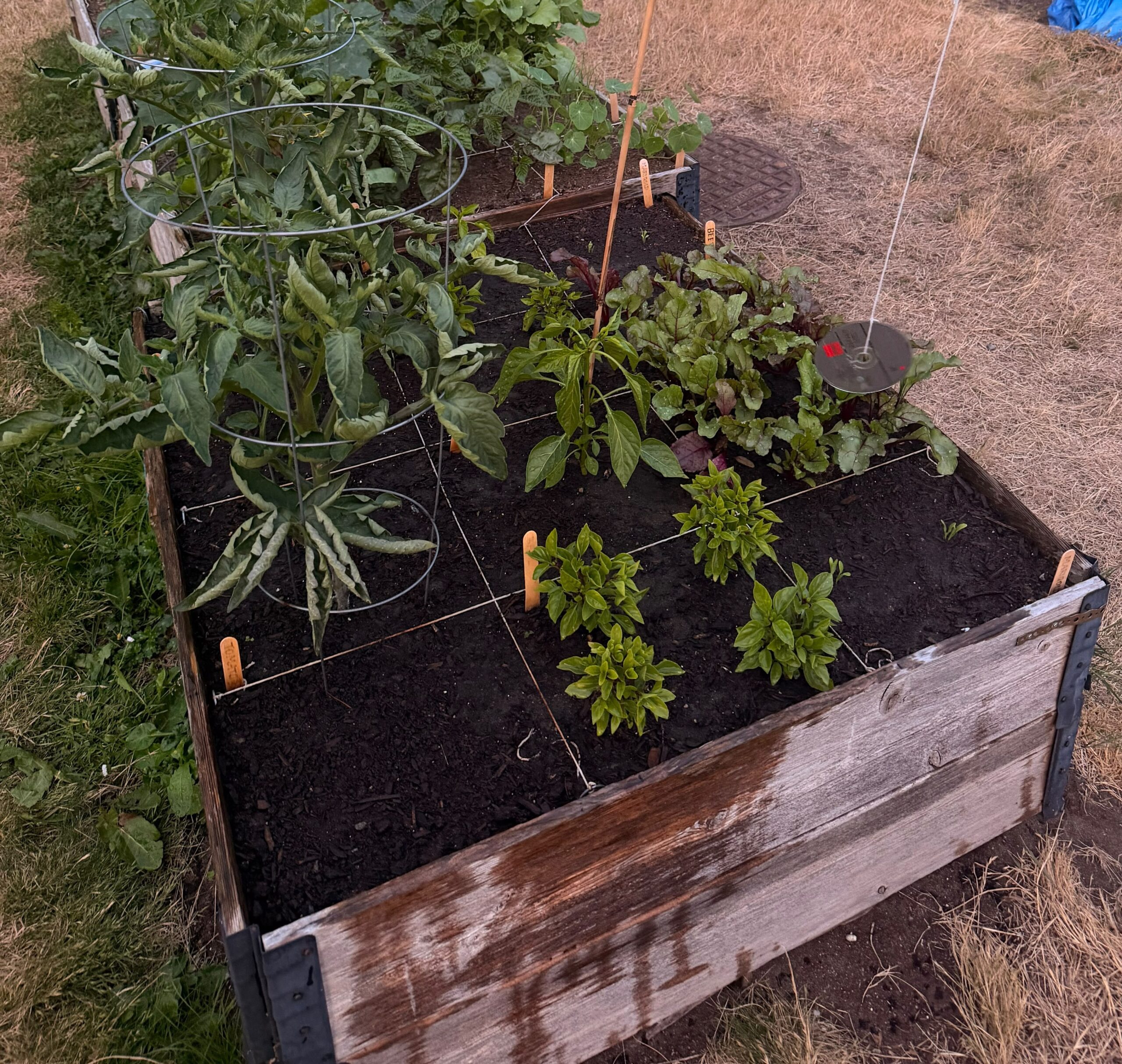
Watch our garden grow
How one semester in the garden changed the way I think about farming, food, and the people who grow it
Growing up I knew farming was part of my families life in India. I always heard stories about working in the field, growing crops and how much time and effort it took to grow the food. Even though I heard those stories I never paid much attention or cared enough because I never experienced it first hand. It was until I started this project and I now understand what they meant. Now that we are half way through the semester, it’s exciting to see how much our garden has grown. Looking back at it now I never expected to have such an experience. While growing our garden one thing I learned is that a garden cannot grow without consistent care. Everyone in our group takes turns watering the garden throughout the week. We care for our garden on a daily basis and I learned that even missing small tasks can affect how plants grow. Seeing vegetables develop over the past few weeks made me realize that growing food takes patience, consistency, and teamwork.
Our garden also reminded me of Burrell and Pedersen’s (2024) idea of “ethic of care”. They explain how people should build caring relationships with nature instead of seeing it as something to control or simply use for their own benefit. I experienced this with our own garden throughout the semester. The vegetables only continued to grow because we consistently cared for them by watering them, checking on them, and making sure we were consistent in our care. This showed me that nature responds to the care we give it.Working in the garden opened my eyes towards the unfair treatment people who grow our food face. Before, I did not know much about “ultra-exploited migrant workers” (Allahdua, 2023) who harvest our local produce, but after reading Gabriel Allahdua’s Harvesting Freedom has exposed the “eighteenth-century working conditions” hidden within Canada’s agricultural sector (Allahdua, 2023). Gabriel Allahdua explains that many workers are often trapped by tied work permits, are forced into substandard housing with dangerous environments and constant threats of deportation to keep them silent (Allahdua, 2023). Spending time in our own garden I have great appreciation for the people who do this work every day. I now realize how physically demanding farming can be, and the people growing our food deserve safe working conditions and respect.
Reflecting on my experience I am glad I had the chance to experience gardening myself. It helped me relate to my family and understand the stories they have shared with me. I have respect for all the people that grow our food, not only has this class taught me what gardening looks like it has also helped me appreciate nature, the hard work it takes and the people who make it possible.
References • Allahdua, Gabriel. Harvesting Freedom: The Life of a Migrant Worker in Canada. Chapter 20, "The Twenty Injustices of Canada." • Burrell, Stephen R., & Pedersen, Cassie. "From Men's Violence to an Ethic of Care: Ecofeminist Contributions to Green Criminology." Journal of Criminology, 2024. AI Acknowledgement Grammarly was used as a writing support tool to review grammar, spelling, and sentence structure. The ideas, reflections, and connections to course materials are my own.

Your blog really resonated with me, especially because of the way you connected your family’s farming experiences in India to what you learned through the gardening project. Your reflection also stood out to me because my family also has farms here in Canada. Even though I have always known how much work farming takes, this class has given me a greater appreciation for the patience, consistency, and care needed to grow healthy crops. It also reminded me not to take the food we eat for granted. Your discussion about migrant workers also made me think about Rob White’s (2018) idea that green criminology encourages us to look beyond traditional definitions of crime and focus on harmful practices that affect both people and the environment. The exploitation of migrant farm workers is a powerful example because, although these working conditions may not always be treated as criminal, they still create serious social harm and inequality. Overall, I think your blog does a great job of showing that gardening is about more than growing food. It teaches us about responsibility, respect for nature, and appreciation for the people whose hard work makes our food system possible.
*Generative AI Acknowledgement: AI was used to fix the grammar and improve the flow of the response.*