Studio 5: Designing Through Systems
DEPD 2410 – Sue Fairburn
Design for Complexity – Designing Through systems
Summary:
Students reflected on coastal ecosystems, engaged during an on-site visit to the intertidal zone including a walking guide, and documented their observations through photos and field notes.
Description
Design for Complexity (Designing through Systems) was a one-time project that centred on the intertidal zone. This was a full semester project that focused on a topic—and explored it through engaging with the site, background research from various sources, expert interviews (we specifically worked with a UBC PhD student at the time: now Dr. Fiona Beaty (https://www.fionabeaty.ca/) and the students (individually) sought local experts and engaged with the community.
The students started with the questions:
- What are the processes that affect coastal ecosystems?
- What are the benefits of restoring these ecosystems?
- What does the coastline mean to people?
- How can a coastline intervention be designed to ecologically function and still maintain the social and recreational benefits that exist now?
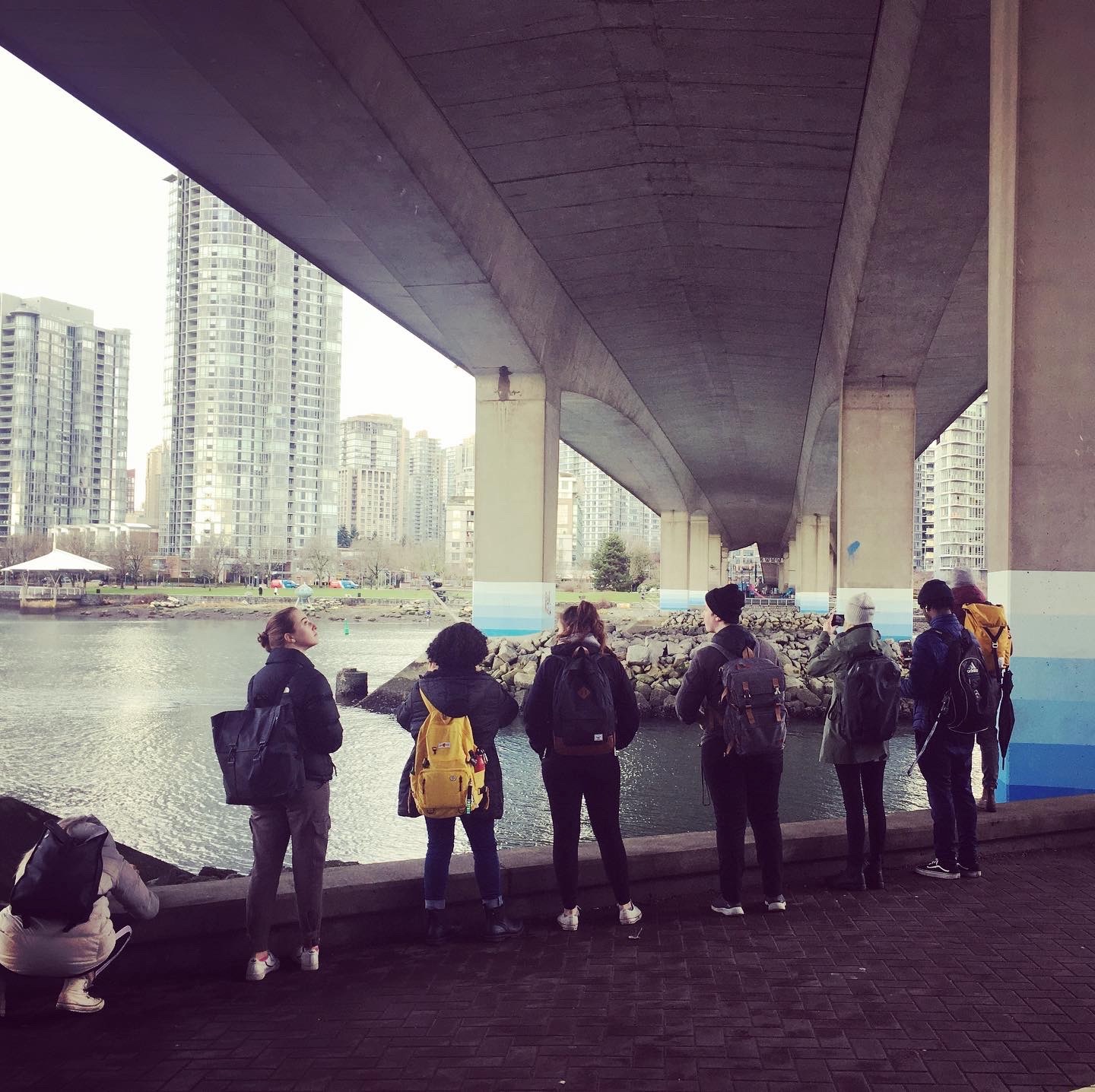
Images shown are of a Field Site Visit in February 2020 to “habitat island” – Vancouver, False Creek area, with year 2 product design students. In this 2.5 hour visit, we arrived by public transit (traveled collectively) and together we sought to learn about ecosystem complexity, the nature of water ways, of land/water boundaries, and of their relationships to urban settings and shared use of humans and industry. This studio-based visit focused on ecosystems and infrastructure.
We visited the site to specifically study the intertidal zone at Habitat island—a man-made island of 0.6 hectares size, that is just over 15 years old. The students were provided a ‘walking guide’ that prompted them to explore the site, with questions and a place to document. They also took photos and composed brief ‘field note’ entries for their process journals. The tide was low, which was ideal for viewing the activity below the high tide line. We also spoke of the artwork that visually engages the public in conversations about tides, water levels, rising, etc.
Below are two quotes from: https://www.citystudiovancouver.com/wp-content/uploads/2018/04/HistoryBoards2.pdf
“At the time the first settlers arrived to the Burrard Inlet in the late 1850s, False Creek was five times the present size and included a large tidal mud flat. This ecologically rich site was blanketed with thick eelgrass, plentiful clam beds and countless songbirds.”
“The cultural traditions of First Nations reflect their unique relationship with the natural environment, one that is based on community, spirituality and stewardship—from harvesting oysters on the shore to collecting Devil’s Club plant to make medicine.”